

Behind every high-performing online store is a solid technical foundation that helps search engines crawl, index, and rank thousands of pages efficiently.
When technical SEO issues pile up, even great products and content struggle to gain visibility. The good news is that many of the most impactful fixes are straightforward once you know where to look. In this article we will explore how e-commerce sites can best remedy technical issues to ensure continued revenue and success.
Why Technical SEO is Critical for E-commerce
Unlike most websites, e-commerce sites face unique technical challenges. These sites typically have large product catalogs, frequent inventory changes, navigation and filters, duplicate URLs, and constantly evolving pages.
Search engines need clear signals to understand which pages matter, how they relate to each other, and when to crawl them. Technical SEO provides that structure. It ensures your site scales without sacrificing visibility. In other words, it is the infrastructure that supports everything else you’re doing on the SEO front.
1. Site Architecture That Supports Scale
A clean, logical site structure is foundational for both SEO and user experience. When visitors can’t find what they’re looking for quickly, they leave. When search engines can’t make sense of your site structure, your rankings suffer.
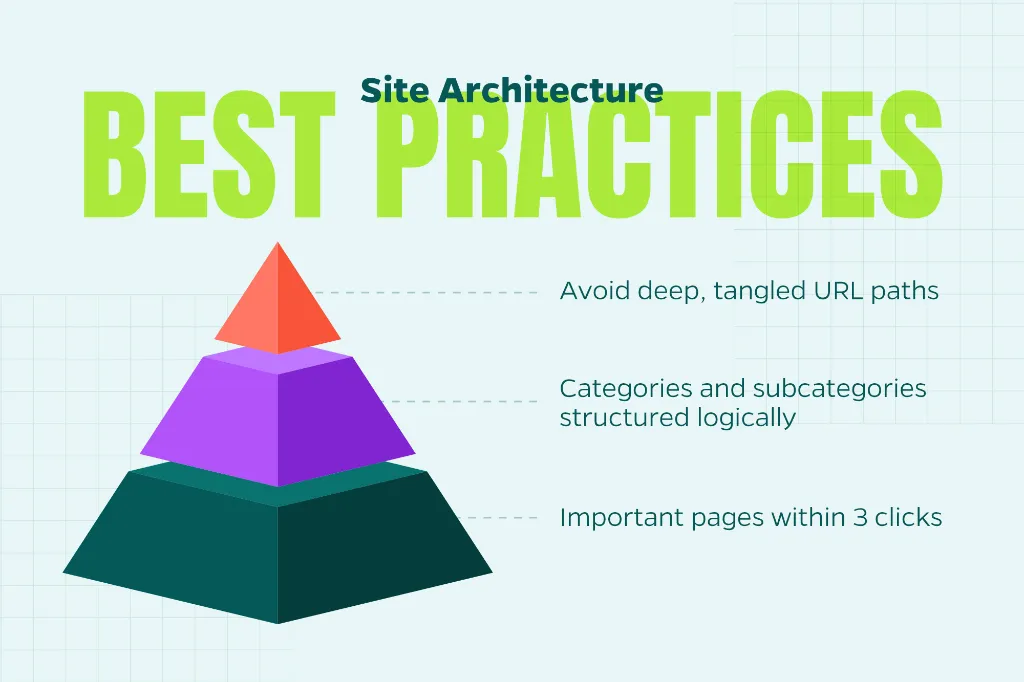
Best practices for site architecture include:
- Keeping important pages within three clicks of the homepage
- Organizing categories and subcategories logically
- Avoiding deep, tangled URL paths
For example, /mens/shoes/running/ is far easier for users and search engines to understand than a long, parameter-heavy URL like /products?cat=12&subcat=45&filter=running.
A strong architecture distributes link equity throughout your site, improves crawl efficiency, and makes it easier for search engines to identify your most valuable pages.
2. Crawl Budget Optimization
Search engines allocate a limited crawl budget to each site. On e-commerce websites, it’s surprisingly easy to waste that budget on low-value pages. This is primarily a concern for larger e-commerce sites with thousands of URLs; smaller stores generally don’t need to over-engineer their crawl budget strategy.
Common crawl budget drains include:
- Filtered URLs with parameters
- Internal search result pages
- Duplicate category and product URLs
Every minute Google spends crawling these pages is time it’s not spending on your money-making products. Too many low-value URLs can also lead to index bloat, where thousands of unnecessary pages end up in Google’s index.
To protect your crawl budget, use robots.txt strategically to block unnecessary pages, apply canonical tags to consolidate similar URLs, and use noindex where appropriate to keep low-value pages out of search results. Limit indexation of filter combinations that don’t drive organic traffic.
It’s especially important for faceted navigation SEO, where filters such as size, color, brand, or price can generate large numbers of URLs. A practical approach is to index high-demand facet combinations that provide real search value and block or otherwise prevent low-value combinations from being crawled and indexed.
An up-to-date XML sitemap can also help search engines find and prioritize important product and category pages. Keep it current, exclude duplicate or noindexed URLs, and submit it through Google Search Console. You can also use Google Search Console’s Crawl Stats report to monitor how Google is crawling your site.
The goal is simple: make sure search engines spend their time crawling the pages that matter most to your business.
3. Canonicalization and Duplicate Content Control
Duplicate content is almost unavoidable in e-commerce. The problem arises when search engines can’t tell which version of a page should rank. This leads to diluted authority and confused algorithms.
Common sources of duplication include product variants like size, color, or material options, sorting and filtering parameters, and multiple category paths leading to the same product.
Canonical tags help resolve this by signaling the preferred version of a page. When implemented correctly, they consolidate ranking signals and reduce keyword cannibalization. This is critical in competitive product categories where every advantage helps.
4. Page Speed and Core Web Vitals
Page speed isn’t just a ranking factor. It’s a conversion factor. Studies consistently show that even a one-second delay in page load time can significantly impact conversion rates.
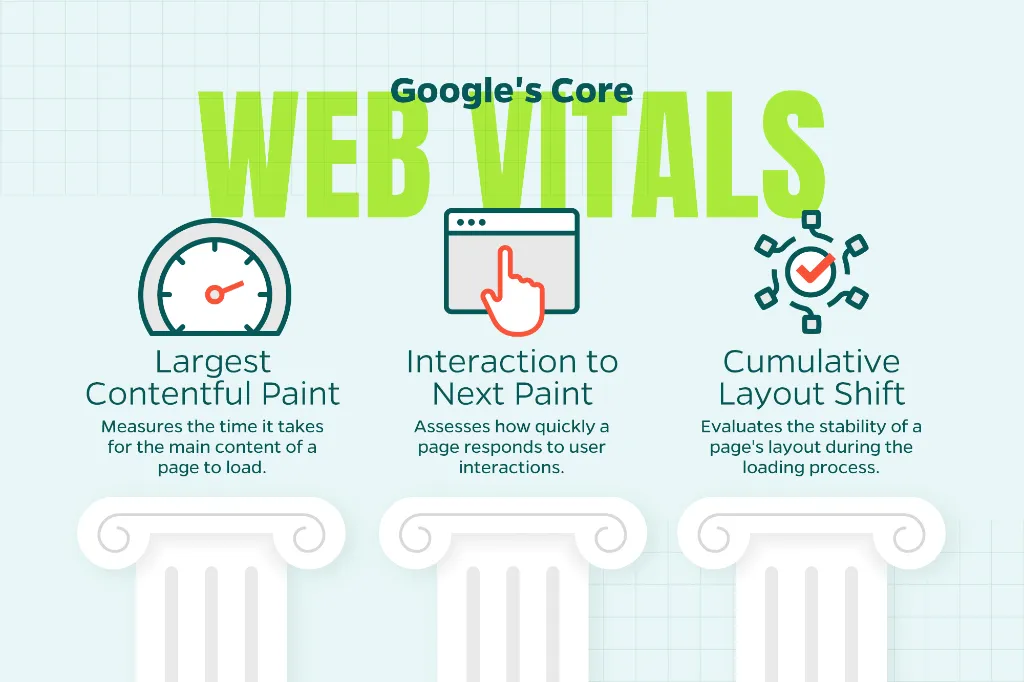
Slow-loading product and category pages increase bounce rates, especially on mobile where users expect instant results. Google’s Core Web Vitals focus on three key metrics:
- Largest Contentful Paint (LCP): How quickly the main content loads
- Interaction to Next Paint (INP): How responsive the page feels when users interact with it
- Cumulative Layout Shift (CLS): How stable the layout is during load (nobody likes buttons that move right before you click them)
For e-commerce sites, improvements often come from compressing and properly sizing images, implementing lazy loading for below-the-fold content, reducing JavaScript bloat, and leveraging browser caching and CDNs.
Small performance gains can add up to meaningful revenue impact. If your site loads in two seconds instead of four, you’re not just improving SEO—you’re directly affecting your conversion rate.
5. Mobile-First Optimization
With Google’s mobile-first indexing, your mobile site is effectively your primary site for SEO purposes. If your mobile experience is lacking, your rankings could tank.
Key considerations include responsive design (not separate mobile URLs, which create unnecessary complications), touch-friendly navigation and filters, readable text without zooming, and fast load times even on slower mobile networks.
6. Structured Data for Products and Categories
Structured data helps search engines understand what your pages represent and can unlock enhanced search results that make your listings stand out.
For e-commerce, product schema is especially valuable. Common schema types include Product, Offer, AggregateRating, BreadcrumbList, and ItemList. Together, these can help search engines understand details such as a product’s price, availability, reviews, and where it fits within your site. For example, Product and Offer markup can help make price and availability eligible to appear directly in search results.
Structured data can also communicate shipping details and return policies that may be eligible to appear with product results. And when paired with an accurate Google Merchant Center feed, your product data can help make products eligible for free listings across Google Shopping experiences.
When implemented correctly, structured data improves click-through rates by making listings more informative and visually compelling. Just as important: validate your markup regularly using Google’s Rich Results Test to avoid errors that could prevent rich results from appearing.
Think of structured data as giving search engines a clear, structured cheat sheet about your products instead of making them figure everything out from your HTML alone.
7. Indexation Management for Out-of-Stock Products
Out-of-stock products create tricky SEO decisions. Remove them entirely and you risk losing rankings you worked hard to build. Leave them unchecked and you frustrate users with products they can’t buy.
The best practices for out-of-stock products depend on the situation:
- Temporarily out of stock: Keep the page live and provide helpful alternatives or an email signup for when it’s back
- Permanently discontinued with existing traffic: Redirect to a relevant category or replacement product so you don’t lose that ranking value
- Low-value discontinued products: Consider deindexing if they never drove meaningful traffic
The key is consistency and clear signals. When you have a systematic approach, search engines can understand whether a page still deserves to be indexed.
8. Secure, Clean URLs and HTTPS
HTTPS is a baseline requirement for e-commerce. It is helpful not just for security, but for trust and SEO. If your site isn’t secure, browsers will actively warn users away. Google itself has confirmed HTTPS as a ranking signal.
Beyond HTTPS, focus on URL hygiene. Avoid unnecessary parameters, use lowercase URLs consistently, and eliminate duplicate URLs caused by trailing slashes or capitalization variations.
Clean URLs improve crawl efficiency and make analytics and reporting more reliable. They’re also more user-friendly when shared on social media or in customer communications.
How To Audit Your Store’s Technical SEO
You don’t need expensive tools to identify many common technical SEO problems. Start with these five steps:
- Check Google Search Console’s Page Indexing report to see how many pages Google has indexed and identify pages being excluded or encountering errors.
- Review the Crawl Stats report to understand how often Google crawls your site and look for unusual spikes, drops, or wasted crawling.
- Run PageSpeed Insights on your homepage and a few important category and product pages, paying particular attention to your Core Web Vitals.
- Use Google’s Rich Results Test to check whether your product structured data is valid and eligible for enhanced search results.
- Crawl your site with an e-commerce SEO tool like Screaming Frog to uncover broken links, duplicate pages, redirect issues, and other technical problems at scale.
A basic e-commerce SEO audit can uncover many opportunities, but larger catalogs and persistent indexing or crawling problems may warrant a more comprehensive e-commerce technical SEO review. A professional audit can connect individual issues to their potential impact and help prioritize fixes rather than simply producing a long list of errors.
Does Your E-commerce Platform Affect Technical SEO?
Your e-commerce platform can make some technical SEO tasks easier and others more challenging. You can rank well on any major platform, but the technical SEO work required will differ.
For example, Shopify technical SEO comes with some built-in advantages, including automatic canonical tags, but gives you less control over certain elements such as URL structure. WooCommerce offers greater flexibility but often relies on plugins and proper configuration. Platforms designed for larger catalogs, such as Adobe Commerce (Magento) and BigCommerce, offer their own capabilities and technical considerations.
Rather than choosing a platform based on SEO alone, understand what your platform handles automatically and where you’ll need additional optimization. The best e-commerce platform for technical SEO is ultimately one that supports your catalog and business requirements while giving you enough control over crawling, indexation, URLs, structured data, and site performance.
It’s especially important for B2B and manufacturing companies with large catalogs connected to an ERP or running on custom-built platforms. These sites follow the same technical SEO principles, but integrations and platform restrictions can make implementation more complex.
Turning Technical SEO Into a Competitive Advantage
When your site is easy to crawl, fast to load, and clear in structure, every other SEO effort becomes more effective. Your content gets indexed more reliably. Your link building delivers more impact. Your paid traffic converts better because the user experience is solid.
If your online store has grown over time, chances are technical issues have grown with it. Addressing them proactively helps protect rankings today and sets the stage for scalable growth tomorrow.
Need help diagnosing technical SEO issues on your site? Contact us today to discuss your SEO strategy.