




Site speed has evolved from a “nice-to-have” technical metric to a cornerstone of effective technical SEO. As search engines increasingly prioritize user experience, your website’s performance plays a direct role in how it’s evaluated, ranked, and perceived. For businesses investing in organic search, understanding the connection between site speed and SEO is essential.
In this article, we’ll explore what site speed really means. You will learn why site speed matters for SEO, how it influences user behavior and search rankings, and what you can do to improve performance in measurable ways.
What is Site Speed?
Site speed refers to how quickly your website’s content loads and becomes usable for visitors. While it’s often discussed as a single concept, site speed encompasses several performance metrics. Here are a few:
- Page load time: How long it takes for the entire page to fully load
- Time to First Byte (TTFB): How quickly the server responds to a user request
- First Contentful Paint (FCP): When users first see any content on the screen
- Largest Contentful Paint (LCP): When the main content of the page finishes loading
- Interaction metrics: How quickly users can interact with page elements
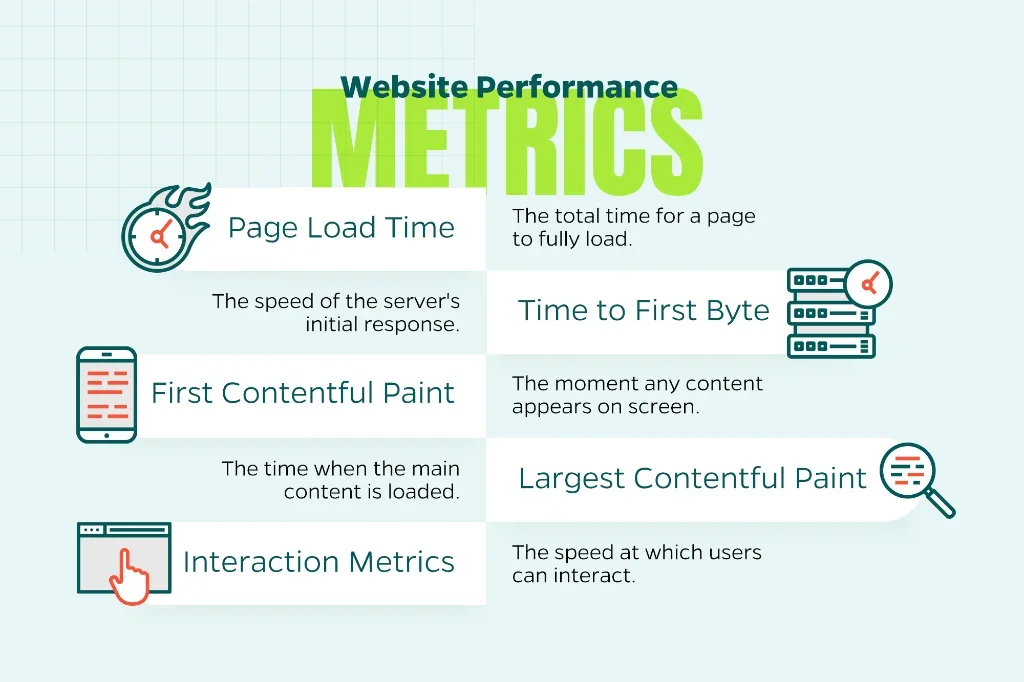
Search engines don’t rely on just one of these measurements. Instead, they evaluate performance holistically, focusing on how quickly users can see and interact with meaningful content.
Why Site Speed Matters for SEO
Search engines aim to deliver the best possible results for users. That goal extends beyond relevance and authority to include usability and performance. A slow website creates friction that directly undermines the user experience search engines want to promote.
From an SEO perspective, site speed influences crawl efficiency, user engagement signals, mobile usability, and conversion rates. When a site loads slowly, users are more likely to abandon it, view fewer pages, and spend less time engaging with content. Over time, these behavioral patterns shape how search engines interpret your site’s value. If people are bouncing or not spending time on your site, it won’t be ranked well by search engines.
Site Speed as a Ranking Factor
Google has confirmed that site speed is a ranking factor for both desktop and mobile searches. While it’s typically not the most influential factor on its own, it can be a decisive differentiator when competing pages have similar relevance and authority.
More importantly, Google now evaluates performance through Core Web Vitals, which is a set of three key performance metrics designed to measure real-world user experience. These metrics are:
- Largest Contentful Paint (LCP) measures loading performance
- Interaction to Next Paint (INP) measures responsiveness to user actions
- Cumulative Layout Shift (CLS) measures visual stability, or how often elements on a page shift while loading.
Pages that consistently meet Core Web Vitals thresholds are more likely to provide smooth, frustration-free experiences. Consequently, pages that adhere to these criteria will be more likely to be ranked well by Google.
The Connection Between Site Speed and User Experience
User experience is the bridge between site speed and SEO outcomes. Even minor delays can significantly affect how users perceive your brand and interact with your website.
Research consistently shows that as load times increase, bounce rates rise. Visitors expect pages to load quickly—especially on mobile devices—and their patience is limited. If a page feels sluggish, users often leave before engaging with the content.
From a business perspective, the implications extend beyond rankings. Faster websites tend to retain visitors longer, encourage deeper navigation, generate higher conversion rates, and build greater trust and credibility.
Search engines take cues from these engagement patterns, reinforcing the importance of performance as part of a broader SEO strategy.
Mobile Speed and SEO Performance
Mobile speed deserves special attention. With mobile-first indexing, Google primarily uses the mobile version of your site to evaluate and rank pages. If mobile performance is poor, strong desktop speed alone won’t compensate.
Mobile users often face additional constraints like slower network connections or less powerful devices. Pages that aren’t optimized for mobile speed may load inconsistently, render improperly, or become difficult to interact with.
Optimizing mobile performance involves more than responsive design. It requires careful attention to file sizes and compression, efficient use of JavaScript, image optimization for different screen sizes, and server response times. A fast, stable mobile experience supports both SEO visibility and overall digital performance.
How Site Speed Affects Crawling and Indexing
Site speed can also influence how search engines crawl and index your website. When pages load slowly, search engine bots may not crawl as many URLs within a given timeframe. This is particularly relevant for large sites with extensive product catalogs or content libraries.
Faster sites allow crawlers to discover new content more quickly, revisit updated pages more frequently, and allocate crawl budget more efficiently. While crawl efficiency alone won’t guarantee higher rankings, it plays a supporting role in ensuring that your SEO efforts are fully recognized by search engines. If you are experiencing any issues in this area, it’s imperative to try to fix crawl errors.
Common Causes of Slow Site Speed
Understanding what slows a site down is the first step toward improvement. Some of the most common culprits include:
- Unoptimized images and media files
- Excessive or inefficient JavaScript and CSS
- Poor server performance or hosting limitations
- Lack of caching
- Too many third-party scripts
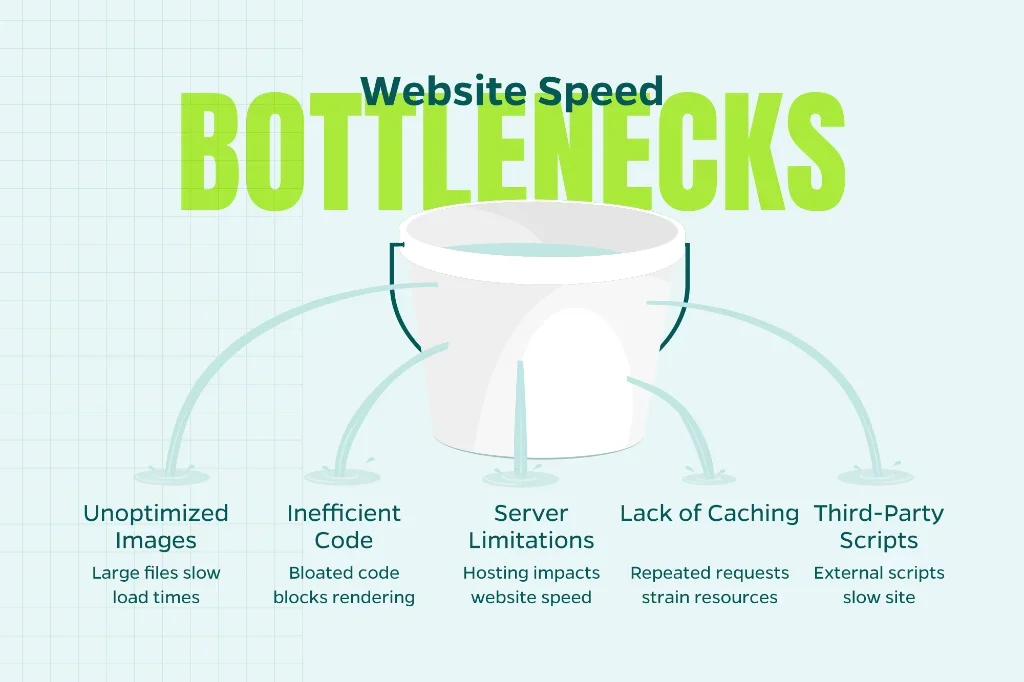
These problems often accumulate over time as websites grow, making regular performance audits essential.
Measuring Site Speed and Performance
Accurate measurement is critical for meaningful optimization. Several tools provide valuable insights into site speed and user experience, including Google PageSpeed Insights and BrightEdge.
The most valuable insights come from combining lab data with real-user data. This approach helps you identify both technical issues and how performance affects actual visitors across different devices and network conditions.
Best Practices for Improving Site Speed
Improving site speed is a technical process, but the benefits extend across marketing, user experience, and conversion optimization. If you want to improve site speed, here are a few best practices:
- Start by compressing and properly sizing images, which are often the biggest culprits in slow load times.
- Minimize and defer non-critical JavaScript to prevent it from blocking page rendering.
- Leverage browser caching and content delivery networks (CDNs) to reduce server load and improve delivery speeds.
- Work on improving server response times and reducing layout shifts and unnecessary animations.
It’s often most effective to prioritize changes based on impact and feasibility, focusing first on issues that affect key pages and core user journeys.
Site Speed as Part of a Holistic SEO Strategy
While site speed is important, it shouldn’t be viewed in isolation. A fast website can’t compensate for weak content, poor keyword targeting, or lack of authority. Likewise, strong content may underperform if technical issues create friction for users.
The most successful SEO strategies integrate site speed with high-quality, relevant content, clear site architecture, strong internal linking, and ongoing technical maintenance. When performance supports usability and content quality, SEO efforts become more effective and more sustainable.
Final Thoughts
Site speed is a critical factor in modern SEO because it directly affects user experience, search engine evaluation, and business outcomes. Faster websites are easier to crawl, more engaging for users, and better aligned with how search engines define quality.
Want help achieving your SEO goals? Reach out to Straight North. We have a proven record of success helping companies achieve strong results across the digital marketing spectrum.