




Search engines have gotten smarter. Yet, they still need help understanding your website. That’s where structured data and schema markup come in.
If you’ve ever wondered how Google displays star ratings, FAQs, event dates, or product prices directly in search results, the answer is schema. When implemented correctly, structured data helps search engines interpret your content more accurately. This improves visibility, click-through rates, and overall SEO performance.
In this technical SEO guide, we’ll walk through what structured data is, why it matters, and how to implement schema markup step by step.
What is Structured Data?
Structured data is a standardized format that describes the content on your web pages. Instead of forcing search engines to interpret your content, structured data tells them exactly what different elements represent.
For example, it clarifies whether a number is a product price or phone number, whether text represents a review or recipe, who authored an article, or when an event takes place.
The most common vocabulary for structured data is Schema.org. It is a collaborative project supported by Google, Bing, Yahoo, and Yandex.
What is Schema Markup?
Schema markup is the code you add to your website to implement structured data. Think of structured data as the concept and schema markup as the execution.
Schema can be added using several formats, but JSON-LD is Google’s preferred method and the one most SEO professionals use today. It’s clean, flexible, and doesn’t interfere with your visible page content.
Why Structured Data Matters for SEO
Structured data doesn’t directly improve rankings, but it significantly influences how your pages appear in search results. This impacts performance in other important ways.
Key benefits include:
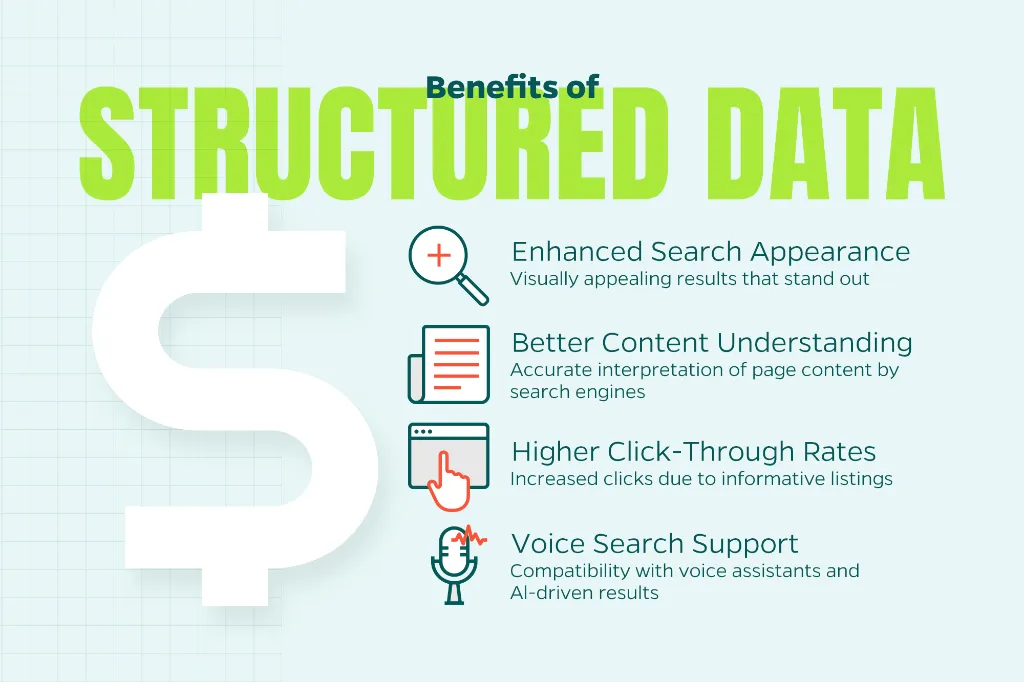
Enhanced search appearance – Rich results like star ratings, FAQs, and product details stand out visually and grab attention in crowded search results.
Higher click-through rates – More informative listings naturally attract more clicks, even when you’re not in the top position.
Better content understanding – Search engines can more accurately interpret what your pages are about and match them to relevant queries.
Voice search support – Structured data helps power voice assistants and AI-driven results, positioning you for emerging search behaviors.
In competitive search landscapes, these advantages make a real difference.
Common Types of Schema Markup
Not every schema type applies to every website. The goal is to mark up content that already exists on your page—not create new content just for schema.
Here are the most commonly used schema types:
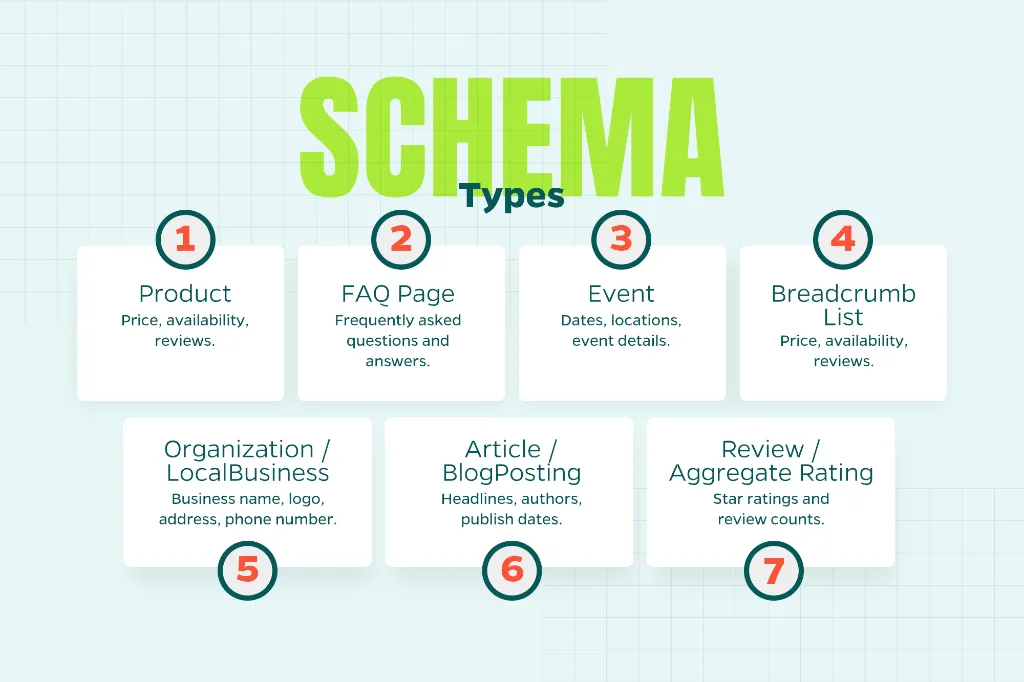
Organization / LocalBusiness – Business name, logo, address, phone number
Article / BlogPosting – Headlines, authors, publish dates
Product – Price, availability, reviews
Review / AggregateRating – Star ratings and review counts
FAQPage – Frequently asked questions and answers
BreadcrumbList – Site navigation hierarchy
Event – Dates, locations, event details
Choosing the right schema types depends on your site’s content and business goals.
How to Implement Structured Data (Step by Step)
1. Identify Pages That Benefit Most
Start with high-value pages that already perform well or have strong conversion potential: service pages, product pages, blog posts with FAQs, or location pages. These are often the best candidates for rich results and will give you the most immediate return on your schema implementation efforts.
2. Choose the Appropriate Schema Type
Match the schema type to your page content. A blog post needs Article or BlogPosting schema. A service page with FAQs needs FAQPage schema. An ecommerce product page needs Product schema.
Avoid mixing unrelated schema types on the same page. This confuses search engines and dilutes the effectiveness of your markup.
3. Create JSON-LD Markup
JSON-LD is added in a <script type=”application/ld+json”> block within your page’s HTML, usually in the <head> or just before the closing <body> tag.
Here’s a simple example for an article:
{
   "@context": "https://schema.org",
   "@type": "BlogPosting",
   "headline": "How to Implement Structured Data and Schema Markup",
   "author": {
       "@type": "Organization",
       "name": "Straight North"
   },
   "datePublished": "2026-01-01",
   "dateModified": "2026-01-01"
 }
4. Add the Markup to Your Website
How you add schema depends on your CMS and technical setup.
For WordPress sites, use SEO plugins like Yoast or RankMath, or add custom fields. For custom-built sites, insert the markup directly into templates or page code. For enterprise CMS platforms, use global components or structured data modules to maintain consistency.
For sites with many similar pages, implementing schema at the template level saves time and ensures you don’t miss anything.
5. Test Your Structured Data
Before publishing, test your markup using Google’s Rich Results Test or the Schema Markup Validator. These tools flag errors, warnings, and eligibility for rich results. Fix any issues before pushing changes live—it’s much easier to correct problems now than to troubleshoot later.
6. Monitor Performance in Google Search Console
After implementation, monitor your Enhancements reports, rich result impressions and clicks, and any errors or warnings that appear over time.
Structured data isn’t a “set it and forget it” task. Content changes, schema guidelines evolve, and ongoing monitoring keeps your implementation working properly.
Best Practices for Schema Markup
To get the most value from structured data, follow these practices:
Only mark up visible content that appears on the page. Be precise and consistent with your data. Avoid spammy or misleading markup that misrepresents your content. Follow Google’s structured data guidelines closely. Update your schema whenever page content changes.
Over-optimization or inaccurate markup can cost you eligibility for rich results. Worse yet, it could trigger manual actions.
Common Mistakes to Avoid
Even experienced teams make schema mistakes. Watch out for marking up content that isn’t on the page, using incorrect schema types, forgetting required properties, duplicating schema across unrelated pages, and ignoring validation errors.
Taking the time to implement schema correctly from the start saves significant headaches down the road.
Final Thoughts
Structured data and schema markup may sound technical, but they’re powerful tools for improving how your website communicates with search engines. When implemented thoughtfully, schema enhances visibility, supports emerging search experiences like voice and AI-powered results, and strengthens your overall technical SEO foundation.
If you’re already investing in high-quality content and solid site architecture, structured data is a natural next step. And it delivers measurable results.
Need help implementing structured data on your site? Contact Straight North to learn how our SEO team can optimize your schema markup and improve your search visibility.