




For healthcare organizations, a website is often the first point of contact between a potential patient and a provider. Whether someone is searching for a surgeon, a physical therapy clinic, or a pediatric urgent care center, they are almost certainly starting with a search engine. That means your service pages — the pages that describe what you do and who you serve — carry a lot of weight.
Healthcare SEO comes with its own set of considerations. Patients are searching with urgency and intent. They want answers fast, and they want to trust the source. At the same time, search engines are paying close attention to the quality and credibility of health-related content. Optimizing your service pages effectively means addressing both audiences at once.
Here is a practical look at how healthcare organizations of any size can strengthen their service pages and improve their visibility in search.
Start with the Right Keywords
Keyword research is the foundation of any service page optimization effort, and in healthcare it deserves extra care. Patients often search using plain language rather than clinical terminology. Someone looking for help with a herniated disc is more likely to search “back pain specialist near me” than “lumbar disc herniation treatment.” Your content needs to reflect that.
For each service page, identify the primary keyword that best captures what patients are searching for. Then look for related terms and questions that naturally support it. Tools like Google Search Console, Google’s “People also ask” feature, and keyword research platforms can help you determine what your target audience is typing.
Local SEO is also a major factor. Most patients are searching for providers within a specific geographic area. Consequently, you should incorporate location-based keywords — such as city names, neighborhood identifiers, and metro-area terms — into your service pages. This can significantly improve your chances of appearing in relevant local searches.
Write for Patients, Not Just Search Engines
Once you have your keyword strategy in place, the content itself must deliver. Google’s guidance on health-related content places a strong emphasis on what it calls E-E-A-T: Experience, Expertise, Authoritativeness, and Trustworthiness. In practical terms, this means your service pages need to do more than stuff keywords into a generic description.
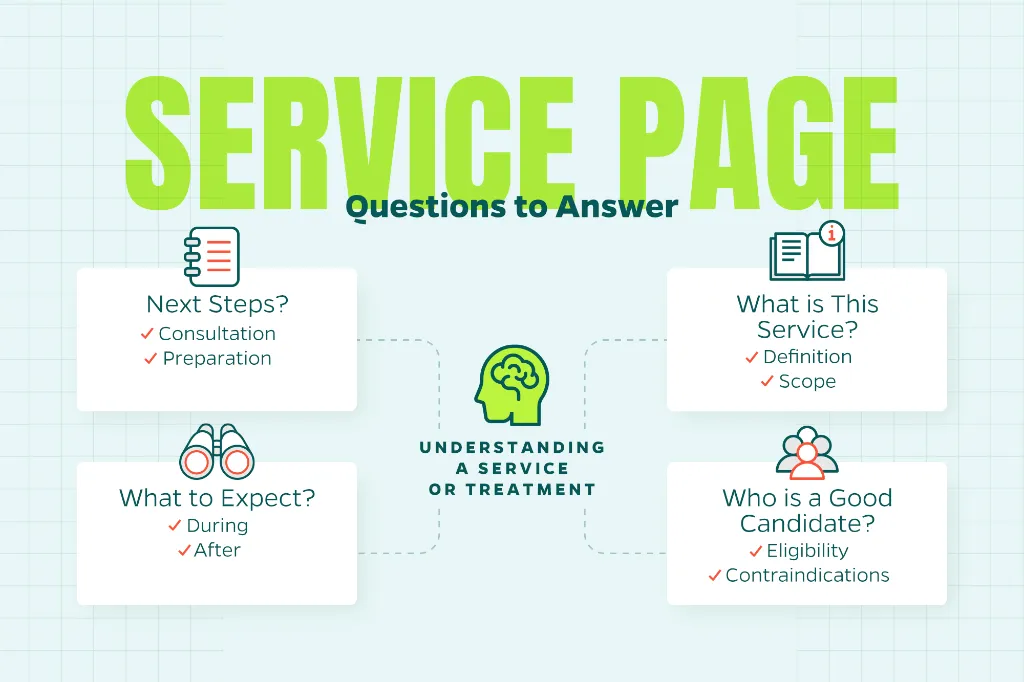
Each service page should clearly answer the questions patients have when they land on it:
- What is this service, and what does it involve?
- Who is a good candidate for this treatment or procedure?
- What can patients expect during and after?
- How do they take the next step?
Writing in a clear, approachable tone matters here. Medical jargon can create distance, and patients who feel confused are less likely to convert. That said, accuracy is non-negotiable. Content that misrepresents a service or overpromises outcomes will damage your credibility with both patients and search engines. When possible, have clinicians review service page content before it goes live.
Get Your On-Page Elements Right
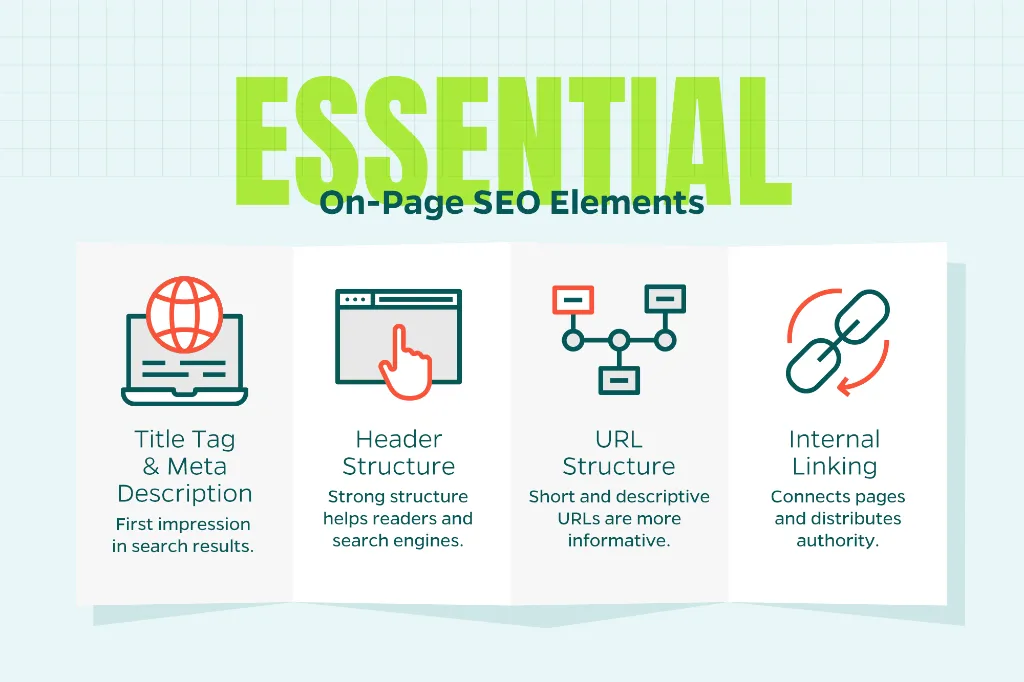
Strong content is the core, but the technical and structural elements surrounding it matter just as much for SEO performance. Here are a few on-page SEO factors that should be addressed on every service page:
- Title tag and meta description. A good title tag and meta description are the first things a prospective patient sees in search results. Your title tag should include the primary keyword and be concise. Your meta description should give a clear, compelling reason to click through.
- Header structure. It’s imperative to have a strong header structure. Use a single H1 that incorporates your main keyword and break the page into logical sections with H2 and H3 tags. This helps both readers and search engines navigate the content.
- URL structure. Keep URLs short and descriptive. A URL like /services/knee-replacement-surgery is cleaner and more informative than /page?id=4829.
- Internal linking. Use internal links to connect your service pages to related content across your site, whether that’s a blog post, a provider bio, or a location page. This helps distribute authority across your site and gives visitors more paths to follow.
Build Credibility with Structured Data and Provider Information
Schema markup, which is structured data added to your page’s code, helps search engines better understand what your content is about. For healthcare organizations, this can include physician profiles, medical conditions, procedures, and local business information. While schema markup doesn’t directly change your rankings, it can improve the way your pages appear in search results, which can influence click-through rates.
Provider information also plays a role in building trust. Where relevant, linking a service page to the specific physicians or specialists who perform that service adds a layer of credibility that patients respond to. Bios that include education, board certifications, and clinical experience reinforce the expertise signals that Google is looking for in health-related content.
Don’t Overlook Page Experience
Even the most well-written service page will underperform if the underlying experience is poor. Page speed, mobile responsiveness, and ease of navigation are all ranking factors, and they also directly affect whether a visitor stays or leaves.
Healthcare audiences skew heavily toward mobile, especially patients searching during moments of concern or urgency. A page that loads slowly or displays poorly on a phone creates friction at exactly the wrong moment. Core Web Vitals are the performance benchmarks Google uses to evaluate page experience. Conduct a regular audit of these vitals to ensure your site is performing as it should be.
Clear calls to action are equally important. Every service page should make it easy for a visitor to schedule an appointment, call your office, or request more information. If that next step is buried or unclear, you are leaving conversions on the table regardless of how well the page ranks.
Treat Service Pages as Ongoing Assets
Building a review cadence into your marketing workflow keeps your service pages competitive. That means periodically checking rankings, reviewing content for accuracy and completeness, updating outdated information, and looking for new keyword opportunities. Even modest, consistent updates can signal to search engines that a page is current and relevant.
For larger healthcare institutions managing dozens or even hundreds of service pages, this kind of systematic upkeep benefits from a clear ownership structure. Someone should be accountable for each page, whether that’s an internal marketing team member or an outside partner.
Ready to Strengthen Your Healthcare SEO?
Optimizing service pages for healthcare SEO requires a thoughtful blend of content strategy, technical execution, and ongoing maintenance. If your organization is looking to improve its search visibility and attract more patients, Straight North can help. Contact us today to learn how our team approaches healthcare SEO and what that could mean for your organization.