
Internal linking is one of the most overlooked opportunities for your on-page SEO strategy. While marketers are often consumed with earning backlinks, your internal linking strategy significantly influences how search engines interpret, rank, and prioritize your content. Let’s break down what internal links are, why they matter, and how to build them strategically.
What are Internal Links and Why Do They Matter?
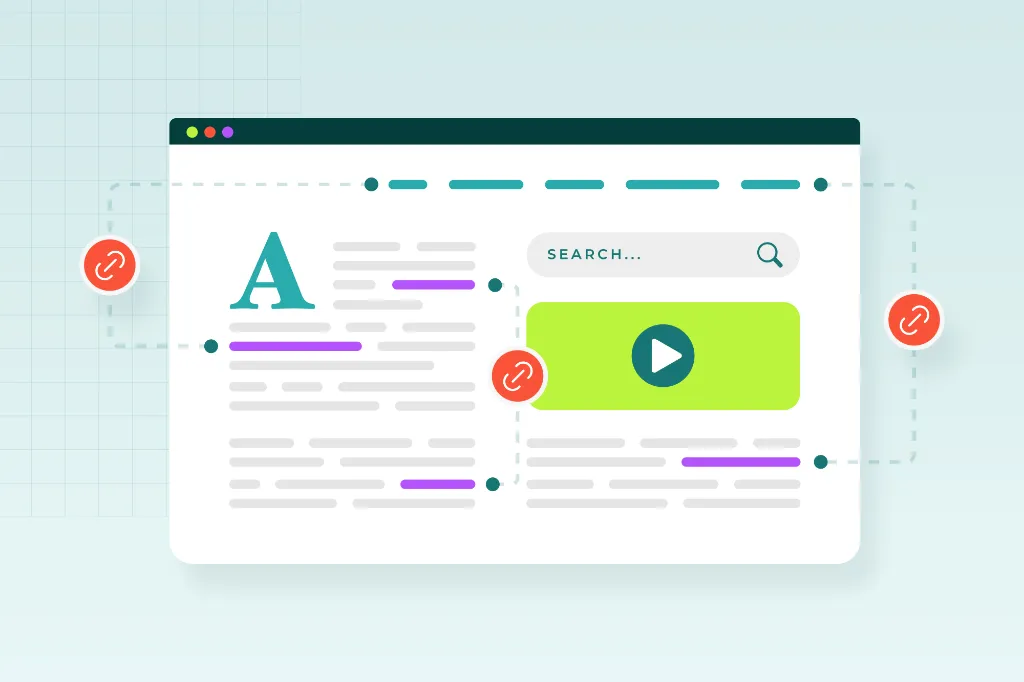
Internal links are hyperlinks that connect one page on your website to another page on the same domain. Unlike external links, they don’t send users away from your site. Internal links simply connect users to another page on your own site. This helps both users and search engines navigate your content more effectively.
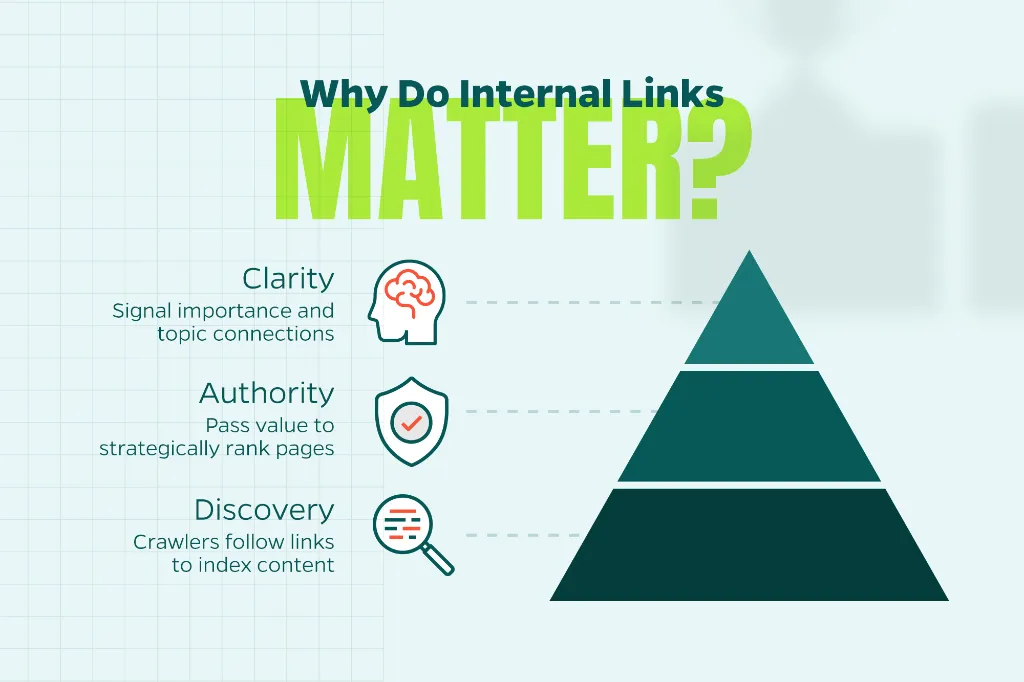
From an SEO perspective, internal links serve three key purposes:
- They help search engines discover pages. Crawlers follow links to find and index content. If a page has no internal links pointing to it, search engines may never discover it.
- They distribute authority (link equity). Pages with strong authority can pass value to other pages through internal links, allowing you to strategically funnel ranking power where it’s needed most.
- They clarify page relationships. Internal links signal which pages are most important and how topics are connected, helping search engines understand your site’s hierarchy and topical expertise.
When done well, internal linking improves your SEO rankings and the user experience simultaneously.
Start with a Clear Site Structure
Before adding or adjusting internal links, it’s important to understand your site’s overall structure. A well-organized website makes internal linking more intuitive and effective.
Most SEO-friendly sites follow a logical hierarchy:
- Top-level pages (home, core service pages)
- Category or hub pages (broader topic areas)
- Supporting content (blogs, guides, FAQs)
This structure helps search engines understand which pages are foundational and which provide deeper detail. It also ensures users can move from broad topics to specific answers without friction.
If your site feels cluttered or disorganized, internal linking alone won’t fix it, but it can reinforce a strong foundation.
Use Descriptive, Keyword-Focused Anchor Text
Anchor text is the clickable text in a link, and it matters more than many people realize. Generic phrases like “click here” or “read more” don’t provide much context to search engines or users.
Instead, use anchor text that clearly describes the destination page. For example:
- Instead of “learn more,” use “essential SEO checklist“
- Instead of “this guide,” use “basic SEO strategy“
That said, avoid over-optimizing. Anchor text should sound natural and fit seamlessly into a sentence. Exact-match keywords are helpful, but forced repetition can look spammy and hurt readability.
A good rule of thumb is to write for humans first, then refine for search engines. Variety matters too. If you’re linking to the same page multiple times, vary your anchor text slightly while keeping it relevant.
Link From High-Authority Pages to Priority Pages
Not all pages on your website carry the same weight. Pages that attract backlinks, traffic, or strong engagement typically have more authority, and internal links from these pages are especially valuable.
Identify your strongest pages, such as:
- High-performing blog posts that rank well and attract consistent traffic
- Popular resources or guides that earn backlinks naturally
- Core service pages with external backlinks from reputable sources
Then, link from those pages to other important URLs you want to rank. This helps pass authority where it’s needed most and signals to search engines which pages deserve attention.
This approach is particularly effective when launching new content that hasn’t yet built external links. You can identify high-authority pages using tools like Ahrefs, BrightEdge, Moz, or Google Analytics.
Create Topic Clusters with Strategic Internal Links
Topic clusters are a powerful way to organize content and strengthen internal linking. The idea is to group related content around a central “pillar” page that covers a topic broadly.
For example, a pillar page on SEO might link out to supporting articles on:
Each supporting article links back to the pillar page and, where relevant, to other cluster content. This creates a strong network of internal links that reinforces topical authority and helps search engines understand your depth of coverage.
Topic clusters also improve user experience by making it easy to explore related content without searching.
Add Internal Links Naturally Within Content
Contextual links placed naturally within the body of content are often more valuable than links in navigation menus or footers. They provide relevance and intent, both of which matter for SEO.
As you write or update content, look for natural opportunities to link to related pages. Ask yourself:
- Would this link help the reader learn more?
- Does it connect to a logical next step?
- Is the linked page genuinely relevant?
Avoid adding links solely for SEO purposes. If a link doesn’t add value for the user, it’s unlikely to add value for rankings either. The best internal links feel natural and enhance the flow of information.
Don’t Forget About Older Content
Internal linking isn’t a one-time task. As your site grows, older content can become isolated or outdated, missing opportunities to link to newer pages.
A simple internal linking habit is to revisit existing content whenever you publish something new. Look for older posts that mention related topics and add links to your latest resources where appropriate.
This keeps your content ecosystem connected and helps search engines rediscover and reassess older pages. Set up a quarterly audit process to review your top-performing content for internal linking opportunities.
Watch Out for Common Internal Linking Mistakes
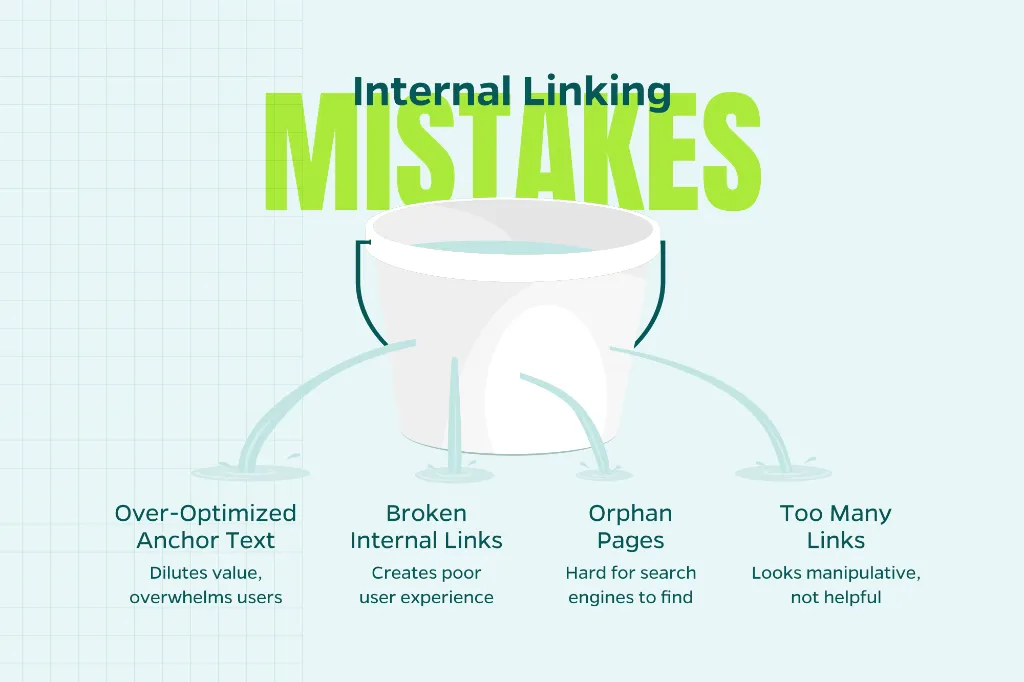
Even well-intentioned internal linking strategies can fall short if common mistakes creep in. Some to avoid include:
- Too many links on one page. Excessive links dilute value and overwhelm users. Most experts recommend keeping internal links to 2-4 per 500 words of content.
- Broken internal links. These create poor user experiences and waste crawl budget.
- Orphan pages. Pages with no internal links pointing to them are hard for search engines to find.
- Over-optimized anchor text. Repetition can look manipulative rather than helpful.
Regular site audits can help catch these issues before they impact performance.
Measure and Refine Your Internal Linking Strategy
Like any SEO effort, internal linking should be monitored and refined over time. Use tools like Google Search Console or SEO platforms to track:
- Crawlability and indexing
- Page performance changes
- Internal link distribution
If certain pages aren’t gaining traction, consider whether they’re properly supported by internal links. Small adjustments can lead to meaningful improvements.
Pay attention to which internal links get clicked most often. This data reveals what your audience finds most relevant and should inform your future linking decisions.
Conclusion
Internal linking may not be as flashy as earning backlinks or launching new content, but its impact is undeniable. By building thoughtful, SEO-friendly internal links, you give search engines clear signals, help users find what they need, and maximize the value of every page on your site.
Need help in this process? Contact Straight North. We can help you with a lot more than internal links. We offer assistance across the entire spectrum of digital marketing, from technical SEO and content strategy to paid advertising and conversion optimization.