
Title tags and meta descriptions have survived every major shift in search over the years — and they continue to play a key role in your website’s success in 2026. The difference today is how often search engines override them, rewriting more than 62% of meta descriptions as AI-powered results reshape user behavior. That means your tags must be more intentional than ever. Fortunately, once you know how today’s algorithms work, you can craft titles and descriptions that improve your on-page SEO and attract the right clicks.
What are Title Tags and Meta Descriptions?
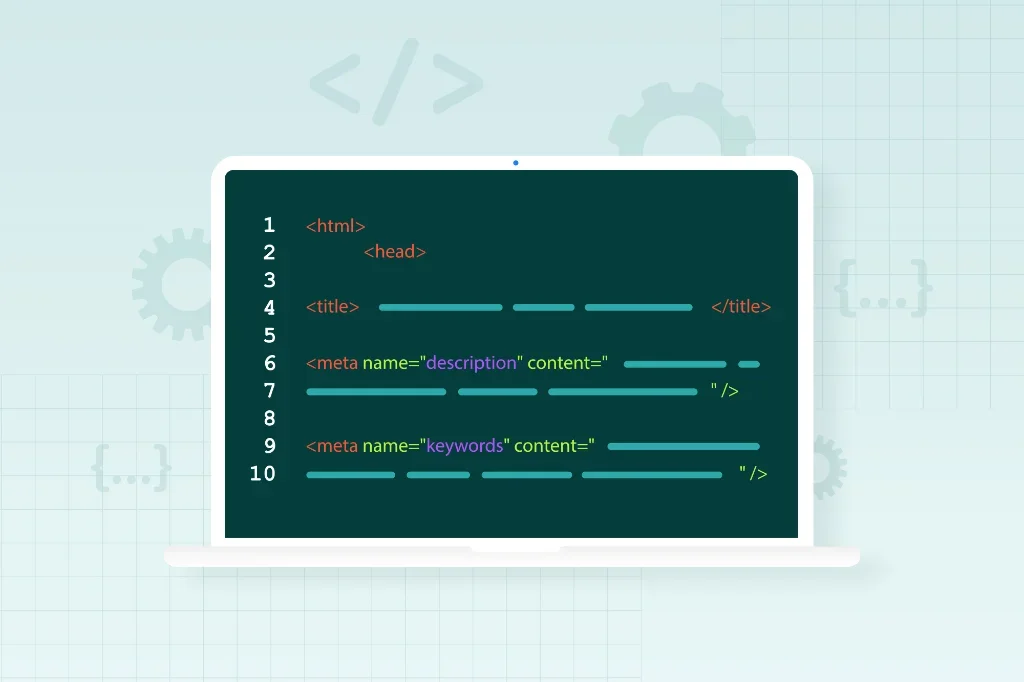
Your title tag is the clickable headline that appears in search engine results pages (SERPs). It’s also what shows up in browser tabs when someone visits your page. Think of it as your first impression. It’s the element that tells both search engines and users what your page is about.
Your meta description is the summary that appears below your title in search results. While it doesn’t directly impact search engine rankings, a well-written meta description can significantly influence click-through rates. It gives potential visitors a compelling reason to choose your page over the nine other results on the screen.
Together, these two elements form the snippet that represents your page in search results. Get them right, and you can boost your click-through rates by 10% to 30%, depending on how well they match your searchers’ intent.
Why Title Tags and Meta Descriptions Still Matter in 2026
Some SEO tactics fade in importance over time. Yet, title tags and meta descriptions remain critical because they serve multiple purposes:
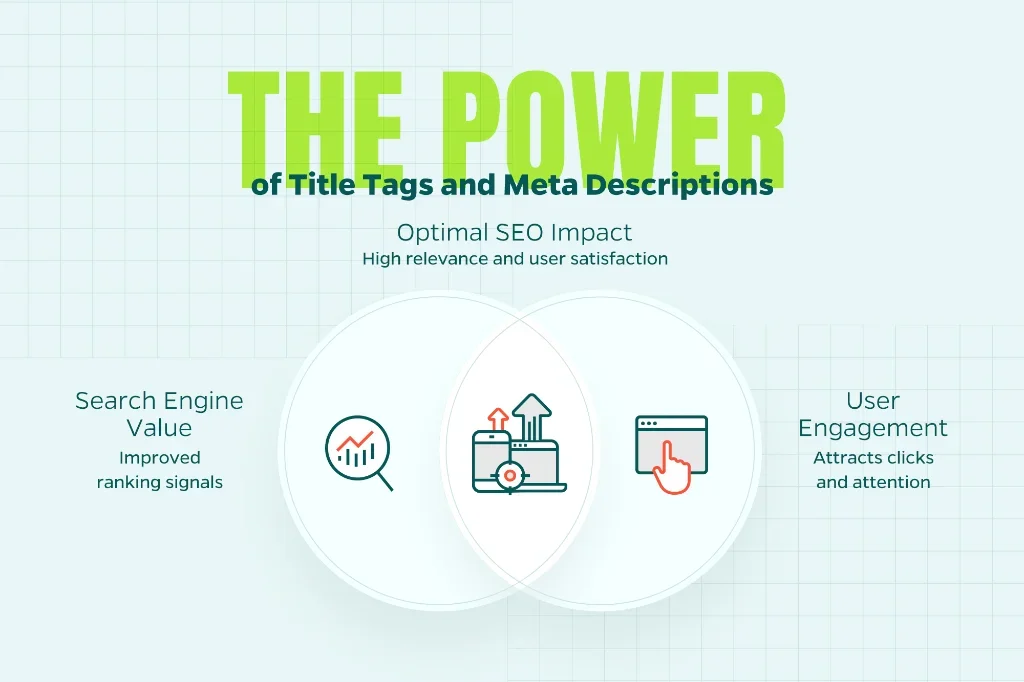
For Search Engines: Title tags help search algorithms understand your page content and determine relevance for specific queries. They’re still a ranking factor, even if their influence has evolved over the years.
For Users: Your snippet is often the deciding factor when someone chooses which result to click. A clear, compelling title and description can be the difference between getting the click and watching your competitor get it instead.
For Click-Through Rates: Google uses click-through rate (CTR) to determine whether you’re a good result. Higher CTRs signal that your page satisfies user intent, which can positively influence your rankings over time.
The challenge in 2026 is that you’re not just competing with other traditional search results. You’re also competing with AI Overviews, featured snippets, and other SERP features that pull attention away from organic listings. That’s why optimization matters more than ever.
Title Tag Best Practices for 2026
Keep It Concise and Front-Loaded
Character limits for title tags aren’t just technical constraints, they’re strategic boundaries. Aim for 50-60 characters (or about 580 pixels) to ensure your title displays fully on both desktop and mobile devices.
Front-load your most important information and keywords at the beginning. If truncation happens, you want the critical message to survive. Instead of “Professional Digital Marketing Services | Brand Name – Get Started Today,” try “Digital Marketing Services | Brand Name.”
Use Your Target Keyword Strategically
Each page should focus on one primary keyword or a small group of related keywords. Include your target keyword naturally in the title, ideally near the beginning. This helps search engines understand your page’s topic while signaling relevance to users scanning the results.
But don’t force it. A keyword-stuffed title that reads awkwardly will hurt your click-through rates, even if it ranks well.
Make Every Title Unique
Duplicate titles confuse search engines and make your site look less professional in search results. Every page on your website deserves its own unique title that accurately reflects its specific content. This differentiation becomes even more important when you have multiple pages targeting similar topics.
Consider Standing Out with Shorter Titles
Here’s an interesting trend for 2026: when most titles in search results are between 45 and 55 characters, a shorter title that includes keywords and possibly a number can draw attention. While others fill the character limit, you might capture more attention with a punchy 30-40 character-title that gets straight to the point.
Write for Humans First, Search Engines Second
A title needs to do more than include keywords—it needs to make people want to click. Use action verbs, create curiosity, or promise value. Quality matters alongside technical optimization. Think about what would make you click when scanning search results.
Meta Description Best Practices for 2026
Stay Within the 140-160 Character Sweet Spot
Meta descriptions should stay within 140–160 characters. Desktop users might see your full description, but mobile users get less space. Write concisely, typically in 1-3 sentences. Pack value into every word.
Align With User Intent
Focus on intent-based, conversational phrases rather than rigid keyword optimization. Ask yourself: what is this searcher trying to accomplish? Are they looking for information, comparing options, or ready to buy? Your description should speak directly to that intent.
Include a Clear Call-to-Action
Don’t be shy about telling people what to do next. Phrases like “Learn more,” “Get started,” “Shop now,” or “Discover how” give users a gentle nudge and set expectations for what happens when they click.
Embrace That Google Might Rewrite It Anyway
Google now rewrites 60–70% of meta descriptions to better match specific search queries. This doesn’t mean you shouldn’t write them. It means you should focus on clarity and relevance. When your description accurately represents your page content and addresses user intent, Google is more likely to use it.
If Google does rewrite your description, it’s often pulling text directly from your page that it thinks better answers the searcher’s query. That’s another good reason to write clear, well-structured content throughout your pages.
Make Each Description Unique and Specific
Generic descriptions like “This page contains information about our services” help no one. Instead, provide specific, valuable information that gives users a reason to click. Include relevant details like pricing, features, benefits, or unique selling points when appropriate.
Punctuation in Title Tags and Meta Descriptions
Many marketers ask about appropriate punctuation for title tags and meta descriptions. Does punctuation matter? Are there any specific types of punctuation you should use or avoid? Below are some guidelines.
Title Tags
- Use pipes to separate ideas: Break up core keywords and your brand name with vertical bars ( | ). This creates clear divisions that both users and search engines can interpret quickly.
- Eliminate cluttered punctuation: Extra symbols like hyphens, asterisks, or decorative marks can make titles feel busy and harder to scan. As noted above, stick to pipes to break up different ideas.
Meta Descriptions
- Write in complete sentences: Use standard punctuation to form clear, readable sentences that users can digest immediately.
- End with a nudge: Conclude with a period or exclamation point, and consider adding a call to action such as “Learn more today!”
- Enhance readability: Use punctuation intentionally to break up ideas and make the description easy to skim.
- Avoid characters that break displays: Steer clear of quotation marks, ampersands, and other symbols that can cause truncation in search results.
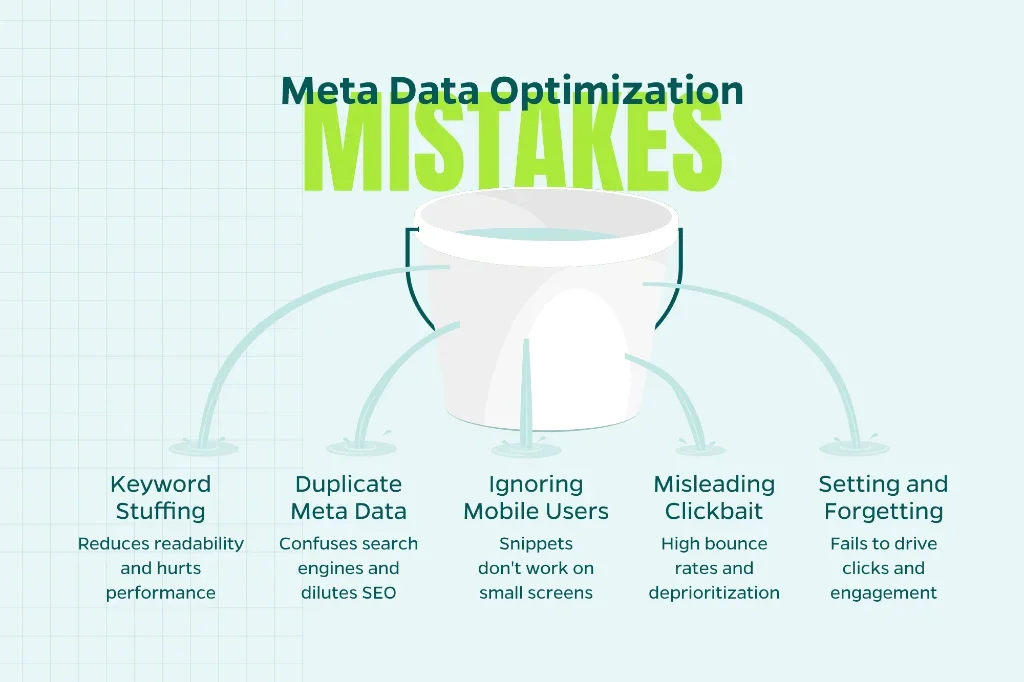
Common Mistakes to Avoid
Keyword Stuffing: Cramming too many keywords into your titles and descriptions makes them unreadable and can hurt your performance. Search engines are sophisticated enough to understand context and synonyms.
Duplicate Meta Data: Using the same title or description across multiple pages confuses search engines and dilutes your SEO efforts. This is especially common on e-commerce sites with similar products or service sites with location-based pages.
Ignoring Mobile Users: Your snippets need to work on small screens. Optimize for mobile users by keeping metadata concise and ensuring your value proposition is clear even when truncated.
Misleading Clickbait: Writing titles and descriptions that don’t accurately represent your page content might get you clicks. But it will also get you high bounce rates—and Google deprioritizes your content based on that signal.
Setting and Forgetting: Your meta data isn’t a “one and done” task. Monitor your performance, test different variations, and refine it based on what drives clicks and engagement.
Tools and Tactics for 2026
Google Search Console is your best friend for identifying optimization opportunities. Look for pages with high impressions but low click-through rates. These are prime candidates for meta data updates.
Preview Tools like Yoast SEO, SEMrush, or even Google’s own SERP simulator let you see how your snippets will appear before you publish. This helps you catch truncation issues and ensure your message comes through clearly.
A/B Testing: When possible, experiment with different title and description variations to see what resonates with your audience. Small tweaks in wording, tone, or structure can sometimes yield surprising improvements in CTR.
Quarterly Audits: Review your title tags and meta descriptions at least once per quarter, especially for high-traffic pages. Search trends change, your content evolves, and your meta data should keep pace.
The Bottom Line
Title tags and meta descriptions might seem like small details in the grand scheme of SEO, but they’re the handshake between your website and potential visitors. In 2026, success comes from balancing technical optimization with genuine human appeal.
Need help getting your meta data right? Straight North has been a leader in this area for decades. Reach out to our team if you want us to help improve the effectiveness of your digital marketing strategy and execution—including title tags and meta descriptions.