
If you run an HVAC company, plumbing business, roofing company, or pest control operation, you are competing in a fast-moving market where customers need help now and make decisions quickly. To win those opportunities, your digital marketing needs to do three things well: show up locally, build trust immediately, and make it easy for customers to act.
The upside is substantial. Many home services companies still underinvest in their online presence, leaving significant market share on the table. Businesses that take a more strategic approach can stand out, capture more qualified leads, and turn digital channels into a reliable source of growth. The tactics below outline where to focus and how to produce game-changing results for your business.
Where to Start
A Simple 90-Day Roadmap
For companies building their marketing from the ground up, sequence matters. In the first 30 days, focus on the fundamentals: complete your Google Business Profile, confirm your name, address, and phone number are consistent across major directories, and make sure your website has clear calls to action. In days 30 to 60, add lead generation channels such as Local Services Ads or Google Ads and put a review request process in place. In days 60 to 90, expand with service pages, location-focused content, and reporting so you can see which channels are producing qualified leads. This kind of phased approach keeps you from spreading budget too thin too early.
How to Think About Budget Allocation
Budget decisions should reflect how quickly you need leads and how strong your existing online presence is. If your budget is limited, start with the channels most likely to drive immediate action. That includes a strong Google Business Profile, basic local SEO, and a tightly targeted paid search campaign for your highest-intent services. As budget grows, invest more in SEO and content, which take longer to build but can lower your long-term cost per lead. The key is to judge channels by lead quality and booked work, not just traffic. An emergency plumbing keyword may cost more than a general awareness campaign, but it can produce better revenue because the searcher is ready to hire now.
Plan Around Seasonality
Home services demand is rarely flat throughout the year, so your marketing should not be either. HVAC companies often need to prepare for summer cooling and winter heating peaks, pest control businesses may see stronger demand in spring and summer, and roofing activity can rise with storms or severe weather. Planning ahead lets you increase budget before demand spikes, update ad copy with timely offers, and publish seasonal content before competitors do. Companies that wait until peak season arrives are often forced to pay more for the same clicks and may miss easy opportunities to capture demand early.
Set Up a Google Business Profile
For home services businesses, the Google Business Profile (GBP) is often the first thing a potential customer sees. When someone searches “plumber near me” or “HVAC repair in [city],” Google surfaces a local map pack before most organic results. If your profile is not complete, accurate, and active, you are handing leads to competitors.
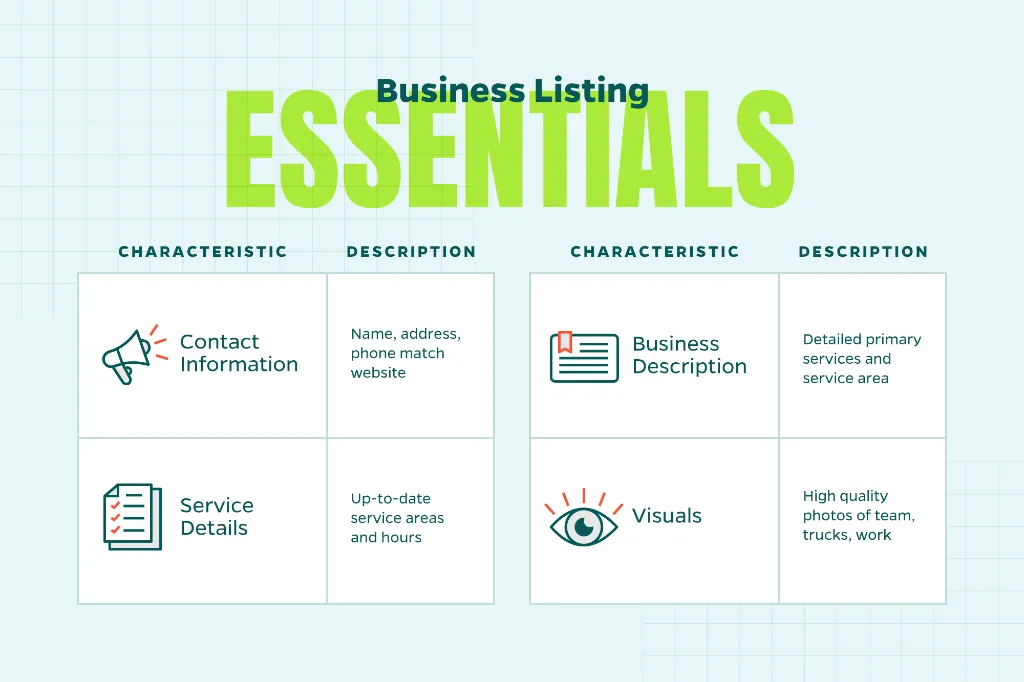
Optimizing your GBP does not require advanced technical skill, but it does require attention to detail. Make sure every field is filled in:
- Business name, address, and phone number that match your website exactly
- Up-to-date service areas and business hours, including holiday schedules
- A detailed business description that includes your primary services and service area
- High-quality photos of your team, trucks, equipment, and completed work
Beyond setup, consistency matters. Post updates, respond to questions, and add new photos regularly. Google rewards active profiles with better visibility, and customers notice the difference between a business that looks alive and one that has been neglected.
Build a Local SEO Foundation That Lasts
Search engine optimization for home services is fundamentally local. The goal is not to rank nationally for “roof repair” — it is to rank prominently for “roof repair in [your city]” and every relevant variation of that phrase across your service area.
A strong local SEO foundation covers several interconnected elements. Your website needs dedicated service pages for each major offering, with location-specific language worked in naturally. A pest control company, for example, should have separate pages for termite control, mosquito treatment, and rodent removal rather than lumping everything onto a single services page. Each of those pages should speak directly to the city or region you serve.
Citation consistency is another critical factor. Your name, address, and phone number (NAP) should be identical in all online directories. That includes your website, your GBP, Yelp, Angi, HomeAdvisor, and other industry directories. Inconsistent citations confuse search engines and can suppress your local rankings. Auditing your citations is often one of the fastest ways to improve local visibility.
Mobile search deserves particular attention in this industry. Most customers searching for urgent home services — a burst pipe, a broken furnace in January, a wasp nest in the backyard — are doing so on their phones. Your site needs to load fast, display properly on small screens, and make it effortless to call or request a quote in just a tap or two.
Use PPC to Capture High-Intent Leads Immediately
Organic search takes time to build. Pay-per-click advertising, particularly Google Ads and Local Services Ads, gives home services companies a way to appear at the top of search results immediately, in front of people who are ready to hire.
Google Local Services Ads (LSAs) are especially well-suited to this industry. LSAs appear above standard paid results and display your business name, rating, and a direct call button. They operate on a pay-per-lead model rather than pay-per-click. Google’s Google Guaranteed badge, which is earned by passing a background check and license verification process, adds a layer of credibility that resonates with cautious buyers.
For traditional Google Ads campaigns, keyword targeting should focus on high-intent terms. Broad terms like “HVAC” attract researchers; terms like “emergency AC repair [city]” attract buyers. Investing in the right keywords, even if they cost more per click, tends to produce a much better return.
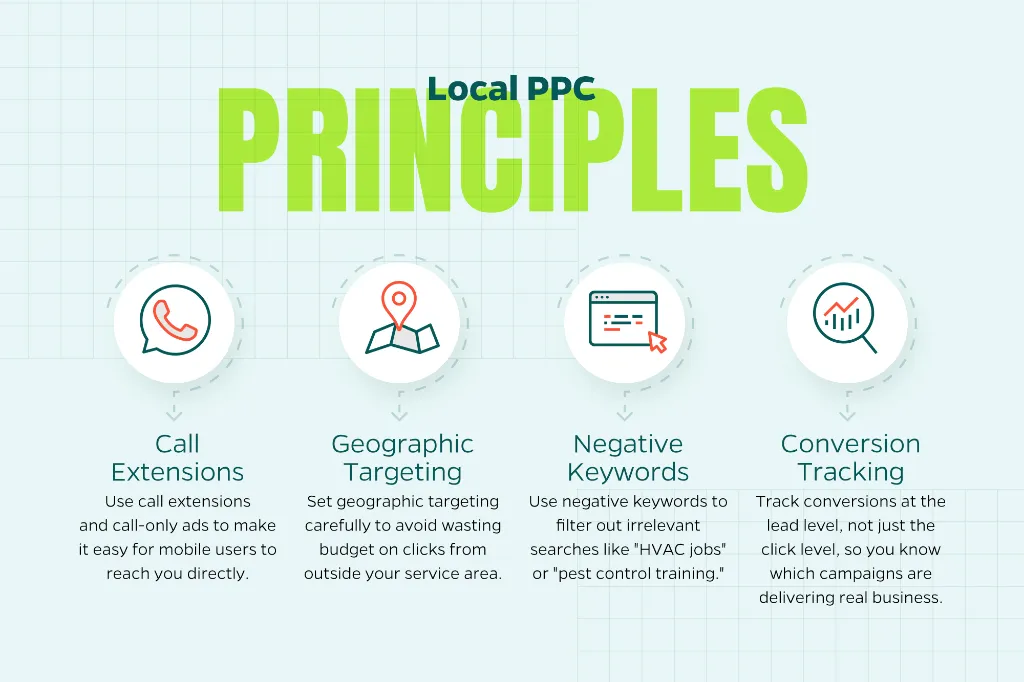
Here are a few PPC principles worth keeping front of mind:
- Use call extensions and call-only ads to make it easy for mobile users to reach you directly
- Set geographic targeting carefully to avoid wasting budget on clicks from outside your service area
- Use negative keywords to filter out irrelevant searches like “HVAC jobs” or “pest control training”
- Track conversions at the lead level, not just the click level, so you know which campaigns are delivering real business
Make Reviews a Core Part of Your Strategy
In home services, trust is everything. A customer is letting a stranger into their home, and online reviews are one of the primary ways they decide whether that stranger is worth hiring. The businesses with the most positive reviews tend to win a disproportionate share of calls.
Generating reviews consistently should be a built-in part of your service process. The most effective approach is simple: ask satisfied customers soon after the job is complete, when the positive experience is fresh. A follow-up text or email with a direct link to your Google review page removes friction and dramatically increases the likelihood that someone will leave a review.
Responding to reviews matters just as much as earning them. When you reply to a positive review, you reinforce a good experience and show potential customers that you are engaged. When you respond to a negative review professionally and constructively, you demonstrate that you take service seriously. This can also reassure a skeptical prospect more than a dozen glowing reviews.
Do not limit your focus to Google alone. Yelp, Angi, HomeAdvisor, and Facebook all play a role in how customers evaluate home services businesses. Building a presence across platforms gives you more visibility and reduces the risk of one bad review having an outsized impact on your reputation.
Create Content That Earns Trust
A lot of home services businesses skip content marketing because it does not feel urgent. There are leads to chase and jobs to schedule. But content works on your behalf around the clock, attracting people who are researching before they are ready to call.
Think about the questions your customers ask. What are the signs that a roof needs replacing? How often should pest control treatments be scheduled? What causes a furnace to short cycle? Each of those questions is a potential blog post or FAQ entry that can drive organic traffic and position your company as the knowledgeable, trustworthy option in your market.
This kind of educational content also supports your SEO strategy. When your website consistently publishes helpful, relevant material, search engines recognize it as a credible resource and reward it with better rankings over time. The compounding effect is real: a well-maintained blog from two years ago can still be generating qualified leads today.
Video is another format worth considering. A quick walkthrough showing what a typical pest inspection looks like, or a short explanation of how a tankless water heater works, can be enormously effective on both your website and social platforms. It humanizes your business and answers objections before a customer even has a chance to voice them.
Leverage Social Media to Stay Top of Mind
Social media is not where most home services leads come from directly, but it plays an important supporting role. A Facebook, LinkedIn, or Instagram presence that shows your work, real team members, and authentic customer stories builds familiarity and trust over time. When someone sees your company regularly in their feed, you become the name they think of when something breaks.
Before-and-after photos perform particularly well in this industry. A roofing company showing a damaged and replaced roof, or a pest control technician explaining a tricky infestation they resolved, communicates competence in a way that no amount of marketing copy can replicate. Authenticity is an asset here. Customers respond to content that feels real, not polished to the point of being impersonal.
Paid social advertising can also serve as a cost-effective way to build local awareness and retarget people who have visited your website. Facebook and Instagram ads with seasonal offers can drive incremental business at a reasonable cost when targeted well. This could include an HVAC tune-up special heading into summer or a gutter cleaning promotion in the fall, for example.
Do Not Neglect Your Website’s Conversion Performance
All the traffic in the world means nothing if visitors land on your site and leave without contacting you. Conversion rate optimization — the practice of improving how well your website turns visitors into leads — is one of the highest-leverage investments a home services company can make.
Start with the basics. Your phone number should be prominently displayed at the top of every page, and it should be clickable on mobile. Request a quote forms should be short. Ask for a name, phone number, and a brief description of the issue. Long forms with many required fields create friction and suppress submissions.
Trust signals matter here, too. Display your licenses, certifications, and insurance information visibly. Feature your Google review count and star rating. If you have earned any awards or industry recognitions, put them on the page. These elements reduce uncertainty and give hesitant visitors a reason to move forward.
Page speed is also non-negotiable. If your site takes more than a few seconds to load, a significant portion of visitors will leave before they ever see your services. Regular performance audits using tools like Google PageSpeed Insights can surface issues that are dragging down your load times.
Track the Right Metrics and Adjust Accordingly
Digital marketing only improves when you know what is working and what is not. For home services businesses, the most meaningful metrics tend to be straightforward: phone calls, form submissions, cost per lead, and revenue attributed to specific campaigns. Vanity metrics like page views and social media followers tell you very little about whether your marketing is growing the business.
Call tracking is particularly valuable in this industry, where a large share of conversions happen over the phone. Assigning unique tracking numbers to different campaigns lets you see exactly which ads, which pages, and which channels are driving calls. That data is essential for making smart budget decisions.
Google Analytics, Google Search Console, and your advertising platforms all provide data that, when reviewed regularly, can guide better decisions. The goal is to track the right things and act on what you learn.
Conclusion
Home services marketing works best when the pieces reinforce each other. Local SEO drives organic discovery. PPC captures urgent demand. Reviews build trust. Content educates and nurtures. Your website converts. And your tracking tells you where to double down.
Not every business needs to do everything at once. A smaller operation might start with a solid GBP, a fast-loading website, and a basic Google Ads campaign, then layer in more channels as revenue grows. The important thing is to be intentional and consistent, because sporadic marketing rarely builds the kind of momentum that sustains a business long-term.
The home services market rewards businesses that are visible, credible, and easy to reach. Digital marketing, done right, delivers all three.
Need Help?
Ready to sharpen your digital marketing strategy? Contact Straight North to learn how we help home services companies generate more leads online.