
If you’ve ever typed a search into Google and noticed the first few links marked as “Sponsored,” you’ve already seen Google Ads in action. But those sponsored results are far more than just promotional spots—they’re the foundation of one of the most powerful advertising platforms in digital marketing.
For businesses of all shapes and sizes, Google Ads offers a strategic opportunity to appear exactly when potential customers are actively searching for what you sell. It’s fast and flexible. More than that, it’s an incredibly effective way to drive qualified traffic, generate high-quality leads, and accelerate revenue growth.
What is Google Ads?
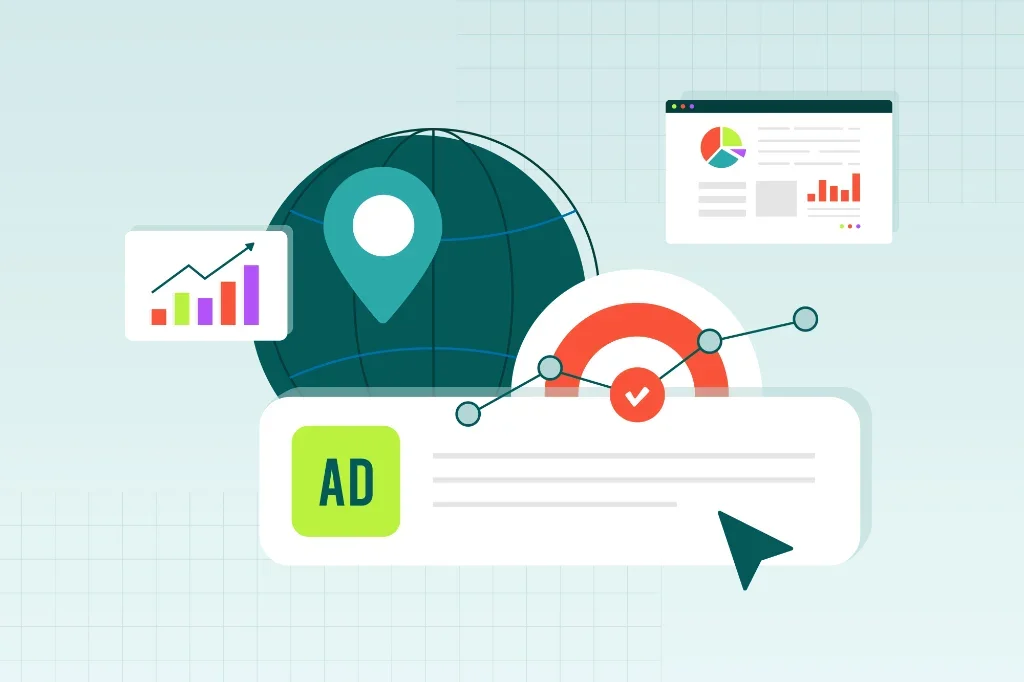
At its core, Google Ads is a pay-per-click (PPC) advertising system. Here’s how it works. Advertisers bid on specific keywords related to their products or services, and when someone searches for those terms, the ad appears at the top or bottom of Google’s search results page (wherever it can be seen prominently). The ads can also show up in other strategic placements across Google’s vast network.
Advertisers only pay when someone clicks the ad. This performance-based model makes PPC remarkably efficient, ensuring your marketing dollars go toward meaningful engagement rather than passive impressions. In other words, you’re investing in action, not just visibility.
The Google Ads platform includes several campaign types designed to meet different business objectives:
- Search campaigns (text ads that appear on search results pages)
- Display campaigns (banner or visual ads on Google partner websites across the web)
- Video campaigns (ads that show on YouTube and across Google’s video network)
- Shopping campaigns (product-based ads ideal for e-commerce businesses)
- Performance Max campaigns (AI-powered campaigns that optimize across multiple channels automatically)
Each type offers unique advantages depending on your business goals—whether you want to drive website traffic, generate phone calls, increase brand awareness, or boost product sales.
Why PPC is a Marketing Essential
Before we dive further into the advantage of using Google Ads as platform, let’s take a step back and explore the benefits of PPC in general.
Organic SEO is crucial for sustainable long-term growth. That said, a good SEO strategy takes time (often months) to see meaningful ROI. PPC, on the other hand, allows you to reach customers right now. That immediate visibility makes PPC an invaluable tool, especially for new campaigns, seasonal promotions, product launches, or when you’re competing in a crowded market where organic rankings are hard to capture.
Some of the biggest advantages include:
- Instant exposure: Skip the months-long wait for organic rankings and start appearing in front of your target audience today
- Precision targeting: Define who sees your ads by keyword, geography, device, language, time of day, and even detailed audience behaviors and interests
- Budget flexibility: You control exactly how much you spend daily, with no minimum investment or long-term commitment required
- Performance transparency: Get real-time data on clicks, conversions, cost-per-acquisition, and other key metrics to measure ROI clearly and make informed decisions
- Scalability: Start small, analyze what’s working, and gradually expand your investment once you identify winning strategies
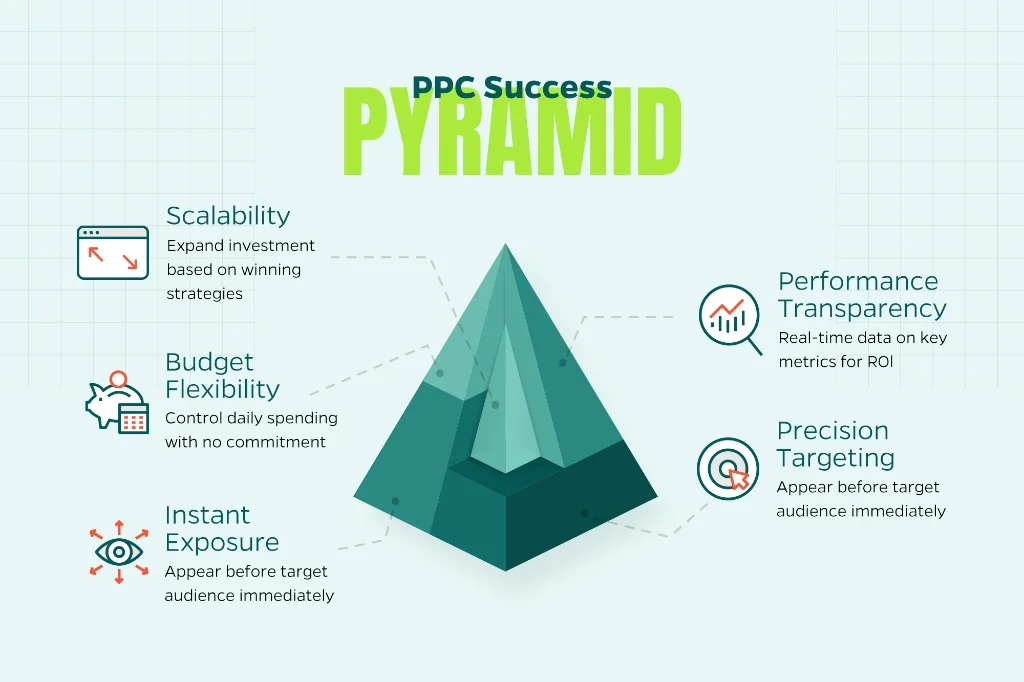
Unlike traditional advertising, PPC isn’t guesswork. PPC is a performance marketing strategy grounded in data and measurable outcomes. With continuous tracking and optimization, campaigns evolve and improve, delivering better results and lower costs over time.
The Google Ads Advantage
What sets Google Ads apart from other advertising platforms is that it is the world’s dominant search engine—processing over 8.5 billion searches per day. Below are some of its other differentiating advantages.
Unmatched Reach and Market Dominance: Google holds roughly 90% of the global search engine market share. This means when you advertise on Google, you’re reaching nearly every person who searches online. No other search platform comes close to this level of visibility. Your potential customers are already there, and Google Ads ensures they find you first.
Superior Intent Data: Google’s search data reveals exactly what people want, when they want it, and how urgently they need it. A search for “emergency plumber near me” at 11 p.m. on a Saturday shows dramatically different intent than “how to fix a leaky faucet.” Google Ads allows you to bid more aggressively on high-intent searches and adjust your messaging accordingly. This is a level of intent specificity that awareness-based platforms simply cannot match.
The Power of Google’s Ecosystem: Google Ads doesn’t just show ads on search results. It extends across YouTube (the world’s second-largest search engine), Gmail, Google Maps, and millions of partner websites through the Google Display Network. This means a single campaign can follow a customer’s journey—from initial search, to watching a YouTube review, to seeing a reminder ad while reading the news. This integrated ecosystem creates multiple touchpoints that reinforce your message across the platforms people use most.
Advanced Machine Learning and Automation: Google invests billions in AI development, and those innovations power Google Ads’ Smart Bidding algorithms. These systems analyze millions of signals in real-time. This includes device type, location, time of day, browsing history, and countless other factors. Then, Google automatically adjust bids to maximize conversions. The result is better performance with less manual work, giving you access to optimization technology that would be impossible to build in-house.
Local Search Dominance: For businesses with physical locations or service areas, Google Ads integrates seamlessly with Google Maps and local search results. When someone searches “dentist near me,” your ad can appear with your location, hours, phone number, and even directions—all within the search results. This local integration drives foot traffic and phone calls in ways that other platforms simply cannot replicate.
Remarketing Across the Web: Because Google tracks user behavior across its vast network, you can remarket to people who visited your site but didn’t convert. Users will see targeted ads as they browse news sites, watch YouTube videos, or check Gmail. This persistent, multi-channel remarketing capability keeps your brand visible throughout the decision-making process, significantly improving conversion rates for considered purchases.
Google Ads vs. Other Advertising Platforms
Of course, while Google is the search giant, it is not the only game in town. With a wide range of digital advertising platforms to choose from—Google Ads, Facebook Ads, LinkedIn Ads, Microsoft Advertising, and more—it’s important to understand what each one brings to the table. Knowing their unique strengths can help you make more informed, strategic choices about where to focus your marketing spend.
Google Ads excels at capturing high-intent users who are actively searching for solutions. When someone types “best CRM software for small business” into Google, they’re signaling clear purchase intent. This makes Google Ads particularly powerful for businesses offering products or services that people actively search for, including legal services, home repairs, B2B software, or e-commerce products.
Facebook and Instagram Ads work differently. They’re interruption-based platforms that excel at discovery and awareness. Users aren’t actively searching for products. Instead, you’re introducing your brand to them based on demographics, interests, and behaviors. This makes social platforms ideal for visually appealing products, impulse purchases, brand building, or reaching audiences who may not yet know they need your solution.
LinkedIn Ads shines in the B2B space, offering unmatched professional targeting by job title, company size, industry, and seniority level. While typically more expensive per click than Google Ads, LinkedIn delivers highly qualified business decision-makers, making it valuable for enterprise software, professional services, and high-ticket B2B offerings.
Microsoft Advertising uses the same search-based model as Google Ads but reaches a smaller, often older and more affluent audience through Bing, Yahoo!, and other partner sites. Though Google is the behemoth, Bing still has a sizeable number of users, accounting for roughly 20% of desktop computer search traffic in the United States. Consequently, many businesses use Bing as their search engine. While Bing has a smaller market share than Google, it features less competition. This means you can achieve lower costs-per-click, and it can effectively complement a Google Ads strategy to capture additional market share.
The reality is that most successful digital marketing strategies don’t rely on just one platform. They use a strategic mix. Google Ads might drive your bottom-funnel conversions while Facebook builds awareness and LinkedIn nurtures B2B relationships. The key is understanding where your audience spends time and what mindset they’re in on each platform.
Keys to a Successful Google Ads Campaign
To maximize your PPC investment and avoid wasting budget, it’s critical to understand the main components that drive ad performance:
- Keyword research: Identify relevant search terms with the right balance of search volume, competition level, and commercial intent that align with your business goals
- Ad copywriting: Create concise, compelling ads that capture attention quickly, communicate clear value, and include strong calls-to-action
- Landing pages: Ensure clicks lead to focused, high-quality pages that match the ad’s promise and are specifically designed to encourage conversions
- Quality Score: Google evaluates your ads’ relevance, expected click-through rate, and landing page experience; higher Quality Scores lower your cost-per-click and improve ad positioning
- Conversion tracking: Accurately monitor valuable actions like form submissions, purchases, phone calls, or app downloads to measure true success and ROI
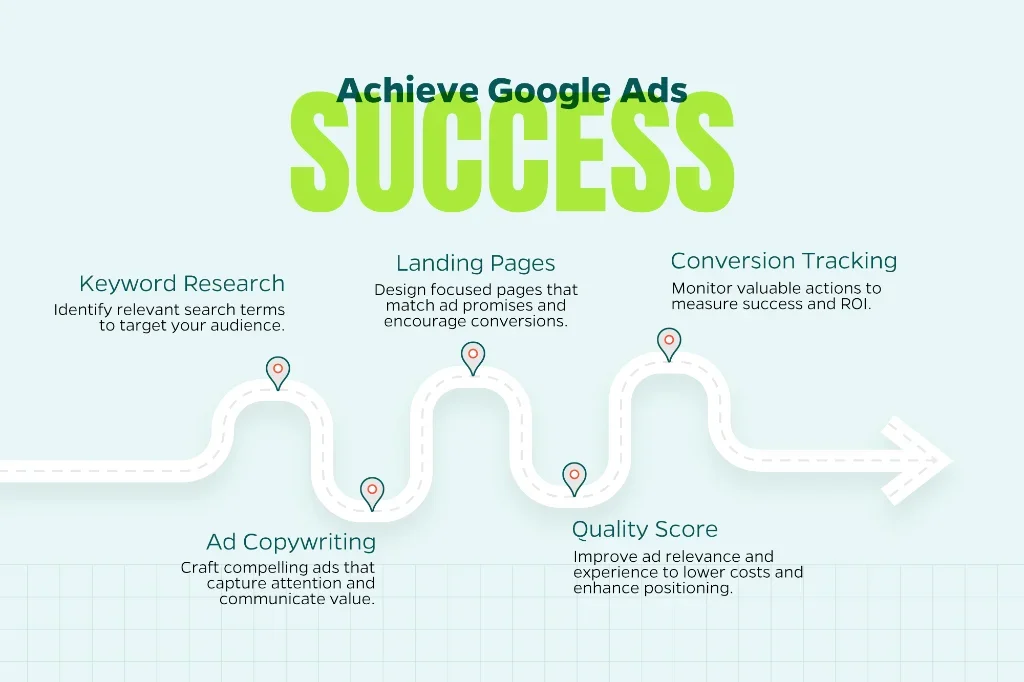
Without optimizing these interconnected elements, campaigns risk wasting budget on unqualified traffic and missing out on high-value opportunities. A data-driven, holistic approach ensures every click aligns with your business objectives and moves prospects closer to conversion.
How to Get Started with Google Ads
While Google Ads offers tremendous power and flexibility, getting started doesn’t have to be overwhelming. Here’s a streamlined approach to launching your first campaign effectively:
- Set Up Your Google Ads Account: Visit ads.google.com and create an account using your Google (business) account. You’ll need to provide basic business information and set up billing details. Google often offers promotional credits for new advertisers, so watch for those opportunities to stretch your initial budget.
- Define Clear Goals: Before building anything, identify what success looks like. Are you driving online sales, generating leads, increasing phone calls, or building brand awareness? Your goal determines your campaign type, bidding strategy, and how you’ll measure results. Being specific such as “generate 20 qualified leads per month under $50 per lead” is far more actionable than “get more customers.”
- Conduct Keyword Research: Use Google’s Keyword Planner tool (free within your account) to identify relevant search terms your customers use. Start with 10-20 highly relevant keywords rather than hundreds of loosely related terms. Focus on keywords that indicate buying intent rather than just information gathering—”buy running shoes online” converts better than “what are running shoes.”
- Create Your First Campaign: Choose Search campaigns for beginners. They’re the most straightforward and deliver the clearest results. Set a conservative daily budget you’re comfortable with (even $20-30/day can generate valuable data), select your geographic targeting, and write 3-5 ads that clearly communicate your value proposition with a strong call-to-action.
- Build a Focused Landing Page: Don’t send clicks to your homepage. Create or identify a specific page that matches your ad’s promise and makes it easy for visitors to take act—whether that’s filling out a form, making a purchase, or calling your business. The more aligned your landing page is with your ad, the better your results will be.
- Set Up Conversion Tracking: This is critical and often overlooked by beginners. Install Google’s conversion tracking code on your website to measure actions like form submissions, purchases, or phone calls. Without tracking, you’re flying blind and can’t determine what’s working.
- Monitor and Optimize: Check your campaign after the first few days, then weekly. Look at which keywords are driving clicks and conversions, pause underperforming ads, and gradually refine your targeting. Google Ads rewards continuous improvement. Campaigns get better and more cost-effective over time with consistent attention.
Consider Professional Management: While it’s possible to run Google Ads yourself, the platform’s complexity means there’s a significant learning curve. Many businesses find that partnering with experienced PPC specialists from the start saves money in the long run by avoiding costly beginner mistakes, implementing advanced strategies, and achieving better results faster. If you are interested, Straight North can help.
Final Thoughts
Google Ads is one of the most effective tools in the digital marketing toolkit for businesses that want measurable, scalable, and immediate results. It offers precise targeting capabilities, deep performance insights, and the flexibility to fit virtually any budget or business goal.
When managed strategically—especially with expert guidance from experienced professionals—Google Ads transforms from a simple marketing channel into a powerful growth engine that consistently delivers relevant leads and qualified customers to your business.
If you’re ready to increase your visibility, attract qualified traffic, and build a stronger online presence that drives real revenue, partnering with an experienced PPC team like Straight North is the best place to start.