
When done well, a LinkedIn marketing employee advocacy program turns your team into a network of credible voices who extend your brand’s message further than paid ads or company posts ever could on their own. And unlike most marketing initiatives, it costs almost nothing to start beyond a little planning and encouragement. This article will outline how to best create a LinkedIn-based employee advocacy program and explore what’s involved.
What Employee Advocacy Means
Employee advocacy is the practice of encouraging and equipping staff to share company content, achievements, and industry insights with their own professional networks. On LinkedIn, this might look like a sales rep sharing a new case study, a project manager commenting on an industry trend, or a new hire posting about their first week on the job.
None of this works if it feels forced. Programs that succeed give employees real content worth sharing and the freedom to add their own voice to it, rather than handing out scripted posts and expecting people to copy and paste.
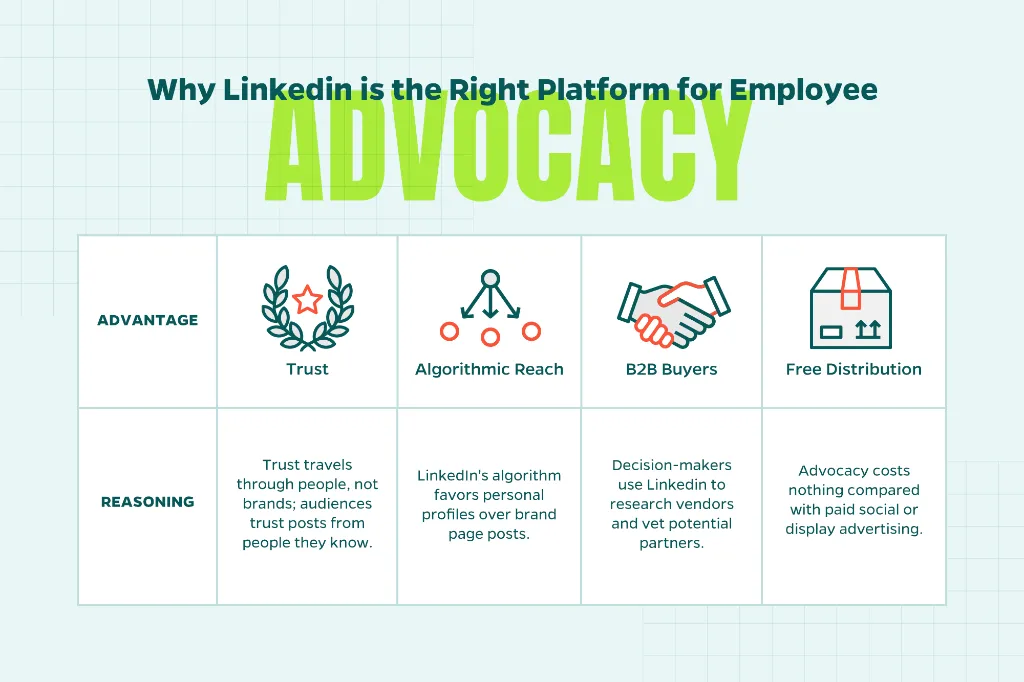
Why LinkedIn is the Right Platform for Employee Advocacy
LinkedIn was built for professional networking, which makes it the natural home for employee advocacy. Here are a few reasons this platform outperforms others for the purpose:
- Trust travels through people, not brands. Audiences are far more likely to engage with and trust a post from someone they know than one from a company account.
- Algorithmic reach favors personal profiles. LinkedIn’s algorithm tends to show personal posts to more people than brand page posts, especially when there’s genuine engagement behind them.
- B2B buyers are already there. Decision-makers use LinkedIn to research vendors, follow industry news, and vet potential partners. So, a well-timed employee post can land directly in front of a prospect doing that kind of research.
- It’s free distribution. Compared with paid social or display advertising, advocacy costs nothing beyond the time it takes to build and support the program.
Laying the Groundwork
Before asking anyone to post, a company needs a plan. Skipping this step is the most common reason advocacy programs fizzle out after a few weeks.
Get leadership involved early. When executives model the behavior by sharing posts themselves, employees are far more likely to follow. A program that only asks entry-level staff to participate while leadership stays silent sends the wrong signal about how much the company values it.
Set goals that go beyond “get more likes.” Some organizations want to build brand awareness, others want to support recruiting, and others are chasing leads for sales. The goal shapes what content gets prioritized and how success gets measured, so define it before launch.
Choose participants who want to be there. Advocacy shouldn’t be mandatory. Look for employees who are already active on LinkedIn or who show interest in representing the company. Start with that group rather than rolling the program out to everyone at once. A smaller group of truly engaged participants will produce better results than a company-wide mandate that nobody wants to follow through on.
Making It Easy to Participate
The biggest barrier to advocacy isn’t willingness. It’s friction. Employees are busy, and if sharing content requires digging through folders or guessing what’s appropriate, most people will quietly opt out.
Here are a few ways to remove that friction:
- Build a simple content library. Curate blog posts, case studies, company news, and industry articles in one shared, easy-to-find location that is refreshed regularly so there’s always something new to share.
- Offer suggested captions, not mandatory scripts. A starting point saves employees time while still letting them personalize the message in their own voice.
- Use an advocacy platform if the team is large enough. Tools built for this purpose can queue up suggested posts, track engagement, and make one-click sharing possible, which matters once a program grows past a handful of participants.
- Keep guidelines short. A one-page document covering tone, confidentiality, and what not to share is usually enough. Long policy manuals tend to go unread.
Training and Guardrails
Most employees have never been coached on how to build a professional presence, so a short training session goes a long way. Cover the basics: how to write a post that invites conversation instead of reading like an ad, how to use hashtags without overdoing it, and how to respond to comments in a way that reflects well on the company.
Guardrails matter too, particularly around confidential information, competitor mentions, and anything that could be read as an official company statement when it isn’t. Clear boundaries protect both the employee and the business, and they give people the confidence to post without second-guessing every word. A short refresher every few months keeps these guidelines top of mind, especially as new hires join the program and social platforms continue to evolve.
Recognizing and Sustaining Participation
Programs tend to lose steam a few months after launch, usually because there’s no ongoing reason to keep participating. Recognition doesn’t need to be elaborate:
- Shout out top contributors in a team meeting or internal newsletter.
- Track and share program-wide results, like combined reach or engagement, so participants can see the impact of their effort.
- Offer small incentives, such as gift cards or extra time off, tied to consistent participation rather than one-off contests.
The goal is to make advocacy feel like a valued part of someone’s professional development, not an unpaid marketing assignment tacked onto their actual job.
Measuring What Matters
Track metrics that connect to the goals set at the start: impressions, engagement rate, website traffic from LinkedIn, or leads generated from employee-shared posts, depending on what the program is meant to achieve. Review the numbers monthly, share the wins with the team, and adjust the content mix based on what resonates most with the audience. If a certain type of post, like customer success stories or behind-the-scenes company updates, consistently outperforms the rest you should lean into more of it.
An employee advocacy program isn’t a one-time campaign. It’s a habit a company builds over time, and it rewards the organizations willing to support it with the right content, training, and encouragement.
Need Help?
Contact Straight North to learn how we can help you build a LinkedIn advocacy strategy that fits your business.