

Key Takeaways
- AEO targets direct-answer features such as snippets, People Also Ask results and voice responses.
- GEO targets mentions and citations within AI-generated answers.
- AEO and GEO overlap, but they are not the same strategy.
- Most businesses need SEO, AEO and GEO working together.
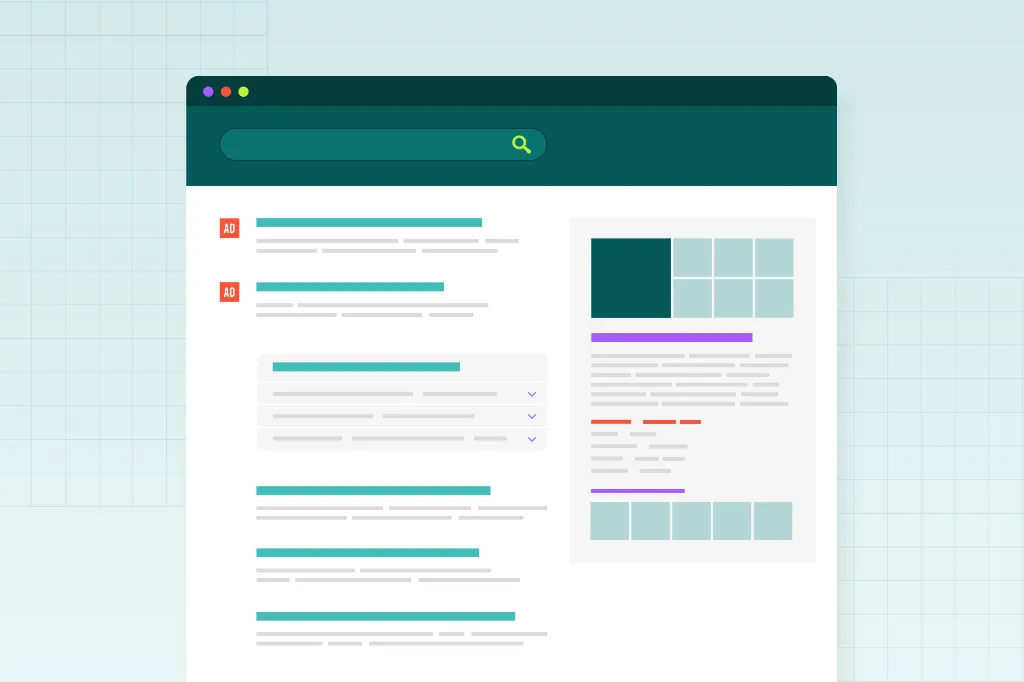
Answer engine optimization (AEO) helps content win direct answers in featured snippets, People Also Ask results, and voice search. Generative engine optimization (GEO) helps a brand’s content and expertise appear or earn citations in AI-generated responses.
So, are AEO and GEO the same thing? No. Although the strategies share many tactics, they target different search experiences. AEO focuses on concise answers delivered through traditional search features, while GEO focuses on visibility within responses generated by tools such as Google AI Overviews and ChatGPT. Neither replaces the other, and both work best when layered onto a strong SEO foundation.
Both are responses to a search landscape that no longer revolves around a page of ten blue links. They aim at different targets, so you need to understand that difference if you want your content strategy to keep pace with how people are finding information online today.
What is GEO (Generative Engine Optimization)?
GEO stands for Generative Engine Optimization. It refers to the practice of shaping content so that it performs well inside AI-generated answers, the kind you get from tools like ChatGPT, Google’s AI Overviews, Perplexity, and Copilot. When someone asks one of these tools a question, the response they receive is synthesized from multiple sources and delivered as a single, conversational answer. Instead of focusing only on traditional rankings, GEO optimization work helps establish a brand as a reliable source that AI engines can mention, summarize or cite.
GEO is about earning a spot inside that synthesis. GEO success can take several forms, including more brand mentions and citations in AI answers and increased referral traffic from AI platforms. It’s less about ranking number one on a results page and more about becoming one of the sources an AI model trusts enough to pull from when it builds its response. That shift changes the rules considerably. A page can rank well in traditional search yet be invisible in an AI-generated summary, or vice versa.
For example, someone might ask, “Should we repair or replace our industrial HVAC unit?” An AI engine may synthesize its answer using guidance from a manufacturer, an HVAC contractor, an industry association, and an energy-efficiency resource. To become one of those sources, a company needs content that clearly explains the factors behind the decision, such as the unit’s age, repair history, energy consumption, and replacement costs, while demonstrating credible, firsthand expertise.
Content that tends to perform well for GEO usually shares a few traits:
- Clear, well-structured writing that’s easy for a model to parse and summarize
- Original data, statistics, or insights that give an AI engine a reason to cite the source
- Strong topical authority built through depth of coverage on a subject, not just a single page
- Consistent, verifiable information that matches what’s published elsewhere about the brand
AI engines can retrieve and evaluate specific passages rather than treating every page as a single unit, making clear, self-contained sections especially important. Learn more about these mechanics in “The Rise and Implications of Context in AI and Traditional Search”.
For a more detailed look at the strategy and its components, read our complete guide to generative engine optimization.
What is AEO (Answer Engine Optimization)?
AEO stands for Answer Engine Optimization. It’s the practice of formatting content so it can be lifted directly and used as a concise answer to a specific question. Think featured snippets, the “People Also Ask” boxes, voice assistant replies, and the short, direct answers that appear above traditional search results.
Where GEO is focused on being part of a broader, AI-generated response, AEO is focused on being the answer. It’s a narrower, more targeted strategy built around identifying the exact questions your audience is asking and structuring content so a search engine can extract a clean, self-contained answer without much interpretation required.
For example, a page targeting the question “How long does an SEO campaign take to show results?” might open with this answer:
Most SEO campaigns begin showing measurable progress within three to six months, although the timeline depends on the website’s condition, competition and starting authority.
That short passage directly answers the question and can stand on its own, making it suitable for a featured snippet. The page can then provide more detail about the factors that affect the timeline.
Here are a few hallmarks of AEO-friendly content:
- Questions posed as headers, mirroring the exact phrasing people use when they search
- Direct answers delivered in the first sentence or two, with supporting detail following after
- Structured data markup, such as FAQ or HowTo schema, that helps engines identify answer-ready content
- Concise formatting, including short paragraphs, numbered steps, and definition-style phrasing
Is AEO the same as SEO? No. AEO builds on the technical foundation, authority and relevance established through SEO; it does not replace it. SEO helps a page become discoverable, while AEO makes its information easier to extract and present as a direct answer.
Where GEO and AEO Overlap
Here’s where things get a little tangled: a lot of the groundwork for GEO and AEO looks similar. Both strategies reward clarity over cleverness. Both depend on structured, well-organized content and a website that covers its subject with genuine depth.
Both also rely on strong E-E-A-T signals. Firsthand experience, relevant expertise, credible sourcing and a trustworthy brand help search and generative engines determine whether content is reliable enough to surface. Content built using AEO principles can therefore support GEO because answer engines and generative engines often draw from the same authoritative pages.
Schema markup can help both strategies, although it does not guarantee visibility in either. Structured data helps search engines identify information that may be suitable for direct-answer features while making a page’s meaning and relationships easier for generative engines to interpret. Learn more in our quick guide to structured data and schema markup.
The overlap has led some practitioners to argue that AEO and GEO are different names for the same discipline. Straight North takes a more practical view: They share a foundation, but their targets are different enough to justify the distinction. AEO aims to win a direct answer, while GEO aims to earn a mention or citation within a synthesized response.
Treating the two as identical can leave gaps in a content strategy. AEO does not necessarily get a brand cited by name inside an AI-generated answer, and GEO does not guarantee a featured snippet. Each requires focused optimization, even when the underlying content supports both.
AEO vs. GEO: The Key Differences
AEO and GEO share a foundation, but they optimize content for different outcomes. This side-by-side comparison shows where their goals, tactics, and measurements diverge.
Comparison | AEO | GEO |
Goal | Become the direct answer to a specific question | Become a mentioned, referenced or cited source within a broader AI-generated response |
Primary surfaces | Featured snippets, People Also Ask results, answer boxes and voice responses | AI Overviews, AI search results and chatbot responses |
Content format that wins | Short, self-contained answers supported by additional context | Comprehensive, well-sourced content containing distinct insights an AI engine can synthesize |
Key tactics | Question-based headers, answer-first writing, concise formatting and applicable schema markup | Topical depth, original data, expert contributions, consistent brand information and authoritative third-party mentions |
Platforms and engines | Google, Bing and voice assistants such as Siri and Alexa | Google AI Overviews and AI platforms such as ChatGPT, Perplexity, Gemini and Copilot |
How success is measured | Featured snippet ownership, People Also Ask visibility and click-through rates in Google Search Console | AI share of voice, brand mentions, citations and referral traffic from AI platforms; measurement is newer and less standardized |
Time to impact | May produce results sooner when an established page already ranks and needs a clearer, more extractable answer | Often requires a longer-term effort to build topical authority, original resources and the external signals that support citations |
Best first move | Identify frequently searched questions and place a concise answer near the top of each relevant section | Determine how the brand appears in AI responses today, then strengthen the content and authority signals behind priority topics |
The main advantage of AEO is that its target is focused, and its performance is generally easier to monitor. Its limitation is that winning a direct answer does not necessarily establish the brand as a source across broader AI-generated responses.
GEO can expand visibility across conversational and generative search experiences, including queries that do not produce a traditional click. Its disadvantage is that results are less predictable and measurement remains younger and messier. Our blog on measuring AI visibility provides a more complete framework of what can and can’t be tracked.
That distinction creates an important blind spot: A page can rank well in traditional search and even win a featured snippet yet remain invisible in AI summaries. Conversely, a source cited in an AI-generated response may not hold a top organic ranking for the same query. This is why AEO and GEO should be treated as complementary layers of a broader SEO strategy.
AEO vs. GEO vs. SEO: How All Three Fit Together
SEO is the foundation beneath both AEO and GEO. A crawlable, fast and authoritative website gives search and AI systems access to the content they need. AEO and GEO then extend that foundation toward different outcomes.
AEO is not replacing SEO. Answer engines and generative engines often depend on content that search systems can discover, index and evaluate. Abandoning SEO would weaken the technical access, relevance, and authority that both newer strategies need.
The relationship is easiest to understand as three layers: SEO helps content get found and crawled, AEO helps it get extracted as a direct answer, and GEO helps it earn a citation or mention within a synthesized response.
AI visibility still depends on core SEO practices. Hear from one of our SMEs on the topic: Why Good SEO Is Still Good GEO.
AEO, GEO, AIO and ARO: Sorting Out the Acronyms
As search evolves, the industry continues to introduce new terms for closely related practices. Their definitions are not always used consistently, but these distinctions can help:
AEO: Answer engine optimization structures content so it can be extracted as a direct answer.
GEO: Generative engine optimization helps content earn mentions or citations within AI-generated responses.
AIO: AI optimization is often used as an umbrella term for improving visibility across AI-powered experiences. In other contexts, AIO may also refer to an AI Overview.
ARO: AI response optimization focuses on visibility within AI-generated responses. How does ARO differ from GEO? In practice, the terms often describe nearly the same work, although their usage varies by practitioner.
LLMO: Large language model optimization focuses specifically on improving how content is discovered, understood and used by LLM-based systems.
The practical lesson is not to chase every new acronym. Clear structure, credible expertise, consistent brand information, and original insights make content easier to extract and more valuable to cite, regardless of the label applied to the work.
Which Should You Prioritize First?
Use this simple decision rule:
- If your business receives a high volume of quick, specific questions, prioritize AEO.
- If you sell a complex, considered or high-ticket product or service, give more weight to GEO.
- In either case, establish a solid SEO foundation first.
AEO is a natural starting point for businesses whose customers ask questions such as “What are your hours?” “How much does this cost?” or “How long does the process take?” Its advantage is a focused path to visibility in snippets, People Also Ask results, and voice search. The trade-off is that these short answers may not provide enough depth to influence a more complicated decision.
GEO is often more important for B2B companies with long sales cycles, including manufacturers, engineering firms, and SaaS providers. Their buyers tend to research layered questions, compare specifications, and evaluate several possible solutions before contacting a company. Generative engines are designed to synthesize that type of information from multiple sources. GEO can help a business enter those broader comparisons, although building the authority needed to earn mentions and citations usually requires a more sustained effort.
AEO still has a role in a GEO-weighted B2B strategy. Concise answers to questions about specifications, costs, compatibility, implementation, and timelines can capture direct-answer opportunities while supporting more comprehensive resources.
Should you hire a GEO agency or use a self-service AEO platform? The answer depends on whether you primarily need measurement or strategic change. A platform can help track answer visibility, citations, and competitor performance, but it will not necessarily improve the content, technical foundation, or authority signals behind those results. An agency is better suited to developing and executing a coordinated SEO, AEO and GEO strategy. Straight North supports that work with lead validation and transparent GoNorth! Reporting so businesses can connect visibility efforts with meaningful outcomes.
Ultimately, this is not an either-or choice. The AEO vs. GEO pros and cons may determine where you begin, but most businesses will need both strategies working on top of foundational SEO.
How to Optimize for Both at Once
Search behavior isn’t splitting neatly into two lanes where people either type a quick question or have a long conversation with an AI tool. Most audiences move fluidly between both, sometimes within the same session. A homeowner might ask a voice assistant a quick question about furnace maintenance, then turn around and ask ChatGPT for a more detailed comparison of repair versus replacement. Building a content strategy that only accounts for one of these behaviors leaves visibility on the table in the other.
Use this five-step approach to build content that can perform in AEO and GEO:
- Open with a direct, extractable answer. Answer the primary question in the first sentence or two so search engines can surface the passage in featured snippets, People Also Ask results and voice responses.
- Follow the answer with depth and original insight. Explain the factors, conditions and exceptions behind the short answer. Add firsthand experience or expert analysis that helps generative engines understand when and how the guidance applies.
- Use appropriate structured data. Add FAQ or HowTo schema when the page and content qualify. Structured data can help search engines interpret the information, although it does not guarantee an AEO placement or GEO citation.
- Keep brand information consistent. Use the same company name, services, locations, credentials and other key facts across the website, business listings, social profiles and authoritative third-party sources. This consistency helps AI engines understand the brand as a distinct entity.
- Publish original data worth citing. Proprietary research gives other publishers and AI engines information they cannot find everywhere else. Straight North’s survey of more than 100 marketers, for example, contributes original findings about how AI search and zero-click behavior are changing discovery, measurement and website strategy.
Some businesses are also experimenting with llms.txt to help AI systems locate important website content. It is an emerging tactic rather than a substitute for accessible, authoritative content, and its effect on AI visibility remains uncertain. Learn more in What Is LLMs.txt, and Does It Matter for SEO and AI Search?.
Need Help?
GEO and AEO aren’t passing trends. They reflect a real shift in how people search, and brands that adapt early stand to gain the most visibility. If you’d like help building a content strategy that positions your business for both answer engines and generative AI platforms, contact Straight North to talk through your options.