
AI search, AI Overviews, ChatGPT, social platforms and online communities are changing how buyers discover information. As zero-click experiences become more common, marketers are rethinking long-held assumptions about SEO, website traffic, brand awareness, and lead generation.
At Straight North, we know that AI-powered search is reshaping how brands earn visibility, attract visitors, and influence buying decisions. But while the industry is focused on predicting what comes next, we wanted to understand how marketers are experiencing these changes in practice and where they are placing their bets.
To gain that perspective, we surveyed more than 100 marketing professionals across a range of industries and business models. We asked how AI search is affecting organic traffic, whether teams are shifting optimization goals toward visibility and awareness, how marketers view the role of the website in today’s buyer journey, and which zero-click strategies are producing measurable results.
Our findings confirm a market in transition. Discovery is becoming more distributed across AI platforms, social networks and online communities. Success is being measured through a broader set of visibility metrics. Yet despite these shifts, marketers continue to view websites as essential for building trust, validating expertise and driving conversions.
This report examines how marketers are adapting to the rise of zero-click marketing, where they are investing, and what these changes mean for SEO and the future of digital visibility.
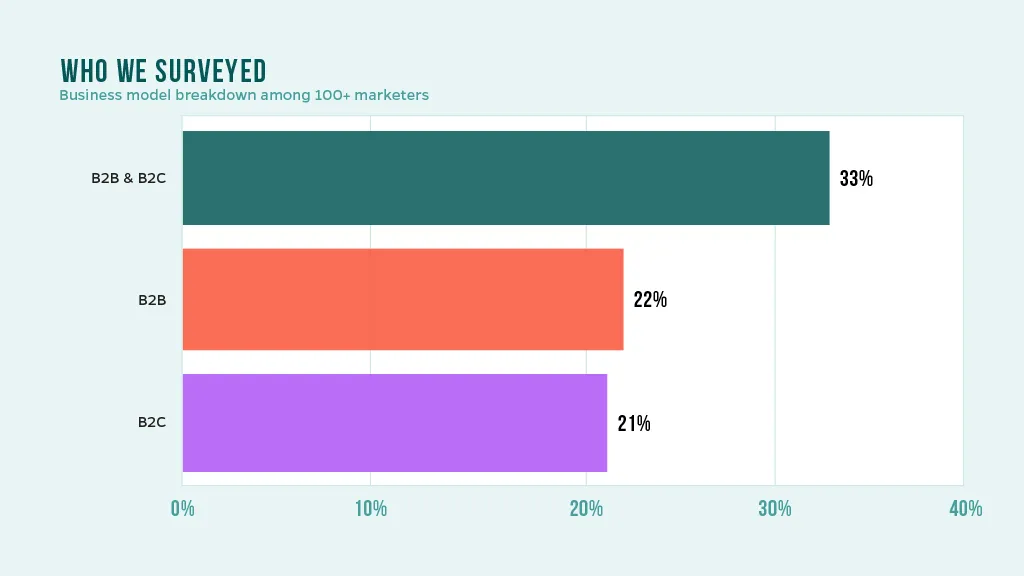
Who We Surveyed
Our survey included 100+ marketing professionals from organizations across multiple industries. Retail and e-commerce (18%), media and marketing (17%), and technology (10%) were among the most represented sectors. The sample also reflects a balanced mix of business models, with 33% serving both B2B and B2C audiences, 22% operating primarily as B2B organizations, and 21% focused on B2C markets.
This combination of perspectives reveals how organizations are navigating a big shift in digital marketing.
Visibility Is the New Competitive Advantage
The survey results point to a fundamental shift in how brands are discovered. While SEO remains important, visibility is no longer created solely through search rankings. Instead, marketers are expanding their strategies to build authority, influence conversations, and stay present wherever buyers research solutions.
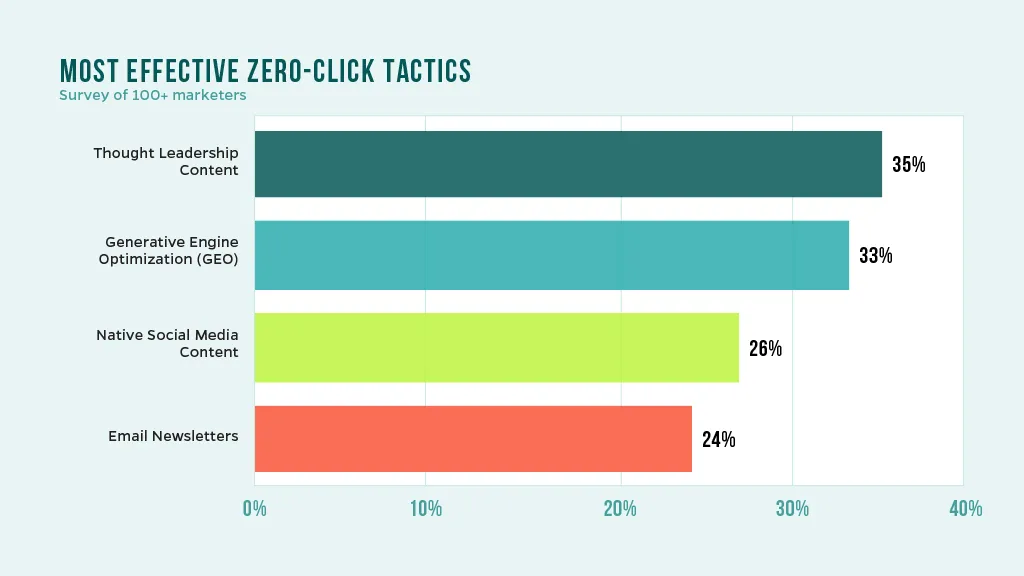
Among respondents, the most effective zero-click tactics included:
- Thought leadership and executive visibility (34.7%)
- Generative Engine Optimization (GEO) (32.7%)
- Native LinkedIn publishing (25.7%)
- Email newsletters (23.8%)
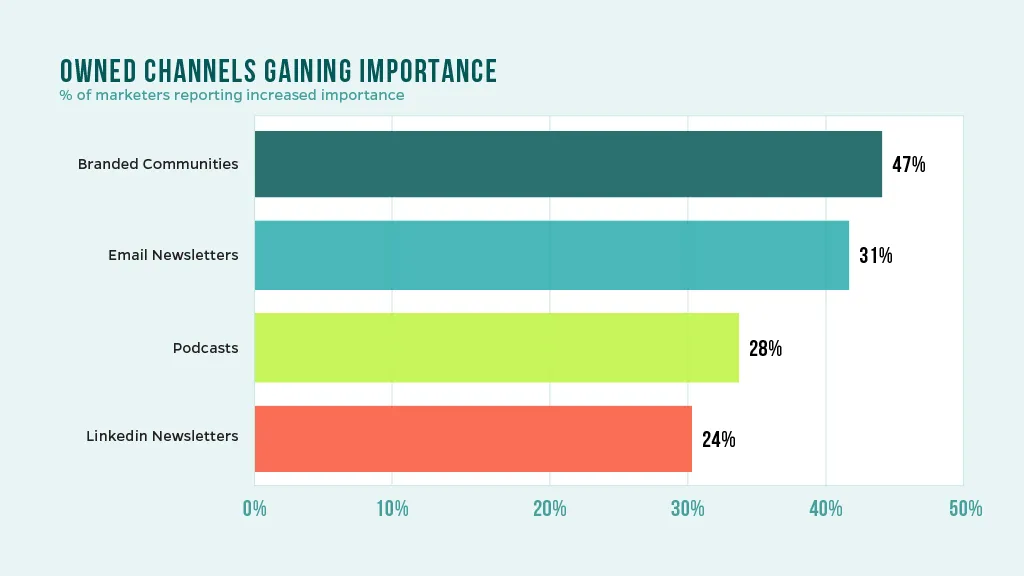
At the same time, marketers are investing more heavily in owned channels, including branded communities (46.5%), email newsletters (30.7%), podcasts (27.7%), and LinkedIn newsletters (23.8%).
These investments are paying off. More than half of respondents (50.5%) reported growth in branded search demand, as buyers are increasingly discovering brands long before they visit a website. AI answers, social content, podcasts, communities, and thought leadership now shape much of that journey. It makes sense then that 55.4% of marketers have shifted at least some of their optimization goals toward visibility and brand awareness.
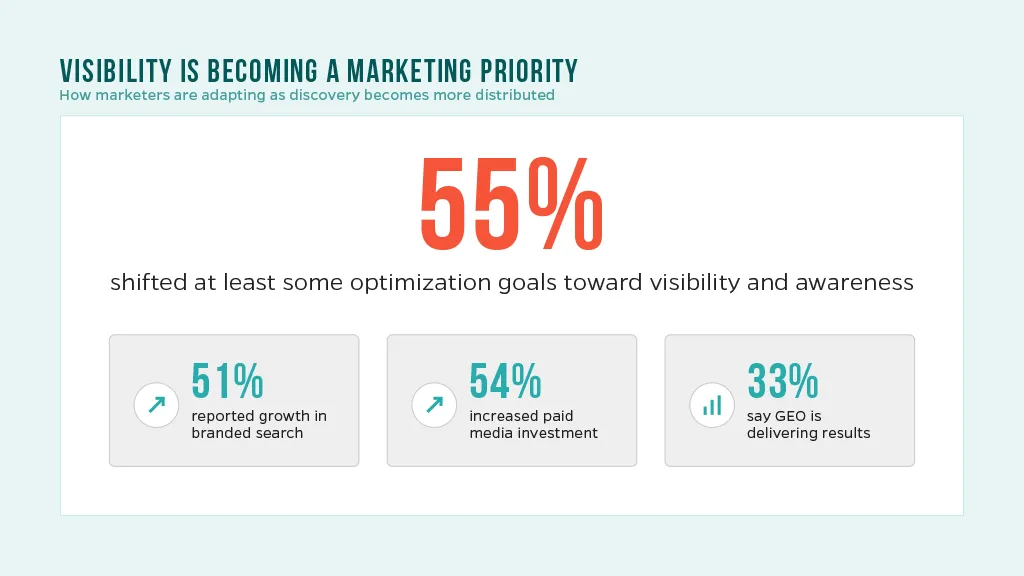
This matters because branded demand is one of the clearest indicators that visibility efforts are influencing buyers before they enter a search engine.
The takeaway is clear: Marketers are moving beyond a strategy focused solely on capturing existing demand. They’re creating demand by building expertise and trust across multiple channels. Success increasingly depends on maintaining a presence wherever buyers learn, compare options, and make decisions not just on ranking in search results. This shift is also influencing budgets, with 53.5% of respondents increasing paid media investment to maintain visibility as discovery becomes more fragmented.
SEO Is Evolving, Not Disappearing
As marketers invest in visibility beyond traditional search rankings, a natural question emerges: what does this mean for SEO itself?
If AI search were eliminating SEO value, we would expect widespread traffic declines. Instead, nearly half of respondents (47.5%) reported increased organic traffic over the past year.
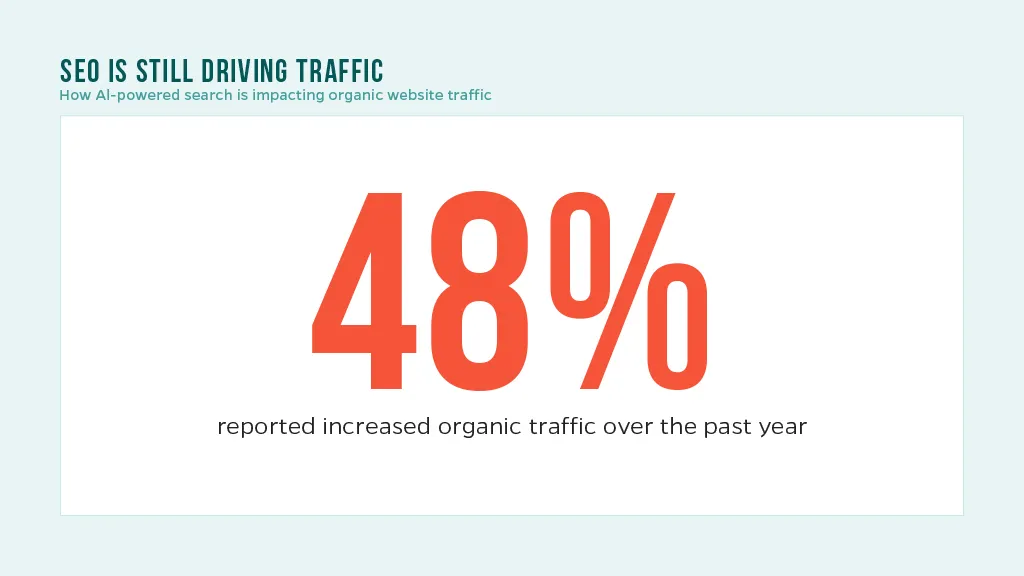
AI search is changing how people discover information, but it is not eliminating the need for SEO and websites. It is helping buyers identify relevant brands and resources before visiting them.
In other words, the path to a website may be changing, but the destination remains important.
Discovery Is Becoming Distributed
The fact that respondents identified social media as being more affected by zero-click behavior than SEO challenges one of the most common assumptions about AI search.
The reality is that zero-click behavior isn’t simply a search phenomenon. It’s a broader change in how people consume information online.
38.6% identified social media as one of the channels most affected by zero-click behavior, compared with 15.8% for paid search and 11.9% for SEO.
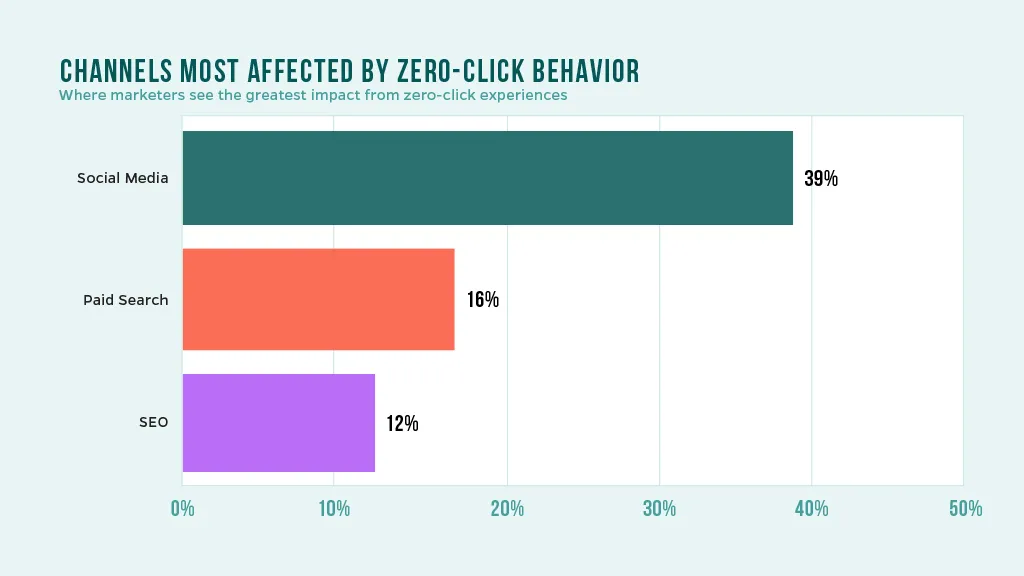
Across social platforms, AI tools, communities, and content platforms, users are increasingly getting answers without leaving the environment where discovery occurs.
For marketers, this means visibility can no longer be measured through a single channel.
Discovery is becoming fragmented across multiple touchpoints. Buyers are building opinions, evaluating brands, and narrowing choices long before they click through to a website.
Organizations that understand this shift will be better positioned to influence decisions throughout the customer journey.
Websites Aren’t Losing Value — Their Role Is Changing
AI search and zero-click experiences have led some marketers to question whether websites are becoming less relevant. The data suggests the opposite.
If discovery is becoming more distributed, websites are becoming more important as places where buyers validate information and make decisions.
Nearly three-quarters of respondents (72%) said websites are just as valuable as before.
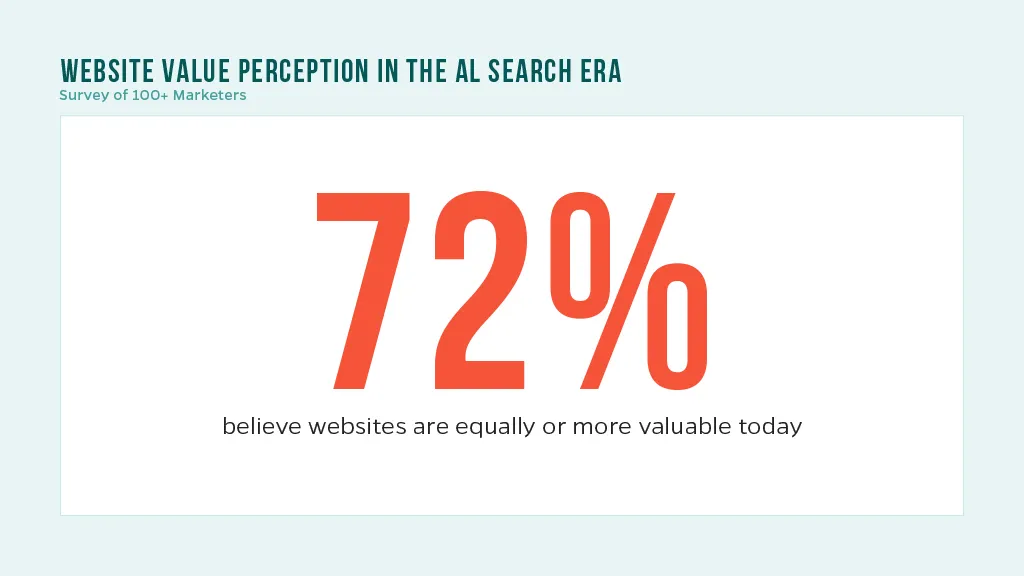
Rather than replacing websites, AI search and zero-click environments are changing how people arrive at them. Buyers are increasingly completing research before they click, which means the traffic that does arrive is often more informed, more qualified, and closer to making a decision.
It changes the purpose of the website. It is no longer simply a discovery channel. It’s becoming a decision channel.
Marketers are investing in visibility through thought leadership, GEO, communities, paid media, and newsletters. But those efforts aren’t replacing the website. They’re feeding it.
The website remains where credibility is validated, trust is reinforced, and conversions occur.
What an AI-Era Website Needs to Do Well
One of the clearest findings from the survey is that the content driving clicks today is largely decision-stage content. The top-performing formats include:
- Gated content (31.7%)
- Product comparisons (29.7%)
- Interactive tools (27.7%)
- Case studies (25.7%)
- Long-form content (23.8%)
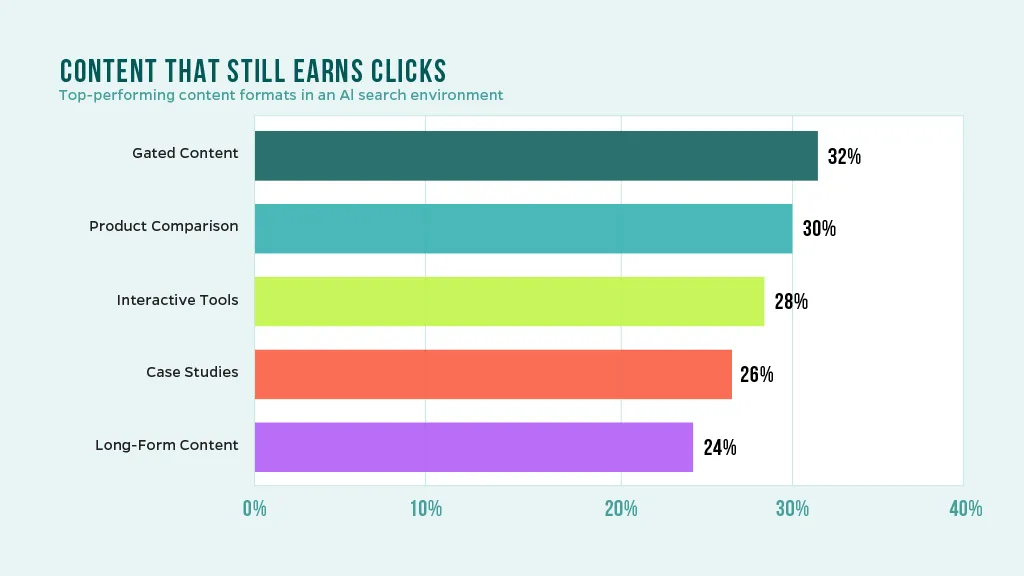
These formats serve similar purposes: helping buyers evaluate, validate, or justify a decision. As AI search increasingly answers basic informational questions, websites are becoming more important during the consideration and conversion stages of the buyer journey.
Product comparison pages help buyers make decisions. Case studies build trust. Interactive tools create value AI can’t easily replicate. Long-form content continues to build authority and demonstrate expertise, while gated content remains an effective way to convert high-intent visitors into leads.
The implication is clear: Websites need to do more than attract traffic. They need to help buyers make decisions.
The Website Has Become the Trust and Conversion Layer
The survey makes one thing clear: marketers are taking a fresh look at what success really means.
Respondents were more likely to prioritize the following:
- Engagement (36.6%)
- Brand visibility and share of voice (31.7%)
- AI citations (25.7%)
Buyers increasingly discover brands through AI answers, social content, online communities, and thought leadership long before they visit a website. By the time they arrive, they’re often looking for validation rather than information.
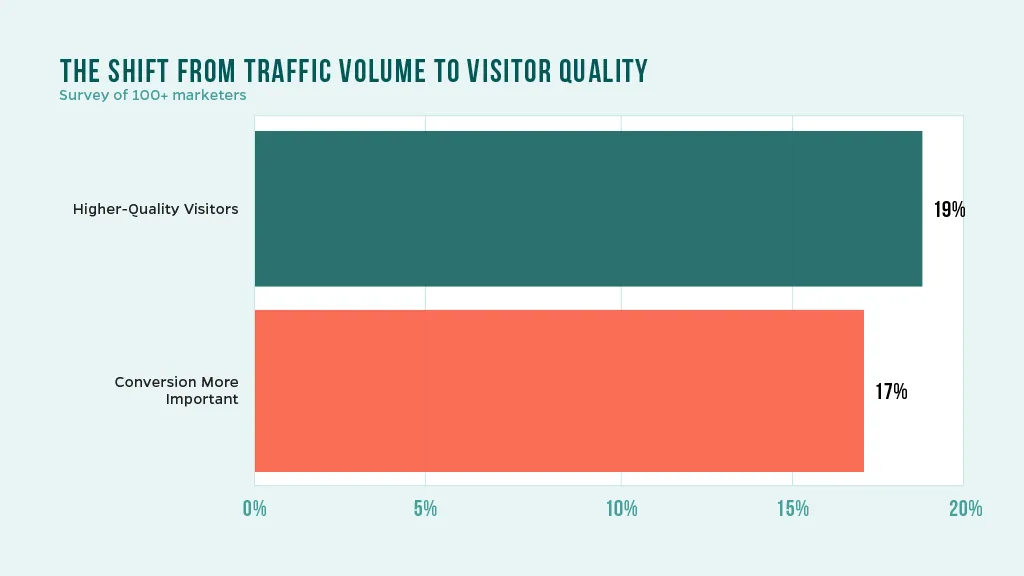
This shift is changing the nature of website traffic itself. In fact, 18.8% of respondents reported lower traffic but higher-quality visitors. This challenges one of digital marketing’s oldest assumptions: that more traffic automatically leads to better results. The data inverts the assumption: as pre-click research increases, conversion potential matters more than visitor volume.
The result is traffic that is more qualified and more likely to convert. A website attracting 10,000 visitors who convert at 0.5% generates fewer opportunities than one attracting 1,800 visitors who convert at 4%. In this environment, traffic volume becomes less important than visitor intent.
Established brands have a clear advantage in this environment. Strong brand recognition, visible expertise, and a presence across multiple channels increase the likelihood that buyers encounter and trust a company before ever visiting its website.
Discovery is becoming distributed, but conversion remains concentrated.
What Zero-Click Marketing Means for the Future of Digital Visibility
Our survey findings point to a clear conclusion: AI search is not replacing SEO, and websites are not becoming obsolete. The rules of digital visibility are evolving.
More than half of marketers (50.5%) reported growth in branded search, 32.7% say GEO is delivering measurable results, and 72.2% believe websites remain equally or more valuable than before.
Buyers are discovering brands across AI platforms, social networks, communities, and other channels long before they visit a website. By the time they arrive, they’re often looking for validation, not information.
The organizations that succeed won’t focus on rankings alone. They’ll build visibility wherever buyers seek information and trust wherever buyers make decisions.
Search rankings still matter, but they’re becoming one signal among many. Competitive advantage will increasingly belong to brands that establish expertise, earn trust, and remain visible throughout the buyer journey.
The future belongs to brands that show up early, build trust consistently, and stay visible from discovery to decision.
Key Takeaways:
- Websites still matter: 72% of marketers say websites are equally or more valuable than before.
- Discovery is becoming more distributed: Buyers are increasingly finding brands through AI platforms, social media, and communities before visiting a website.
- Visibility is a growing priority: 55.4% have shifted optimization efforts toward visibility and awareness, while 53.5% have increased paid media investment.
- Trust and conversion are the website’s new superpowers: Websites are becoming the place where buyers validate information and take action.
- Owned audiences are gaining importance: Communities, newsletters, and thought leadership help brands build direct relationships beyond search.
- SEO isn’t disappearing — it’s expanding: Search remains important, but it now operates as part of a broader visibility strategy.