



In industrial B2B markets, trust is currency. Before a procurement manager signs off on a new vendor or a plant engineer recommends switching suppliers, they do their homework. They search your company online, read your content, check your case studies, and quietly size you up against competitors. What they find — or don’t find — shapes whether you make the short list.
That process is why brand authority matters so much in the industrial sector. It’s not about being the loudest voice in the room. It’s about being the most credible one. This article breaks down what brand authority means for marketing at industrial companies, why it’s harder to build than most people assume, and the specific strategies that move the needle.
What Brand Authority Means in an Industrial Context
Brand authority is the level of trust and expertise your company is perceived to have within your industry. It’s the difference between being a vendor and being a go-to resource. When a potential customer already knows your name, respects your perspective, and has consumed your content long before they ever contact your sales team, your authority is working.
For industrial companies, this is especially important because the sales cycle is long and the stakes are high. Buyers in this sector don’t make impulse decisions. They evaluate partners they may work with for years. A strong brand presence signals that your company has the depth, stability, and expertise to deliver.
Authority also compounds over time. The more consistently you demonstrate expertise, the more visible you become in search results, the more referrals you earn, and the more easily your sales team can open doors. In other words, it’s an ongoing investment.
Why Industrial Companies Struggle with Brand Authority
Most industrial companies are built around operational excellence, not marketing. The culture is product-focused and engineering-driven. While this is a strength, it can make brand-building feel like a foreign language. Leadership often views marketing as a cost center rather than a growth lever, and content creation tends to fall to whoever has a spare hour.
There’s also a common misconception that brand authority only matters for consumer companies. Yet, industrial buyers are just as susceptible to brand perception as any other audience. They Google you. They read your blog. They notice whether your website looks like it was last updated in 2009.
The challenge is finding the time, budget, and strategic direction to do this well. Many manufacturers and industrial service companies know they should be investing in their brand, but they don’t have a clear framework for where to start.
Strategies That Build Real Authority
Create Content That Solves Real Problems
The most effective content for industrial companies isn’t promotional — it’s educational. Think about the questions your prospects are asking before they ever reach out to sales. How do I reduce downtime in my facility? What should I look for in a precision machining partner? How do I evaluate suppliers for a critical component?
When your content answers those questions clearly and thoroughly, you position your company as a trusted resource. Over time, that visibility in search results translates into inbound leads from buyers who already respect your expertise.
Case studies are particularly powerful here. A well-written case study that shows how you solved a specific problem for a client does more than a dozen generic capability statements. It gives prospects a concrete reason to believe you can do the same for them.
Optimize for Search
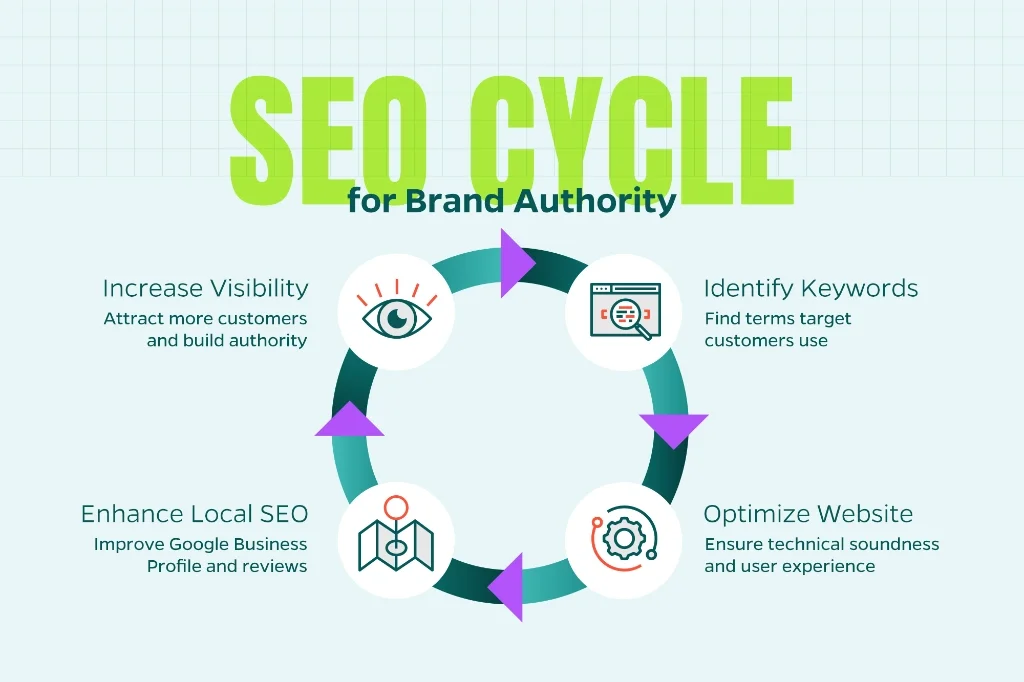
Search engine optimization (SEO) is a foundational piece of brand authority because it directly impacts whether buyers can find you. If your website doesn’t rank for the terms your prospects are searching, your authority is largely invisible.
For industrial companies, this means identifying the specific keywords your target customers use when searching for products or services like yours. It also means making sure your website is technically sound, loads quickly, and provides a good experience on mobile devices. These aren’t glamorous tasks, but they have a direct impact on whether you get found.
Local SEO matters too, especially for companies that serve a defined geographic market. Making sure your Google Business Profile is complete and accurate, earning consistent reviews, and building citations in relevant directories all contribute to local search visibility.
Leverage Industry Relationships and Earned Media
Brand authority doesn’t only come from your own channels. When trade publications, industry associations, or respected voices in your sector validate your expertise, it carries significant weight with buyers.
Pursue speaking opportunities at industry events. Pitch contributed articles to trade publications. Participate actively in industry associations and standards bodies. Seek out backlinks from credible industry websites, which also improve your SEO. These earned-media touchpoints reinforce the message that your company is a legitimate player.
Be Consistent Across All Touchpoints
One of the most common mistakes industrial companies make is inconsistency. The website says one thing, the sales deck says another, and the LinkedIn page hasn’t been updated since the company rebrand three years ago. To buyers doing their due diligence, that kind of disconnect raises questions.
Brand authority is built through consistent, coherent messaging across every customer touchpoint. This includes your website, your content, your social channels, your proposals, your email communications, and even how your people talk about your company in conversations. When all those signals point in the same direction, they reinforce each other.
Measuring Whether It’s Working
Brand authority can feel intangible, but there are meaningful indicators you can track. Organic search traffic and keyword rankings tell you whether you’re gaining visibility. Time-on-page and return visit rates reflect whether your content is resonating. Inbound lead volume and lead quality are downstream signals that authority is translating into business results.
You can also look at qualitative signals. Are prospects mentioning your content during sales calls? Are you getting referrals from people who found you through search? Are competitors starting to reference your work? These are signs that your authority is real and growing.
The Long Game Is Worth Playing
Building brand authority in the industrial sector is not a quick-win strategy. It requires sustained effort, consistent output, and patience. But for companies willing to commit to it, the rewards are significant: shorter sales cycles, stronger close rates, higher-quality leads, and a competitive position that is genuinely difficult for rivals to replicate.
The companies that show up consistently with helpful, credible content tend to win more than their share of the market over time. In an industry where most competitors are still relying entirely on referrals and cold outreach, investing in brand authority is one of the highest leverage moves you can make.
Need Help?
If you’re ready to build a stronger brand presence for your industrial company, Straight North can help. Contact us today to learn more.