
If you’re a B2B manufacturer looking to generate more qualified leads, LinkedIn advertising deserves a serious look. While platforms like Google and Meta often dominate the conversation in digital marketing, LinkedIn offers something those channels rarely can: precise targeting of the exact professionals who influence or make industrial purchasing decisions.
That said, LinkedIn is not a set-it-and-forget-it solution. Success on the platform requires a clear strategy, realistic expectations about timelines, and a willingness to invest in the right formats. This guide breaks down what manufacturers need to know to get meaningful results from LinkedIn advertising.
Why LinkedIn Works for Manufacturers
Manufacturing purchases are rarely impulsive. The buying process often involves engineers, procurement managers, operations directors, and C-suite executives. LinkedIn is where those people live professionally. With over one billion members globally, and robust filters for job title, industry, company size, and seniority, LinkedIn lets you reach decision-makers in a way that broad-reach platforms simply cannot replicate.
For manufacturers, this specificity is invaluable. You can target a procurement director at a mid-sized aerospace company in the Midwest while excluding consumers, students, and anyone else who will never be a legitimate prospect. That level of audience control is hard to find anywhere else in digital advertising.
LinkedIn also tends to attract a professional mindset. When someone logs in, they’re thinking about work. That context makes them more receptive to relevant business content than they might be scrolling through a social feed filled with vacation photos and trending news.
Choosing the Right Ad Formats
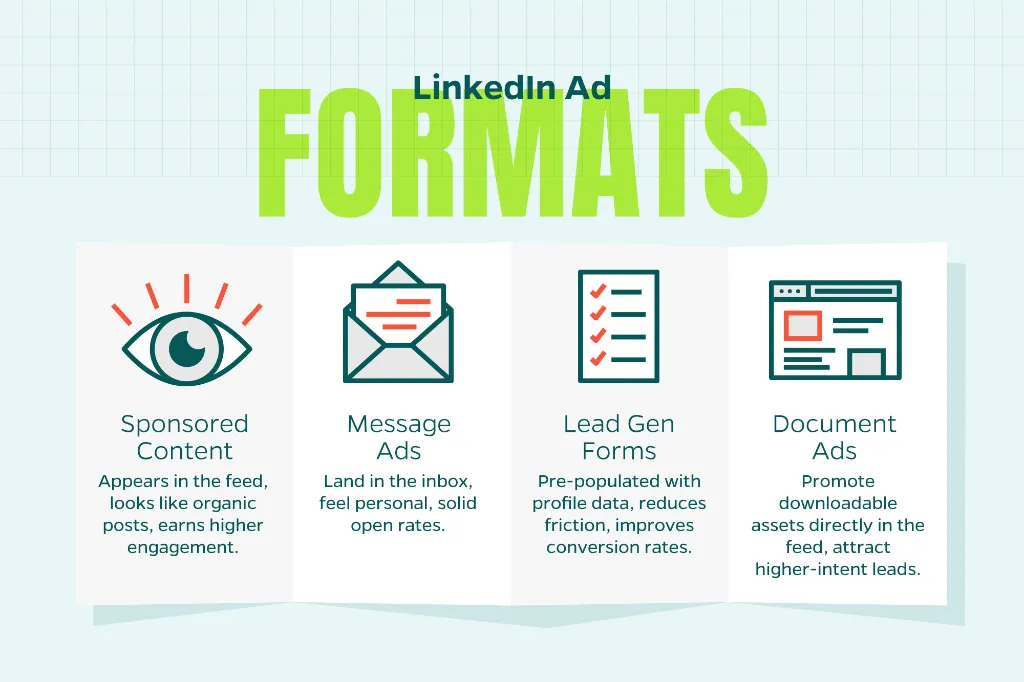
LinkedIn offers several ad formats, and the best choice depends on where your prospects are in the buying journey and what action you want them to take.
- Sponsored Content appears directly in the LinkedIn feed. It looks and feels like organic posts, which tends to earn higher engagement. For manufacturers, this format works well for sharing case studies, product demonstrations, or thought leadership content that educates prospects before they’re ready to buy. You can use single-image ads, carousel ads, or video ads depending on your content.
- Message Ads (formerly InMail) land directly in a prospect’s LinkedIn inbox. They can feel more personal than display advertising, and because LinkedIn limits how frequently users receive them, open rates tend to be solid. These work best when you have a specific, time-sensitive offer like registering for a webinar, downloading a technical guide, or scheduling a product demo.
- Lead Gen Forms are a standout feature unique to LinkedIn. When someone clicks your ad, a form pre-populated with their LinkedIn profile data appears — no manual entry required. For manufacturers targeting busy engineers or operations managers who don’t have time to fill out lengthy contact forms, this reduces friction significantly and typically improves conversion rates.
- Document Ads allow you to promote a downloadable asset, such as a white paper, spec sheet, or industry report, directly within the feed. Prospects can preview the content before deciding to download, which tends to attract higher-intent leads. For manufacturers with robust technical documentation, this format is worth testing.
Targeting Strategies That Work
LinkedIn’s targeting capabilities are powerful, but they can also be a trap. It’s tempting to layer on filters until your audience is extremely narrow and then wonder why your budget isn’t moving and your reach is negligible.
A practical approach is to start with two or three targeting parameters and expand or refine from there based on performance data. For most manufacturers, a useful starting combination is job function (Engineering, Operations, Procurement), industry (tied to your core verticals), and company size (aligned to your ideal customer profile).
Account-based targeting is another option worth exploring. LinkedIn allows you to upload a list of target companies and serve ads exclusively to employees at those organizations. If your sales team already has a defined list of high-priority accounts, LinkedIn advertising can run in parallel to keep your brand visible while outreach efforts are underway.
Retargeting is equally important and often underused by manufacturers. You can retarget people who have visited your website, watched a video, or engaged with a previous LinkedIn ad. Since most industrial sales cycles are long, staying in front of warm prospects over time is essential. Retargeting makes that practical without spending your entire budget on cold audiences.
Budget Realities and Expectations
LinkedIn advertising costs more per click than most other platforms. Cost-per-click can range from $5 to $15 or more, depending on your audience and industry. That can feel steep but it’s important to weigh that against the quality of the audience you’re reaching. A single qualified lead from LinkedIn can represent significant revenue potential for a manufacturer, making the math work even at higher CPCs.
Patience matters here. LinkedIn campaigns often take four to eight weeks before patterns emerge. Resist the urge to overhaul campaigns after a few days of data. Instead, set a testing window, track the right metrics, and make informed decisions from a position of actual evidence.
Measuring What Matters
Clicks and impressions are easy to see but rarely tell the whole story for manufacturers. The metrics that matter are the ones tied to pipeline. This includes how many leads did the campaign generate, what is the cost per lead, and ultimately, what revenue can be traced back to LinkedIn activity.
Installing the LinkedIn Insight Tag on your website is a prerequisite for measuring conversions and building retargeting audiences. Connect LinkedIn campaign data to your CRM — whether that’s HubSpot, Salesforce, or another platform — so you can track leads through the full sales cycle, not just to the form submission.
For manufacturers with longer sales cycles, it’s also worth tracking engagement metrics like video completion rates, content downloads, and return visits to key pages. These are leading indicators that someone is moving through the funnel, even if they haven’t converted yet. Capturing that signal lets you keep campaigns optimized during the long stretches between initial contact and closed deal.
Making LinkedIn Work in a Broader Strategy
LinkedIn advertising works best when it’s not operating in isolation. Pair it with a strong organic LinkedIn presence so prospects who see your ads and click through to your company page find an active, credible organization. Align your campaigns with website content. If an ad promises a technical guide or a case study, make sure the landing experience delivers on that promise without unnecessary friction.
Consider how LinkedIn fits alongside your other channels as well. A prospect might first discover you through a Google search, then see a LinkedIn ad, then receive a targeted email. Each touchpoint contributes to the eventual decision to engage. Treating LinkedIn as one component of a coordinated effort — rather than a standalone solution — is what separates campaigns that generate leads from campaigns that generate reports with no clear outcome.
For B2B manufacturers willing to invest the time and budget to do it right, LinkedIn advertising offers a genuinely differentiated opportunity to reach the professionals who matter most to your business. The targeting is precise, the audience is professional, and the platform is built for the kind of high-consideration purchases that define industrial buying. The companies that figure this out now will have a meaningful edge over competitors who haven’t.