


In marketing, you can make plenty of dramatic claims. But your prospects want proof. They want to see your solution working in the real world, solving legitimate problems for actual customers. That’s the power of a well-crafted case study.
While content marketing assets tell prospects what your business can do, case studies show them what you’ve already done. They turn abstract promises into concrete outcomes, building credibility in a way that few other formats can match. In this article, we’ll break down why case studies are so effective and how they can convert prospects into customers.
Why Case Studies Work So Well
Case studies combine storytelling with proof. They demonstrate how your company solves problems and delivers measurable outcomes.
Most buyers follow a predictable path: identify a problem, research solutions, evaluate options, and choose. Case studies support every stage of that journey. They build trust through real results, reduce perceived risk by showing others’ success, and provide clarity on what it looks like to work with your company. Unlike blog posts or service pages that focus on what you say you can do, case studies highlight what you’ve already done.
The Role of Case Studies in Content Marketing
Case studies aren’t just standalone assets. They’re versatile pieces of content that can be deployed across your entire marketing ecosystem.
Supporting Bottom-of-Funnel Conversions
When prospects are close to making a decision, they seek validation. Case studies serve as powerful conversion tools by reinforcing your credibility and reducing buyer hesitation.
For example, potential customers may feel reassured when they encounter a case study that mirrors their own challenges. If you’ve helped similar customers achieve success, it becomes much easier for your prospects to envision the same outcome for themselves.
Strengthening Sales Enablement
Your sales team can leverage case studies during prospect conversations. This offers prospects concrete examples of your success instead of hypotheticals. Case studies also have the potential to standardize messaging and ensure your team has consistent, data-backed stories aligned with your brand positioning.
Enhancing SEO and Website Engagement
Case studies can target long-tail keywords related to specific industries, services, or problems while keeping visitors on your site longer. Well-structured case studies provide valuable content that search engines recognize as useful. They give readers exactly what they’re looking for: insight, proof, and relevance.
Fueling Multi-Channel Marketing
One case study can be transformed into multiple content formats: social media posts highlighting key results, email campaigns featuring success stories, video testimonials, sales presentations, and LinkedIn articles. This makes case studies a high-value investment — you’re building a foundation for ongoing marketing efforts across multiple channels.
What Makes a Case Study Effective?
Not all case studies deliver the same impact. To truly resonate with your audience, your case studies need to be clear, compelling, and results-driven.
Here are the key elements of a high-performing case study:
A Relatable Success Story
Introduce your success story in a way that is relatable to the audience. Include relevant details like industry, company size, and business goals. The more specific you are, the easier it is for readers to see themselves in the story.
A Clearly Defined Challenge
Outline the specific problem you faced. This is where you capture attention and demonstrate that you understand your readers’ pain points. Avoid vague statements. Instead, explain the real obstacles. In the digital marketing world, that may be declining organic traffic, low conversion rates, or struggling to compete in a saturated market.
A Strategic Approach
Explain how your team approached the problem — this showcases your expertise and methodology. Focus on the strategy behind your actions. What made your approach unique? Why did you choose certain tactics? This positions your company as thoughtful and strategic, not just reactive.
Measurable Results
Results are the most critical part of any case study. Use specific metrics whenever possible. Examples include percentage increases in traffic, leads, or conversions; revenue growth; cost reductions; or ROI improvements. Numbers make your story tangible. They help turn abstract success into concrete proof that resonates with decision-makers.
A Human Element
While data is essential, don’t overlook conveying an emotional appeal. Show readers the human impact of your success. Including a direct quote adds authenticity and makes your case study feel more credible rather than just a collection of statistics.
Best Practices for Creating Case Studies
If you want your case studies to truly support your content marketing efforts, approach them strategically from the start.
Choose the Right Projects or Clients
Not every successful project deserves to become a case study. Focus on those that delivered strong results, represent your ideal target audience, highlight your core services, and tell a compelling story with clear before-and-after contrast. The goal is to showcase work that aligns with the types of clients or customers you want to attract moving forward.
Keep the Structure Simple
A clear, consistent structure makes your case studies easier to read and more effective. A proven format includes overview, challenge, solution, and results. This allows readers to quickly grasp the story and find the specific information they need, whether they’re skimming or reading closely.
Write for Your Audience, Not Yourself
Resist the temptation to make your case study self-promotional. Instead, focus on the customer’s journey, framing the story around their challenges and success with your company positioned as the knowledgeable guide.
Use Visuals to Enhance Impact
Charts, graphs, and before-and-after comparisons make your results more compelling. Visual elements break up text and make your case study more engaging. Even simple design touches like pull quotes or color blocks can improve readability and reinforce key points.
Make Them Easy to Find
Your case studies won’t deliver value if prospects can’t find them. Feature them prominently on your website with intuitive navigation. Consider creating a dedicated section organized by industry, service type, or business challenge so prospects can quickly locate relevant stories.
Common Mistakes to Avoid
Several common pitfalls can limit the impact of your case studies:
- Being too vague: Without specific details or metrics, your case study loses credibility
- Overloading with jargon: Keep language clear and focused on outcomes
- Focusing too much on your company: The client’s story should be the star
- Skipping the results: Without measurable outcomes, the story feels incomplete
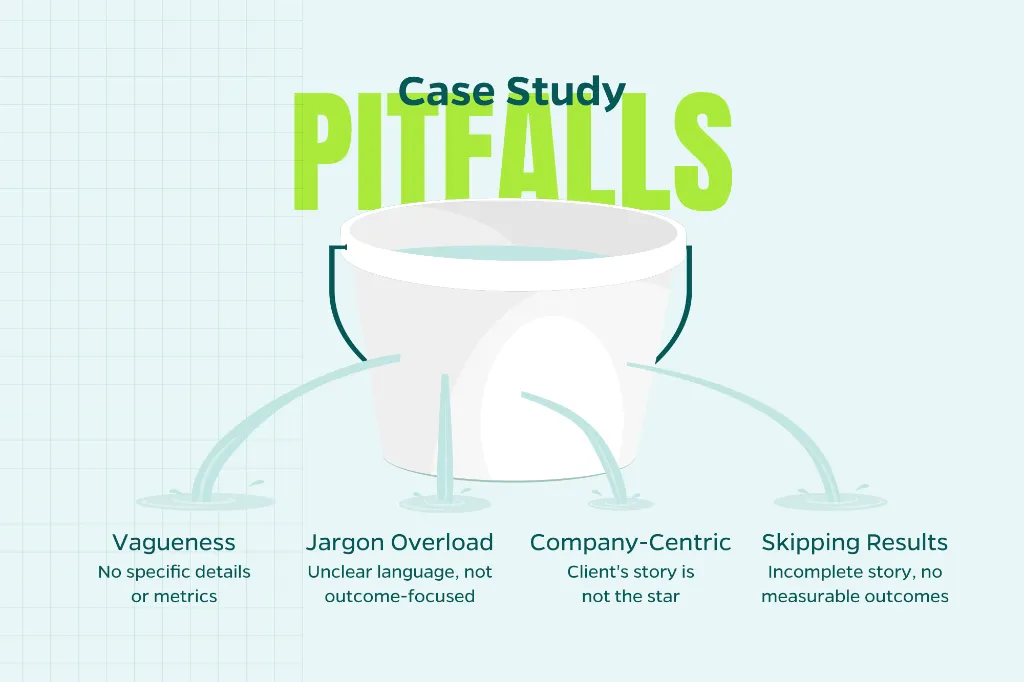
Avoiding these mistakes can dramatically improve how your case studies perform.
Turning Case Studies into a Competitive Advantage
When used strategically, case studies can differentiate your brand in meaningful ways. They demonstrate expertise, build authentic trust, and connect with your audience more deeply than most marketing content.
More importantly, they provide something many tactics can’t: proof. In a world where buyers are increasingly skeptical, proof drives action. Case studies give you the opportunity to show — not just tell — what makes your company different.
Put Case Studies to Work
Want to create case studies that resonate with your audience and support your growth objectives? Contact Straight North today to learn how we can help you use content marketing to convert more prospects into customers.