

If you ask a manufacturer about their audience, they may define them as “distributors in the Midwest” or “plant managers at food processing facilities.” That’s a good start. But when it comes to digital marketing, you often need more than a general description to drive results.
Buyer personas take that general sense of your audience and sharpen it into something your marketing team can use. They help you speak directly to the people making purchasing decisions, and they guide everything from the content you create to the ads you run and the emails you send. For small to mid-sized manufacturers, getting personas right can be the difference between a digital strategy that generates leads and one that generates traffic but nothing else.
What is a Buyer Persona?
A buyer persona is a semi-fictional profile of your ideal customer, built from a combination of real data and informed assumptions. It goes beyond job title and industry to capture the motivations, challenges, decision-making process, and information habits of the people you’re trying to reach.
In manufacturing, you might be selling to a procurement manager who cares deeply about price and lead times, a plant engineer who wants detailed specs and reliability data, or a VP of Operations focused on total cost of ownership and supplier risk. Each of those people needs to hear a different message, even if they’re all part of the same purchase decision. That’s why most manufacturers end up with more than one persona.
Start With the Data You Already Have
Building personas doesn’t require a big research budget. The best starting point is usually the information that already exists inside your organization. Talk to your sales team. They interact with prospects and customers every day and have a clear sense of who buys, who stalls, and who walks away. Review your CRM data to identify patterns in your best accounts. Look at your website analytics to understand what content your visitors consume and where they come from.
If you can conduct customer interviews, do it. Even a handful of conversations with existing customers can surface insights that no amount of internal data will reveal. Ask about their role, their buying process, the challenges they face, and how they found you. The specifics tend to be more useful than anything you might assume.
Key Elements of a Manufacturing Buyer Persona
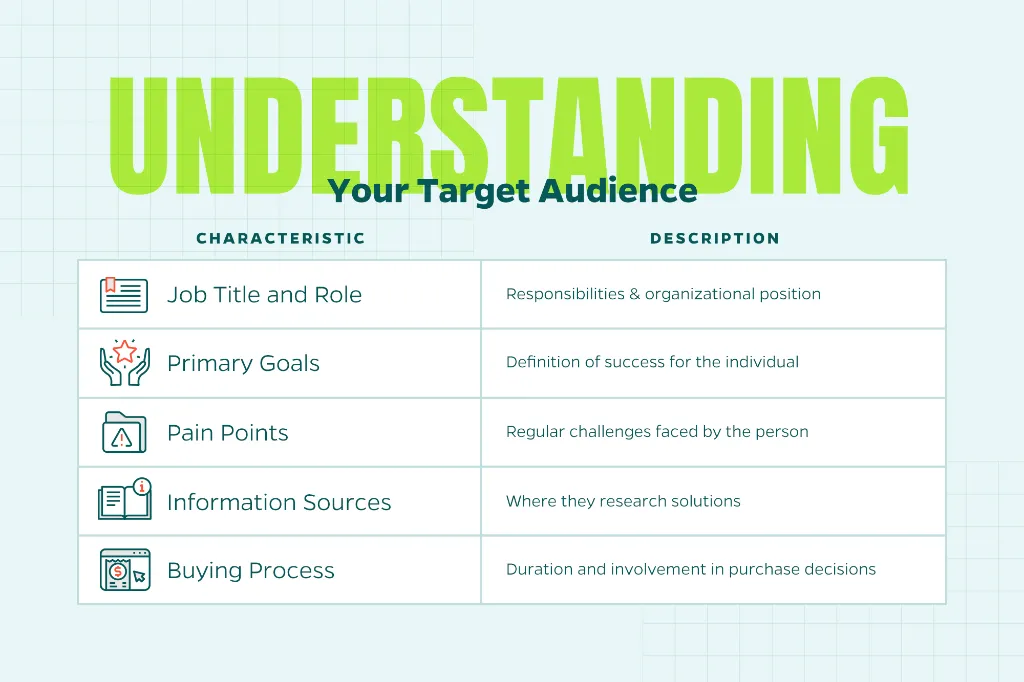
Once you’ve gathered your data, build out each persona with a consistent set of details. For manufacturers, the most useful elements typically include:
- Job title and role: What is this person responsible for, and where do they sit in the organization? Are they the decision-maker, an influencer, or both?
- Primary goals: What does success look like for them? Procurement managers often prioritize cost savings and vendor reliability. Engineers may be more focused on performance specifications and compliance.
- Pain points: What challenges do they deal with regularly? Supply chain disruptions, quality issues, and lengthy vendor qualification processes are common in manufacturing environments.
- Information sources: Where do they go when researching solutions? Trade publications, LinkedIn, industry associations, and peer referrals are all common channels.
- Buying process: How long does a typical purchase decision take, and how many people are involved? Understanding the complexity of the buying cycle helps you map content to each stage.
How Personas Shape Your Digital Marketing
Once your personas are defined, they should inform every major marketing decision. Here’s where manufacturers typically see the clearest impact.
Content strategy. If one of your personas is a plant engineer in the early research phase, they probably want detailed technical content marketing like white papers, spec sheets, and application guides. A procurement manager later in the buying cycle may respond better to case studies and ROI calculators. Knowing your personas means you can create content that serves each stage of the journey instead of producing material that doesn’t connect with anyone in particular.
SEO and keyword targeting. Different personas search differently. A procurement manager might search for “industrial fastener suppliers Ohio,” while an engineer searches for “stainless steel bolt tensile strength specifications.” Persona-driven keyword research helps you capture both, rather than optimizing only for one type of visitor.
Paid advertising. Platforms like LinkedIn allow you to target by job title, industry, and company size, which makes persona-driven targeting highly practical for B2B manufacturers. When you know exactly who you’re trying to reach, you can stop wasting ad spend on audiences that will never convert.
Email marketing. Segmenting your email list by persona allows you to send messages that feel relevant rather than generic. An email that speaks directly to a plant engineer’s concerns about downtime will outperform a one-size-fits-all message every time.
Common Mistakes to Avoid
The most common mistake manufacturers make with personas is building them based entirely on assumptions rather than real customer data. It’s easy to think you know your buyer, but until you’ve tested those assumptions against actual conversations and analytics, you might be optimizing for the wrong person.
Another mistake is creating too many personas. More isn’t better. If you end up with eight or ten personas, the detail gets diluted and they become too narrow to be useful. Most manufacturers can work effectively with two to four well-developed personas. Start lean, then expand if the data supports it.
Finally, treat your personas as living documents. Your market changes, your product line evolves, and your customers’ priorities shift. Set a reminder to revisit your personas at least once a year and update them based on fresh data.
Conclusion
Buyer personas are one of the most practical tools in digital marketing, but they only deliver value when they’re built carefully and applied consistently. For manufacturers competing in crowded markets, the ability to speak directly to the right person at the right time is a meaningful advantage. A well-crafted persona tells you what to say to them, where to say it, and when.
The work of building personas is front-loaded, but the payoff extends across every channel in your marketing mix. When your content resonates, your ads convert more efficiently, your email open rates improve, and your sales team has better conversations with warmer leads. It’s one of those foundational marketing investments that makes everything else work better.
Need Help?
Ready to develop buyer personas that fuel smarter manufacturing marketing? Contact Straight North to learn how we help manufacturers build digital marketing strategies grounded in real audience insights.