

Most manufacturers assume the problem with their marketing is their website. They see traffic coming in, but conversions are flat. So, they redesign the homepage, rewrite the copy, and add another CTA. Still, the numbers barely move.
The real issue is what happens after someone leaves your site. In manufacturing, buyers don’t make decisions in a single session. They’re comparing specs, getting internal buy-in, and evaluating multiple vendors over weeks or months. If you’re not staying visible during that process, you’re giving competitors room to win deals you should have closed.
Retargeting solves this. It keeps your company in front of prospects while they’re still deciding. It doesn’t require them to remember your URL or dig through their browser history. It puts your company back in front of them as they are doing their typical web browsing. This article explores how you can use retargeting to improve your manufacturing marketing.
What is Retargeting?
Retargeting is a form of digital advertising that serves ads specifically to people who have previously visited your website or engaged with your content. Instead of casting a wide net, you’re focusing your ad spend on an audience that already knows you exist. This tends to make your investment go a lot further.
Here’s how it works at a basic level. When someone visits your site, a small piece of code (often called a pixel) places a cookie in their browser. That cookie allows your ads to follow that visitor across other websites, social media platforms, and apps. When past visitors see your ad again — maybe while reading an industry article or scrolling LinkedIn — it creates another touchpoint in their buying journey.
This matters because the manufacturing sales cycle is rarely short. A procurement manager or plant engineer researching solutions today might not be ready to make a call for another two or three months. Retargeting keeps your name in front of them during that entire window.
Why Retargeting Fits the Manufacturing Buyer Journey
In manufacturing more than other sectors, B2B buyers take their time. Purchasing decisions often involve multiple stakeholders, budget approvals, and detailed technical vetting. That process can stretch over weeks or months. During that time, your prospects are almost certainly looking at competitors.
Retargeting is well-suited to this environment for a few reasons:
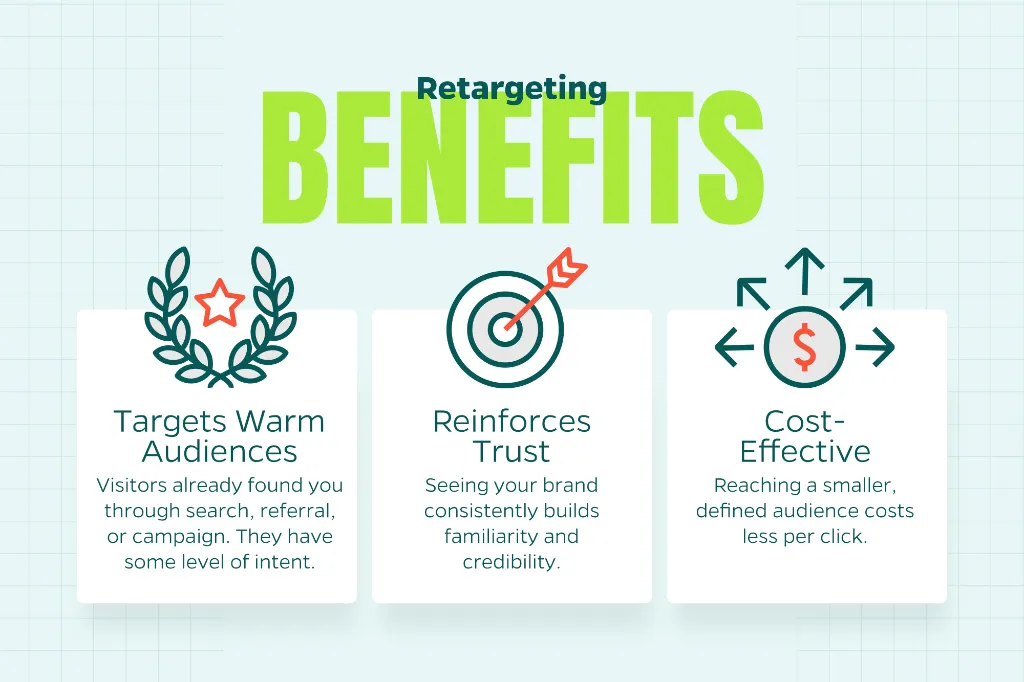
- It targets warm audiences. These visitors already found you through search, a referral, or a campaign. They have some level of intent.
- It reinforces trust over time. Seeing your brand consistently during the research phase builds familiarity which tends to build credibility.
- It’s cost-effective. Because you’re reaching a smaller, more defined audience, retargeting campaigns often cost less per click than broad awareness advertising.
Simply put, retargeting lets you compete for attention during the research phase without burning your entire ad budget on cold traffic.
Platforms Worth Considering
Not all retargeting platforms are created equal, and not all of them make sense for every manufacturer. The right choice depends on where your buyers spend their time online and what kind of content you’re promoting.
Google Display Network is one of the most widely used options, placing visual banner ads across millions of websites. It offers broad reach and relatively straightforward setup through Google Ads.
LinkedIn is often a strong fit for manufacturers targeting engineers, operations leaders, or procurement professionals. The ability to layer retargeting on top of LinkedIn’s professional targeting filters can be particularly valuable when your audience is specific. All in all, manufacturing marketers should explore LinkedIn.
Meta (Facebook and Instagram) may seem like an unlikely channel for industrial marketing, but decision-makers are regular people. Plenty of them scroll social media outside of business hours. For certain products or services, Meta retargeting can fill in gaps that more B2B-focused platforms miss.
Most manufacturers will do well starting with one or two platforms rather than trying to maintain a presence everywhere at once. Get traction in one place, then expand.
Practical Tips for Getting Started
Retargeting doesn’t require a massive budget or a dedicated marketing team to work. But a few basics will determine the effectiveness of your efforts.
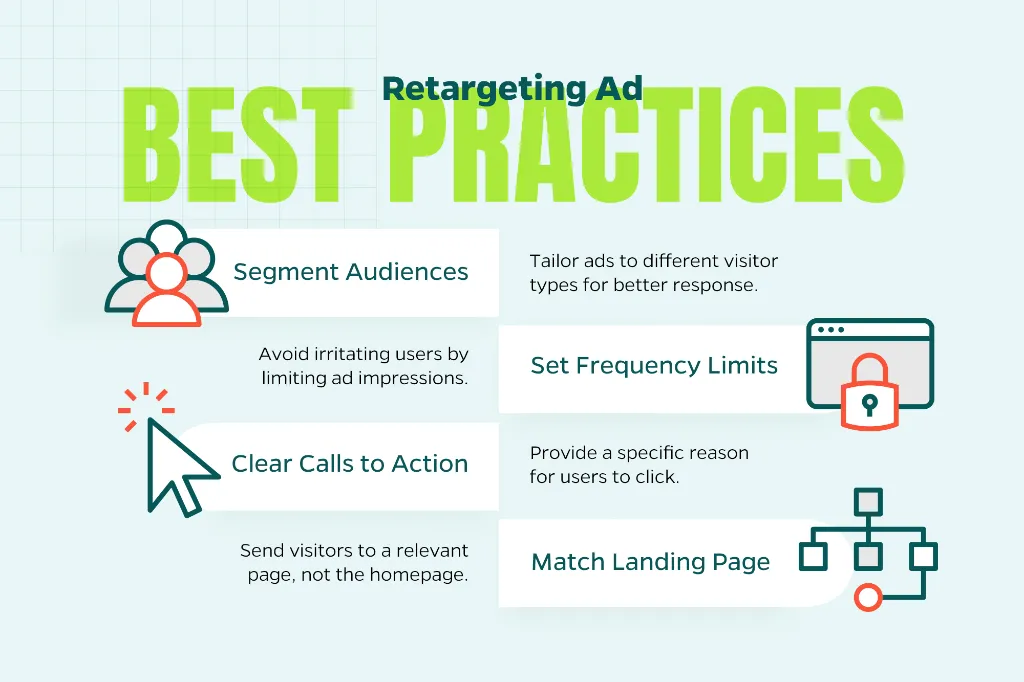
Segment your audiences. Not every visitor to your site is the same. Someone who viewed your capabilities page is a different kind of prospect than someone who spent five minutes reading a case study. Tailor your ads accordingly. The more relevant the message, the better the response.
Set frequency limits. Showing your ad to the same person 20 times per week creates more irritation than interest. Most platforms let you cap how often a single user sees your ads. Use that feature.
Include clear calls to action. Your retargeting ad should give someone a specific reason to click. Whether it’s downloading a spec sheet, requesting a quote, or watching a product demo, make the next step obvious.
Match your landing page to your ad. If your ad promotes a specific product line, send the visitor to a page about that product line as opposed to your homepage. The fewer clicks it takes to get to relevant content, the better your conversion rate will be.
Measuring What Matters
One of the advantages of digital advertising is that you can track results with a level of precision that traditional marketing never allowed. With retargeting, the metrics you’ll want to keep an eye on include click-through rates, cost per conversion, and whether the visitors who convert through retargeting turn into qualified leads.
That last point is worth emphasizing. A retargeting campaign that drives a lot of form fills but generates low-quality inquiries isn’t doing its job. Work with your sales team to understand which leads are moving through the pipeline. Use that feedback to refine your targeting and messaging over time.
Be patient, too. Retargeting is a nurture play designed to work over a period of weeks or months. Give campaigns enough time to generate meaningful data before drawing conclusions or making major changes.
A Tool Worth Using
For small and mid-sized manufacturers, every marketing dollar needs to work hard. Retargeting is one of the more efficient ways to make that happen. Instead of spending money introducing your brand to people who have never heard of you, you’re staying visible to people who are already interested.
That said, retargeting works best as part of a broader digital strategy. On its own, it can only reach the visitors your site already attracts. Pair it with solid SEO, targeted content, and smart paid search campaigns, and you’ve got a system that builds awareness and converts it. Those elements help produce a strong lead generation program.
Need Help?
Interested in learning how retargeting might fit into your marketing strategy? Contact Straight North to start the conversation.