
LinkedIn has evolved well beyond a digital résumé repository. For B2B companies, using LinkedIn for marketing helps you reach decision-makers, build brand credibility, and drive meaningful business conversations. Yet, posting consistently isn’t enough. What you post matters just as much as how often you post.
Not all content is created equal on LinkedIn. Some formats and topics tend to generate strong engagement and reach, while others quietly disappear into the feed. If your company is investing time and resources into LinkedIn marketing, it pays to understand what the platform rewards.
Thought Leadership Posts That Take a Position
LinkedIn’s audience skews professional. That means users are generally there to learn, stay informed, and advance their careers or businesses. Thought leadership content speaks directly to that intent. Posts that share a specific perspective, particularly ones that are backed by real experience or data, tend to outperform generic informational content.
The key is specificity. A post that says “here’s what we’ve learned from running PPC campaigns for home services companies over the past three years” will almost always outperform one that offers broad marketing advice anyone could have written. LinkedIn rewards authentic expertise, and users can tell the difference.
Short-Form Text Posts with a Strong Hook
Despite the rise of video and visual content across social platforms, plain text posts still perform exceptionally well on LinkedIn. The reason is practical: they load instantly, work in any environment, and don’t require the viewer to commit to watching anything.
A strong text post typically follows a recognizable structure:
- An attention-grabbing opening line or “hook” that earns the click
- A concise body that delivers on the hook’s promise
- A clear takeaway or question that invites engagement
Posts structured this way give LinkedIn’s algorithm something to work with. When users click “see more” or leave a comment, the algorithm interprets that as a signal that the content is worth distributing more broadly.
Native Documents and Carousel-Style Content
LinkedIn’s document format has often been used to create slide-style posts. It has become one of the platform’s highest-performing content types. These posts encourage repeated interaction as users swipe through each slide, which sends positive engagement signals to the algorithm.
From a content strategy standpoint, this format works well for step-by-step guides, industry data breakdowns, before-and-after case study snapshots, and tip lists. The visual structure makes complex information easier to digest, and because the content is hosted natively on LinkedIn rather than linking out to a third-party site, the platform tends to favor it.
Video Content
Video has been a growing priority on LinkedIn for several years, and the platform continues to push it. That can sound intimidating, but high production value isn’t the deciding factor. LinkedIn users respond well to straightforward, conversational video. That could be as simple as someone talking directly to the camera about a topic relevant to their work.
Short videos in the 60– to 90–second range tend to perform best. The goal is to communicate a clear idea quickly, not to produce an overly polished brand spot. Think of it less as advertising and more as a direct conversation with your professional network.
Content That Sparks Discussion
LinkedIn’s algorithm places significant weight on comments, not just likes or shares. That means content designed to start a conversation has a structural advantage over content that simply delivers information and stops there.
Below are a few approaches that tend to invite comments:
- Asking a direct question at the end of a post
- Sharing a contrarian or nuanced take on a common assumption in your industry
- Posting lessons learned from a real mistake or unexpected outcome
- Sharing a data point that challenges conventional wisdom
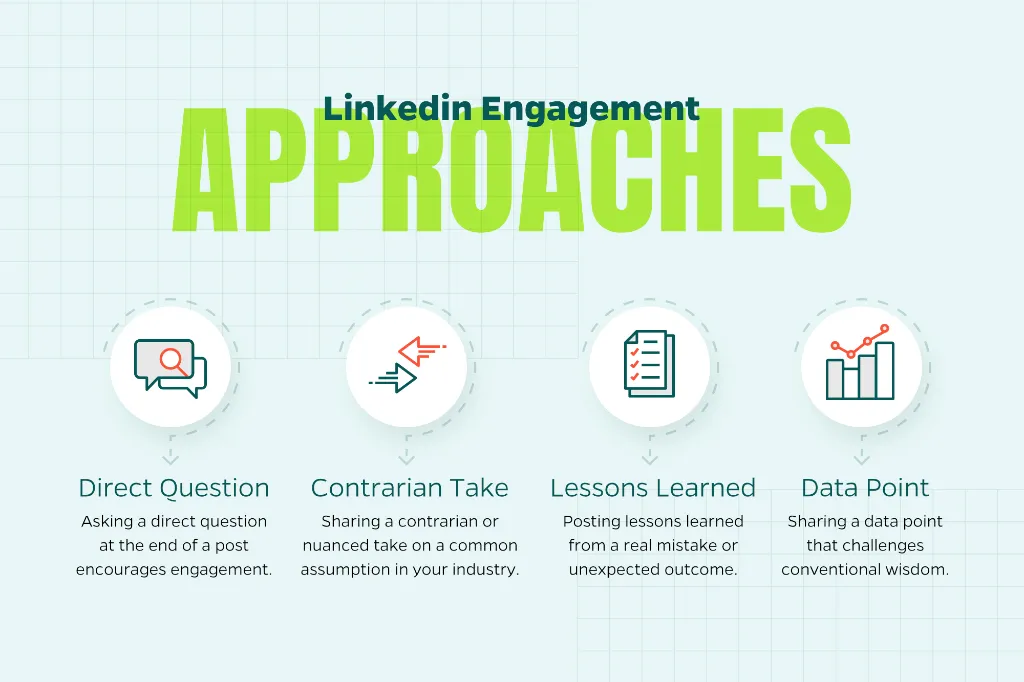
The common thread is that each of these gives the reader a reason to weigh in. Engagement that feels earned tends to be more valuable than engagement that feels manufactured.
Company Pages vs. Personal Profiles
One of the more important nuances in LinkedIn strategy is that personal profiles generally outperform company pages in terms of organic reach. LinkedIn was built around professional relationships, and content posted by individuals tends to feel more human and credible than content posted by a brand account.
That doesn’t mean company pages are irrelevant. But the most effective LinkedIn strategies often involve a combination of both: company pages for brand consistency and official announcements, and individual employees for authentic, relationship-driven content. When employees share or comment on company content, reach expands significantly.
What to Avoid
Just as important as knowing what works is understanding what tends to underperform. On LinkedIn, the following content types consistently see limited reach:
- Purely promotional content that leads with a sales pitch rather than something of value
- Generic motivational content that lacks any specific relevance to your industry or audience
- Infrequent posting followed by bursts of activity (consistency matters more than volume)
Content Quality Is a Long Game
LinkedIn rewards consistency and relevance over time. Building a presence on the platform is about showing up regularly with content that your target audience finds useful, credible, and worth engaging with. When you do that consistently, the algorithm notices. More importantly, so does your audience.
Understanding what types of content perform best is a starting point but translating that into a strategy that fits your brand, your audience, and your goals takes more than a checklist. It requires testing, analysis, and ongoing refinement.
Need Help?
If you’re looking to get more from your LinkedIn presence, Straight North can help. Contact us today to talk through your content strategy.