



Anyone can post on LinkedIn. Far fewer people get remembered for what they post. If you scroll through your feed right now, you’ll probably notice the same handful of names showing up repeatedly. It’s probably not because they post the most, it’s likely because what they say tends to stick. That’s thought leadership, and it’s one of the most underused tools in a B2B marketer’s kit.
Thought leadership is about becoming the person (or brand) that others look to when they need a straight answer, a fresh angle, or a reality check on something happening in your industry. Done well, it builds trust long before a prospect ever fills out a contact form. Here’s how to build that kind of presence on LinkedIn without it feeling forced.
The Importance of Point of View
Most company pages treat LinkedIn like a press release feed. They share new hire announcements, award badges, and the occasional product update. None of that is wrong, it doesn’t build authority either. Thought leadership requires an opinion that a reader can agree or disagree with.
Before you write another post, get clear on what your brand believes about your industry. Where do you disagree with common practice? What trend do you think is overhyped? What do clients misunderstand about your field that you wish they didn’t? Those questions are where real thought leadership content comes from. A useful exercise is to draft a short list of five opinions your team holds strongly, then use that list as a starting bank of post ideas for the next several weeks.
Pick a Lane and Stay in It
You don’t need to comment on everything happening in your industry. You need to be known for something specific. A CFO who consistently shares sharp takes on cash flow management earns a different kind of credibility than one who posts broadly about “leadership” or “business trends.” Narrow focus makes your expertise legible. Here are a few ways to find your lane:
- Look at the questions your sales team fields most often. Those are gaps in public knowledge you can fill.
- Notice which of your past posts or comments got real engagement, not just polite likes.
- Identify one or two topics where you have direct, firsthand experience rather than secondhand knowledge.
Publish Consistently, Not Constantly
Thought leadership is built on repetition and reliability, not volume. A brand that posts three thoughtful updates a week will outperform one that posts daily filler. Consistency signals that you’re paying attention to your industry over time, which is exactly the impression you want to leave.
If you’re not sure where to start, build a simple content calendar around two or three recurring themes. This takes the guesswork out of what to post next. It also keeps your messaging from drifting week to week, which matters more than most people expect when they’re trying to build a recognizable voice.
Write Like a Person, Not a Press Office
LinkedIn rewards posts that sound like they came from a human being with opinions and experience. That doesn’t mean you should abandon professionalism. It means you should write the way you’d explain something to a colleague over coffee: clearly, directly, and without corporate padding.
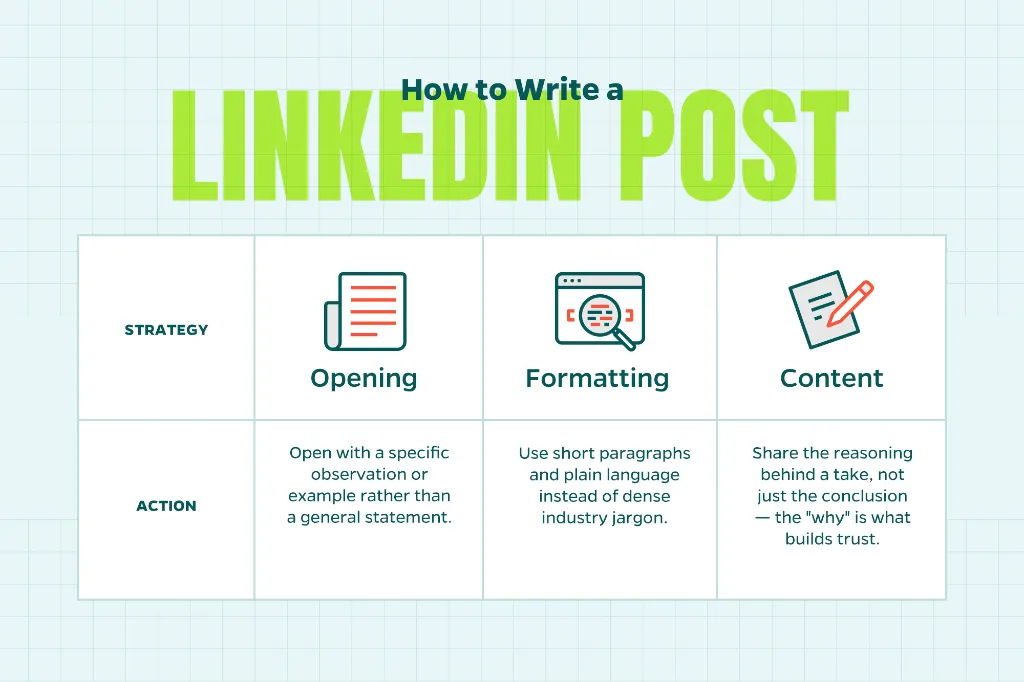
Here are a few habits that make posts feel more human and less scripted:
- Open with a specific observation or example rather than a general statement.
- Use short paragraphs and plain language instead of dense industry jargon.
- Share the reasoning behind a take, not just the conclusion — the “why” is what builds trust.
Put Real People in Front of the Brand
People build relationships with people, not logos. A company page can share updates, but it can’t have a conversation in the comments section the way an individual employee can. Some of the strongest thought leadership on LinkedIn comes from executives, subject matter experts, and even individual contributors posting under their own names about work they know well.
If leadership buy-in is a challenge, start small. Ask one or two team members with expertise and a willingness to write to post occasionally. Then, support their efforts by engaging with and sharing their posts from the company page. Momentum tends to build once people see that their voice is reaching a real audience and generating a response.
Engage Before You Expect Engagement
Thought leadership isn’t a one-way broadcast. Some of the most effective work happens in the comments section. This includes thoughtful replies on other people’s posts, questions that push a conversation further, or a quick note that adds value to something a peer shared. This kind of engagement puts your name in front of new audiences without asking them to follow you first.
Set aside even ten or fifteen minutes a few times a week to comment thoughtfully on posts from people in your industry, your clients, and your prospects. It’s a small habit that compounds into real visibility over time.
Back Up Opinions with Evidence
An opinion without support is just noise. The posts that earn trust tend to combine a clear point of view with something concrete behind it. That could be a data point, a client story (with permission), or a lesson learned from a project that didn’t go as planned. Vulnerability and specificity are important. Readers remember posts that admit a mistake or share a hard-won lesson far more than posts that only celebrate wins. If you find yourself writing a post that could apply to any company in your industry, that’s usually a sign it needs one more layer of detail before you publish it.
Measure What Matters
Impressions and likes feel good, but they’re not the whole story. Track the metrics that reflect growing authority. This includes who’s commenting and how substantively, whether the same names keep showing up, and whether posts are generating direct messages, connection requests, or sales conversations. Those signals tell you whether your content is building real credibility or simply circulating in a bubble, and they’re far more useful for guiding what you post next than a like count ever will be.
Thought leadership on LinkedIn isn’t built overnight, and it isn’t built by chasing every trending topic either. It’s built one clear, honest, well-timed post at a time. Stay consistent, stay specific, and the credibility will follow.
Need Help?
Building a thought leadership presence on LinkedIn takes strategy and consistency. Contact Straight North to learn how our team can help you develop a LinkedIn content plan that gets your brand noticed.