
If you’re running B2B marketing campaigns and trying to decide where to put your budget, the LinkedIn-versus-Facebook question comes up constantly. Both platforms have enormous reach. Both offer sophisticated ad targeting. The real question is: which one is more likely to give you something meaningful in return?
The answer depends on your goals, your audience, and how you define ROI. But for most B2B companies, the platforms serve very different purposes. Understanding those differences is the first step toward spending smarter. In this article we will break down the case for each and share what we have learned about each platform.
The Case for LinkedIn
LinkedIn was built for professionals, which gives it a structural advantage in B2B marketing that no other platform has matched. When someone logs into LinkedIn, they’re already in a business mindset. They’re thinking about their industry, their career, their company’s challenges. That’s a very different headspace than scrolling through a personal social feed.
From a targeting standpoint, LinkedIn lets you reach people based on:
- Job title and seniority level
- Company size and industry
- Skills, certifications, and years of experience
- Group membership and professional interests
For B2B marketers trying to get in front of decision-makers, this level of precision is hard to replicate elsewhere. LinkedIn also tends to perform well for longer sales cycles and higher-value offerings. If you’re selling enterprise software, professional services, or complex industrial solutions, you’re probably not closing deals on the first touchpoint. LinkedIn is particularly effective for building awareness and nurturing prospects over time through thought leadership content, sponsored articles, and direct outreach via LinkedIn’s messaging tools.
That said, LinkedIn advertising is expensive on a cost-per-click basis. You’ll pay more here than almost anywhere else in digital advertising. That means your targeting needs to be tight and your content needs to be compelling to justify the investment.
The Case for Facebook
It would be a mistake to dismiss Facebook as a purely B2C channel. With nearly three billion monthly active users, Facebook advertising reaches virtually every professional demographic. That includes the decision-makers you’re trying to reach on LinkedIn. The difference is that on Facebook, those people aren’t necessarily wearing their professional hats.
That distinction matters, but it doesn’t make Facebook useless for B2B. Here’s where Facebook tends to shine:
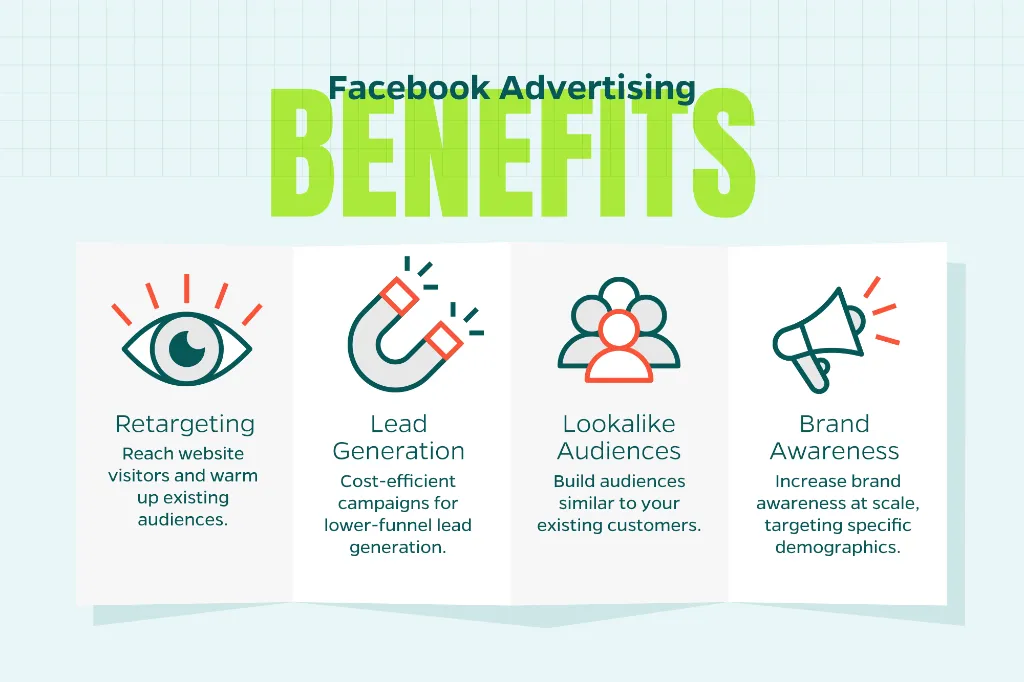
- Retargeting website visitors and warming up audiences who already know your brand
- Lookalike audiences built from your existing customer or lead lists
- Lower-funnel lead generation campaigns where cost efficiency matters
- Brand awareness at scale, especially for companies targeting small business owners or entrepreneurs
Facebook’s Meta Ads platform is also remarkably sophisticated when it comes to optimization. Its machine learning algorithms are good at finding conversions within your target audience, which can translate to better cost-per-lead numbers compared to LinkedIn.
For B2B companies with tighter budgets, Facebook can extend reach in ways that LinkedIn simply cannot match on a dollar-for-dollar basis. It’s also worth noting that Facebook advertising reaches buyers outside of work hours, which isn’t always a drawback. Business decisions don’t always happen between 9 and 5.
Where the ROI Question Gets Complicated
Comparing ROI across platforms is tricky because ROI is rarely a single number. It depends on what you’re measuring: cost per lead, lead quality, pipeline contribution, or closed revenue. A platform that generates twice as many leads at half the cost may still underperform if those leads never convert.
This is where many B2B marketers find that LinkedIn leads, while more expensive to acquire, tend to be closer to their ideal customer profile. The person who clicked your LinkedIn ad saw it in a professional context, identified themselves by job title and company, and engaged with content relevant to their work. That context often translates into higher lead quality and faster progression through the sales funnel.
Facebook leads, on the other hand, may have a lower cost per acquisition but require more qualification time. Your sales team may find themselves sorting through a higher volume of leads to find the ones worth pursuing. Depending on your team’s capacity and your sales process, that extra work can erode the cost advantage.
The honest answer is that neither platform “wins” universally. The better question is: which platform aligns with where your buyers are and how they want to engage?
A Smarter Approach Than Picking One
For many B2B companies, the most effective strategy isn’t choosing between LinkedIn and Facebook. It’s using them together, with each platform playing a distinct role.
Here is a common approach worth considering. Use LinkedIn for top-of-funnel awareness and precise targeting of new prospects, then use Facebook for retargeting those same audiences at a lower cost as they move down the funnel. This lets you take advantage of LinkedIn’s targeting capabilities without paying LinkedIn’s rates for every touchpoint in the buyer journey.
What matters most is that your platform mix is intentional. Know what each channel is supposed to accomplish, track the right metrics, and be willing to adjust when the data tells you something isn’t working. Too many B2B marketers run campaigns on both platforms without a clear strategy for either, then wonder why they’re not seeing results.
The Bottom Line
LinkedIn is generally the stronger platform for direct B2B targeting, especially when you need to reach specific roles at specific types of companies. The higher cost per click is the price of precision, and for many B2B marketers, that precision is worth it. Facebook, meanwhile, offers reach and cost efficiency that can complement a LinkedIn strategy or stand on its own when budget is limited and audience parameters are broader.
There is no universal answer here. But there is a right answer for your business, based on your audience, your budget, and your goals. The companies that figure that out tend to get considerably more from their social advertising spend than those that default to one platform out of habit.
Need Help?
Want to build a social advertising strategy that’s right for your B2B business? Contact Straight North to get started.