
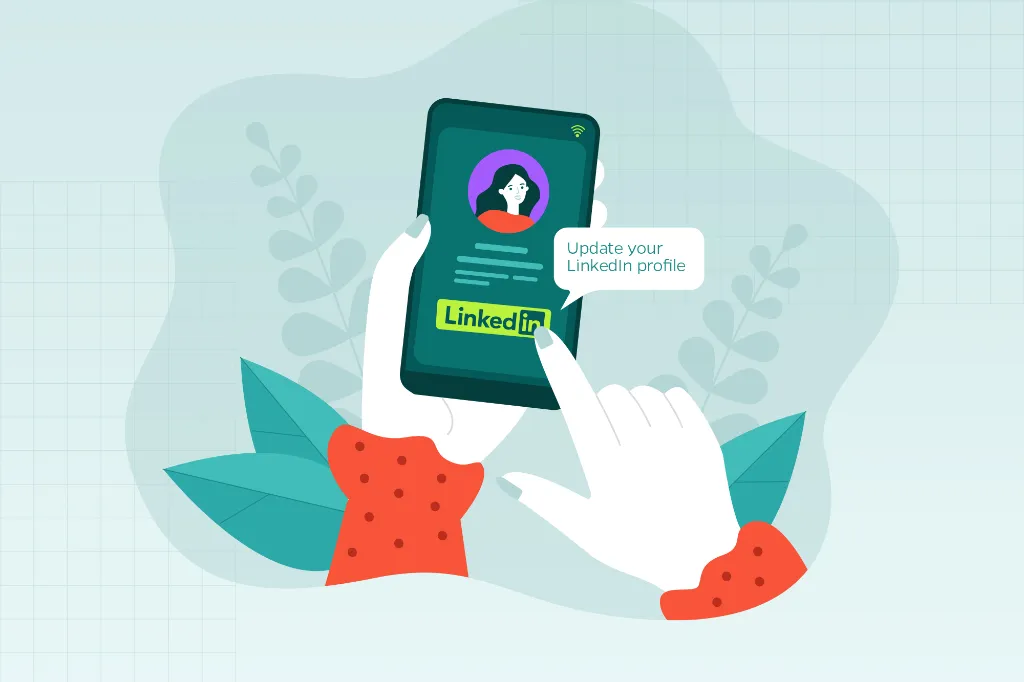
Most B2B buyers check out a company or salesperson on LinkedIn before they ever agree to a call. That means the personal profiles of company employees, particularly the sales staff, serve as marketing messages. A profile that reads like a digital resume from 2014 tells prospects nothing about how you can help them. A profile built with lead generation in mind, on the other hand, quietly qualifies and warms up visitors before you say a word.
Fortunately, optimizing a LinkedIn profile isn’t a massive undertaking. A good approach makes a handful of deliberate choices, section by section, with your buyer in mind instead of your resume in mind. This article will show you where to focus on using your LinkedIn profile to improve your company’s lead generation.
Start with a Headline That Solves a Problem
The default headline LinkedIn gives you is your job title and employer. That’s fine for networking with old coworkers, but it wastes prime real estate for lead generation. Your headline shows up next to your name in search results, comments, and connection requests, so it’s often the first thing a prospect reads about you.
Instead of “Account Executive at XYZ Company,” try framing the headline around the outcome you deliver. Something like “Helping mid-size manufacturers cut procurement costs through smarter vendor contracts” tells a visitor exactly why they should care. You still have room to mention your title and company if you want. But lead with value, not hierarchy.
Write an About Section for Your Reader, Not for Yourself
The About section trips up more professionals than any other part of the profile. It’s tempting to write it like a career biography, starting with where you went to school and working forward chronologically. That approach might feel natural, but it rarely moves a prospect toward action.
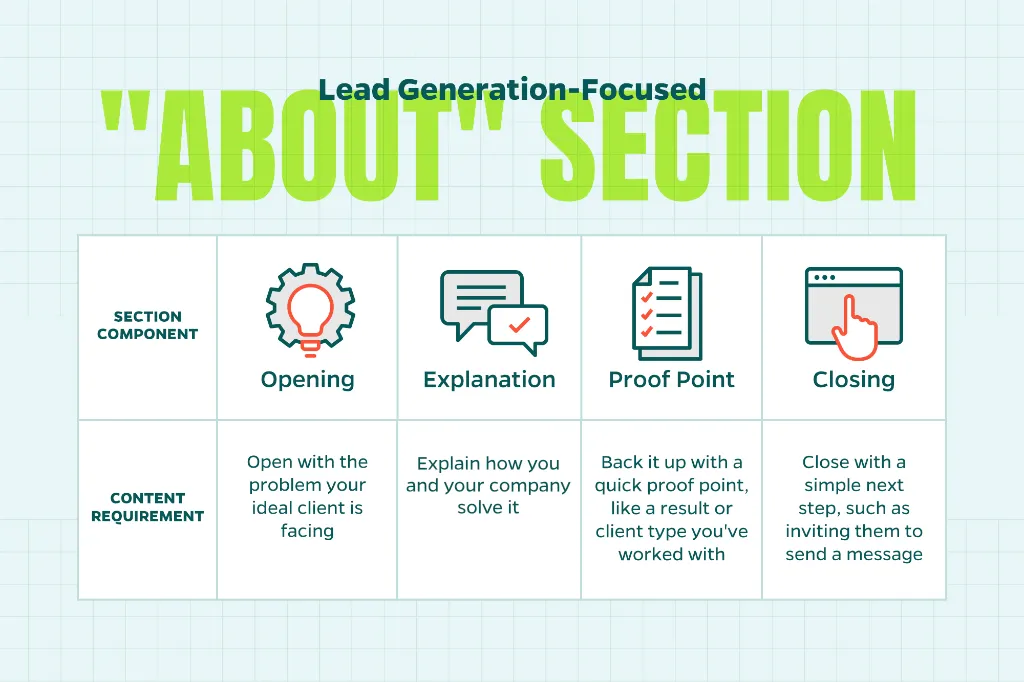
A stronger About section speaks directly to the reader’s situation. Try this structure:
- Open with the problem your ideal client is facing
- Explain how you and your company solve it
- Back it up with a quick proof point, like a result or client type you’ve worked with
- Close with a simple next step, such as inviting them to send a message
Keep the tone conversational, as if you’re explaining your work to someone at an industry event rather than filling out a form. Short paragraphs and white space make the section easier to skim, which matters since most people are scanning on mobile.
Feature Your Best Proof, Not Everything You’ve Ever Done
LinkedIn’s Featured section lets you pin content near the top of your profile, and it’s an underused tool for lead generation. This is where case studies, client testimonials, webinar recordings, or a link to a relevant blog post can do real persuasive work.
Resist the urge to feature everything. Pick two or three pieces that speak directly to the problems your ideal clients are trying to solve. A focused Featured section builds credibility faster than a cluttered one.
Treat Your Experience Section Like Case Studies
Job descriptions on most LinkedIn profiles read like they were pulled from an old resume: a list of responsibilities with no context about impact. For lead generation purposes, each role is a chance to show a prospect what working with you might produce.
Rather than listing duties, describe outcomes. Mention the types of clients you’ve served, the challenges you helped solve, and any measurable results you’re able to share. Even a sentence or two per role, written in plain language, does more to build trust than a bulleted list of tasks.
Collect Recommendations Instead of Just Endorsements
Skill endorsements are easy to rack up but carry little weight with prospects, since anyone can click a button without real context. Recommendations are different. They’re written testimonials from people who’ve worked with you directly, and they show up prominently on your profile.
Make a habit of asking recent clients, partners, or colleagues for a short recommendation after a project wraps up successfully. A handful of specific, well-written recommendations does more for your credibility than a hundred generic endorsements ever will.
Stay Active, Because a Static Profile Loses Momentum
Even a perfectly optimized profile won’t generate leads if nobody sees it. LinkedIn’s algorithm favors accounts that post and engage regularly, which means activity feeds directly into visibility. Commenting thoughtfully on posts in your industry, sharing insights from your own work, and posting original content on a consistent basis all keep your profile in front of the right audience.
You don’t need to publish daily to see results. A steady rhythm, even once or twice a week, paired with engagement on other people’s posts, does far more for lead generation than a profile that only gets touched once a year.
Make It Easy for Prospects to Take the Next Step
Once a visitor lands on your profile and likes what they see, don’t make them guess what to do next. Your contact information should be current and visible, and your custom URL should be clean and professional rather than a string of numbers.
If you have a scheduling link, relevant resource, or specific call to action you want prospects to take, the Featured section and About section are both good places to include it. The goal is to remove friction between interest and outreach.
A Profile That Works as Hard as You Do
Optimizing your LinkedIn profile for lead generation is about making sure that when the right prospect finds you. That could come through search, a mutual connection, or a comment on a post. The important thing is that they see a profile that speaks to their needs and makes the next step obvious. Small, deliberate changes across your headline, About section, Featured content, and experience descriptions add up to a profile that works for you around the clock, not just when you’re actively pitching.
Need Help?
Want help turning your LinkedIn presence into a consistent source of qualified leads? Contact Straight North to learn how our digital marketing team can support your LinkedIn strategy.