

For many manufacturers, a website redesign starts with aesthetics: updated branding, modern visuals, maybe a new CMS. But if your site isn’t generating qualified leads, a fresh look alone won’t move the needle.
At Straight North, we’ve worked with manufacturers long enough to know that lead generation is what truly defines success. The most effective manufacturing marketing websites guide engineers, procurement managers, and operations leaders toward action.
Here are 10 ways to approach your manufacturing website redesign strategically so it becomes a consistent source of high-quality leads.
1. Start with Clear Business and Lead Goals
Before wireframes or color palettes, define what success looks like.
Ask yourself:
- What types of leads do we want more of?
- Which industries or verticals are most profitable?
- Are we targeting engineers, plant managers, procurement teams, or all three?
- What actions define a qualified lead (RFQ submissions, consultation requests, spec downloads)?
Manufacturing sales cycles are long and complex. Your website should support that process, not oversimplify it. Establish measurable KPIs such as:
- Increase RFQ submissions by 30%
- Improve organic traffic to product pages
- Boost conversion rate from 1% to 2.5%
- Generate more quote requests from specific industries
Clear goals keep the redesign focused on performance, not preferences.
2. Align the Website with the Buyer’s Journey
Manufacturing buyers don’t make impulsive decisions. They research thoroughly, compare suppliers, and validate technical capabilities.
Your redesigned site should support three key stages:
Awareness
Prospects are researching solutions to a problem. Educational blog posts, industry guides, and application pages help you get discovered through search.
Consideration
They’re evaluating vendors. Detailed service pages, case studies, and technical resources build credibility.
Decision
They’re narrowing choices. This is where clear calls to action, trust signals, and easy RFQ processes matter most.
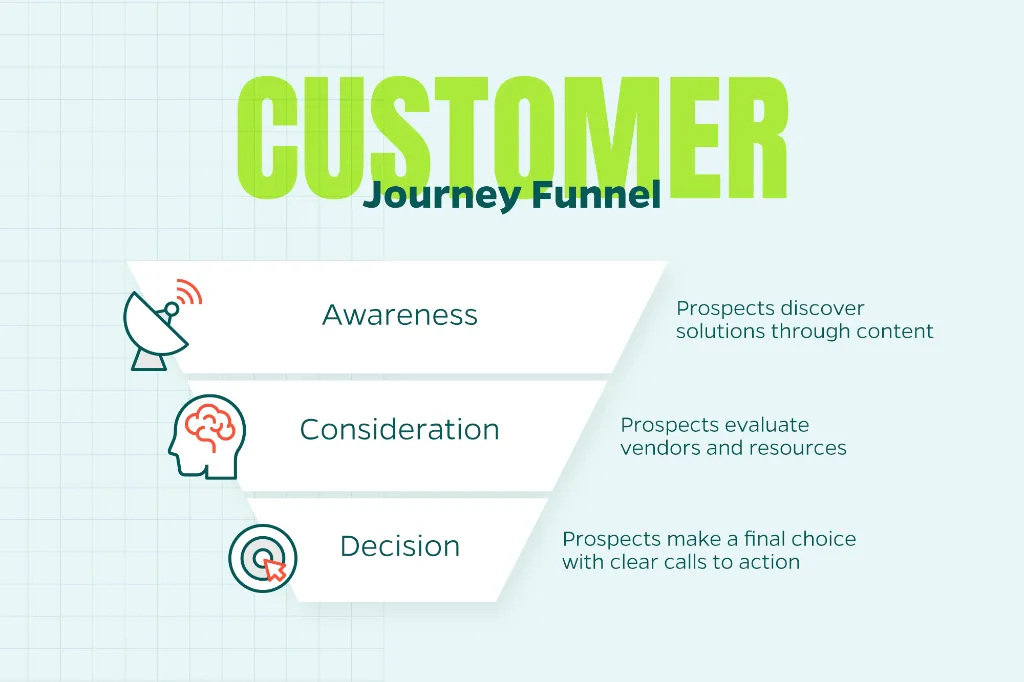
If your current site jumps straight to “Contact Us” without building confidence first, you’re losing opportunities. Redesign your navigation and content architecture to guide users logically from learning to inquiring.
3. Clarify Your Messaging
Manufacturing websites often sound interchangeable. Generic claims like “high-quality solutions” and “industry leader” don’t differentiate you.
Instead:
- Highlight specific certifications, tolerances, or capabilities
- Emphasize industries served
- Call out production capacity, lead times, or unique processes
- Showcase competitive advantages (in-house engineering, rapid prototyping, custom fabrication)
Speak directly to your ideal customer’s pain points. For example:
- “Struggling with tight tolerances in aerospace components?”
- “Need a supplier who can scale production without sacrificing quality?”
Clarity beats corporate jargon every time.
4. Build Conversion Paths into Every Key Page
One of the biggest missed opportunities in manufacturing redesigns is failing to integrate calls to action throughout the site. Every high-value page should offer a next step. For example, product pages should include “Request a Quote” buttons, while downloadable spec sheets can be offered behind simple forms. Engineering consultation requests, live chat for quick qualification questions, and industry-specific landing pages with tailored CTAs are all valuable options to consider.
Remember: not every visitor is ready to submit an RFQ. Offer micro-conversions such as downloading a capabilities brochure, viewing a case study, or subscribing to industry updates. The goal is to move visitors closer to becoming sales-qualified leads.
5. Optimize Site Structure for SEO From the Ground Up
A redesign is the perfect time to fix structural SEO issues.
Manufacturers often have:
- Thin product pages
- Disorganized navigation
- Duplicate content
- Poor internal linking
- Unoptimized metadata
Start with keyword research tied to real buying intent. For example:
- “Custom stainless steel fabrication”
- “Precision CNC machining for aerospace”
- “Industrial conveyor manufacturer”
Then build your site architecture around those search terms. Each service, industry, and major product category should have a dedicated, optimized page.
Technical SEO also matters. You should focus on fast load speeds, mobile responsiveness, clean URL structure, proper schema markup, and secure HTTPS protocol. A beautiful site that doesn’t rank won’t generate leads. SEO should shape the redesign, not be added afterward.
6. Showcase Proof: Case Studies, Certifications, and Results
Manufacturing buyers need reassurance. They’re often responsible for large budgets and long-term supplier relationships.
Strengthen credibility with:
- Detailed case studies (problem → solution → measurable result)
- Client testimonials (especially from recognizable brands)
- Industry certifications (ISO, AS9100, etc.)
- Awards or compliance standards
- Equipment lists and facility photos
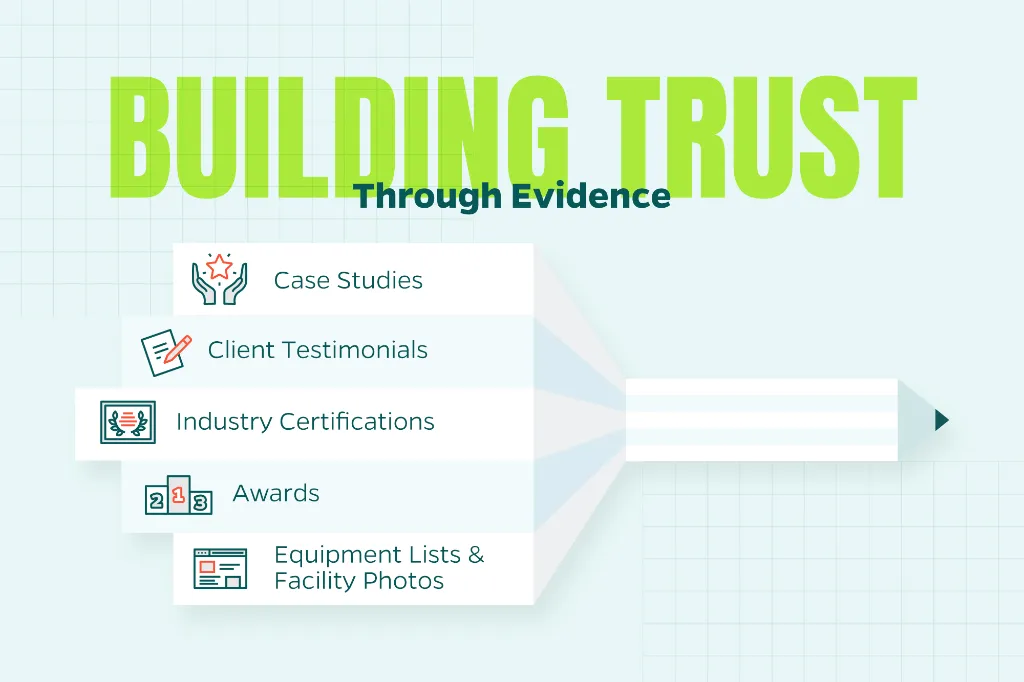
Visual proof matters too. High-quality images of your facility, team, and processes humanize your brand and differentiate you from competitors relying on stock photography.
Trust signals should appear across the site, not buried on a single “About” page.
7. Simplify the RFQ Process
Long, complicated forms can hurt conversions. But overly short forms can send unqualified leads to sales.
Strike a balance.
Best practices include:
- Only require essential information
- Use smart form logic to show relevant fields
- Allow file uploads for drawings or specs
- Make the form easy to complete on mobile
- Clearly communicate next steps after submission
Also consider placing RFQ access in multiple areas:
- Persistent header button
- Service page CTAs
- Footer links
- Dedicated landing pages for paid campaigns
The easier it is to request a quote, the more opportunities you’ll capture.
8. Improve User Experience and Navigation
Engineers and procurement teams are busy. They don’t have time to hunt for information. Your redesigned site should prioritize intuitive navigation, logical product and service categorization, prominent search functionality, clean and uncluttered layouts, and clear headings with scannable content.
Avoid overloading pages with dense technical text. Break up information with icons, diagrams, and expandable sections for detailed specs. The goal is to make complex information accessible without oversimplifying it.
9. Integrate Marketing Automation and Tracking
A lead-generating website doesn’t end at form submission. Your redesign should integrate with:
- CRM systems
- Marketing automation platforms
- Call tracking software
- Analytics tools
This allows you to:
- Track which channels drive the most qualified leads
- Score leads based on behavior
- Nurture prospects with targeted email campaigns
- Provide sales with better insight before follow-up
Closed-loop reporting helps you measure ROI and continuously improve performance.
10. Plan for Ongoing Content and Optimization
A redesign isn’t a one-time project. It’s the beginning of a growth strategy. After launch:
- Monitor traffic and conversion rates
- A/B test calls to action
- Add new industry pages
- Publish educational blog content
- Expand case studies
- Refine keyword targeting
Manufacturing markets evolve. Your website should evolve with them. The companies that consistently generate leads treat their websites as living assets, not digital brochures.
Final Thoughts: Redesign with Purpose
Redesigning a manufacturing website is a significant investment. Done right, it becomes your most consistent and scalable lead generation tool. Done wrong, it’s an expensive cosmetic update.
The difference comes down to strategy.
Focus on:
- Clear goals
- Buyer-focused messaging
- Strong SEO foundation
- Integrated conversion paths
- Trust-building proof
- Ongoing optimization
When you approach your redesign through the lens of lead generation, every design choice, content decision, and technical improvement serves a measurable business objective. And that’s when your website stops being just a marketing asset and starts becoming a revenue engine.
Need help navigating this process? Contact Straight North. We help manufacturing companies with the full spectrum of digital marketing strategies including SEO, website redesign, and lead generation.