




When a homeowner has water pooling under the sink or a furnace that quit in the middle of January, trust becomes the deciding factor almost instantly. While two companies can offer nearly identical pricing and availability, the one that shows it is licensed, insured, and credentialed will usually win the job.
For HVAC contractors, plumbers, pest control operators, electricians, and other home services businesses, credentials should be more than legal requirements you hang on your wall. They are marketing proof points that reduce a customer’s perceived risk when they are deciding who to call.
If you are marketing a home services business, your licensure, insurance, certifications, or industry affiliations should be showcased. Include them on your website, your marketing materials, and the conversations your team has with prospects. This article will go into greater detail about why these credentials matter and how to put them to work.
Licensing Builds the Foundation of Trust
A license tells a customer that your business has met a state or local government’s minimum standard for competence and safety. For trades like plumbing and HVAC, that often means passing exams, logging apprenticeship hours, and staying current on code changes. For pest control, it typically means demonstrating safe and proper handling of chemicals that could otherwise harm people, pets, or the environment.
None of that is exciting to explain in a sales pitch, but it is exactly what a cautious homeowner wants to know before they let a stranger into their home. Displaying your license number and issuing authority on your website and in your Google Business Profile gives customers an easy way to verify you are legitimate, rather than asking them to take your word for it.
Insurance Protects Everyone at the Table
General liability insurance and workers’ compensation coverage protect your business, but they also protect the customer. If a technician accidentally damages a customer’s flooring or gets injured on the property, proper insurance means the homeowner is not left holding financial responsibility for someone else’s mistake.
Savvy customers, especially those who have been burned before, often ask directly about insurance coverage. Being able to answer confidently, and to back it up with a certificate of insurance on request, removes a major objection before it is even raised. Consider highlighting insurance coverage in these places:
- Website service pages, near pricing or scheduling calls to action
- Email signatures and proposal templates
- Vehicle wraps and printed materials, where a short line builds immediate credibility
Certifications Signal Specialized Expertise
Beyond baseline licensing, industry certifications show that your technicians have gone further than the minimum. NATE certification for HVAC technicians, EPA Section 608 certification for handling refrigerants, or manufacturer-specific training from brands like Trane or Carrier all tell a customer that the person working on their system understands it deeply, not just adequately.
These credentials also matter for warranty compliance. Many equipment manufacturers require installation or service by certified technicians for a warranty to remain valid, which means certifications can directly protect a customer’s investment. That is a compelling detail to mention in service descriptions or FAQ content, since it connects a credential to a concrete customer benefit rather than leaving it as an abstract badge.
Industry Affiliations Add Third-Party Credibility
Membership in organizations such as the Air Conditioning Contractors of America, the National Pest Management Association, or a local Better Business Bureau chapter signals that other professionals and watchdog groups vouch for your standards. These affiliations often come with their own code of ethics, which adds a layer of accountability beyond what any single business claims about itself.
Local chamber of commerce membership works similarly, especially for home services companies that depend heavily on local search visibility and community reputation. It is a small credential, but it reinforces that your business is an established, accountable part of the community rather than an unfamiliar name that showed up online.
Where to Showcase Credentials for Maximum Impact
Having credentials is only half the equation. The other half is making sure prospective customers see them during the research phase. A few high-impact locations include:
- Homepage and service pages: badges or a short trust statement near the top of the page
- Google Business Profile: license numbers and certifications in the business description
- About Us page: a dedicated section explaining what each credential means for the customer
- Review responses: mentioning insurance or licensing when addressing a review about property damage or safety
- Estimates and invoices: a footer line listing license number and insurance status
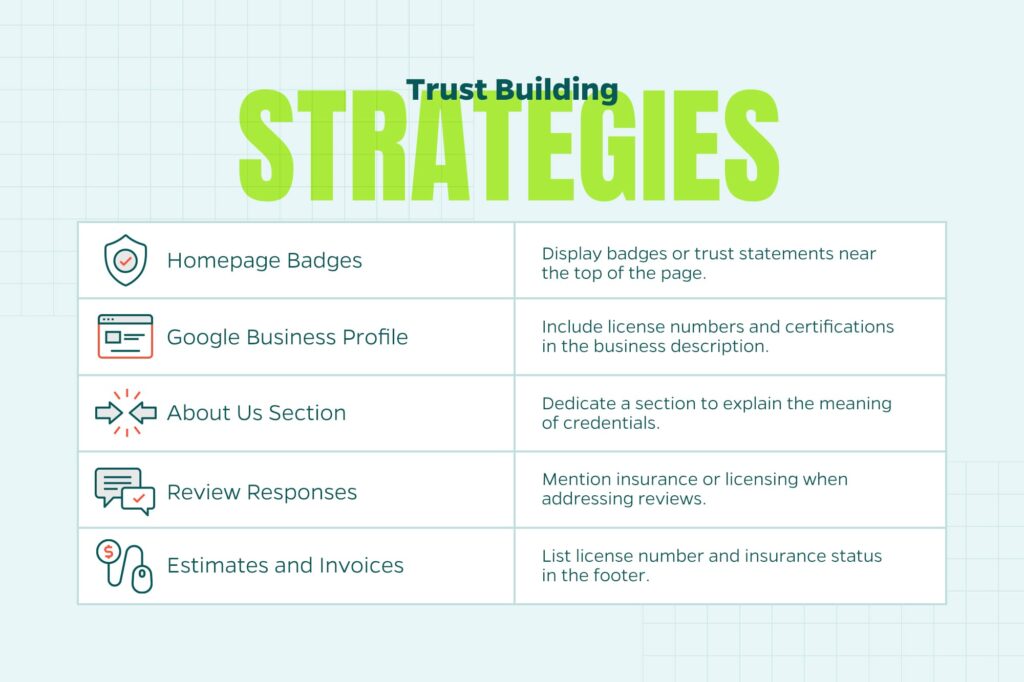
The goal is not to overwhelm visitors with a wall of logos. It is to place the appropriate credential in front of the reader at the right moment, so trust builds naturally as someone moves through your site.
Common Mistakes That Undercut Good Credentials
Many home services companies have strong credentials but still fail to get credit for them. Here are a few common missteps:
- Burying license numbers in fine print instead of near the calls to action where decisions happen
- Letting certifications lapse or listing outdated ones, which can create liability if a customer later checks and finds a discrepancy
- Treating credentials as a one-time website update rather than something reinforced across ads, proposals, and social media
- Assuming customers already know what a credential means, rather than briefly explaining why it matters to them
Fixing these issues does not require a full rebrand. It usually just takes a content and messaging review, making sure every credential your business has earned is visible, current, and explained in terms a homeowner can appreciate.
Turning Compliance into a Competitive Advantage
Licensure, insurance, and certifications exist first as regulatory requirements or safety measures. But for home services companies willing to communicate them well, they double as some of the most persuasive marketing content available. Unlike a discount or a promotional offer, a credential is not something a fly-by-night competitor can fake or match overnight. It is earned, and customers can sense the difference between a business that that leads with it confidently and one that seems like it has something to hide.
Need Help?
Want help translating your credentials into content that builds trust and drives leads? Contact Straight North to learn how our digital marketing team can help your home services business stand out.