
Manufacturers today are dealing with a different kind of buyer. Gone are the days when a product brochure and a follow-up call would close the deal. Today’s buyers show up already informed, cautious, and armed with questions.
They’re not just shopping for a supplier. They’re looking for a partner who gets their problems and can deliver reliable solutions. This shift has made content marketing essential for manufacturers. But here’s the question that keeps coming up: should you focus on educational content or sales content?
The truth is you need both. The real challenge is understanding what each type of content does for your audience and knowing when to use it. This blog will outline a strategy for manufacturing marketers to achieve the right balance.
What is Educational Content?
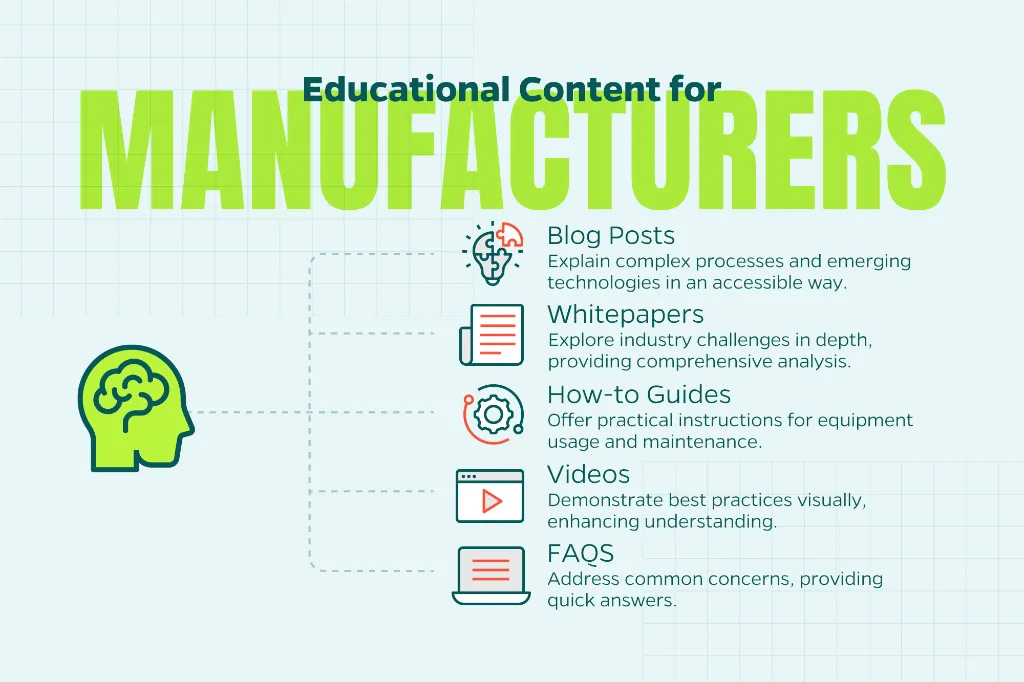
Educational content is all about helping your audience make smarter decisions. It’s not designed to close a sale right away. Instead, educational content delivers value by answering questions and solving problems.
For manufacturers, this might look like:
- Blog posts that explain complex processes or emerging technologies
- Whitepapers exploring industry challenges in depth
- How-to guides for equipment usage or maintenance
- Videos that demonstrate best practices
- FAQs addressing common concerns
Think of educational content as the answer to the questions your prospects are already Googling. It builds trust by showing you understand their world and have the expertise to guide them through it.
For example, a manufacturer of industrial pumps might publish content about selecting the right pump for specific applications, common causes of pump failure, or maintenance best practices. None of this directly sells a product, but it positions the company as the go-to resource when buyers are ready to decide.
What is Sales Content?
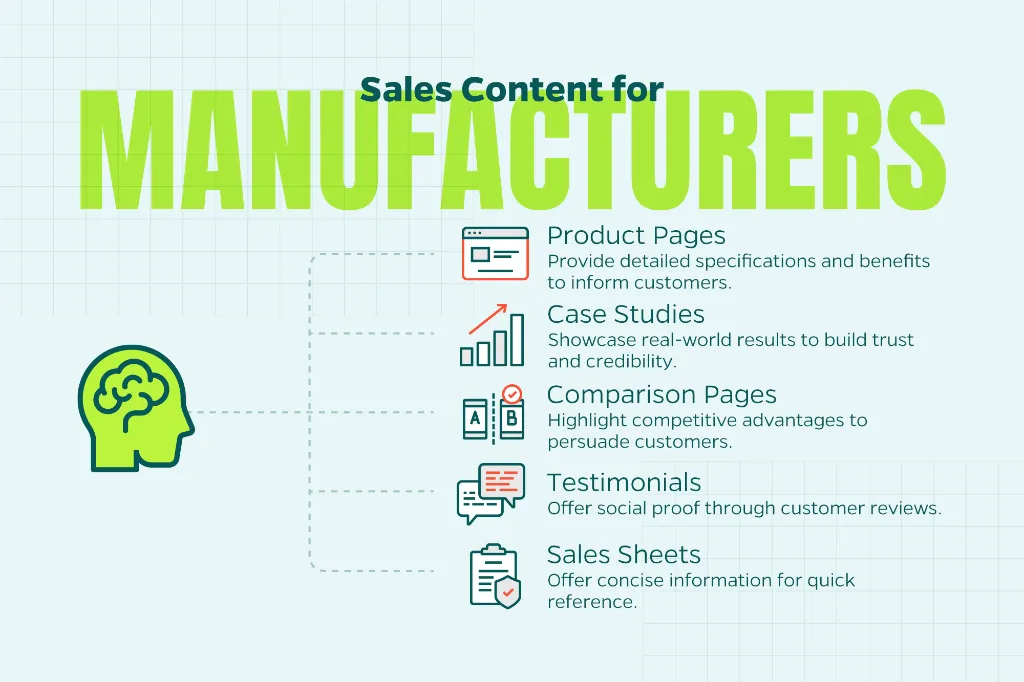
Sales content is more direct. Its job is to move prospects toward action, whether that’s requesting a quote, booking a consultation, or making a purchase.
This includes:
- Product pages with detailed specs and benefits
- Case studies showing real-world results
- Comparison pages that highlight your competitive advantages
- Customer testimonials and reviews
- Sales sheets and brochures
Sales content is what converts interest into revenue. Once a prospect understands their problem and knows the general solution, they need concrete reasons to pick your company over everyone else.
Why Manufacturers Often Default to Sales Content
Many manufacturing companies lean heavily on sales content because it feels more concrete. Product specifications, capabilities, and features take center stage on websites and marketing materials. And yes, that information matters. But here’s the problem: relying too much on sales content can limit your reach. Most buyers don’t start their journey by searching for a specific product or vendor. They start with a question or challenge. If your content doesn’t speak to those early-stage needs, you’re invisible to potential customers before they know you exist.
The Role of Educational Content in the Buyer Journey
Educational content shines in the early and middle stages of the buyer journey, as outlined below.
Awareness Stage
At this point, buyers are just identifying a problem or opportunity. They’re searching for general information and trying to understand what’s possible. Educational content helps you show up in those searches and introduces your brand as a helpful resource.
Consideration Stage
During the consideration phase, buyers are evaluating different approaches and solutions. More detailed educational content like whitepapers, comparison guides, or deep-dive articles helps them narrow things down.
When you consistently deliver valuable insights, you build credibility. By the time prospects are ready to make a decision, your company is already on their shortlist.
Where Sales Content Fits In
Sales content becomes critical in the later stages of the buyer journey.
Decision Stage
This is where buyers compare specific vendors and solutions. They want proof your offering will deliver. Case studies, testimonials, detailed product specs, and ROI calculators all play a role here.
Effective sales content answers questions like:
- Why should I choose this company over the competition?
- What results can I realistically expect?
- How does this solution stack up against alternatives?
Without strong sales content, even the best educational strategy will struggle to convert leads into customers.
Striking the Right Balance
The most effective manufacturing marketers understand that educational and sales content aren’t competing strategies. They work together. A well-rounded content strategy guides prospects from initial awareness all the way to a final decision.
Here’s how to approach that balance:
1. Start with Your Audience’s Questions
Identify the challenges, concerns, and questions of your target audience. Build educational content around these topics. This ensures you’re meeting prospects where they are, not where you wish they were.
2. Map Content to the Buyer Journey
Make sure you have content supporting each stage:
- Educational content for awareness and consideration
- Sales content for decision-making
If you spot gaps, prioritize filling them.
3. Use Educational Content to Build Trust
Resist the urge to turn every blog post or guide into a sales pitch. Focus on being genuinely helpful. Over time, this approach builds the kind of credibility that turns into loyalty.
4. Integrate Clear Next Steps
Even educational content should guide readers forward. That might mean downloading a resource, subscribing to your newsletter, or exploring related content. Just don’t make it feel forced.
5. Align Sales Content with Buyer Needs
Your sales content shouldn’t just list features. It should clearly connect those features to the problems your audience is trying to solve.
Common Mistakes to Avoid
As you develop your content strategy, watch out for these pitfalls:
Overloading Content with Technical Jargon
Yes, manufacturing audiences are often highly knowledgeable. But clarity still wins. Keep your content focused on practical value and avoid showing off with unnecessarily complex language.
Ignoring SEO Opportunities
Educational content is one of the best tools for organic search visibility. If you’re not optimizing it, you’re leaving traffic on the table.
Keeping Marketing and Sales in Silos
Your content strategy should bridge the gap between these teams. Collaboration ensures a consistent message and a smoother experience for buyers.
Neglecting Content Updates
Industries change, and your content should too. Regularly review and refresh both educational and sales materials to keep them relevant and accurate.
Measuring Success
To understand whether your content strategy is working, track metrics that align with your goals.
For educational content, monitor:
- Organic traffic
- Time on page
- Engagement metrics
- Lead generation
For sales content, focus on:
- Conversion rates
- Form submissions and quote requests
- Opportunities created
- Closed deals
Analyzing these metrics helps you refine your approach and improve performance over time.
Ready to Strengthen Your Content Strategy?
If your current approach leans too heavily in one direction or isn’t seeing the results you need, it might be time to rethink your strategy. Straight North helps manufacturers develop content that drives real business outcomes. From educational resources that attract the right audience to sales content that converts, we can help you build a strategy that works.
Contact Straight North today to learn how we can support your content marketing efforts and help you generate more qualified leads.