




Schema markup is one of the most practical tools healthcare organizations can use to make sure they get seen in searches. While building content and managing a basic SEO strategy are important, schema markup is a vital component in improving your website’s technical SEO.
Despite these advantages, schema markup tends to get skipped or deprioritized in healthcare marketing. In this article we will explore what schema markup is, how it improves search visibility, and how your healthcare can start employing it.
What is Schema Markup?
Schema markup is a type of structured data you add to your website’s code. It uses a standardized vocabulary — developed collaboratively by Google, Bing, Yahoo, and Yandex through Schema.org — to help search engines understand the content on your pages more precisely.
Without schema, a search engine reads your page and makes its best guess about what you do, who you serve, and where you’re located. With schema, you’re telling it directly. With schema markup and structured data, you’re essentially annotating your own content so there’s no guesswork for search engines.
For healthcare organizations, that distinction matters. A page that says “Dr. Sarah Jensen is a board-certified cardiologist serving patients in the Chicago metro area” is useful. Schema markup takes that same information and structures it in a way Google can parse, store, and display with greater confidence.
What Schema Can Do for Healthcare Search Visibility
The most visible payoff from schema markup is eligibility for rich results in Google Search. These are the enhanced listings that go beyond the standard blue link. Examples include star ratings, hours of operation, appointment booking links, accepted insurance, or a provider’s specialty displayed directly in the search results.
Rich results tend to catch attention and build credibility before a user ever clicks on a website. For healthcare specifically, rich results can also surface information that patients are seeking. This includes:
- Practice name, address, and phone number (consistency here is particularly important for local SEO)
- Individual physician profiles, including credentials and areas of focus
- Available services or conditions treated
- Patient reviews and aggregate ratings
- Accepted health insurance plans
- Telehealth availability
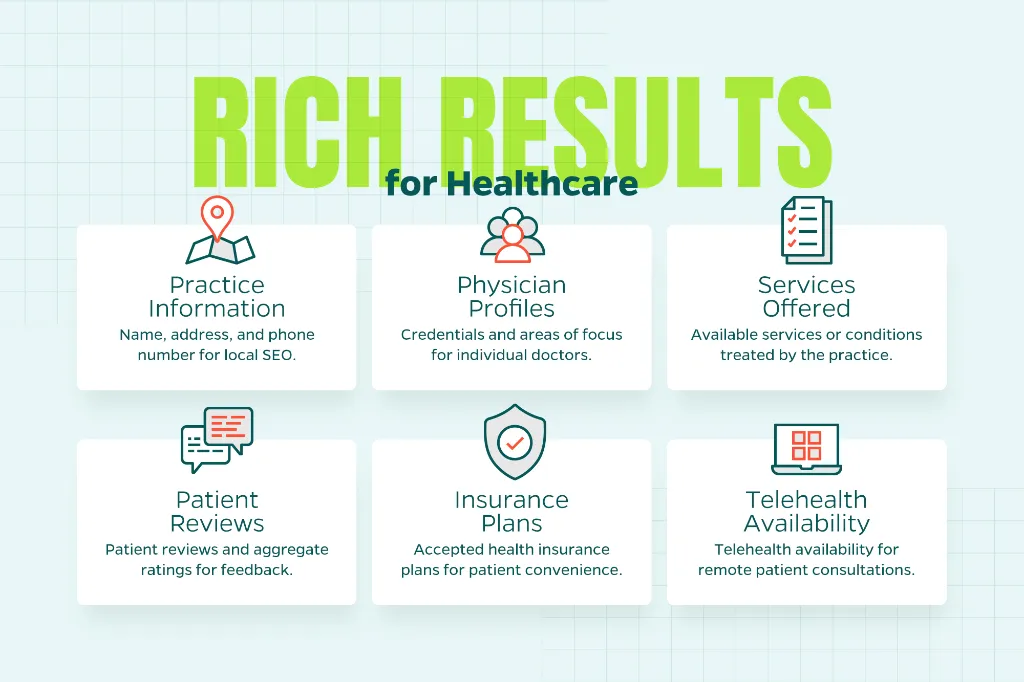
When any of these appear directly in search results, they reduce friction. The patient gets a clearer picture of whether your practice is the right fit before they visit your site. Consequently, that pre-qualified click is more likely to convert into an appointment.
Schema Types That are Particularly Relevant for Healthcare
Schema.org maintains a broad library of markup types, and several are especially applicable to healthcare marketing.
Physician and MedicalBusiness are two of the most used. Physician markup lets you describe an individual provider with specificity. This includes their name, medical specialty, hospital affiliations, languages spoken, and more. MedicalBusiness works at the practice or facility level, and it supports the kind of location and contact details that fuel local search visibility.
MedicalCondition and MedicalProcedure schema can add depth to service pages. If you have content explaining a specific condition or treatment, these markup types help search engines categorize that content accurately and connect it to relevant queries.
FAQ schema is worth mentioning separately. Healthcare content is full of patient questions such as “What should I bring to my first appointment?” “Do you accept Medicare?” “How long does recovery typically take?” Marking up FAQ content gives Google the option to expand those questions and answers directly in search results, which can significantly increase your content’s footprint on the page.
An Honest Look at the Limitations
Schema markup is not a shortcut to ranking on the first page. It does not replace strong content, a well-structured site, or a sound local SEO strategy. What it does is make the content you already have more legible to search engines and more eligible for enhanced display formats.
It’s also worth noting that Google does not guarantee rich results even when your schema is correctly implemented. It uses structured data as one signal among many. That said, correctly implemented schema puts you in contention for those features. Without it, you’re not even eligible.
Implementation also requires some care. Schema that is inaccurate, outdated, or conflicts with the content on the page can create problems. If your schema says a practice is open on Sundays and the page says otherwise, that’s the kind of inconsistency search engines notice. Keeping structured data current is part of the ongoing maintenance it requires.
Why Healthcare Marketers Should Prioritize This Now
Competition for healthcare search visibility has intensified in recent years. Large health systems, telehealth platforms, and well-funded practice groups are all investing in SEO. Meanwhile, Google’s search results pages have become more complex, with more features competing for attention above the fold.
In that environment, showing up is not enough. How you show up matters. Schema markup is one of the more concrete ways a healthcare organization can improve the quality and completeness of its presence in search results. Plus, you don’t have to wait months for content gains to compound.
For practices that serve specific geographic areas, the local SEO implications are especially significant. Structured data reinforces NAP information across the web, supports Google Business Profile integration, and helps ensure that when someone searches “pediatric dentist near me” at 7:00 pm, your practice appears with the right details already visible.
Getting Started
If schema markup is not currently part of your healthcare marketing strategy, the best first step is an audit. Understand what structured data, if any, is already on your site — and whether it’s accurate and properly formatted. Google’s Rich Results Test is a useful free tool for checking existing markup.
From there, prioritize the pages and schema types that align most directly with how patients search for your services. Provider profile pages, location pages, and high-traffic service pages are usually the right starting point.
Done well, schema markup is a durable investment. It works quietly in the background, making your site more informative to search engines and more competitive in the results that matter most to patients.
Need Help?
To learn more about how schema markup fits into a broader healthcare marketing strategy, contact Straight North. We’re happy to talk through what’s working, what’s missing, and where the best opportunities are for your organization.