

Most website visitors don’t convert the first time they show up. They browse, they consider, and then they leave—often with good intentions to come back later. The problem is that “later” rarely happens on its own.
This is where Meta retargeting comes in. Instead of letting those interested visitors slip away, retargeting keeps your brand visible as they continue scrolling through Facebook and Instagram. The goal is to reconnect with people who’ve already shown interest in what you offer.
When done right, retargeting doesn’t feel pushy or repetitive. It feels like a natural reminder at the right time. Here’s how to make it work for your business.
What Meta Retargeting Does
Meta retargeting lets you show ads to people who’ve already interacted with your business in some way. That could mean they visited your website, looked at a specific product page, abandoned a cart, engaged with your Instagram posts, or clicked on a previous ad.
The mechanics are straightforward. Tools like the Meta Pixel and Custom Audiences track these interactions, then serve your ads to those same users as they scroll through Facebook or Instagram. Since these people already know who you are, they’re more likely to pay attention and, ultimately, convert.
The big advantage is you’re working with warm leads. These aren’t strangers. They’ve already demonstrated some level of interest or intent. Your job is to stay visible while they make up their minds.
Why Meta is Built for Retargeting
Facebook and Instagram aren’t like search engines where people show up looking for specific answers. They’re habits. People check them multiple times a day as they’re on the couch, on a lunch break, or in line at the grocery store. These habits create natural opportunities for your brand to reappear without feeling forced.
Here’s why retargeting works so well as an advertising tool on Meta platforms:
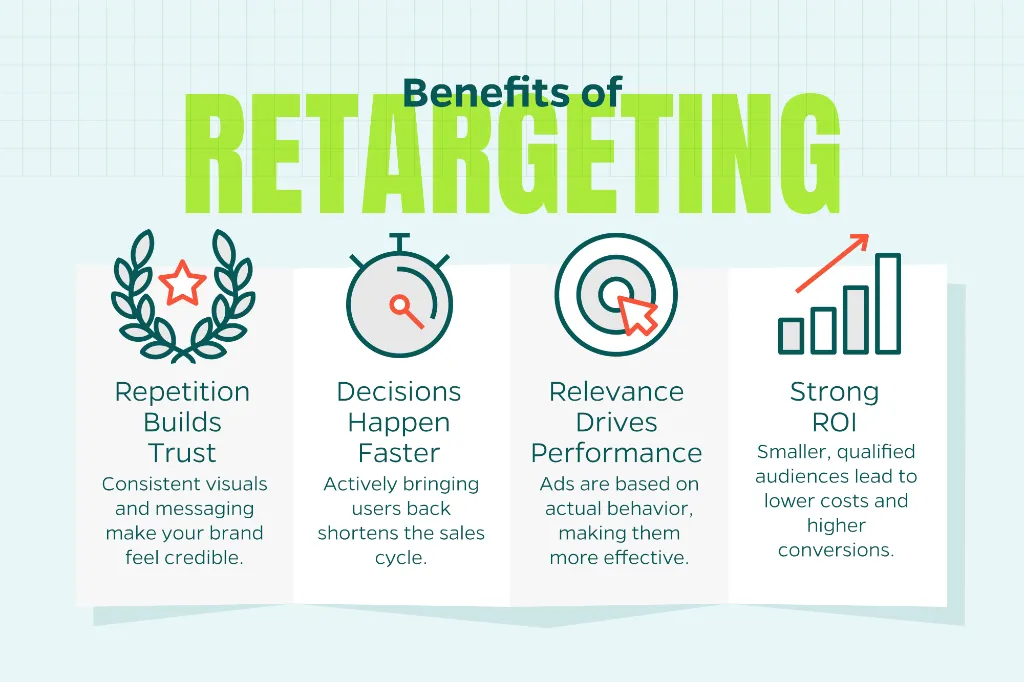
Repetition builds trust. When someone sees your brand a few times—especially with consistent visuals and messaging—it stops feeling random and starts feeling credible.
Relevance drives performance. Retargeting ads are based on actual behavior, so they’re inherently more relevant. Someone who browsed your pricing page needs different messaging than someone who just read a blog post.
Decisions happen faster. Instead of hoping users wander back to your site weeks later, you’re actively bringing them back. That shortens the sales cycle.
The ROI tends to be strong. Retargeting audiences are smaller and more qualified, which often means lower costs per click and higher conversion rates compared to cold prospecting.
The Audiences Worth Retargeting
Not everyone who visits your site is equally likely to convert. So, smart retargeting starts with segmentation. Here are a few audience types that tend to perform well:
Website visitors. You can retarget everyone who landed on your site, or get more specific by focusing on high-value pages like pricing, service descriptions, or contact forms.
Product or service viewers. If someone spent time looking at a specific offering, they’re probably closer to a decision. This group is especially valuable for ecommerce and service businesses.
Cart or form abandoners. These people were literally one step away from converting. A well-timed reminder—maybe with a gentle nudge or incentive—can make all the difference.
Past customers. Retargeting isn’t just for first-time buyers. You can re-engage previous customers for upsells, renewals, or complementary products.
How to Build Retargeting Ads That Actually Work
Showing the same generic ad to everyone who visited your site isn’t a strategy. Effective retargeting is about showing the right message to the right person at the right time.
Match your message to where they are in the journey. Someone who just discovered your brand needs educational content or social proof. Someone who almost bought needs clarity, urgency, or a compelling reason to finish what they started. Tailor your Meta creative to user needs.
Lead with value, not desperation. Instead of pushing hard, focus on being helpful. Highlight benefits, address objections, or show how your solution solves their specific problem.
Leverage social proof. Testimonials, case studies, reviews, and trust badges work exceptionally well with retargeting audiences. They provide reassurance that other people have already taken the leap and it worked out for them.
Keep your creative fresh. Ad fatigue is real. When people see the same ad too many times, they tune out. Rotate your images, headlines, and formats regularly to maintain engagement.
Common Retargeting Mistakes to Avoid
Even with the best intentions, retargeting campaigns can underperform or backfire. Here are a few pitfalls we see regularly:
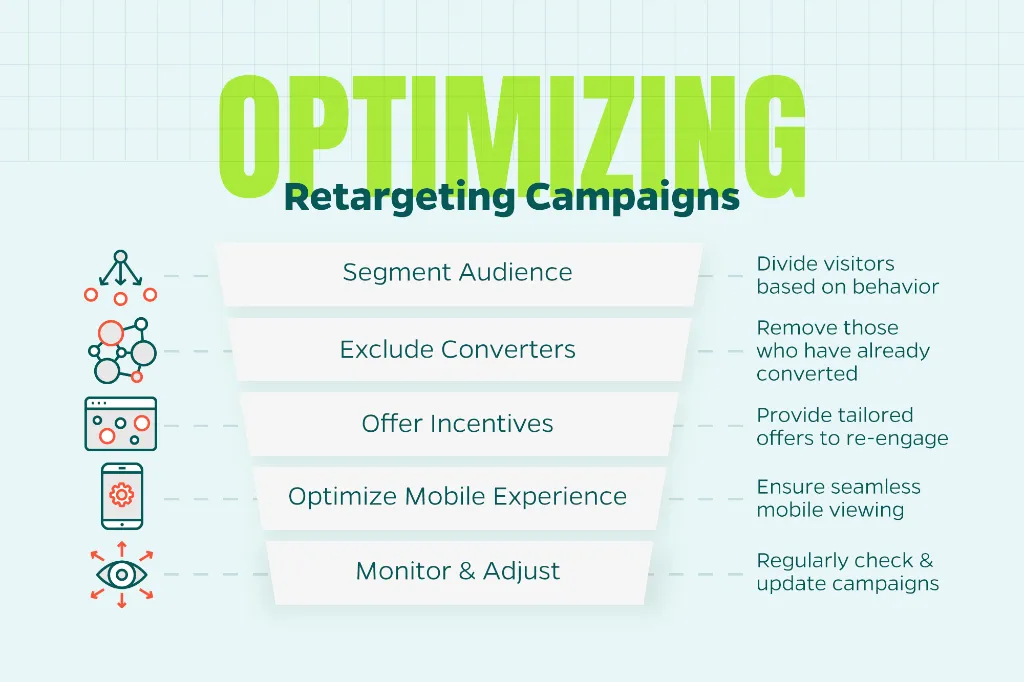
Retargeting everyone the same way. Lumping all website visitors into one audience ignores the fact that someone who spent 10 seconds on your homepage has very different intent than someone who browsed your pricing page for five minutes.
Forgetting to exclude converters. If someone already bought from you or filled out your contact form, stop showing them the same conversion-focused ads. It’s wasteful and can feel tone-deaf. Create exclusion audiences to prevent this.
Weak or generic offers. If your retargeting ad looks identical to your prospecting ad, you’re missing an opportunity. Retargeting audiences already know you exist. Give them a reason to come back, whether that’s new information, social proof, or an incentive.
Ignoring mobile experience. Most people scroll Facebook and Instagram on their phones. If your landing page isn’t mobile-optimized or loads slowly, you’ll lose conversions no matter how good your ad is.
Setting it and forgetting it. Retargeting campaigns need regular attention. Audience sizes shift, creative fatigues, and performance drifts. It’s a good idea to check in weekly. You can refresh what’s not working while continually optimizing.
Don’t Overdo It
One of the fastest ways to ruin a retargeting campaign is overexposure. If someone sees your ad ten times in three days, you’re no longer helpful—you’re annoying. And that can actively damage how people perceive your brand.
Smart frequency management includes setting caps on how many times someone sees your ad, using time-based exclusions (like stopping ads after 30 or 60 days), and sequencing your ads so they tell a story rather than repeating the same message.
Here’s an example of a good cadence: show an educational ad first, follow it with a testimonial, then finish with a direct offer. That progression feels natural. Showing the same “Buy Now” ad five times does not.
Best Meta Retargeting Metrics
Meta gives you plenty of data, but not all of it matters equally. Focus on metrics that tie directly to business outcomes, not just activity.
The ones that typically matter most:
- Conversion rate
- Cost per conversion
- Return on ad spend (ROAS)
- Quality of leads or speed of sales
It’s also worth remembering that retargeting doesn’t always get credit for the final click. Someone might see your retargeting ad on Instagram, then later search for your brand and convert through Google. That’s still a win. Retargeting played a role, even if it didn’t close the deal directly.
Retargeting Works Best as Part of Something Bigger
Retargeting isn’t a standalone strategy. It’s most effective when it works alongside other marketing efforts. SEO and content bring in new visitors. Paid search captures people actively looking for solutions. Email nurtures relationships. And retargeting brings all those people back when they’re not quite ready to convert right away.
Think of it as a bridge between initial interest and the ultimate action.
Final Thoughts
Meta retargeting gives you a second chance to turn interested visitors into actual customers. With the right audience strategy, thoughtful messaging, and creative that doesn’t wear out its welcome, it can transform missed opportunities into real revenue.
At Straight North, we treat retargeting as a core piece of a larger performance-driven approach. When it’s done right, it doesn’t feel like you’re following people around the internet. It feels like you’re showing up at the right time with something useful to say.
If you’re already investing in driving traffic but not seeing the conversions you want, retargeting might be the piece you’re missing. Want help? Reach out to Straight North. We’ll help you build a Meta retargeting strategy that delivers.