
Ask most B2B marketers about Meta advertising, and you’ll get the same response: skepticism. Facebook and Instagram feel like B2C territory—perfect for impulse purchases and lifestyle brands, but questionable for complex sales cycles and enterprise buyers.
Yet, Meta can be a legitimate B2B channel when you approach it correctly. It won’t replace LinkedIn or Google Ads, but it plays a specific role in building awareness, influencing stakeholders, and supporting demand generation.
Let’s break down how Meta fits into B2B marketing. We will outline what works, and how to structure campaigns that deliver real results.
B2B Buyers Use Meta
Decision-makers scroll Instagram during their morning coffee. They check Facebook between meetings. They’re not actively shopping for vendors in those moments, but that’s exactly the point.
Meta excels at introducing your brand before buyers start their research. It reinforces credibility through repeated exposure and keeps you visible during the long stretches between “we might need this” and “let’s get demos scheduled.”
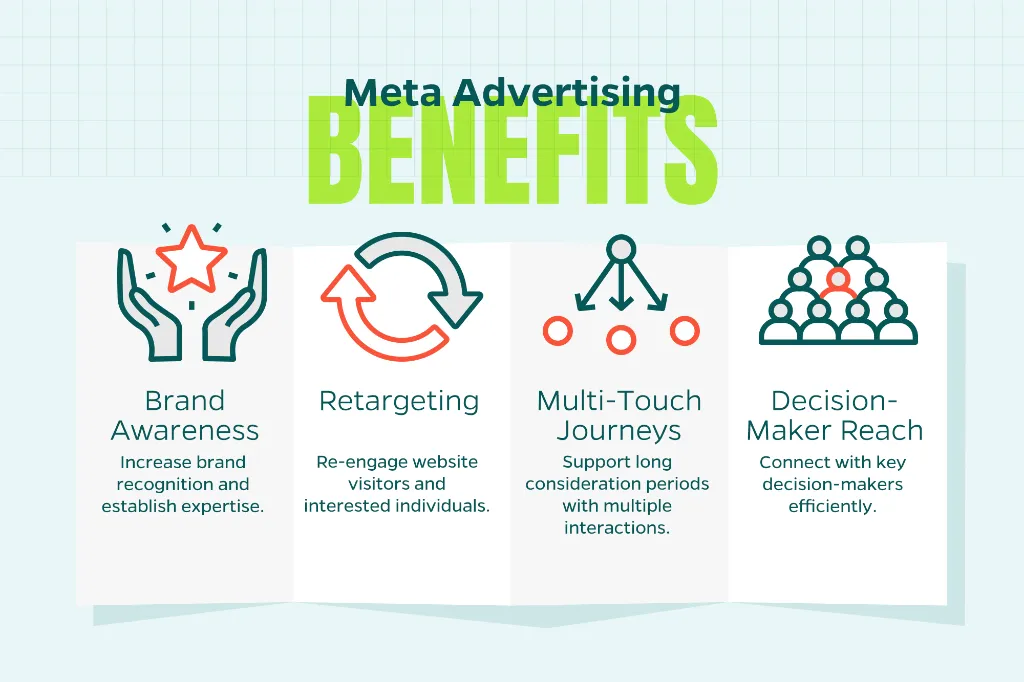
Meta works particularly well for:
- Building brand awareness and establishing thought leadership
- Retargeting website visitors and engaged audiences
- Supporting multi-touch journeys with long consideration periods
- Reaching decision-makers at scale
The challenge is matching Meta’s strengths to realistic B2B objectives.
Set Expectations That Match Reality
Meta isn’t typically a direct lead engine for B2B the way search ads can be. Expecting a flood of high-intent demo requests—especially for complex, high-consideration services—is unrealistic.
Successful B2B Meta campaigns focus on:
- Educating prospects before asking for commitment
- Building familiarity and trust over time
- Amplifying other channels like search, email, and outreach
When Meta plays a supporting role in your broader strategy, performance improves significantly.
Choose Campaign Objectives That Align with B2B Goals
Meta’s campaign objective shapes everything downstream. For B2B, these objectives tend to deliver the best results:
Awareness & Reach
Best for introducing new brands, launching new services, or entering unfamiliar markets. These campaigns prioritize efficient exposure and create audiences for future retargeting and conversion efforts.
Traffic
Use this when promoting valuable content like blog posts, guides, and research reports. Traffic campaigns work well when paired with strong landing pages that move visitors further down the funnel.
Lead Generation
Meta’s native lead forms can work for B2B, but you should manage your expectations. They’re most effective for mid-funnel offers like webinars, newsletters, and downloadable resources.
For high-value conversions like demos or consultations, sending traffic to an optimized landing page typically produces better lead quality than in-platform forms.
Target Smarter, Not Just Narrower
B2B targeting on Meta isn’t as precise as LinkedIn, but it can still be useful.
Use Interest Targeting Strategically
Job titles and industry filters exist, but they’re noisy. Instead of relying on them exclusively, layer job-related interests with behaviors and test broader audiences with strong creative. Let Meta’s algorithm find patterns you might miss.
Leverage Your Best Audiences
Custom and lookalike audiences often outperform cold targeting:
- Website visitors (especially those viewing key pages)
- Email subscribers and CRM contacts
- Users who’ve engaged with your content
- Video viewers who watched past meaningful thresholds
Lookalike audiences built from high-quality leads or existing customers help you scale while maintaining relevance.
Make Retargeting Non-Negotiable
For B2B, retargeting is where Meta often delivers its strongest performance. Focus on:
- Visitors to service or solution pages
- Users who engaged with long-form content
- People who watched significant portions of your videos
This is where Meta transitions from creating awareness to driving action.
Create Ads That Resonate
Meta creative makes or breaks B2B campaigns on the platform.
Start with the Problem
Don’t lead with your company name or credentials. Instead, highlight a challenge your audience faces daily. Show you understand their pain points, then position your solution as the logical answer.
Keep It Clear and Human
Avoid jargon and buzzwords. The best B2B Meta ads use plain language, speak directly to the reader, and feel genuinely helpful rather than salesy.
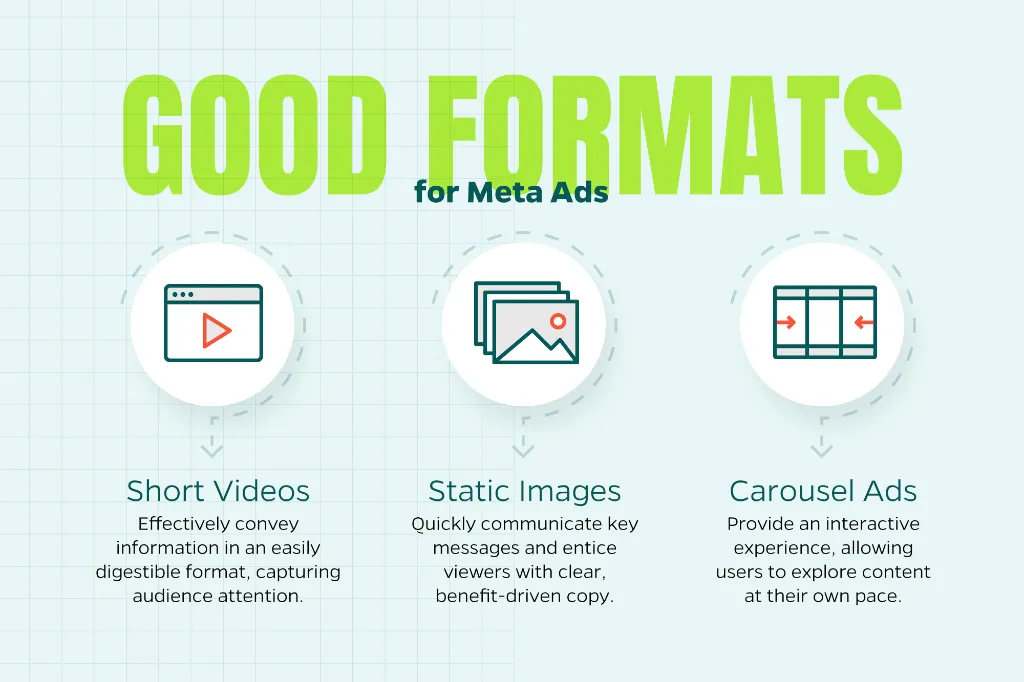
Test Multiple Formats
Meta’s algorithm rewards variety. Strong Meta testing for B2B audiences include:
- Short videos explaining a concept or sharing an insight
- Static images with clear, benefit-driven copy
- Carousel ads that walk through a process or framework
Consistency matters more than production polish. Clear messaging beats clever copy every time.
Don’t Neglect the Landing Experience
Even exceptional Meta ads fail when the landing page disappoints.
For B2B campaigns, make sure you:
- Match the landing page message to the ad promise
- Remove unnecessary friction from forms and navigation
- Focus on one clear call-to-action
If you’re promoting educational content, don’t oversell. If you’re collecting contact information, explain what happens next. Transparency improves both conversion rates and lead quality.
Measure What Matters
Meta often influences decisions rather than closing them immediately. Your success metrics should reflect that reality.
Track these KPIs:
- Cost per engaged session
- Growth of your retargeting audiences
- Assisted conversions in your analytics platform
- Lift in branded search volume
- Lead quality trends over time
When Meta is integrated into your full marketing ecosystem, its contribution becomes much clearer.
Avoid These Common Mistakes
B2B Meta campaigns fail for predictable reasons:
- Treating Meta like a search channel instead of an awareness platform
- Targeting too narrowly before gathering sufficient data
- Using overly aggressive, sales-driven messaging
- Abandoning campaigns before Meta’s algorithm has time to optimize
Meta’s machine learning improves with data. Give campaigns time to learn and iterate on what you discover.
Making Meta Work for Your B2B Business
Meta advertising isn’t about forcing immediate conversions—it’s about building momentum. Used strategically, it supports awareness, nurtures interest, and strengthens performance across your entire marketing funnel.
Ready to explore how Meta advertising can support your B2B marketing goals? At Straight North, we’ve helped B2B companies build integrated digital strategies where Meta, SEO, paid search, and conversion optimization work together to convert the right prospects. Contact us to discuss your marketing objectives and find out what’s possible.