

Running Meta ads without testing makes it difficult to know what’s driving performance. When juggling multiple variables at once—creative, audiences, placements, and budgets—it’s easy to attribute results to the wrong variable or miss opportunities for improvement. A/B testing brings clarity to your strategy and success. It isolates specific elements and shows which variations contribute most to stronger ROI.
For marketers focused on efficiency and growth with Meta ads, A/B testing is a strategic necessity. By using structured tests and reliable performance data, advertisers can refine Meta campaigns over time, reduce wasted spend, and make confident decisions that lead to more consistent results.
What is A/B Testing in Meta Ads?
A/B testing (sometimes called split testing) compares two or more versions of an ad element to determine which performs better against a specific goal. Meta’s platform allows you to isolate one variable at a time. For example, you could look at creative, audience, or placement—while keeping everything else consistent.
In one scenario, you might show the same offer to the same audience but change the headline. If one version generates a higher click-through rate or lower cost per conversion, you’ve learned something actionable you can apply across your campaigns.
The key is control. Without it, you’re not testing—you’re just comparing results that may have been influenced by unrelated factors.
Why A/B Testing Matters for ROI
Meta ads are dynamic by nature. Audiences shift, creative fatigues, and algorithms evolve. A/B testing helps you stay ahead of those changes by grounding your decisions in performance data rather than assumptions.
Some of the biggest ROI benefits include:
- Lower costs over time: Identifying high-performing creatives or audiences reduces wasted spend.
- Stronger conversion rates: Small optimizations often compound across impressions and clicks.
- More predictable scaling: Knowing what works makes it easier to increase budgets with confidence.
- Better alignment with user intent: Testing clarifies what messaging resonates at each funnel stage.
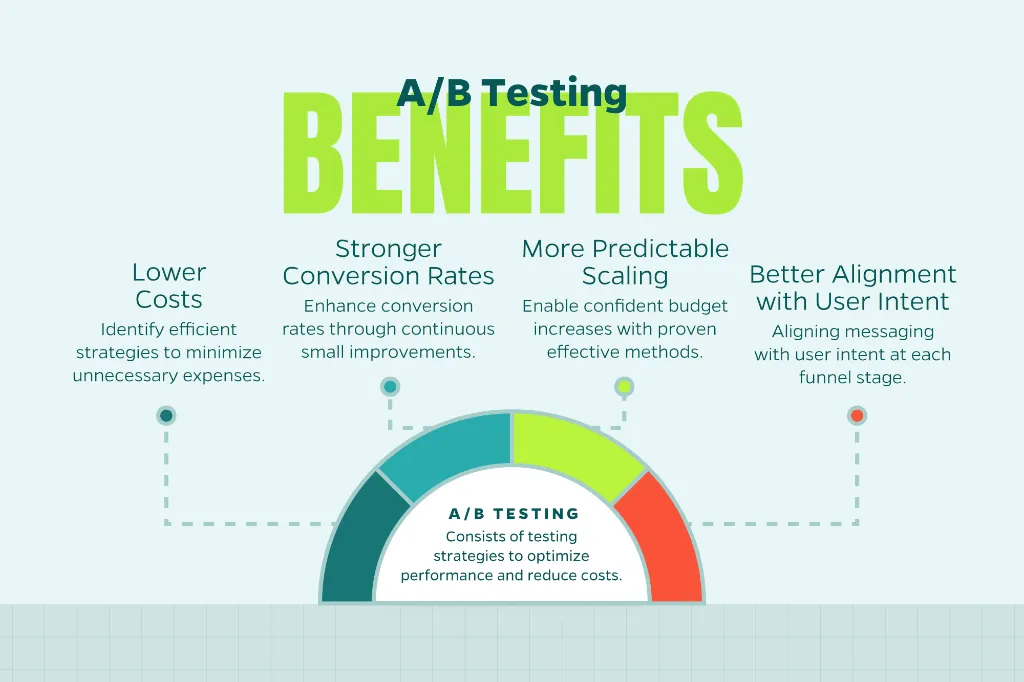
In short, A/B testing helps you spend smarter and optimize better.
What You Can A/B Test in Meta Ads
Meta’s Ads Manager supports structured A/B testing. But even outside its built-in tools, advertisers can manually test variables with disciplined setup. The most impactful areas to test include the following.
Creative Elements
Creative is often the biggest driver of performance in Meta ads, making it a natural starting point for testing.
Common creative variables include:
- Headline or primary text
- Image versus video
- Video length or format
- Call-to-action language
- Offer framing (discount vs. value proposition)
When testing creative, change one element at a time. Swapping both the visual and copy makes it difficult to pinpoint why one version won.
Audience Targeting
Audience tests help determine who responds best to your message.
You might test:
- Lookalike audiences versus interest-based audiences
- Broad targeting versus layered targeting
- Different lookalike percentages
- Retargeting windows (e.g., 7-day vs. 30-day site visitors)
These tests are especially valuable for brands trying to scale beyond a core audience without sacrificing efficiency.
Placements and Formats
Meta automatically optimizes placements by default, but testing manual placements can still reveal useful insights.
Examples include:
- Feed-only versus all placements
- Instagram-first versus Facebook-first
- Reels versus static feed placements
Understanding where your audience converts most efficiently can inform both creative design and budget allocation.
Campaign Objectives and Optimization Events
Sometimes performance differences stem from how Meta is optimizing delivery.
You could test:
- Traffic versus conversion objectives
- Different conversion events (e.g., add to cart vs. purchase)
- Lead form types (instant form vs. landing page)
These tests tend to be more strategic and should be run with enough volume to produce reliable results.
How to Structure an Effective A/B Test
The difference between useful insights and misleading data often comes down to setup. A well-structured test follows a few core principles.
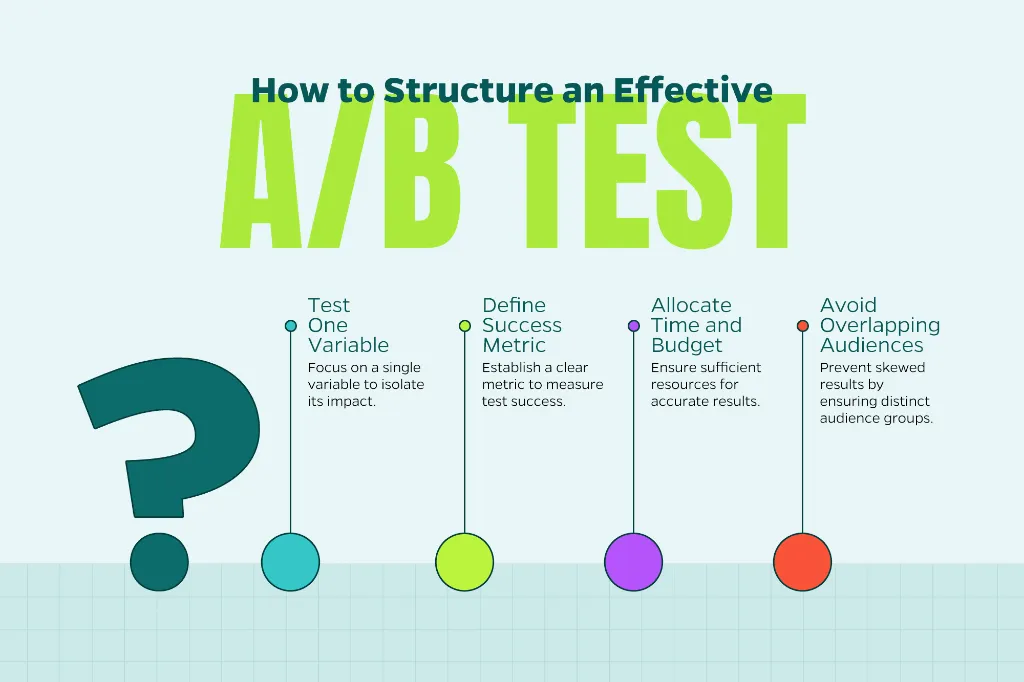
Test One Variable at a Time
Changing multiple elements at once may show performance differences, but it won’t tell you why those differences occurred. Isolate a single variable so your conclusions are clear and repeatable.
Define a Clear Success Metric
Before launching a test, decide what “winning” means. Is it a lower cost per lead? Higher ROAS? Better click-through rate? Your metric should align with your campaign’s primary objective, not vanity metrics.
Give the Test Enough Time and Budget
Short tests with low spend often produce noisy results. Meta needs sufficient data to exit the learning phase, and you need enough conversions to make a confident call. While there’s no universal rule, most tests should run at least 7–14 days with consistent delivery.
Avoid Overlapping Audiences
If both versions of your test compete for the same users, results can become skewed. Meta’s built-in A/B testing tool helps prevent this by splitting audiences automatically, but manual tests require more vigilance.
Interpreting Results Without Overthinking Them
Once a test concludes, it’s tempting to chase every data point. Instead, focus on your predefined success metric and look for meaningful differences—not marginal ones.
A few best practices:
- Ignore minor fluctuations that aren’t statistically meaningful
- Look at performance trends, not just final numbers
- Consider downstream impact (e.g., lead quality, not just volume)
- Document results so future tests build on past learnings
A/B testing works best as a continuous process, not a one-off experiment.
Common A/B Testing Mistakes to Avoid
Even experienced advertisers fall into testing traps that limit ROI. Some of the most common include:
- Ending tests too early based on initial performance
- Making decisions during the learning phase
- Testing too many variables at once
- Applying results universally without context
- Failing to refresh creative after identifying a winner
Testing is as much about discipline as it is about experimentation.
Turning Test Results into Ongoing Optimization
The real value of A/B testing comes from what you do after the test. Winning variations should inform future creative, audience strategy, and budget decisions. Losing variations still matter—they tell you what not to repeat.
Over time, these insights compound:
- Creative themes become clearer
- Audience signals sharpen
- Campaign structure becomes more efficient
That’s how incremental improvements turn into sustained ROI growth.
Final Thoughts
A/B testing Meta ads is about making smarter, data-backed decisions that improve performance one step at a time. With the right structure and expectations, testing becomes less intimidating and far more impactful.
If you’d like help designing, executing, or interpreting A/B tests for your Meta campaigns, Straight North’s team is always happy to help. Reach out to Straight North to learn how a more strategic testing approach can support your broader marketing goals.