


Content marketing remains one of the most effective ways to build trust, educate your audience, and drive sustainable growth. Yet, even brilliant content can languish in obscurity if it never reaches the right people. That’s where paid amplification comes in, and Meta Ads are among the most powerful tools available.
Meta Ads run across Facebook, Instagram, Threads, and the Meta Audience Network, giving brands the ability to extend their reach, target precisely defined audiences, and accelerate results.
In this article, we’ll explore how Meta Ads can amplify your content marketing strategy, which types of content deliver the best results, and how to align paid promotion with your broader digital marketing goals.
Why Content Marketing Needs Paid Advertising Support
Organic content distribution has become fiercely competitive. Social feeds are saturated, algorithm changes continue to limit visibility, and even your most engaged followers may only see a fraction of what you publish. While SEO and email marketing remain essential distribution channels, they often require months to generate meaningful momentum.
This is why paid advertising can produce big results. It addresses these challenges by:
- Expanding your reach beyond existing followers
- Driving immediate traffic to high-value content
- Supporting top-of-funnel engagement at scale
- Reinforcing brand messaging through strategic repetition
Instead of waiting and hoping the right audience discovers your content organically, paid advertising lets you place it directly in front of them.
Why Meta Ads are an Ideal Investment
Across the spectrum of paid advertising options, Meta Ads offer distinct advantages that make them particularly effective for content amplification:
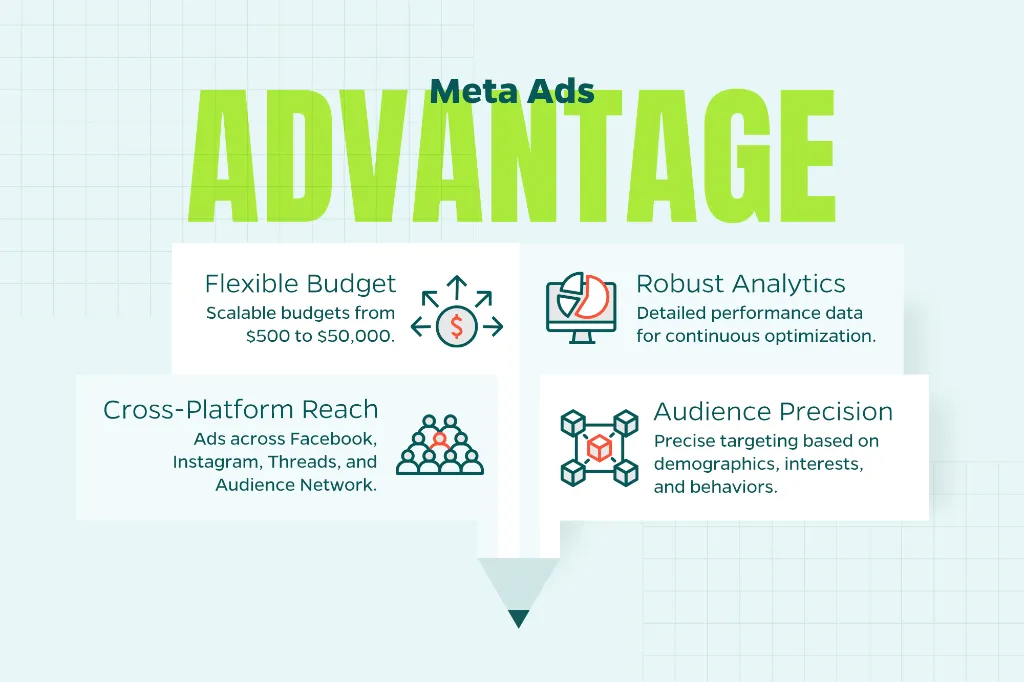
Unmatched audience precision. Meta’s targeting capabilities allow you to reach users based on demographics, interests, behaviors, job titles, and even life events. You can promote content to the exact people who will find it most valuable.
Cross-platform reach. Your ads run across Facebook, Instagram, Threads, and the Meta Audience Network, meeting audiences wherever they’re most active without requiring separate campaigns for each platform.
Flexible budget options. Whether you’re working with $500 or $50,000, Meta Ads scale to fit your investment level. You maintain complete control over daily and lifetime budgets while optimizing for the results that matter most to your business.
Robust analytics and optimization. Meta provides detailed performance data that helps you understand not just how many people saw your content, but how they engaged with it. These insights inform continuous improvement and help you allocate budget toward your best-performing content.
Instead of waiting and hoping the right audience discovers your content organically, Meta Ads let you place it directly in front of them when they’re most likely to engage.
How Meta Ads Fit into a Content Marketing Strategy
The most effective Meta Ads strategies go beyond direct sales. They support the entire marketing funnel by promoting content that informs, engages, and establishes credibility.
Here’s how Meta Ads typically align with content marketing objectives:
- Awareness: Promote blog posts, videos, or infographics to introduce your brand and demonstrate expertise
- Engagement: Drive interactions like video views, post engagement, or extended time on site
- Consideration: Share comprehensive guides, case studies, or webinars that showcase tangible value
- Retargeting: Re-engage users who consumed your content but haven’t taken the next step
By mapping Meta Ads to different stages of the buyer’s journey, you can nurture prospects more effectively and create a smoother path toward conversion.
Types of Content That Perform Well with Meta Ads
Not all content is equally suited for paid promotion. Meta Ads tend to perform best when the content delivers immediate value and aligns with how users naturally consume information on social platforms.
Educational Blog Content
Promoting blog posts remains one of the most popular applications of Meta Ads for content marketing. High-performing topics often include:
- How-to guides and tutorials
- Industry insights, trends, and predictions
- Problem-solving content addressing specific pain points
When promoting blog content, focus on a compelling headline and hook that encourages clicks without feeling overly promotional. Your goal is to spark curiosity, not trigger ad fatigue.
Video Content
Video continues to dominate on Meta platforms. Short-form videos, explainer clips, and thought leadership snippets generate strong engagement while building brand recognition. With the rise of Reels and short-form content across Instagram and Facebook, video has become even more critical in 2026.
Video ads can be used to:
- Break down complex topics into digestible formats
- Tease longer-form content pieces
- Build remarketing audiences based on view duration and engagement
Even simple, well-crafted videos can outperform highly polished content if the message resonates with your audience.
Gated Assets and Lead Magnets
Meta Ads excel at promoting high-value gated content such as:
- Ebooks and whitepapers
- Industry reports and research
- Checklists, templates, and toolkits
These assets work best when paired with precise targeting and a compelling value proposition. The objective is to exchange genuinely helpful content for contact information, not to push a hard sell.
Case Studies and Social Proof
Content that demonstrates real-world results can be particularly powerful for mid-funnel audiences. Promoting case studies, client success stories, or user-generated content through Meta Ads helps reinforce credibility and move prospects closer to a purchasing decision.
Meta Ads Targeting Strategies That Enhance Content Performance
One of Meta Ads’ greatest strengths is its sophisticated targeting capability. Effective content amplification depends on matching the right content with the right audience at the right time.
Core Audience Targeting
Core audiences allow you to target users based on demographics, interests, behaviors, and professional attributes. This approach works well for top-of-funnel content aimed at introducing your brand to new prospects.
For example, a digital marketing agency might target:
- Marketing managers, directors, or CMOs
- Business owners in specific industries or revenue brackets
- Users interested in advertising, analytics, or growth marketing
Custom Audiences
Custom audiences are built from your existing data sources, including website visitors, email subscribers, or previous ad engagement. These audiences are ideal for promoting deeper content to users who already have some familiarity with your brand.
Examples include:
- Promoting a detailed guide to recent blog readers
- Sharing a case study with users who watched an introductory video
- Driving webinar registrations from past content downloads
Lookalike Audiences
Lookalike audiences allow you to reach new users who share characteristics with your best-performing existing audiences. This is particularly effective for scaling successful content campaigns once you’ve identified what resonates. Meta’s AI-powered lookalike modeling has become increasingly sophisticated, making this an essential tool for growth in 2026.
Crafting Ad Creative That Supports Content Goals
When promoting content through Meta Ads, ideal ad creative on Meta platforms should complement the content itself, not overshadow it.
Here are some best practices:
- Lead with value: Clearly communicate what the user will learn or gain
- Keep copy concise: Social ads should be easy to scan and digest quickly
- Use native formats: Images and videos should feel natural in the feed, not disruptive
- Align visuals with content: Ensure consistency between the ad and landing page experience
- Test and learn: Meta offers many testing opportunities to see what works best—take advantage of them
Avoid overly sales-driven messaging when promoting informational content. Your goal is to spark curiosity and encourage exploration, not to trigger immediate skepticism.
Measuring Success Beyond Clicks
While clicks and impressions matter, they don’t tell the complete story of content performance. Meta Ads provide a range of metrics that help you evaluate true impact.
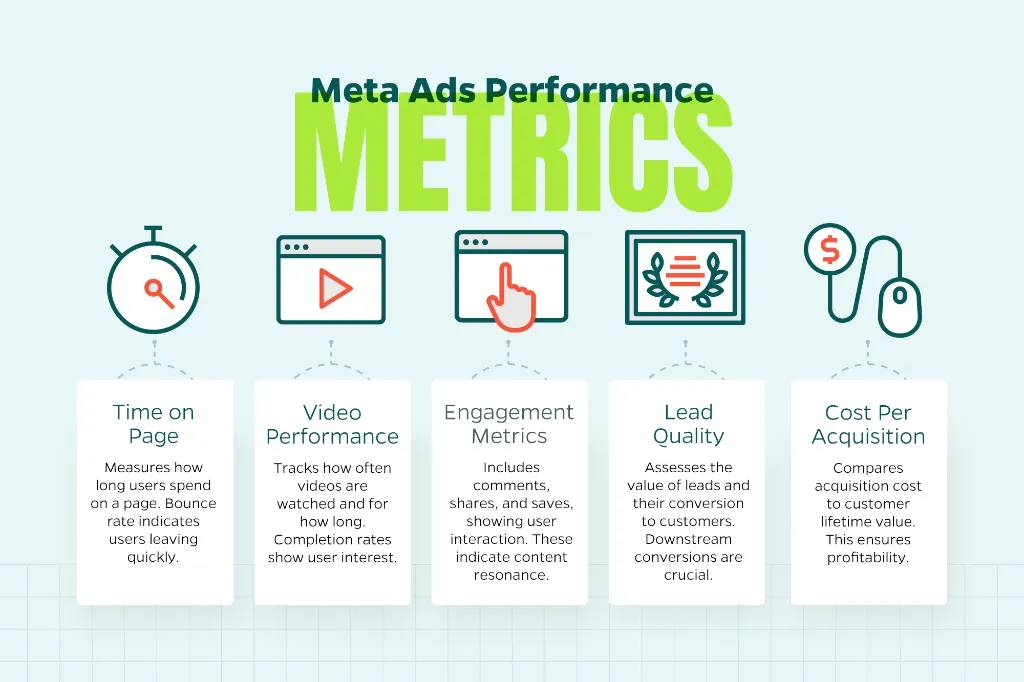
Key performance indicators may include:
- Time on page and bounce rate
- Video completion rates and watch time
- Engagement metrics like comments, shares, and saves
- Lead quality and downstream conversions
- Cost per acquisition relative to customer lifetime value
By integrating Meta Ads data with analytics platforms like Google Analytics 4 and CRM systems, marketers can better understand how paid content contributes to revenue and pipeline growth.
Common Mistakes to Avoid
Even experienced marketers can undermine their content strategy with a few missteps. Common pitfalls include:
- Promoting unfocused or low-quality content that doesn’t deliver clear value
- Sending traffic to slow, poorly optimized, or mobile-unfriendly landing pages
- Using overly broad targeting without adequate testing and refinement
- Focusing exclusively on vanity metrics rather than business outcomes
- Neglecting to test different ad formats, creatives, and messaging approaches
A thoughtful testing framework that refines audiences, creative elements, and content formats over time ensures continuous improvement and better ROI.
Conclusion
Meta Ads aren’t a shortcut or a replacement for solid content marketing. They’re an amplifier that helps your best content reach the audiences who need it most—faster and more consistently than organic distribution alone.
When integrated thoughtfully, Meta Ads can:
- Extend the lifespan and impact of high-performing content
- Support every stage of the buyer’s journey with relevant touchpoints
- Improve content ROI through smarter, data-driven distribution
- Strengthen brand visibility in increasingly competitive markets
For brands looking to maximize the impact of their content marketing efforts, Meta Ads offer a scalable, measurable way to turn great content into tangible business results.
Want help managing Meta Ads? Contact Straight North today. Our team specializes in creating data-driven Meta Ads strategies that amplify your content, reach your ideal audience, and deliver measurable results that impact your bottom line.