

Key Takeaways
- Google Core Updates are a normal part of search and not a penalty.
- Measure business impact, not just ranking changes.
- Ranking declines don’t always mean your website is the problem.
- Respond with data and strategy, not quick fixes.
- Consistently improving quality content is the best long-term SEO strategy.
Google announces another core update. Rankings fluctuate. Traffic changes. Suddenly leadership wants answers.
It’s one of the most common scenarios marketing teams face. While most executives don’t need to understand Google’s algorithm, they do need to understand what these updates mean for business performance and how to respond appropriately.
Core updates don’t just reshuffle rankings. They can change how Google evaluates the quality, relevance, and trustworthiness of content across millions of websites, affecting search visibility, traffic, and leads.
The good news? Core updates are a normal part of search. They aren’t automatically bad news. The companies that perform best aren’t the ones that react the fastest. They’re the ones that consistently improve their websites over time.
In this blog, Enterprise SEO & GEO Strategist Marc Holt explains what Google core updates are, why they matter to leadership, and how to communicate their impact in simple business terms so your organization can make informed decisions instead of reacting to short-term fluctuations.
What Is a Google Core Update?
Google regularly rolls out broad core updates that refine how it evaluates and ranks content in search results.

A Google Core Update is a change to how Google decides which websites rank highest in its search results. These updates happen several times a year and affect websites across many industries. For example, a manufacturer, a law firm, an online retailer could all see ranking changes after the same update. Your leadership team should see these updates as a normal part of doing business online, not as a sign the company did something wrong.
In other words, a core update changes Google’s evaluation system and not necessarily the quality of your website.
The updates are designed to improve search quality, not to punish individual websites. Ranking changes often occur because Google believes another page better satisfies a user’s search intent.
While updates can influence search visibility, traffic, and leads, they shouldn’t automatically be viewed as bad news. Instead, leadership should see core updates as a normal part of doing business online and use them as an opportunity to evaluate how well their website continues to meet users’ needs.
Why Core Updates Get Leadership’s Attention
Most executives aren’t concerned with whether a keyword moved from position three to position five. They care because those ranking changes can influence business outcomes.
When search visibility changes, it can affect website traffic, lead generation, sales opportunities, marketing performance, and even revenue forecasts. That’s why conversations about core updates often extend beyond the marketing team.
If a company sees a 20% decline in organic traffic following a core update, leadership’s first question isn’t, “What changed in Google’s algorithm?” It’s, “What does this mean for next quarter’s revenue?”
It’s an important distinction. Leadership doesn’t need to understand the technical details behind Google’s ranking systems. They need to understand the business impact, the level of risk, and whether the organization needs to take action.
By translating SEO performance into business terms, marketing teams can help leadership make informed decisions instead of reacting to short-term fluctuations.
Why Understanding Core Updates Leads to Better Business Decisions
When rankings decline after a core update, it’s natural for leadership to ask questions. But without the right context, those questions can quickly turn into requests for immediate action. They start looking to redesign the website, make sweeping SEO changes, or chase short-term fixes before they understand the full impact of the update.
“When leaders understand core updates, they’re less likely to panic when rankings change. Instead, they can support a long-term plan instead of asking for quick fixes.”
Enterprise SEO & GEO Strategist | SEO & GEO Analytics Expert
Providing that context helps shift the conversation from reacting to evaluating. Rather than asking, “What do we need to change today?” leadership can focus on the questions that matter most: Which pages were affected? Has lead generation changed? What are competitors doing differently? Where should we invest to improve long-term performance?
That kind of informed discussion leads to better business decisions, including prioritizing high-value content updates and supporting ongoing SEO and content investments instead of unnecessary overhauls.
The challenge, of course, is explaining a technical SEO topic in a way that resonates with business leaders.
How to Explain a Core Update to Leadership
Leadership doesn’t need a technical explanation of Google’s algorithm. What they need is a simple understanding of why rankings changed and what it means for the business.
Holt recommends framing it this way: Google’s goal is to provide users with the most helpful, relevant, and trustworthy answers possible. A core update is simply Google refining how it determines which pages best accomplish that goal.
Google is always trying to give people the best answers to their searches. A core update is simply Google changing how it decides which pages deserve to rank highest. For example, Google may decide a competitor’s guide is more complete or helpful than your guide. That doesn’t mean your website was penalized, it means Google changed what it values most.
This explanation helps shift the conversation away from “What did we do wrong?” and toward “What is Google rewarding now?” In many cases, nothing is technically broken. Instead, Google’s updated evaluation may favor content that is more comprehensive, more current, or more helpful than it previously considered.
That raises the next question leadership is likely to ask: Why did our rankings change in the first place?
Why Rankings Change After a Core Update
A change in rankings doesn’t automatically mean your content became poor overnight. More often, it means Google believes another page now provides a better answer for a particular search.
That page may include newer research, stronger examples, clearer explanations, more complete information, fresher content, or better demonstrate expertise and trustworthiness. Google’s goal is to surface the content it believes best satisfies search intent, and a core update can change how those qualities are evaluated.
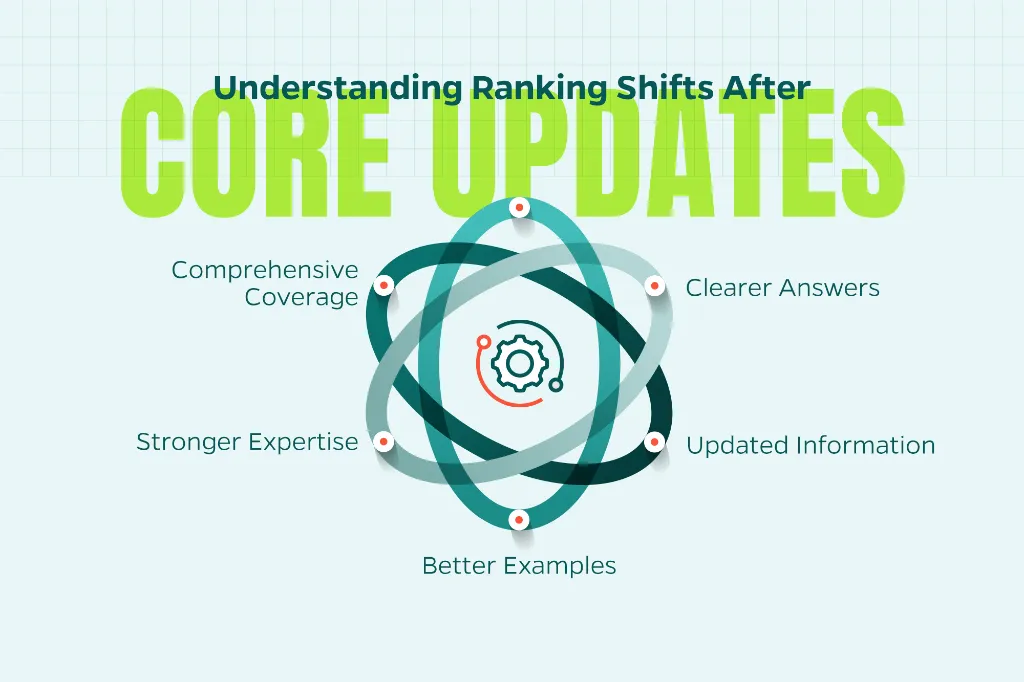
The important takeaway for leadership is that ranking shifts are often comparative, not punitive. Your website isn’t competing against Google’s algorithm. It’s competing against other websites that may have improved their content, strengthened their expertise, or simply better aligned with what Google now values most.
What Google Is Really Looking For
At the heart of every core update is the same objective: helping users find the most helpful, reliable, and relevant information. That’s why Google’s E-E-A-T framework (Experience, Expertise, Authoritativeness, and Trustworthiness) has become such an important guide for creating content that performs well over time.
Google wants to rank content that demonstrates real expertise, answers questions clearly, and provides genuine value to users. Rather than trying to optimize for the algorithm itself, businesses should focus on building content that earns trust and solves problems better than the alternatives.
For example, a detailed service page reviewed by an industry expert with current information and supporting evidence is more likely to demonstrate the qualities Google wants to reward than a generic page written solely to target keywords.
“Investing in quality content is an investment in long-term business growth.”
Enterprise SEO & GEO Strategist | SEO & GEO Analytics Expert
That means publishing content written or reviewed by knowledgeable experts, keeping information accurate and up to date, making pages easy to read and navigate, and supporting claims with credible sources or real-world experience. These aren’t just SEO best practices. They are the qualities that create a better experience for users and help Google identify your website as a trustworthy resource.
While no website is guaranteed to benefit from every core update, organizations that consistently invest in helpful, authoritative content are better positioned for long-term success than those chasing short-term ranking gains.
The Business Impact of a Core Update
While rankings often receive the most attention after a core update, they’re only part of the story. Leadership is less concerned with whether a keyword moved up or down than with how those changes affect overall business performance. The most valuable conversations shift from SEO metrics to business outcomes.

I’d focus on business results instead of individual keyword rankings. If search visibility changes, it can affect leads, sales, and advertising costs. For example, if fewer people find your website through Google, the business may need to rely more on paid search until rankings improve. That’s why leadership should focus on the overall business picture, not just SEO metrics.
A decline in search visibility can have a ripple effect throughout the business. If fewer people discover your website through organic search, lead volume may decrease, sales opportunities can slow, and marketing teams may need to increase paid advertising to maintain performance. Looking at rankings alone won’t tell the full story.
Rankings are an indicator; not the outcome. Leadership should evaluate how ranking changes affect business performance before deciding whether action is necessary.
They should monitor the metrics that reflect real business impact, including:
- Organic traffic
- Conversions
- Lead volume
- Revenue
- Customer acquisition costs
These metrics provide a clearer picture of how a core update is affecting the business and help leaders make informed decisions based on outcomes and not just keyword positions.
How Leadership Should Respond
A core update doesn’t require an immediate overhaul of your website. In fact, the worst response is often reacting too quickly before you understand what actually changed. Instead, use a measured approach that focuses on data, strategy, and continuous improvement.
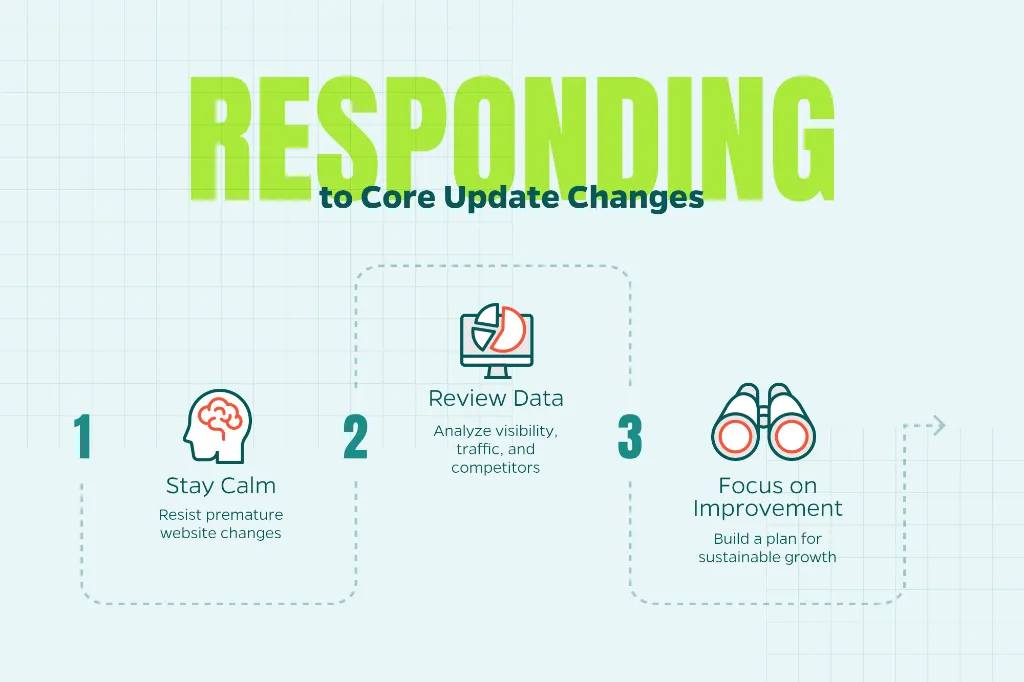
Step 1: Stay Calm
Ranking fluctuations are common while a core update is rolling out. Resist the urge to make major website changes until you have a clear picture of the impact. Premature changes can make it more difficult to determine what actually affected performance.
Step 2: Review the Data
Compare performance before and after the update to identify meaningful trends rather than reacting to day-to-day fluctuations. Before making any decisions, evaluate what changed and whether it had a meaningful impact on the business. Look beyond rankings to identify:
- Which pages gained or lost visibility
- Whether organic traffic, leads, or conversions changed
- Which competitors gained visibility and why
- Whether the changes are isolated or sitewide
This analysis provides the context needed to determine whether action is necessary or whether performance is simply experiencing normal volatility.
Step 3: Focus on Long-Term Improvement
Once you understand the impact, build a plan based on sustainable improvements rather than quick fixes. Prioritize initiatives that strengthen your website over time, such as:
- Updating your most valuable content
- Refreshing outdated information
- Strengthening expertise and trust signals
- Continuing to publish high-quality, user-focused resources
At the same time, avoid common knee-jerk reactions, including:
- Redesigning the website without evidence it’s needed
- Deleting content solely because rankings declined
- Chasing every short-term ranking fluctuation
The companies that recover most successfully from core updates aren’t the ones that react the fastest. They’re the ones that stay patient, evaluate the data, and continually improve the quality of their content over time.
The Takeaway for Leadership
Google core updates are a normal part of search, and they aren’t going away. While they can create short-term fluctuations in rankings and traffic, they shouldn’t dictate your long-term business strategy.
Leadership doesn’t need to understand the technical details of Google’s algorithm. What matters is understanding how to interpret the impact, ask the right questions, and make informed decisions based on data instead of fear.

Leadership should focus on long-term business goals instead of reacting to every ranking change. For example, companies that consistently improve their content and website are usually better prepared for future updates than those that chase quick fixes. The best strategy is to stay patient, keep improving, and make decisions based on data instead of fear.
By staying patient, continually improving your content, and keeping your focus on long-term business goals, you’ll be better prepared not only for the next core update but for whatever changes search brings next.
Search will continue to evolve, but organizations that consistently invest in their users — not just their rankings — will always be better positioned for what’s next.