




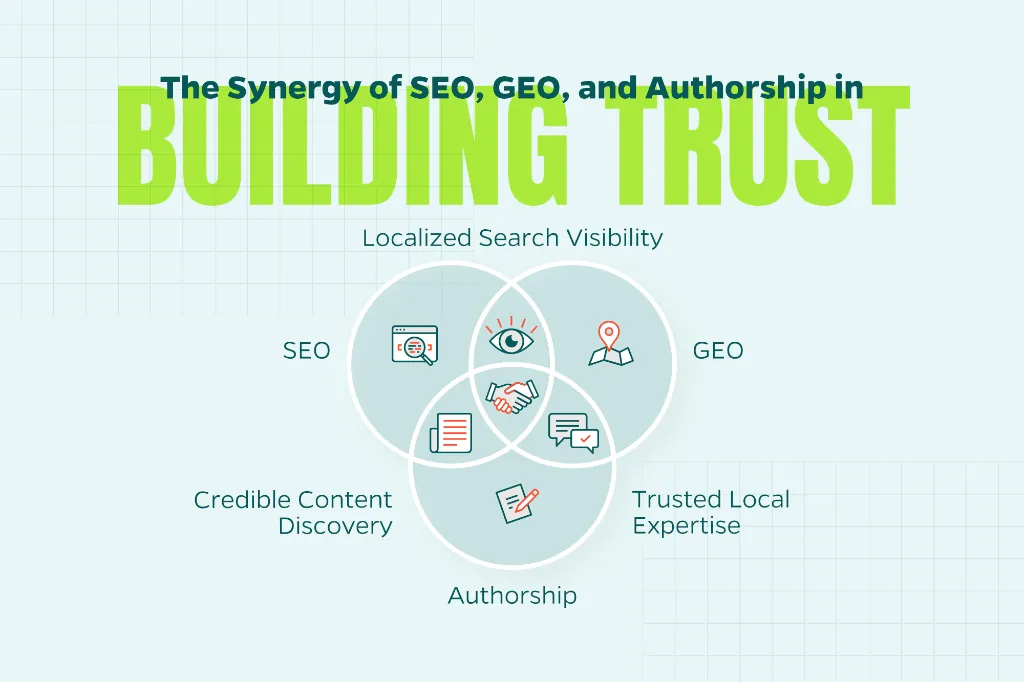
Search isn’t one lane anymore. Someone Googles a question, scans the AI answer at the top, then clicks through to a result to validate it. SEO gets the content in front of users, but GEO helps shape the answer they see first. And in both cases, one factor is doing more of the heavy lifting than ever: trust. Not just what you say, but who’s saying it. That’s why authorship isn’t just a formatting detail anymore. It’s an investment in building real trust with your audience.
As AI-powered search systems surface answers from credible sources, expertise, consistency, and authorship set high-quality content apart. Straight North Senior SEO Strategist Bob Hand explains how these signals are evaluated and what SEO teams can do to turn authorship into a measurable advantage.
Where Authorship Inconsistencies Occur
Start by auditing your existing content. Look across your blogs, resource hubs, and educational pages: are authors consistently attributed, and are names formatted the same way every time? Even small inconsistencies (full name vs. shortened name, individual vs. “team”) can fragment author signals, making it harder for search engines to recognize subject matter authority and for users to connect articles to a real person.
It’s also important to check beyond your core blog. Guest posts, syndicated content, and legacy pages are common gaps, as they are often missing attribution altogether or relying on outdated labels. These areas should be updated with proper sourcing when possible.
In those cases, it does make sense to link to the author’s LinkedIn, wherever you can see their other work. I know it’s tempting to not link outside of your site, but that’s very much a case of developing a good link neighborhood and building that connection for Google to see this person is an expert in their field, look, they write on this (subject) in other ways. And I think the last would be any legacy content that has no author, where you just internally don’t have an author, or outdated labels that were never cleaned up, which can require some updates, even if that’s just having someone audit the content and put a “reviewed by,” and then their byline.
Cleaning up these inconsistencies is a strong first step. However, as content production expands, maintaining that clarity becomes much more complex.
Challenges at Scale (AI + High-Volume Publishing)
In today’s landscape, article production is outpacing the number of true subject matter experts available to support it. This often leads to overreliance on generic “team” bylines or stretching individual authors across too many unrelated topics. Either way it weakens topical authority.
“AI-assisted workflows can disconnect content from real authors, especially when teams generate a blog with a tool like ChatGPT and publish it without assigning a qualified expert to own or validate it.”
As teams try to cover more ground, there’s also a growing risk of publishing pages that are only loosely connected to core services or specialization. Increasing article volume without increasing knowledge creates noise instead of authority. To avoid this, it’s critical to clearly define where content comes from and tie it back to real, accountable authors. That connection plays a major role in how AI systems and search engines evaluate your content.
As you evolve and refine authorship across your site, legacy content is often where the biggest gaps and opportunities exist.
Managing Legacy Content
When evaluating legacy or unattributed material, the goal is to determine its ongoing value. If the content is still useful, assign a credible author to it. If multiple pages overlap, consolidate them into a single, stronger asset. And if the content is low-quality or no longer relevant, it’s often best to remove it altogether.
That said, pruning should be approached carefully.
I talk about pruning with a big asterisk, and that is, you always hear in SEO about these nightmare situations where a client decides hey, 75% of my blog gets no traffic, so I’m just going to remove those pages. And that can do things to your site that you may not anticipate. You’ll lose traffic because of how topical authority works. So again, when you’re doing that value assessment, I think it’s important to determine how it works strategically in your funnel, even if it’s generating no traffic on its own. If it makes sense in the broader picture, you may still want to keep it. I would just say, if it doesn’t have a clear funnel to your service pages, if it isn’t generating any meaningful traffic, there’s a lot of check marks that you can say, this might be worthy of pruning.
Rather than mass-deleting pages, take time to evaluate how each piece contributes to your broader content strategy. Even pages with low traffic can support topical authority or play a role in guiding users through your funnel. Removing them without considering those connections can do more harm than good.
Once you clean up your assets and assign the proper attributions, the next step is making sure each author is consistently associated with a defined area of experience.
Building Strong Topical Ownership
The old adage “a jack of all trades is a master of none” applies here. To build real authority, authors should consistently publish within their specialization. When a writer frequently shifts focus, it becomes harder for both users and search engines to recognize them as a credible voice on any one topic.
“There should be depth, multiple pieces covering the same subject from different angles, you can clearly associate that person with a specific area of expertise as the key point.”
Build depth by creating multiple pieces on related topics and interlinking them to reinforce that connection. Over time, this creates a strong association between the author and their area of focus. While this is easier with a team of specialists, the goal remains the same: align each author with specific topics rather than everything.
But as long as you start to grow your knowledge footprint, the challenge becomes growing into new areas without losing that clarity.
Expanding Output Without Diluting Expertise
As your strategy grows, branching into new topics requires a thoughtful approach to maintain clarity and authority. Instead of overextending your existing team, consider bringing in new voices, especially contributors who already have an established presence in the space. Focus on closely related topics, assign ownership by subject area, and test new directions with a small set of materials before increasing volume.
Over time, evaluate performance to ensure these efforts are actually supporting your business goals rather than creating noise. The goal isn’t just to publish more. It is to grow in a way that reinforces your knowledge and keeps your material aligned with what you do best.
But strong authorship doesn’t stop at what’s on your site. How your authors show up across the broader web plays a major role in reinforcing their reliability.
Off-Site Signals That Build Author Credibility
Building strong author trust signals doesn’t stop at your website. Connect your authors to the broader web by using Person schema and linking to real profiles like LinkedIn or industry publications, and make sure their bios stay consistent everywhere they appear. From there, it’s about helping your key contributors show up beyond your site. Whether it’s through speaking, publishing, or being featured elsewhere, ensure their experience is easy to recognize wherever people (and AI) find them.
If they participated in any speaking engagements, webinars, or panels within the industry, if they’re cited, quoted, or referenced by other credible sources. If they have consistent identity signals that search engines can connect across platforms, again, going back to the sameAs schema. As long as those connections are clear, and they clearly have skin in the game within the industry, those are really good off-site signals.
These external signals reinforce that your authors are active, credible participants in their field, not just names attached to content. And as you build that visibility, the next step is making sure those signals are applied strategically across your most important contributors.
Amplifying External Validation
Consistency is the key. Wherever your authors appear with their writing, encourage them to build visibility through speaking, industry publishing, or third-party features. Prioritize top authors in key business areas and ensure they have the same bios, titles, and credentials wherever their names appear.
Prioritize building a few strong, credible signals rather than spreading efforts too thin. Start with what matters most to your business, then build outward based on those priorities. This approach not only strengthens authority but also helps drive more meaningful visibility and traffic.
As your authors gain visibility externally, it’s just as important to reinforce that authority internally through consistent processes that ensure pages are accurate, accountable, and backed by real skills.
Editorial Governance and Accountability
Strong authorship doesn’t happen by accident. It’s built through a structured editorial process.
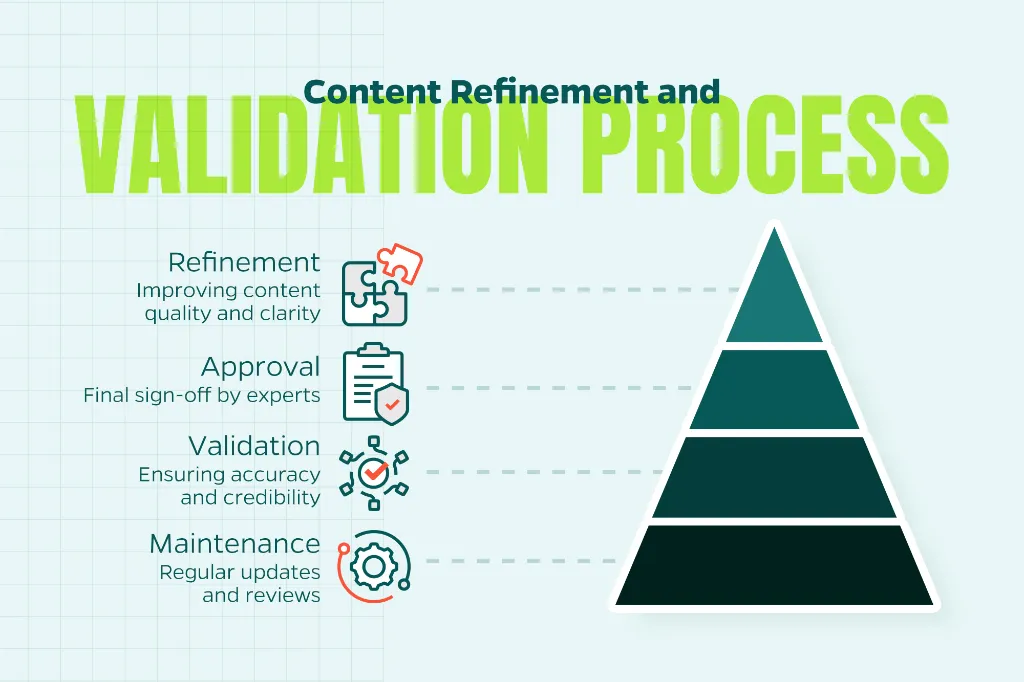
It’s really a layered process. It begins with the writer creating, an editor refining, a subject matter expert validating. More rigorous review is needed for high-stakes or sensitive topics. A clearly defined person responsible for final approval, standard QA guidelines to ensure consistency and accuracy, and ongoing tracking of updates so changes are intentional and documented. So, having SOPs, creating a process for content creation is important to ensure consistency in how not only the content is written, but how it’s validated, and how authorship is attributed to it.
This layered approach ensures subject matter is not only created, but properly refined, validated, and approved by the right people. It also creates accountability by making it understood who is responsible for the accuracy and quality of each piece.
Ongoing reviews are just as important. Outdated content can quickly erode user confidence and lead to higher bounce rates. Including signals like “Reviewed by” or “Edited by” with timestamps helps demonstrate that content is actively maintained and still relevant.
Some best practices to reinforce this process include:
- Establishing SOPs and QA guidelines
- Maintaining consistent “Written by” and “Reviewed by” attribution
- Documenting updates to track changes over time
Additional Signals of Content Maintenance
Signals of ongoing updates help show that your information is actively managed and reliable over time. This can include visible “Last Updated” dates, named reviewers or editors, and regular refresh cycles that demonstrate ongoing updates. Together, these signals reinforce that your pages aren’t static or outdated, improve the user experience, and give readers more confidence in what they’re reading.
With these systems in place, your information is not only accurate but also accountable. Likewise, it’s better structured for how AI systems discover, evaluate, and surface information.
Optimizing for AI Citation (AI Search Readiness)
Page layout and structure make a big difference when you want your page and its content to be picked up by search engines. Pages perform better when they use structured formats with FAQs and headings. They also should go beyond summaries and include original insights.
We get a lot of questions about how are we going to optimize for AI? And a big answer to that is, we answer more questions as specifically and clearly as possible. A lot of that’s literally through frequently asked question sections… or a lot of that guides the type of content that we provide on the pages, so we look at quantitative metrics like number of words, times… number of times specific keywords are used — but more important than any of those considerations is what questions are being answered, because people find your page by asking questions.
Make sure you’re answering potential questions with transparent, structured information that is easy for systems to interpret and summarize. Also, your page should include strong validation signals. For example, identify responsible authors or reviewers so accountability is visible. And finally, monitor which pages are appearing in AI Overviews or other generative environments to identify patterns in what gets surfaced.
Structuring Content for AI Extraction
Best practices:
- Use clear headings and well-defined sections
- Provide concise, direct answers
- Follow an inverted pyramid structure (most important info first)
- Tie insights to named professionals
- Avoid vague or overly broad language
“You can directly answer that within the meta description. There’s no problem with that from a user conversion standpoint, and it will make it abundantly obvious to AI and to users that this is the answer that they want, and they can get more details by clicking in. You don’t need to bury the lede to get people to click in.”
When your content is structured this way, it becomes easier not only to rank but also to be pulled directly into AI-generated answers.
And ultimately, all these efforts point to a larger shift in how authorship is viewed in search.
The Future of Authorship in SEO: Key Takeaways
Authorship is no longer just a byline. It’s a core part of how your content performs in modern search. As AI systems increasingly rely on clear, credible signals, the shift is toward building fully developed author entities that reflect real expertise and accountability.
Key Takeaways:
- Standardize authorship across your site
- Align articles with real subject matter experts
- Build strong topical ownership per author
- Support authors with off-site credibility (LinkedIn, publications, etc.)
- Maintain assets with clear updates and accountability
- Structure pages for easy extraction in AI-driven results
Ultimately, authorship is about trust, and in an AI-driven search landscape, trust is your biggest competitive advantage.