



Key Takeaways:
- Confirm a core update caused the decline before making changes.
- Use performance data to prioritize high-value pages.
- Improve content based on searcher needs, not word count.
- Rule out technical SEO issues before rewriting pages.
- Make targeted improvements and give Google time to reevaluate them.
Google rolls out a new core update. You check your web rankings and they’ve changed significantly. Some pages that previously had little traction are gaining visibility, while others are losing rankings or remain relatively unchanged. It’s difficult to piece together what’s happening.
Straight North SEO & GEO Analytics Expert Marc Holt emphasizes that a ranking decline does not necessarily mean a site has been penalized. Instead, a core update changes how Google evaluates which pages are most helpful and relevant to searchers, causing some pages to rise, fall, or remain stable.
The important question isn’t simply whether your rankings changed, but how you respond when they do. For businesses that rely on organic search, ranking declines can mean less traffic, fewer leads, and lost sales. Before making sweeping changes, it’s important to understand what caused the decline. A thoughtful approach helps you identify which pages lost visibility, determine whether content or technical issues are responsible, and prioritize the improvements most likely to make an impact.
The following five steps will help you understand what changed, strengthen your content and technical SEO, and build your online authority. By making targeted improvements instead of reacting hastily, you can give your site a better chance of recovering while putting it in a stronger position for future Google core updates.
Step 1: Confirm That a Core Update Caused the Drop
A Google core update changes how Google determines which pages are the most helpful and relevant for a particular search. As Google reevaluates pages based on these criteria, rankings can shift across the search results. Some pages may gain visibility, others may move down, and some may remain relatively stable.

Start by checking whether Google announced a core update. Then compare your website’s performance before and after the update. Look for lasting changes instead of focusing on one bad day. Also remember that not every traffic drop is caused by a core update. Technical problems, seasonality, changes in search demand, and other issues can also affect your rankings.
Comparing traffic and rankings before, during, and after the update can help you determine whether you’re seeing a meaningful shift or normal performance fluctuations.
Because Google constantly compares pages against one another, a ranking decline doesn’t automatically mean your site was penalized or that something is wrong. Instead, it may mean that Google now considers competing pages a better match for what people are searching for.
Treat a ranking decline as a signal to investigate what changed, identify where your site may be falling behind, and determine which improvements are most likely to make a difference.
Step 2: Audit Your Existing Content
Once you’ve identified where performance declined, take a closer look at the affected content before deciding what to change. The goal of a content audit is to determine which pages still provide value, which have fallen behind and which may no longer serve their original purpose.
Start by reviewing high-priority pages for signs that they need attention. Look for thin or outdated information, repetitive content, and pages that no longer align with what your audience is searching for. Also consider whether multiple pages cover similar topics and may be competing with one another rather than providing distinct value.
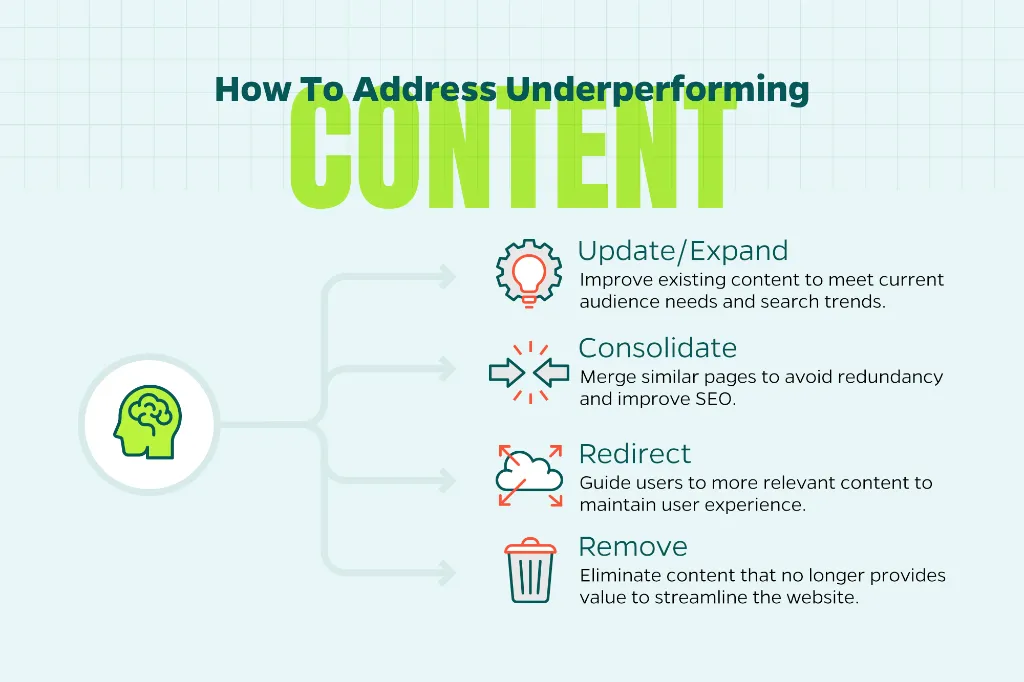
Not every underperforming page needs more content. Depending on what you find, the right response may be to update or expand a page, consolidate overlapping content, redirect an outdated page, or remove content that no longer provides meaningful value.
The purpose of this step is to understand what needs attention and why before you start making improvements.
Step 3: Create More Helpful Content
Once your audit has identified the pages worth improving, focus on making those pages more useful to the people searching for them. Google Analytics and Google Search Console can help you prioritize high-value pages where stronger content could have the greatest impact.

Google Analytics shows how visitors interact with your pages after they arrive on your website. If an important page is getting less traffic or fewer conversions, it may need stronger content. Focus on making the page more helpful by answering searchers’ questions, adding original insights, updating outdated information, and giving visitors a better reason to choose your page over others.
Use the affected page’s performance as a starting point but evaluate the content from the searcher’s perspective:
- Does it answer their most important questions thoroughly?
- Is the information accurate and current?
- Could you add original insights, firsthand expertise, or useful examples that competing pages don’t provide?
Most importantly, consider what gives someone a reason to choose your page over another search result. The goal isn’t simply to make a page longer or add more keywords. It’s to create a more useful and distinctive resource that better satisfies what the searcher came to find.
Rather than trying to improve every page at once, prioritize the pages where better content has the greatest potential to improve traffic, engagement, and conversions.
Step 4: Fix Technical Issues
A decline in traffic doesn’t always mean your content is the problem. If an important page suddenly loses visibility or stops performing as expected, investigate whether a technical issue is making it harder for Google to crawl, index, or understand the page.
Common problems include:
- Indexing issues
- Broken redirects
- Incorrect canonical tags
- Poor internal linking
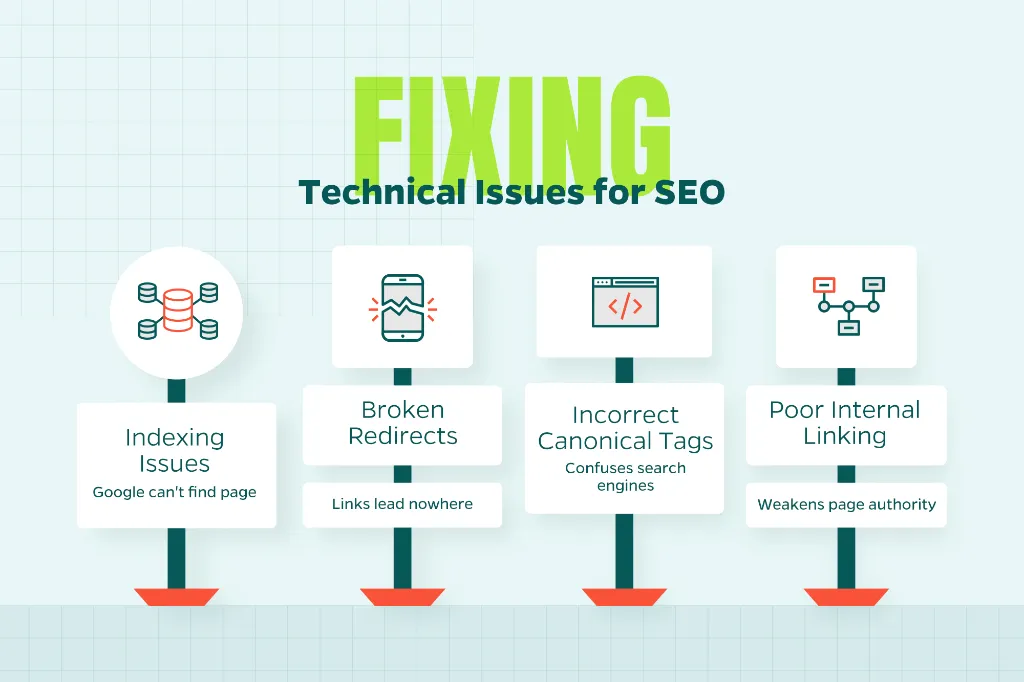
These problems can all interfere with a page’s search performance, even when the content itself is strong. Before rewriting an affected page, rule out these technical issues so you don’t spend time solving the wrong problem.
Google Analytics can help point you in the right direction by identifying where significant performance changes occurred. It may not reveal the specific technical issue, but it can show you which pages deserve further investigation so you can determine what’s actually contributing to the decline.
Step 5: Build Your Online Authority
Google Analytics can’t directly measure a page’s authority or trustworthiness, but performance data can help you identify where those qualities may need strengthening. If an important page experiences a meaningful decline in traffic or conversions, take a closer look at whether it gives users and search engines enough reason to trust the information it provides.
That may mean demonstrating expertise more clearly, adding original insights and stronger examples, updating outdated facts, clarifying who created the content or incorporating additional trust signals. These improvements can make a page more credible and useful rather than simply adding more content for the sake of SEO.
Use performance data to prioritize where these changes could have the greatest impact. Instead of applying the same authority-building tactics across your entire website, focus first on high-value pages where stronger expertise, credibility, and trust could meaningfully improve the user experience.
Why Core Update Recovery Takes Time
Once you’ve identified the pages that need attention and made meaningful improvements, the next step is often the hardest: waiting. Recovery from a core update isn’t immediate, and a lack of quick movement doesn’t necessarily mean your changes aren’t working.

Recovery usually takes time because Google needs to re-crawl, process, and re-evaluate your updated pages. The best results come from making meaningful improvements instead of rushing to change everything. Focus on your highest value pages, improving them carefully, and give Google time to recognize those changes.
This delay is another reason to avoid making widespread changes simply because rankings haven’t rebounded quickly. Instead, focus on your highest-value pages, make meaningful improvements based on what you’ve identified, and allow enough time to evaluate their impact. A measured approach makes it easier to see what’s working without making unnecessary changes that could complicate your recovery.
How Can You Prepare for the Next Google Core Update?
The best time to prepare for a Google core update is before one happens. Establishing a performance baseline gives you something to compare against when rankings change, making it easier to separate meaningful declines from normal fluctuations.
Use Google Analytics to regularly monitor your most important pages and track traffic, conversions and other key performance indicators over time. Maintaining this historical data can help you quickly identify which pages were affected and how significantly their performance changed.
“Combined with regular content updates and good technical SEO, this makes it much easier to respond with confidence instead of guessing.”
Enterprise SEO & GEO Strategist | SEO & GEO Analytics Expert
Preparation also goes beyond monitoring. Continue improving your content, maintaining strong technical SEO, and strengthening the expertise and trust signals across your site. When the next core update arrives, you’ll have both a stronger website and the data needed to investigate changes with confidence instead of relying on guesswork.
Respond to Core Updates With Data, Not Panic
A ranking decline after a Google core update doesn’t mean you need to overhaul your entire website. It means you need to understand what changed before deciding what to change.
Start with the data. Confirm whether the decline coincides with a core update, identify the pages that experienced meaningful losses, and rule out technical problems. Then prioritize the pages that have the greatest impact on your traffic, leads, and sales.
From there, make improvements where they matter most. Strengthen content that no longer meets searchers’ needs, reinforce expertise and trust signals, address technical SEO problems, and give Google time to recrawl and reevaluate your changes.
The goal isn’t to react to every ranking fluctuation. It’s to build a more resilient website by making informed, meaningful improvements to the pages that matter most. With the right data and a measured approach, the next Google core update becomes less of a guessing game and more of an opportunity to identify where your website can improve.