

As a manufacturer, you have a built-in advantage when it comes to content marketing. You’ve got deep technical expertise, experienced engineers, and detailed product knowledge that your competitors would envy. The challenge is turning all that knowledge into content that generates leads.
Too often, manufacturers publish technical information that’s accurate but hard to digest. Maybe it’s overly focused on products or written for internal audiences rather than potential customers. The result is content that informs but rarely converts.
With the right approach, though, your technical content can become one of your most powerful manufacturing lead generation tools. The key is translating complex knowledge into content that answers buyer questions, builds trust, and guides prospects toward a decision.
This article provides manufacturing marketing strategies you can use to create technical content that drives real engagement and conversions.
Start with Real Buyer Questions
The most effective technical content starts with understanding what your prospects want to know. Engineers, procurement teams, and technical buyers search for highly specific information during their research phase. They want to understand how a technology works, compare product specifications, or evaluate potential solutions to their problems.
Start by identifying the questions your sales and engineering teams hear most often:
- How does a particular manufacturing process work?
- What are the differences between two materials or technologies?
- How do you calculate performance, efficiency, or ROI?
- What problems does a specific product solve?
These questions translate directly into valuable content topics. When your blog article, white paper, or guide answers real questions buyers are already asking, it has a much higher chance of attracting qualified search traffic and keeping readers engaged.
Focus on Problems Before Products
Here’s one of the most common mistakes in manufacturing content: jumping straight into product promotion.
Most buyers begin their research long before they’re ready to evaluate vendors. At that early stage, they’re trying to understand a problem or explore potential approaches. If your content only talks about your products, you’ll miss that critical research window entirely.
Instead, start by addressing the problem your audience is trying to solve. Explain the challenge in clear terms. Discuss why it occurs, what it costs businesses, and what factors make it difficult to address.
Once readers understand the problem, you can introduce possible solutions. Your product or technology can be part of that conversation, but it should appear as a logical next step rather than a sales pitch. This approach builds credibility and positions your company as a trusted technical resource.
Translate Technical Expertise into Clear Language
Manufacturers often struggle with balancing accuracy and accessibility. Engineers may write content that’s technically precise but difficult for non-specialists to follow. Your audience may include engineers, but it often also includes operations managers, procurement leaders, and executives. These readers want to understand the implications of a technology without having to decode dense technical language.
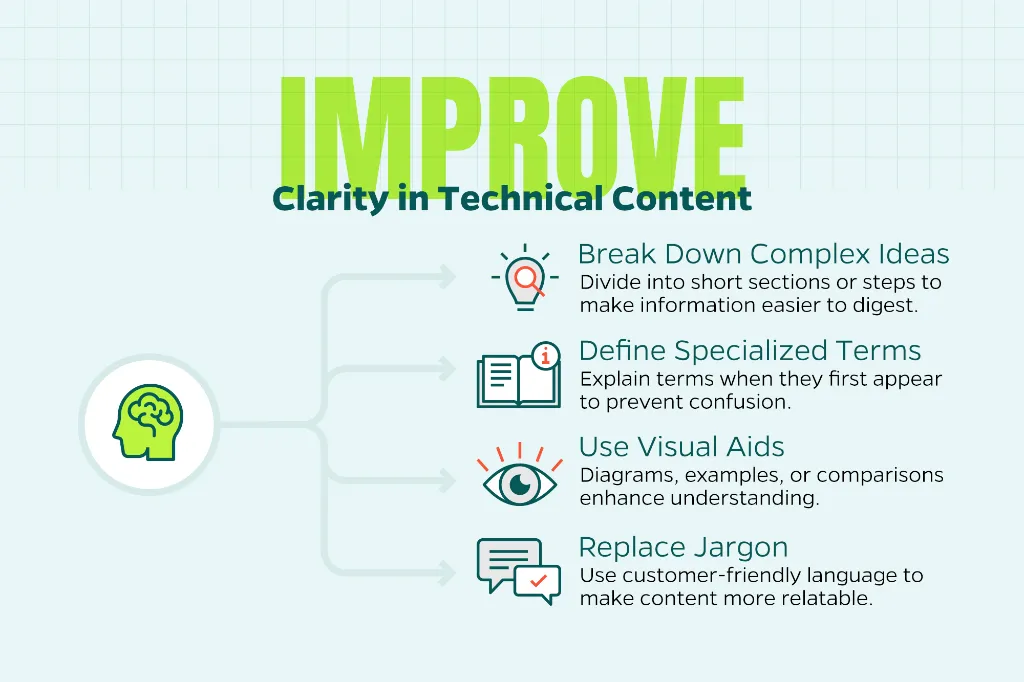
When creating technical content, focus on clarity:
- Break complex ideas into short sections or steps
- Define specialized terms when they first appear
- Use diagrams, examples, or comparisons when possible
- Replace internal jargon with language customers use in real life
Clarity doesn’t mean oversimplifying the subject. It means presenting information in a way that respects the reader’s time and helps them quickly grasp the key points. The easier your content is to understand, the more likely readers will stay engaged and continue exploring your website.
Use Real Data and Practical Examples
Technical buyers rely heavily on evidence when evaluating solutions. Claims without supporting information rarely build trust. Whenever possible, support your content with data, specifications, and real-world examples, such as:
- Performance metrics or efficiency improvements
- Before-and-after comparisons
- Cost savings calculations
- Case studies showing how a customer solved a specific challenge
For example, instead of saying “our product improves production efficiency,” explain how a manufacturer reduced downtime by 23% after implementing your solution. These concrete examples help readers visualize the results and evaluate whether the solution could work for their own operations.
Structure Content for Skimming
Even highly technical readers rarely consume long articles word for word. Most people scan content first to decide whether it’s worth reading in detail. That’s why structure plays a critical role in how well your technical content performs.
Use clear headings, short paragraphs, and bullet points to make your article easy to navigate. Each section should focus on a specific idea and move the reader logically toward the next step.
Well-structured content offers several advantages:
- Readers can quickly find the information they need
- Key points stand out during a quick scan
- Search engines can better understand the topic and hierarchy of your page
Good formatting improves both the user experience and the overall effectiveness of your content.
Align Content with the Buyer Journey
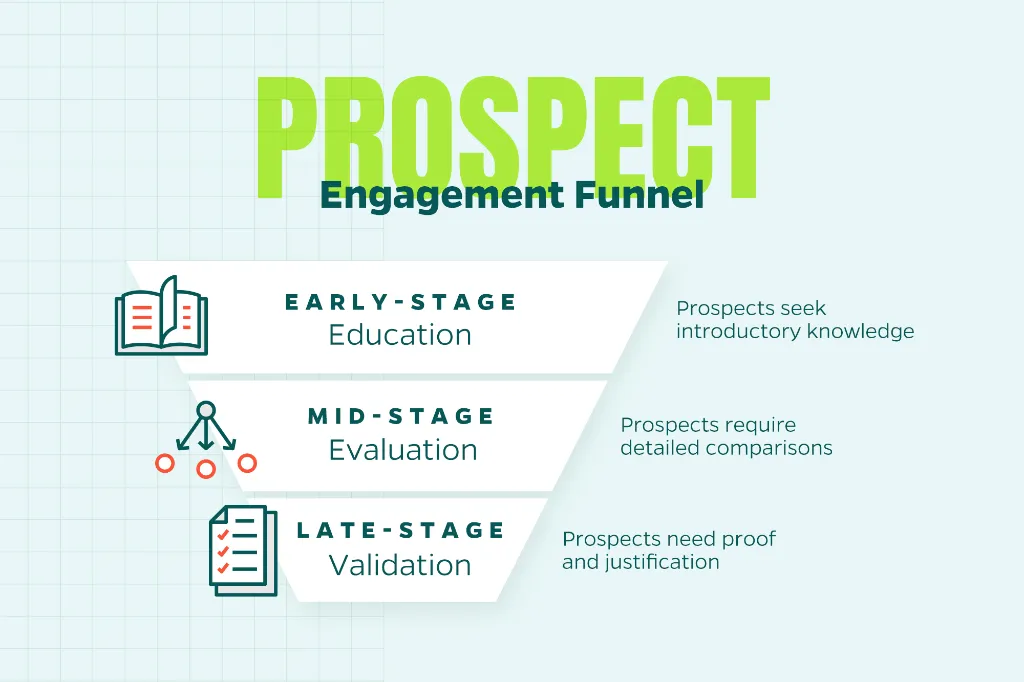
Different types of technical content work best at different stages of the buying process.
- Early-stage prospects often search for educational material. Blog articles, guides, and explainer videos can introduce them to new concepts or technologies.
- Mid-stage buyers may want more detailed information. Comparison articles, technical specifications, and downloadable white papers help them evaluate their options.
- Late-stage prospects often look for proof and validation. Case studies, ROI calculators, and implementation guides help them justify a purchasing decision.
When you plan content across the entire buyer journey, you create multiple opportunities to engage prospects and move them closer to conversion.
Include Clear Conversion Paths
Even the most informative technical content won’t generate leads unless readers know what to do next.
Every article should include a clear next step that aligns with the reader’s level of interest. Here are a few examples:
- Download a detailed white paper
- View a product specification sheet
- Request a consultation or demo
- Contact your sales team for more information
Your calls to action should feel like a natural continuation of the topic rather than a sudden shift into sales language. When the next step provides additional value, readers are far more likely to take it.
Optimize for Search Without Sacrificing Quality
A search engine optimization strategy is essential for helping your technical content reach the right audience.
Start by identifying the phrases your prospects use when researching problems or technologies. These keywords should guide your content topics and appear naturally in titles, headings, and body text.
However, SEO should never come at the expense of readability or accuracy. Technical audiences quickly recognize content that was written primarily for search engines rather than for people. In today’s world, keyword stuffing isn’t a winning strategy for SEO anyway. Semantic relevance is helpful in writing to both your audience and SEO.
The goal is to create authoritative, helpful content that answers real questions while also aligning with the language buyers use during their online searches.
Make Technical Content a Long-Term Strategy
One blog post rarely drives a steady stream of leads on its own. The real impact of technical content comes from consistency. Manufacturers that publish regularly build a library of resources that attract traffic over time. Each article answers a different question, targets a different keyword, or addresses a different stage of the buyer journey.
Over months and years, a content ecosystem becomes a powerful source of organic visibility and qualified leads. It also strengthens your brand’s reputation as an authority in your industry.
Final Takeaways
Manufacturers have no shortage of technical knowledge. The challenge is transforming that expertise into content that engages readers and supports business growth.
By focusing on real buyer questions, explaining complex topics clearly, and guiding readers toward meaningful next steps, you can turn technical content into a reliable lead generation engine. The companies that do this well aren’t just publishing information. They’re building trust with prospects long before the first sales conversation begins.
Need Help Creating Technical Content That Converts?
Creating high-quality technical content requires a blend of industry knowledge, marketing strategy, and SEO expertise.
If your manufacturing company wants to generate more leads from its website, the team at Straight North can help. Our digital marketing experts specialize in developing content strategies that translate complex products and technologies into engaging, search-optimized resources.
Contact Straight North today to learn how we can help your manufacturing business create technical content that attracts the right audience and drives measurable results.