


Content marketing looks different depending on who you’re trying to reach. Many companies default to a generic strategy of “creating good content” without considering whether that approach fits their audience. Unfortunately, it often leads to poor results.
Whether you’re selling software subscriptions to enterprise IT managers or running shoes to weekend joggers, the basic tenets of content marketing are the same. But how you execute those fundamentals — the tone, the format, the channel, the buying journey you’re mapping to — differs significantly between B2B and B2C. Understanding those differences is key to building a strategy that drives results.
The Core Difference: Who Makes the Decision
Before diving into tactics, it helps to anchor everything in one central reality: B2B and B2C purchases are made differently.
In a B2C context, a single person typically decides to buy. The process can be fast, emotional, and heavily influenced by convenience, price, and brand feel. Someone sees a social post, clicks a link, reads a few reviews, and buys a product. Sometimes this happens in a matter of minutes.
B2B is a different animal. Purchases often involve multiple stakeholders, longer evaluation periods, and a much higher stakes outcome. A company investing in a new marketing automation platform is committing budget, onboarding a team, and betting on a vendor relationship that could last years. That changes everything about how content needs to work.
Audience Mindset and Tone
B2C content tends to lead with emotion. It creates aspiration, taps into lifestyle, and connects products to how people want to feel. Think of how outdoor gear brands sell adventure as much as equipment, or how a food brand ties a recipe to the joy of cooking for family. The goal is resonance, emotional appeal, and making the audience see themselves in the content.
B2B content, by contrast, earns trust through expertise. The audience isn’t looking to feel inspired; they’re looking to solve a problem or justify a decision to their boss. That calls for a tone that is authoritative but still approachable. That doesn’t mean it should be dry and academic. But it should be grounded in real knowledge and practical application. The companies that do it best write for real people who happen to work in professional roles, not nameless “decision-makers.” Keeping the writing clear, direct, and human goes a long way.
Content Formats That Work
The right content format depends on your audience’s habits and where they are in the buying journey. B2B and B2C audiences tend to gravitate toward different formats for different reasons.
For B2C, high-performing formats often include:
- Short-form video and social content that’s shareable and visually engaging
- Influencer-driven content that borrows credibility from trusted voices
- Blog posts and how-to guides that capture search traffic and answer quick questions
- Email campaigns with personalized product recommendations or time-sensitive offers
For B2B, content tends to be more in-depth and education-focused:
- Long-form blog articles and thought leadership pieces that demonstrate expertise
- White papers, case studies, and guides that support the evaluation process
- Webinars and video content that address specific pain points or industry challenges
- Email nurture sequences that keep prospects engaged over a longer sales cycle
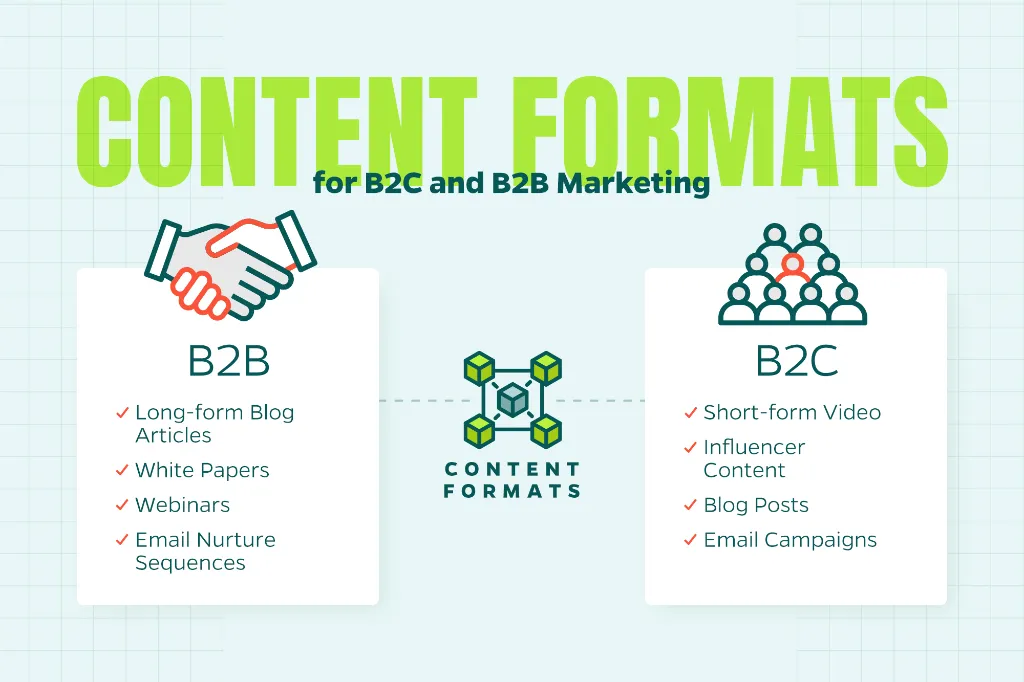
Neither list is exhaustive, and there’s overlap between the two. But the key point is that B2B content often needs to do more heavy lifting. It should educate, build credibility, and help stakeholders make a defensible decision.
The Role of the Buying Journey
In B2C marketing, the funnel can be remarkably compressed. Someone at the awareness stage might convert the same day. That means content often needs to serve multiple stages at once — introducing the brand while also nudging toward purchase.
B2B funnels tend to be longer and more deliberate. A prospect might consume content for months before making contact. That creates both a challenge and an opportunity: the challenge is maintaining visibility over a long period, and the opportunity is building genuine credibility through consistent, useful content.
This is why content mapping matters more in B2B. Knowing which content serves awareness, consideration, and decision stages keeps prospects engaged at every step. A company that only produces top-of-funnel blog posts but neglects mid-funnel content like comparison guides or ROI calculators often loses prospects right when they’re getting serious.
Distribution and Channels
Where content lives matters as much as what the content says. B2C brands tend to prioritize social media channels because that’s where their audiences spend time. Paid social and influencer partnerships often amplify reach quickly.
B2B content distribution leans more heavily on LinkedIn, organic search, and email. LinkedIn is particularly effective for reaching professional audiences and establishing thought leadership. SEO-driven blog content builds long-term visibility for the kinds of research-heavy queries B2B buyers type into Google when they’re evaluating options.
That doesn’t mean B2B should ignore social media or B2C should ignore search. It means each should prioritize the channels that align with their audience’s behavior rather than spreading effort too thin.
Metrics That Matter
How you measure success also differs between B2B and B2C content marketing. B2C metrics often emphasize volume and speed: traffic, social engagement, conversion rates, and revenue attributed to specific campaigns. With a shorter buying cycle, the connection between content and conversion is usually more direct.
B2B measurement tends to focus on quality over quantity. A white paper that generates 50 highly qualified leads might outperform a blog post that drives 5,000 page views with no follow-through. Metrics like lead quality, pipeline contribution, and content-assisted conversions often tell a more useful story than raw traffic numbers.
Getting this right requires clear, cohesive alignment between marketing and sales. That’s something easier said than done, but worth the investment to establish.
Applying the Right Strategy
None of this means your content strategy needs to be rigid or siloed. Some companies serve both B2B and B2C audiences, and even within those categories there’s plenty of variation. A B2B company selling to small business owners is doing something different than one selling to Fortune 500 procurement teams.
The most effective content strategies start with a clear picture of the audience. You want to determine how they make decisions, what they care about, where they spend time, and what would genuinely help them. From there, format, tone, and channel choices tend to follow naturally.
Need Help?
If you’d like to talk through what a smart content marketing strategy looks like for your business, the team at Straight North is ready to help. Reach out today to start the conversation.