

A burst pipe at midnight. An air conditioner that quits on the hottest weekend of the summer. A furnace that stops working in the middle of a January cold snap. When these situations arise, people reach for their phones immediately.
That urgency is both an opportunity and a challenge for home services marketers like HVAC and plumbing companies. The leads are out there, searching at 11 p.m. or 2 a.m. They are ready to hire whoever picks up or whoever ranks at the top of the search results. The question is whether your marketing is built to capture them. This article will walk you through the basics.
Why After-Hours Leads Are Different
Emergency service leads have a fundamentally different mindset than someone browsing for a routine tune-up. They’re not comparing prices, reading blog posts, or weighing their options over a few days. They’re looking for services that are fast, credible, and available.
This means the usual conversion timeline collapses. Someone searching “emergency plumber near me” at midnight is not going to revisit your website tomorrow morning. If your site doesn’t answer their core questions immediately — “Are you available right now? Can I reach a real person?” — they’ll click to the next result.
That behavior has implications for how you structure your digital presence, from your Google Business Profile to your paid search campaigns to the contact options on your website.
Your Google Business Profile is a First Responder
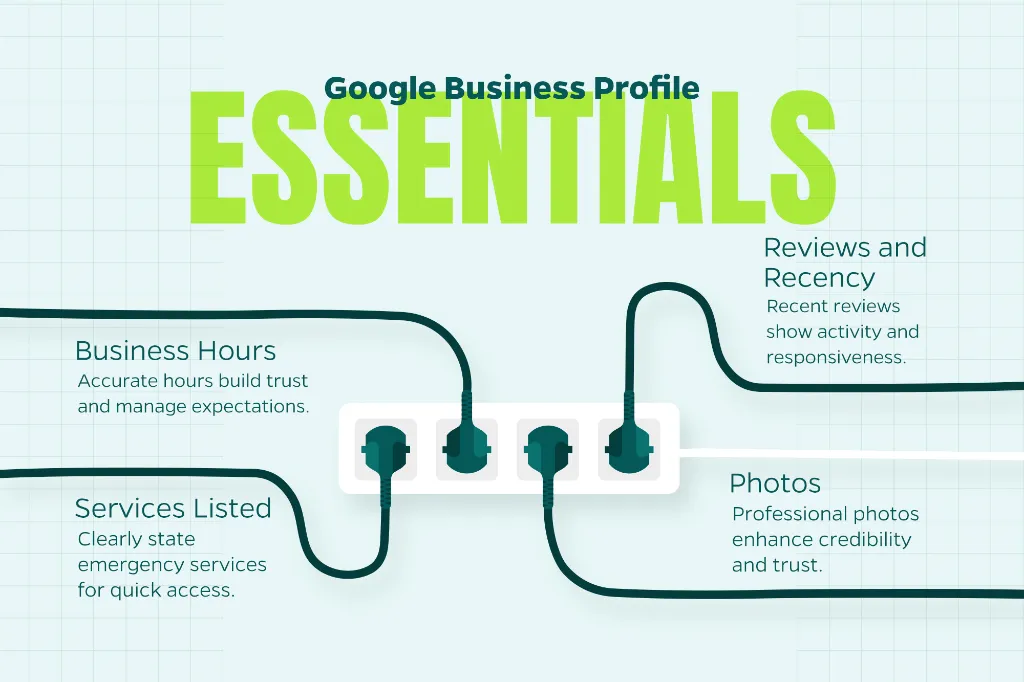
For local emergency searches, Google Business Profile (GBP) is often the first thing a panicked homeowner sees. It’s essential to your local SEO. Before prospects click to your website, they’re scanning your listing for phone number, hours, and reviews. If any of that information is incomplete or outdated, you may lose the lead before they ever reach your site.
Here are a few things you want to get right:
- Business hours: Make sure your hours accurately reflect when you take calls, including any 24/7 or on-call availability. Inaccurate hours erode trust fast.
- Services listed: Explicitly include emergency or after-hours services in your GBP description and service categories.
- Reviews and recency: A strong review count with recent entries signals that you’re active and responsive. That matters especially for someone who’s never heard of your company and needs to trust you quickly.
- Photos: Branded vehicle photos, uniformed technicians, and completed job images all contribute to a professional impression in a high-stakes moment.
Paid Search Built for Urgency
PPC campaigns are one of the most effective tools for capturing emergency leads, but only if they’re structured with that intent in mind. Generic HVAC or plumbing ads won’t cut it here. You need campaigns specifically built around emergency and after-hours keywords.
Think in terms of how someone describes their problem at 1 a.m.: “water heater leaking,” “AC not working overnight,” “emergency drain cleaning,” “furnace repair tonight.” These high-intent phrases deserve their own ad groups with messaging that speaks directly to the situation.
Ad copy for emergency searches should do a few things at once: confirm availability, communicate speed, and provide a clear call to action. Phrases like “Available Now,” “24/7 Emergency Service,” and “Call for Immediate Help” are the exact reassurance an anxious homeowner needs.
Don’t forget ad scheduling and bid adjustments. If you’re not monitoring performance by hour of day, you may be spending budget during low-intent daytime hours while under-bidding during the overnight windows where emergency searches spike.
Your Website Needs to Convert Under Pressure
When someone lands on your site at midnight with water on their floor, they’re not reading your About page. They need to find your phone number and confirm you’re available in about five seconds. If your site makes that difficult, you’ve lost the lead.
Mobile experience is critical here. Most after-hours emergency searches happen on phones. Your site should load quickly, display a click-to-call button prominently at the top of the page, and keep the path to contact as short as possible.
Consider what you’re communicating above the fold on your service pages. Does a visitor immediately see that you offer emergency service? Is your phone number visible without scrolling? Is there a clear signal that tells them you’re available right now?
If your primary contact option is a form submission that gets checked during business hours, you will lose emergency leads to competitors who answer the phone. At minimum, emergency-focused landing pages should offer a phone number with clear language about availability, not just a contact form.
Lead Capture Beyond the Phone Call
Not every after-hours visitor is ready to call at that exact moment. Some may be assessing whether the situation is truly urgent or want to line up a company before placing the call. Having a few additional options on your site helps capture these leads without requiring an immediate conversation.
Live chat or AI chat widgets can bridge the gap for visitors who are hesitant to call but still want quick answers. If your chat tool is well-configured, it can qualify the lead, collect contact information, and trigger an alert to your on-call team.
Callback request forms can also convert visitors who don’t want to wait on hold. The key word is simple. A lengthy intake form will kill conversions in an emergency scenario. Keep it to three or four fields and set an expectation for how quickly someone will respond.
Tracking and Following Up
Call tracking is especially important for service businesses. Assigning unique phone numbers to different campaigns lets you see exactly which ads and pages are driving calls, not just traffic. Combined with GA4 goal tracking for form submissions and chat interactions, you can build a clear picture of after-hours lead performance.
Follow-up speed matters too. Even if you can’t dispatch a technician immediately, responding to a callback request or chat lead within minutes dramatically improves close rates. An automated confirmation message that lets the prospect know a real person will reach them shortly goes a long way toward keeping the lead warm until your team can connect.
Need Help?
If you’d like to talk through how your current marketing setup handles after-hours leads, reach out to Straight North. We’re happy to take a look and share what we’ve seen work.