
LinkedIn is now a crowded, fast-moving content platform where attention must be earned quickly. Consequently, video gives B2B brands one of the most effective ways to improve your marketing on LinkedIn. If your company is still leaning only on text posts and static images, you are likely missing opportunities to start better conversations and generate stronger engagement.
Written content still has an important role to play. A sharp article or a well-timed text post can absolutely move people to act. Yet, video brings the message closer to the audience by making expertise feel more immediate, credible, and human. It gives prospects a clearer sense of who you are, what you know, and why your perspective is worth their attention.
Why Video Works on LinkedIn
The LinkedIn algorithm has consistently favored video content in recent years. This has given video greater organic reach than most other post types. But the reasons video performs well go deeper than algorithmic preference.
Video creates a sense of familiarity. When your audience watches you explain a process, share an opinion, or walk through a case study on camera, they start to feel like they know you. People buy from companies they trust, and trust is built through repeated, meaningful contact.
Video also communicates complexity more efficiently than text. If you are trying to explain a nuanced service offering, demonstrate a product, or break down industry data, a two-minute video can often do what would take a 600-word article to accomplish. Yet, it holds the viewer’s attention more reliably throughout.
Types of Videos That Perform Well on LinkedIn
Not all video content is created equal. Formats that work well on Instagram or Facebook may fall flat on LinkedIn. The platform’s audience is professionally minded, so content needs to deliver value. It should offer practical insight, industry perspective, or authentic expertise. Here are the formats that tend to land well:
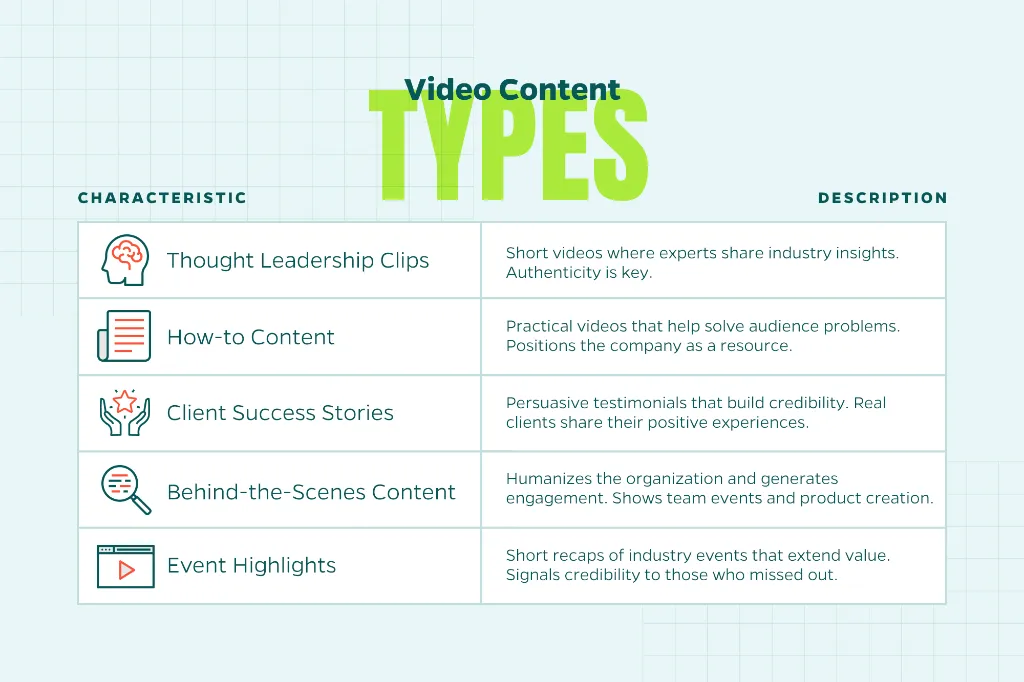
- Thought leadership clips. Short videos — typically 60 to 90 seconds — where a leader or subject matter expert shares a perspective on an industry trend, a common challenge, or a lesson learned. These do not need high production value. Authenticity carries more weight than polish.
- How-to and educational content. Practical, step-by-step videos that help your audience solve a real problem. These position your company as a resource rather than just a vendor, which is a meaningful distinction in any competitive market.
- Client success stories. A brief video testimonial or a narrated case study is far more persuasive than a written blurb. Hearing a real client describe the results your company delivered builds credibility in a way that text simply cannot match.
- Behind-the-scenes content. Videos that humanize your organization tend to generate strong engagement because they offer something audiences do not get from polished corporate content. This could include a team event, a day in the life, or a look at how your product gets made
- Event and webinar highlights. If your company hosts or participates in industry events, short video recaps extend the value of that investment significantly and signal credibility to those who were not in the room.
Getting the Technical Basics Right
You do not need a production crew to create an effective LinkedIn video. A modern smartphone, decent lighting, and a quiet environment are enough to produce content that performs well. That said, a few technical details are worth getting right.
Captions are essential today. A significant share of LinkedIn users watch video with the sound off. They may be viewing your post while in an office, commuting, or multitasking. If your video does not have captions, you are losing a large portion of potential viewers before they even register your message. Most native LinkedIn uploads and third-party tools make it easy to auto-generate captions, so there is no good reason to skip this step.
Keep it concise. LinkedIn’s own data suggests videos under two minutes consistently outperform longer content. Lead with your most important point rather than building to it. If someone watches only the first 15 seconds of your video, what do you want them to take away?
It’s also best to upload natively. Videos uploaded directly to LinkedIn receive preferential treatment in the feed. The algorithm prioritizes content that keeps users on the platform, and native uploads do exactly that.
Building a Sustainable Video Habit
One of the most common pitfalls companies run into with LinkedIn video is treating it as a one-off campaign rather than an ongoing content channel. A single high-production video posted every few months will not build the audience momentum that drives meaningful lead generation.
Consistency is what earns you a place in your audience’s feed over time. That does not necessarily mean posting every day. It means posting regularly enough that your brand stays visible, and your audience knows to expect content from you. For most B2B companies, two to four videos per month is a sustainable starting point.
Repurposing content can make this cadence more manageable. A webinar can yield three or four short video clips. A blog post can become a talking-head video. A client conversation can become a testimonial. Once you start thinking about content across formats, the production burden becomes much lighter.
Measuring What Matters
LinkedIn provides native analytics for video content. Views and impressions are useful as a baseline, but watch time is the metric that tells you whether your content is holding attention or losing it early. If viewers are consistently dropping off in the first few seconds, that is a signal about your opening hook. If they are making it through 80 percent of a two-minute video, you are doing something right.
Engagement rate — including likes, comments, shares, and saves relative to views — gives you a sense of how resonant the content is. Comments are worth watching. When a video sparks a conversation in the comments, it signals strong relevance and tends to push the post further into the feed.
Track these metrics over time rather than evaluating individual posts in isolation. Patterns across multiple videos will tell you which topics, formats, and posting times are driving the best results for your specific audience.
Conclusion
On LinkedIn, video is one of the most direct paths to building credibility, expanding reach, and staying visible with the prospects and partners your business wants to connect with.
The barrier to entry is lower than most people assume. The upside is substantial. Starting simply and improving over time is far more valuable than waiting until everything is perfect.
If your company is ready to make video a more intentional part of its LinkedIn strategy, the time to start is now. The brands building those habits today are the ones that will have the audience advantage tomorrow.
Need Help?
Want to make LinkedIn video work harder for your business? Contact Straight North to learn how we can help you develop a video content strategy that drives real B2B engagement.