


Google’s search algorithms continue to evolve. It’s a reality as consistent as “death and taxes.” Yet, despite Google’s evolution towards AI-driven overviews and more sophisticated evaluations of content quality, great SEO starts with great writing.
Still, many marketers struggle with the balancing act between optimizing for visibility and writing for real people. If you write too mechanically, you will lose readers. But write too casually, and you may miss crucial signals that help search engines understand and rank your content.
Fortunately, SEO-friendly content and highly readable content aren’t mutually exclusive. In fact, the best-performing pages today succeed precisely because they combine both. As we move into 2026, search algorithms are better than ever at identifying natural, context-rich content that aligns with user intent. So don’t pretend you’re living in 2002 by keyword-stuffing your copy.
Whether you’re new to SEO-driven writing or looking to refine your process, here are ten tips to help you create content that ranks and resonates.
1. Start with Intent. Let Keywords Support It.
Search engines now rely heavily on intent matching, entity understanding, and topical context. Keyword research still matters, but it’s no longer the starting point. Instead, begin by asking:
- What exact problem or question is the user trying to solve?
- What stage of the buyer’s journey are they in?
- What format are they expecting—quick answer, comprehensive guide, comparison, definition?
Once you understand the intent, that’s when keyword research fits in. Treat keywords as semantic markers that reinforce your content’s relevance, not as the foundation itself.
Tips for a 2026-ready approach:
- Identify primary intent (informational, commercial, navigational, transactional)
- Use keywords and related phrases naturally to support relevance
- Incorporate entities—people, tools, brands, concepts—that give search engines richer context
- Avoid over-optimization; repeating the same phrase excessively signals low quality
Think of keywords as seasoning. The dish should still taste great without them, but a thoughtfully applied sprinkle enhances the overall flavor.
2. Make Readability Your Foundation
Readability isn’t just about sentence length and simple vocabulary—although both help. Today, readability also signals authenticity, authority, and helpfulness. These are qualities favored by both human readers and search algorithms.
Key elements of readable, user-friendly content:
- Short paragraphs (2–4 sentences)
- Clean, scannable formatting
- Clear explanations of complex ideas
- Conversational transitions that guide readers naturally
- Logical progression from one point to the next
Google’s helpful content standards now reward clarity and user value above all else. If you can explain a concept clearly and without fluff, you already have a competitive advantage.
After writing a section, ask yourself, “Would I actually read this if I were the user?” If the honest answer is no, rewrite until the copy feels both engaging and genuinely useful.
3. Use Structure to Boost Both SEO and User Experience
Strong structure benefits people first and search engines second. A well-organized article helps users quickly find what they need. This improves engagement metrics like dwell time and scroll depth. Those behavioral signals, in turn, help search engines understand that your content is genuinely valuable.
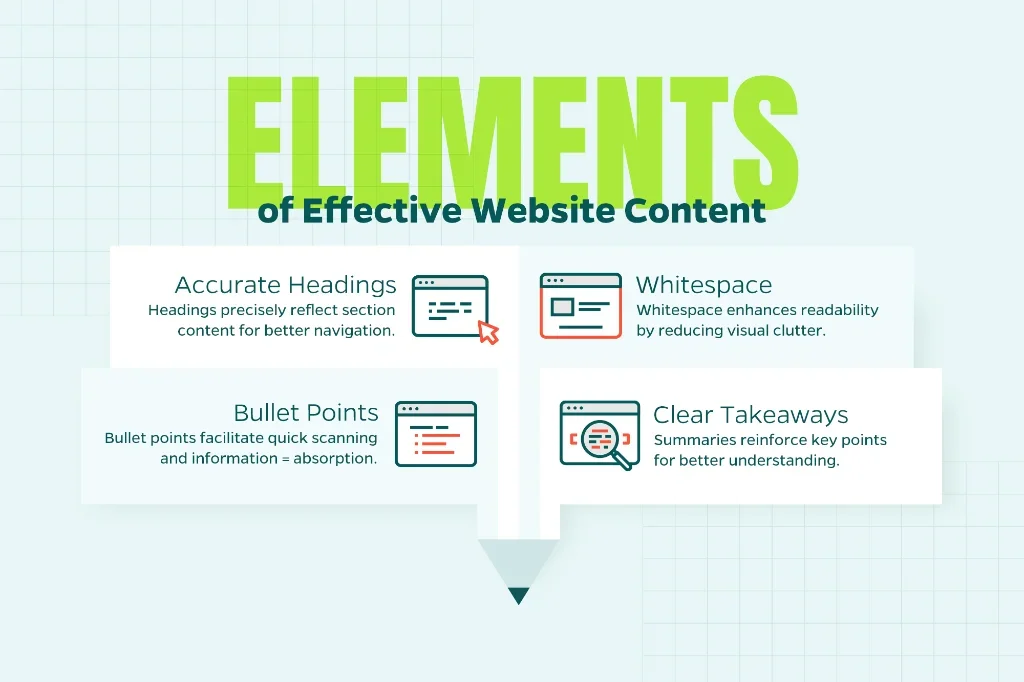
Use clear, purposeful structure:
- Headings (H2, H3) that accurately summarize each section’s content
- Shorter text blocks surrounded by whitespace
- Bullets and numbered lists for easy scanning
- Clear takeaways or summaries after major points
Search engines increasingly rely on headings to interpret section-level intent. Overly creative or vague headings like “Here’s the Thing” weaken clarity. Instead, make headings descriptive, keyword-supportive, and aligned with what users expect to find.
4. Write for the Skimmer First, Deep Reader Second
Most visitors skim before they commit to reading. If your content passes the skim test, they’ll stay and engage more deeply.
Write with two layers:
Surface-level clarity: Someone should be able to scan your headings, bolded phrases, and bullets to grasp the main ideas without reading every word.
Depth when needed: Provide details, examples, and explanations for readers who want to go further and truly understand the topic.
This layered approach improves readability while giving you room to integrate SEO elements naturally—without overwhelming readers with dense walls of text.
5. Embrace Natural Language—It’s How Search Works Now
We’re well past the era of awkward, robotic SEO writing. Today’s search models understand conversation, synonyms, and nuanced phrasing. AI-driven search features expect pages to read like authentic, human explanations.
What natural SEO writing means today:
- Write as if you’re explaining something to a knowledgeable colleague
- Use natural variations of keywords (plural, singular, synonyms)
- Avoid forcing keywords where they don’t fit naturally
- Lean into human tone: “Here’s what matters most,” “Let’s break this down,” etc.
Your goal is clarity, not keyword density. If you’re answering the user’s question thoroughly and naturally, you’re already doing SEO right.
6. Use Data, Examples, and Evidence to Build Authority
Search quality guidelines emphasize Experience, Expertise, Authoritativeness, and Trustworthiness (E-E-A-T). One of the most effective ways to demonstrate topical authority is to include:
- Specific, real-world examples
- Brief case study insights
- Relevant statistics from reputable sources
- Step-by-step process explanations
- First-hand experience and insights
- Industry terminology used accurately and appropriately
Authoritative content serves two purposes.
- It helps search engines trust your expertise
- It reassures readers that they’re learning from someone credible
Even a simple anecdote or practical example can elevate your content and improve engagement. This can indirectly boost SEO signals like time on page and interaction rates.
7. Optimize Meta Elements Without Overthinking Them
Title tags and meta descriptions don’t dramatically affect rankings on their own, but they significantly influence click-through rates.
Your title tag should:
- Contain your primary keyword naturally
- Communicate a clear value proposition
- Use natural language (avoid cramming extra phrases)
Your meta description should:
- Reinforce the page’s core value
- Provide a compelling reason to click
- Include a keyword or two naturally, not forcefully
Don’t chase perfection here. Aim for clarity and strong alignment with your page’s actual content and purpose.
8. Add Internal Links Thoughtfully
Internal links help search engines understand how your content relates to the rest of your site. They also help users discover more valuable information without leaving your ecosystem.
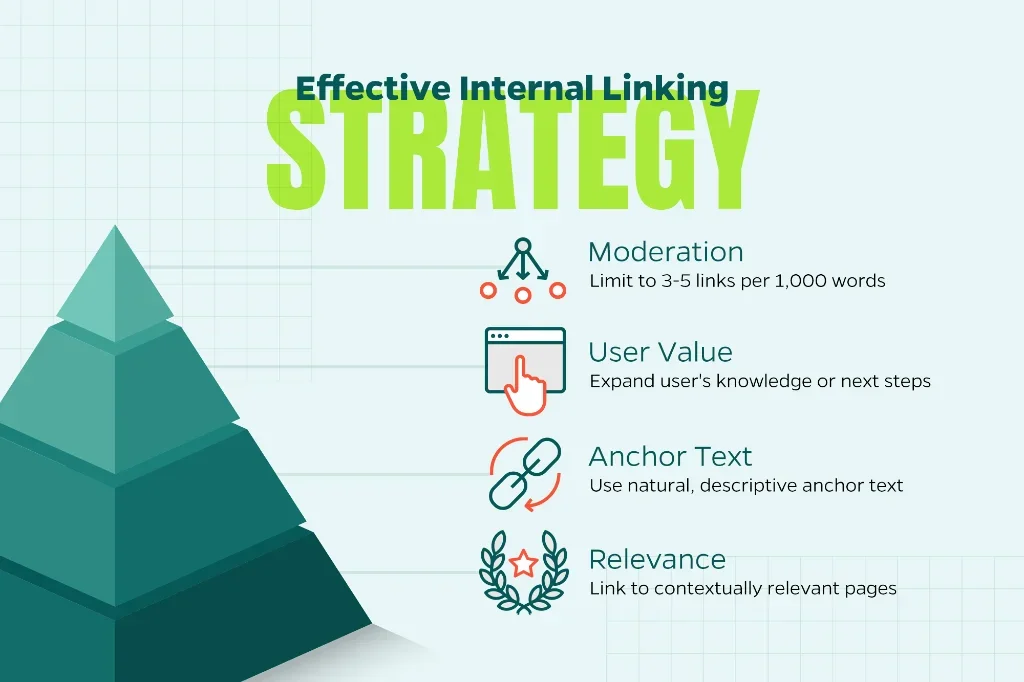
Best practices:
- Link to contextually relevant pages, not just anything loosely related
- Use natural, descriptive anchor text (“content marketing strategies” instead of “click here”)
- Ensure linked pages genuinely expand on the user’s knowledge or next steps
- Avoid overlinking—3 to 5 meaningful internal links per 1,000 words is typically sufficient
A thoughtful internal linking strategy builds topical authority and encourages deeper site exploration, both of which strongly support SEO.
9. Format for AI Overviews and Evolving Search Features
As AI-generated answers become more prominent in search results, content formatting matters more than ever. While you can’t optimize specifically for AI overviews, you can make your content more machine-readable and extraction-friendly.
To future-proof your content:
- Use concise, clear definitions for key terms
- Answer common questions directly and succinctly
- Use lists and bullets wherever appropriate
- Keep sections relatively self-contained—a search engine should understand a section without reading the entire page
These structures help AI models identify and extract your content as a reliable snippet or supporting resource in search results.
10. Review, Edit, and Humanize Your Final Draft
Great SEO content is rarely perfect on the first try. Editing is where readability truly comes together and where you catch issues that weaken clarity.
A strong editing process includes:
- Removing repetitive phrasing and redundancy
- Tightening unnecessarily long sentences
- Swapping jargon for plain, accessible language
- Checking that headings accurately reflect their sections
- Ensuring the intro and conclusion feel cohesive
- Reading aloud to catch awkward pacing or unclear transitions
Before publishing, ask yourself: “Does this feel like a conversation with a knowledgeable guide?” If yes, you’re ready to hit publish.
Final Thoughts: Readable Content is SEO Content
Writing SEO-friendly content without sacrificing readability is the standard for high-performing pages as we head into 2026. Search engines want what users want: clarity, usefulness, and content that confidently and thoroughly covers its topic.
If you focus on user intent, readability, logical structure, natural language, and authoritative insights, your content will perform well across both human and algorithmic expectations.
Want to make sure you get this right? Contact Straight North. We help clients develop comprehensive plans to address SEO strategy and a full range strategy of digital marketing tactics.