
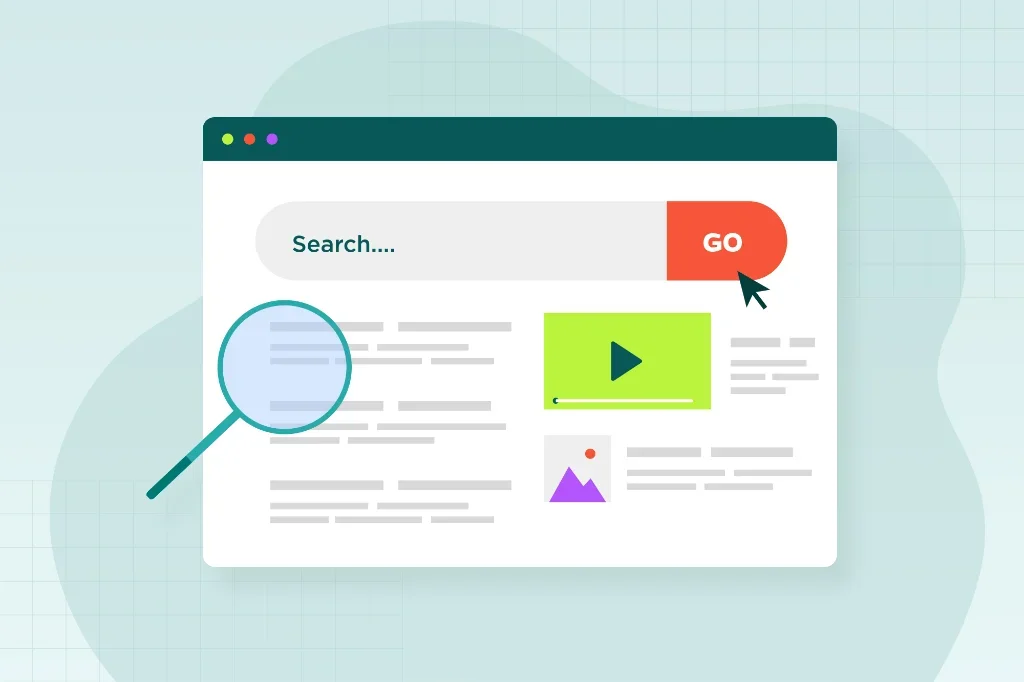
Google has been moving steadily toward a search environment dominated by AI-generated summaries and conversational results. Featured snippets, AI Overviews, and answer boxes now claim prime real estate at the top of a search engines results page (SERP), often appearing long before traditional blue links. For businesses, these placements represent a significant opportunity. But you can only capitalize on it if your content is structured and optimized to earn them.
The shift is clear: search engines are prioritizing content that is accurate, concise, well-structured, and clearly aligned with user intent. Strong on-page SEO is no longer just about “ranking well.” It’s about being the source search engines trust enough to quote.
Below, we will explore the on-page strategy and tactics that help brands win featured snippets and visibility in AI-driven answer results. You will learn how to apply them without compromising readability or brand voice.
Why Featured Snippets and AI Answers Matter More Than Ever
Featured snippets have always played a crucial role in zero-click searches. Today, AI Overviews and other AI-generated elements rely heavily on the same structural signals that trigger snippets. If your content surfaces in either format, you gain three major advantages:
- You become the authoritative answer source.
When Google or an AI assistant displays a passage directly from your content, users associate your brand with expertise—whether they click through or not. - You win high-intent visibility above traditional organic rankings.
Even if ranking #1 isn’t feasible in a competitive space, snippet optimization can leapfrog your content ahead of stronger domains. - You future-proof your SEO.
As AI search continues evolving, well-structured, intent-aligned content positions your brand for visibility across emerging and evolving platforms.
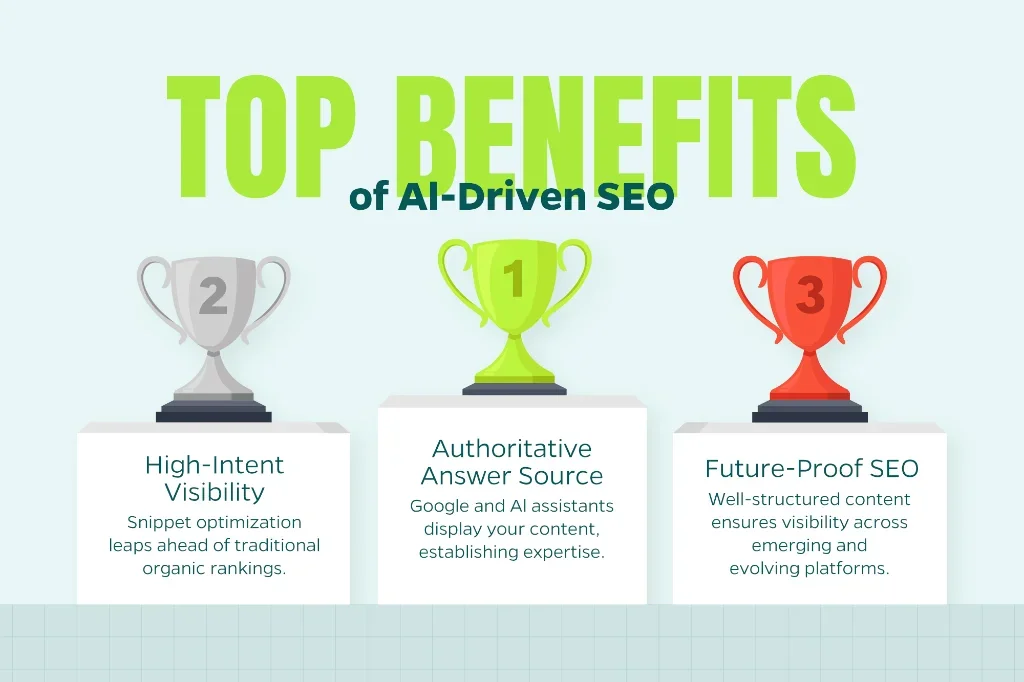
These benefits all flow from one thing: exceptional on-page optimization tailored to how modern search systems evaluate and package answers.
Start With Search Intent—Not Keywords Alone
Traditional on-page SEO starts by matching content to keyword research. But snippet and AI answer optimization requires a deeper layer: search intent refinement.
Ask yourself:
- Does this query require a definition? A process? A comparison?
- Is the user looking for a step-by-step guide, or a quick answer?
- Should the response be brief and structured, or in-depth with supporting details?
Your goal is to anticipate the exact format Google would use to answer the query. Then, build your content accordingly. When your format fits the “expected answer type,” your likelihood of capturing AI Overview or snippet visibility rises dramatically.
Use Clear, Answer-Driven Formatting
Structured content isn’t about writing for algorithms. It’s about making answers effortless for both people and search engines. Several formatting strategies stand out.
- Place the direct answer immediately after the heading
If an H2 is “What Is Predictive Maintenance?”, the first sentence that follows should answer exactly that question in a few crisp sentences.
This structure makes your content snippet ready. Google prefers clean, direct answers that can be extracted without heavy editing.
- Use headings that reflect natural language queries
Think:
- “How Does HVAC Preventive Maintenance Work?”
- “What Is the Difference Between a Crawl Space and Basement HVAC?”
- “Why Do SEO Audits Improve Lead Generation?”
AI assistants and featured snippet algorithms read these headings as explicit intent signals.
- Rely on lists, tables, and numbered steps when appropriate
Certain answer types often trigger specific snippet formats:
- Lists for benefits, steps, or checklists
- Tables for comparisons (e.g., “gas vs. electric furnaces”)
- Numbered steps for processes
- Bullets for concise feature sets
If your content is packaged in the ideal structure, Google is more likely to extract it.
- Keep paragraphs short and scannable
Long, dense paragraphs reduce snippet potential. Clear structure fosters clarity. Try to keep each paragraph focused on a single idea. It helps user understanding and AI retrieval.
Strengthen Topical Authority Within the Page
Snippet visibility isn’t just about one paragraph or list. Google’s AI systems evaluate authority holistically: organization of information, depth of coverage, internal linking, and supporting context are all considered desirable. In other words, topical authority matters.
Cover the topic completely, not partially
If your blog answers “What is predictive maintenance?” but doesn’t cover benefits, use cases, costs, or common tools, Google has fewer signals that your answer is authoritative.
The more comprehensively you address related subtopics, the more likely Google is to trust your content.
Use internal links to reinforce authority
Linking to related service pages, guides, or blog posts helps search engines understand how this content fits within your larger topical footprint.
Include supporting details that demonstrate expertise
Examples, short case insights, industry terminology (explained clearly), and specific use cases boost trustworthiness without overwhelming readers.
Optimize for Conversational and Long-Tail Queries
AI-generated answers often draw from content that mirrors natural language. This includes:
- “Why do HVAC systems freeze up in winter?”
- “How often should you replace commercial air filters?”
- “What’s the best way to improve indoor air quality in an office?”
These queries map closely to how people use voice assistants and generative AI tools. If your content answers these conversational questions directly, you’re giving search engines and AI models exactly what they need.
Don’t Neglect Traditional On-Page Fundamentals
Even as AI-driven search evolves, the basics still play a crucial role:
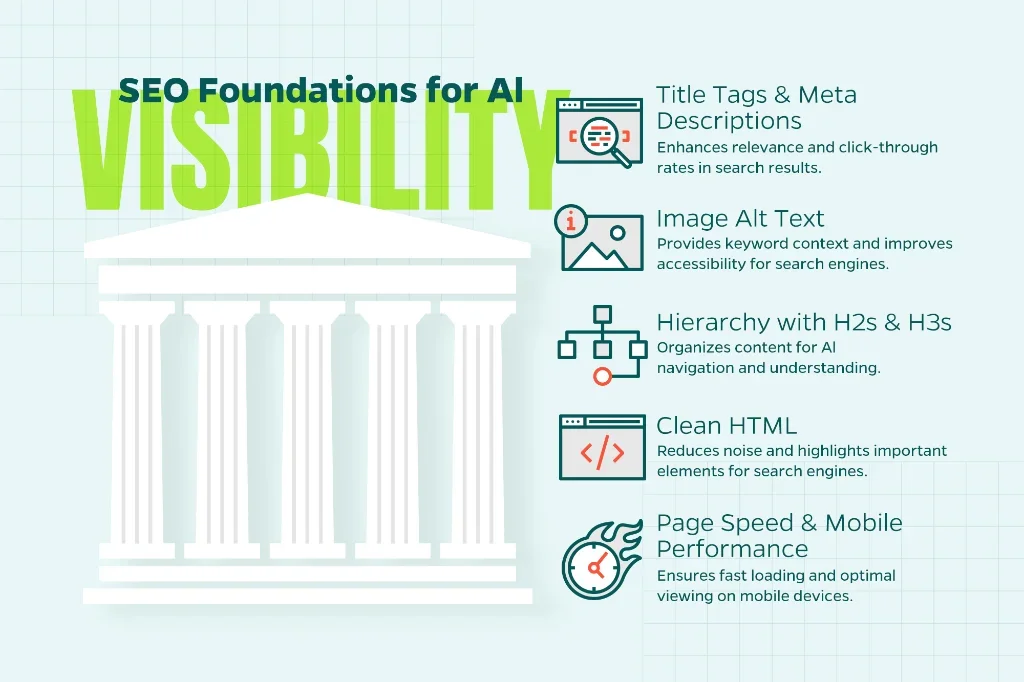
Strong title tags and meta descriptions
These help Google confirm relevance and maintain your click-through rate.
Optimized image alt text
Gives search engines additional keyword context and improves accessibility.
Clear hierarchy through H2s and H3s
Signals help AI readers navigate your content.
Clean, semantic HTML
Reduces noise and highlights important elements.
Page speed and mobile performance
A slow, clunky page is less likely to be elevated into AI-generated positions.
Answer Questions Completely. But Keep It Short.
One common question we hear: How long should my answer be if I want to be retrieved by AI?
Here’s a practice that works well:
- Start with a short answer immediately after a relevant heading.
- Then break out the longer, supporting detail below it.
This creates a structure that is both snippet-friendly and reader-friendly. Short answers earn trust. Long explanations keep users engaged.
Test, Measure, and Refine
Snippet capture is dynamic—sometimes volatile—and your content won’t win every position. What matters is deliberate testing and ongoing optimization.
Use tools such as:
- Google Search Console
- Semrush, Ahrefs, and BrightEdge
- Keyword tracking tools that identify “SERP feature” visibility
- AI overview detection tools (this space is emerging rapidly and offered by some of the players above)
Here’s what to monitor:
- Which pages currently trigger snippets or overviews
- Which competitors hold positions you want
- When Google changes the format of a key SERP
- How your content performs after adding structured summaries or lists
Small edits—such as rewriting a definition, improving an H2, or tightening an answer paragraph—can make a meaningful difference.
Final Thoughts
Featured snippets and AI answers aren’t new, but their importance has grown dramatically. As AI-generated search becomes increasingly dominant, brands that prioritize answer-ready, intent-driven content will consistently win visibility that competitors overlook.
Want to learn more? Reach out to Straight North for guidance on a comprehensive SEO strategy that can help you achieve success in this new era and take your marketing to the next level.