

When it comes to paid social advertising on Meta, the company’s main platforms (Facebook, Instagram, Messenger, and WhatsApp) typically steal the show. But there is another way to advertise with Meta: the Audience Network.
Audience Network Ads give you the option of extending your campaigns beyond Meta’s native properties. These placements let you connect with third-party audiences across thousands of mobile apps and publisher sites.
If your brand is looking to scale reach efficiently, you should understand the pros and cons of Audience Network. In this article we will break down how Audience Network works and explore why it may—or may not—make sense for your digital marketing strategy.
What is Meta Audience Network?
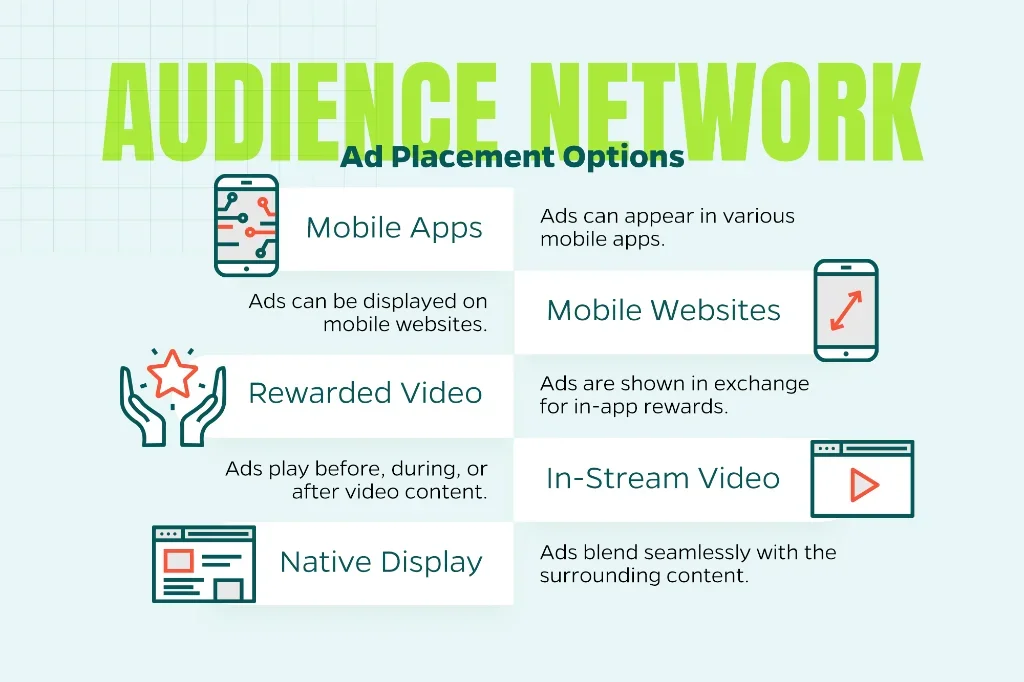
Meta’s Audience Network is an ad distribution network that places your ads beyond Meta’s owned apps. When you think of Meta, what comes to mind? It’s probably Facebook, Instagram, Messenger, for example. Yet, with Audience Network, Meta has created a way to syndicate ads to a wide range of third-party mobile apps, gaming environments, and websites. Through Audience Network, your ads can appear in:
- Mobile apps (gaming, utilities, shopping, lifestyle, fitness, and more)
- Mobile websites
- Rewarded video placements within apps
- In-stream video
- Native display placements
For advertisers, the benefit is enticing: reach more people without having to create and manage separate campaigns for placements outside Meta. You run your ads using Meta Ads Manager as usual. Then, select “Advantage+ placements” or include Audience Network manually, and Meta’s delivery system handles the rest.
It sounds great. But is the Audience Network the best solution for your business? Let’s break down the strengths and weaknesses of the platform.
Strengths of Audience Network for Advertisers
If your goal is to achieve a broad reach at a low price, the Audience Network offers some distinct advantages.
Cost-efficiency
Audience Network CPMs are often significantly lower than Facebook or Instagram placements. When blended strategically, this can reduce overall campaign costs and expand reach.
Larger addressable audience
Obviously, this syndicate network offers a broad reach across many types of platforms. Because you can reach people outside Meta’s apps, you’re less dependent on feed inventory, which can fluctuate based on demand, seasonality, and auction pressure.
Consistent targeting inputs
Unlike other ad networks, Audience Network uses Meta’s targeting data, meaning you’re still reaching custom audiences, lookalike audiences, interest-based audiences, and Advantage audience expansion. You get the same refined targeting capabilities you expect from Meta, just applied elsewhere.
Machine learning optimization across expanded inventory
With more inventory, Meta’s algorithm has more opportunities to identify low-competition pockets of attention. This can lead to conversion events coming from placements you may not expect to perform well individually but that collectively strengthen ROAS.
Seamless campaign management
Audience Network is built directly into Meta Ads Manager, so setup is minimal, reporting is unified, creative can be reused, and optimization stays centralized.
Potential Drawbacks of Audience Network for Advertisers
While the Audience Network has its benefits, marketers should also be aware of possible drawbacks.
Potentially Low-Quality Traffic
With the broad nature of Audience Network’s targeting, impressions, and clicks often don’t convert into meaningful actions. You might see decent numbers on your dashboard—lots of impressions, maybe even a reasonable click-through rate. Yet, these users often are bouncing quickly, not exploring your site, and not moving down your conversion funnel. It’s the difference between someone genuinely interested in what you’re offering versus someone who accidentally tapped an ad while scrolling through a mobile game.
Some Unqualified Leads
With Audience Network, the targeting can be less precise than what you’d get on Facebook or Instagram’s main platforms. This means you may end up spending your ad budget attracting people who aren’t as likely to become customers. Or your sales team could waste time following up on leads that go nowhere. Consequently, your cost per qualified lead increases even if your cost per click looks reasonable.
Possible Spam
This type of approach can result in an uptick in bot traffic—fake clicks generated by automated programs rather than real humans. You could also see fraudulent activity where clicks are intentionally generated to drain your ad budget without any real user interest. In this situation, you would be essentially paying for engagement that has little business value. This makes it more difficult to filter out the noise from your legitimate performance metrics.
Should Your Business Use Audience Network?
The short answer: it depends on your business model and what you’re optimizing for. At Straight North, we often turn Audience Network off by default because it can introduce low-quality traffic or spam—especially for lead generation campaigns. But there are situations in which leaving it on makes sense.
One of the clearest examples is e-commerce campaigns that optimize for revenue.
If your Meta setup is tracking actual purchase values (through the Pixel or CAPI) and you’re using bid strategies like “Value Optimization” or “Highest Value,” Meta’s algorithm can clearly see which impressions lead to real sales. That gives it a reliable feedback loop.
Why does that matter? Because:
- Bots and low-intent users don’t make purchases, so they don’t influence optimization.
- Spam leads get filtered out naturally because revenue events require real credit card transactions.
- Meta learns which placements—including Audience Network—produce revenue, not just cheap clicks.
In other words, when the algorithm is optimizing toward revenue, it has built-in guardrails that push it away from low-quality inventory. Audience Network becomes less of a risk and sometimes a surprisingly efficient source of converting traffic.
There’s one more scenario where using Audience Network may be beneficial: hyperlocal campaigns.
If you’re advertising in a very tight geographic radius, your available audience is already small. In that case, turning on Audience Network can help you capture every possible impression and squeeze more volume out of a limited market. Qualification becomes less of a concern because reach is the priority.
Bottom line: Audience Network’s effectiveness depends on your goal, your data quality, and how much control the algorithm has to optimize intelligently.
Types of Audience Network Placements
So, where do your Audience Network Ads show up? We mentioned them earlier in the article, but let’s get into a bit more detail. Understanding the placement types is key to building an effective strategy. Audience Network offers several formats, each suited to different goals.
- Native Ads
Native ads are custom designed to blend into the user experience within an app. These placements tend to drive high engagement and perform especially well in news apps, weather apps, lifestyle apps, and utility apps. For advertisers focused on mid-funnel metrics like landing page views or time on site, native placements can deliver strong value.
- Banner Ads
Simple and widespread, banner ads provide low-cost reach. While they may not produce the highest direct conversions, they’re good for frequency building, brand visibility, and cost-efficient reach in large volumes.
- Interstitial Ads (Full-Screen Ads)
These are full-screen placements that appear between content actions (like game levels). They’re visually commanding and typically deliver high impressions, strong viewability, and good performance for both retention and conversions.
- In-Stream Video Ads
These appear before, during, or after video content in apps. They support brand storytelling and offer strong completion rates.
- Rewarded Video Ads
One of the most engaging formats where users opt in to watch. These ads often deliver high completion rates, higher recall, better emotional response, and lower-cost awareness. Rewarded placements are excellent for upper-funnel efforts.
Best Practices for Using Audience Network Effectively in 2026
If you’re planning to integrate Audience Network into your marketing strategy, these best practices can help maximize results.
- Enable Advantage+ placements
Letting Meta choose placements tends to outperform manual selection. Advantage+ placements allow the system to allocate budget dynamically across Meta properties and Audience Network based on real-time results.
- Use mobile-friendly, flexible creative
Since most Audience Network placements occur in mobile apps, creative should be vertical or square, short form (especially video under 15 seconds), clear and direct, and adaptable to various formats. Meta’s creative enhancement tools can help automate this.
- Include video wherever possible
Video placements, especially rewarded formats, represent some of the strongest opportunities within Audience Network. High-quality video assets expand your placement eligibility and improve upper-funnel metrics dramatically.
- Monitor placement-level reporting carefully
While Meta emphasizes aggregated reporting (and often discourages over-optimizing based on placement-specific performance), it’s still valuable to review placement-level CPM differences, conversion value distribution, and rising or declining placements over time. This helps identify creative that might need adjustments.
- Avoid over-filtering your audience
Audience Network works best when the algorithm has room to explore. Overly narrow audiences can limit scale and undercut its benefits. Broad targeting paired with strong creatives typically delivers the best results.
Final Thoughts
For companies planning their 2026 paid media strategies, Audience Network represents a key opportunity to lower CPMs, expand reach, and improve efficiency. Yet, with most advertising platforms, the benefits often come with risks. Use the guidance above determine whether the Audience Network makes sense for you.
Want help navigating the Meta landscape? Contact Straight North. We help clients maximize profitability in Meta advertising—while delivering comprehensive results across the digital marketing spectrum.