
In the constantly evolving world of digital marketing, Pay-Per-Click (PPC) remains a powerhouse for driving targeted traffic and measurable results. As we move through 2025, the landscape has shifted dramatically. For example, AI automation is reshaping bid strategies, privacy regulations are rewriting the targeting playbook, and mobile users are calling the shots more than ever.
Whether you’re launching your first campaign or optimizing your fiftieth, this guide tackles the most pressing PPC questions with practical, actionable answers.
What Exactly Is Pay-Per-Click (PPC) Advertising?
Unlike traditional advertising where you pay for exposure and hope for results, PPC charges you a fee only when someone clicks your ad.
Here’s how it works. Your ad appears in search results, social feeds, or display networks when it’s relevant to a user’s search, interests, or demographics. When they click on the ad, you pay. When they scroll past it, you don’t.
But PPC in 2025 looks very different from even a few years ago. Gone are the days of only simple text ads. Today’s platforms leverage AI to serve dynamic formats including video, interactive elements, and shopping carousels. These ads match user intent in real-time. So, it’s not about casting a wide net and hoping for the best. PPC is a form of precision marketing that puts your message in front of people actively searching for what you offer.
What Are the Main Benefits of PPC?
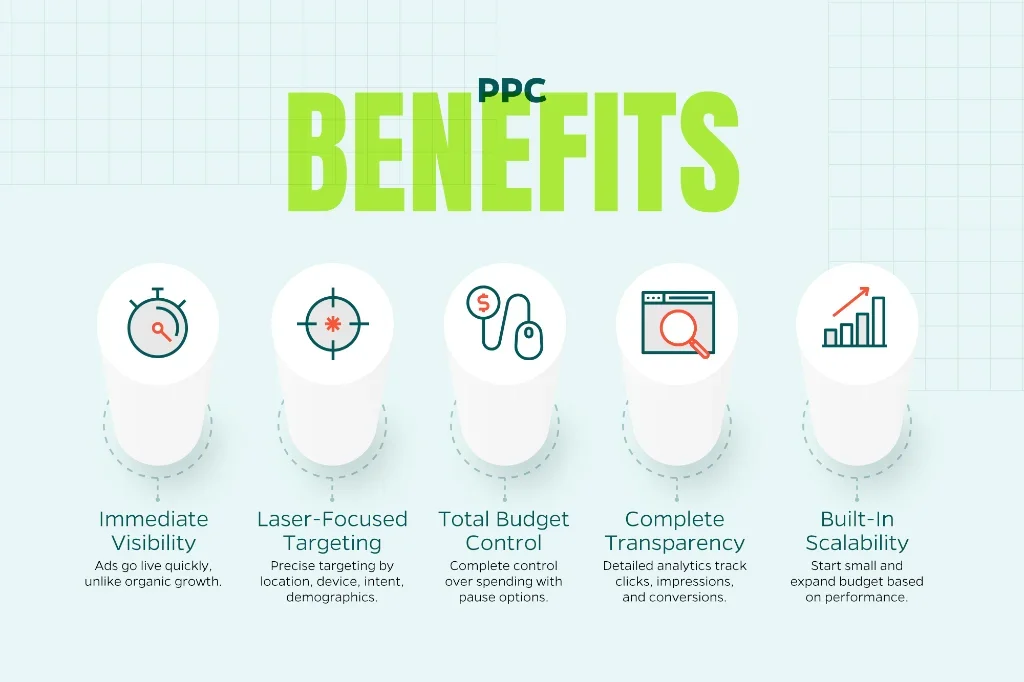
PPC has always been powerful, but its advantages have only grown stronger:
- Immediate visibility: Your ads can go live within hours, not the months it takes to build organic presence.
- Laser-focused targeting: Set precise parameters around location, device type, search intent, demographics, and more.
- Total budget control: You decide exactly how much to spend, and you can pause campaigns anytime.
- Complete transparency: Track every click, impression, and conversion with detailed analytics.
- Built-in scalability: Start with a modest budget and expand as you see what works.
What makes PPC particularly valuable in 2025 is the speed at which you can test and learn. Want to know if a new product message resonates? Launch a campaign and have data within days, not quarters.
Which Platforms Should I Consider for PPC?
The PPC ecosystem has expanded well beyond Google. While Google Ads still dominates, smart marketers are diversifying across platforms. Each has its own unique strengths:
- Google Ads: This is the 800-pound gorilla offering Search, Display, Shopping, YouTube, and more—ideal for high-intent searches.
- Microsoft Ads: Don’t sleep on Bing. It captures a professional, higher-income audience with lower competition. Plus, the audience is larger than you think; about 20% of desktop users in the United States use Bing.
- Meta Ads: Facebook and Instagram excel at visual storytelling and detailed demographic targeting.
- LinkedIn Ads: The go-to for B2B marketers targeting decision-makers by job title and industry.
- Amazon Ads: Essential for e-commerce brands looking to capture shoppers at the point of purchase.
- Emerging platforms: TikTok, Pinterest, and Reddit are gaining traction for reaching younger, niche audiences
The key is matching platform to purpose. A B2B software company might prioritize LinkedIn and Google, while a consumer brand could focus on Meta and Amazon. The best campaigns often use a multi-platform approach to meet customers wherever they’re searching.
How Does PPC Actually Work in 2025?
At its heart, PPC runs on an auction system. Don’t let that fool you into thinking the highest bidder always wins. When someone searches for “best CRM software,” platforms evaluate three key factors:
- Your bid: How much you’re willing to pay per click.
- Ad quality: Is your ad relevant, and does your landing page deliver a good experience?
- Expected performance: Based on historical data, how likely is your ad to get clicked?
In 2025, automation has moved from being “nice to have” to essential. Google’s Smart Bidding and similar tools across platforms use machine learning to adjust bids in real-time, considering factors like device type, location, time of day, and user behavior patterns.
You set your budget and goals—maybe you want to maximize conversions or hit a specific return on ad spend (ROAS)—and the system continuously optimizes to get you there. But automation doesn’t mean “set it and forget it.” Human oversight still matters. Regular review of performance data, testing new approaches, and strategic adjustments separate campaigns that coast from campaigns that convert.
What PPC Trends Are Shaping 2025?
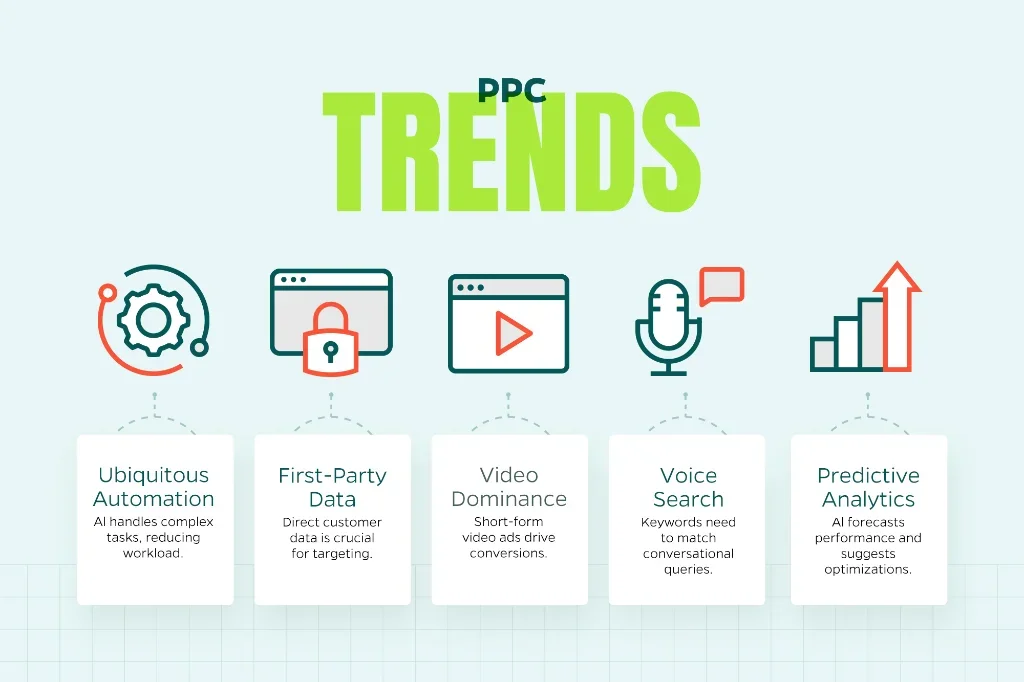
Staying competitive means keeping pace with rapid changes. Here’s what’s defining PPC right now:
- The ubiquity of automation: From bid management to creative testing and audience refinement, AI handles increasingly complex tasks and can help take the load off your shoulders.
- First-party data is king: With third-party cookies fading away, collecting data directly from your customers (with their consent) is crucial for targeting.
- Video takes center stage: Short-form video ads are driving measurable conversions across platforms.
- Voice search optimization: As conversational queries grow, your keywords need to sound like how people talk.
- Predictive analytics: AI tools now forecast campaign performance and suggest optimizations before problems arise.
The marketers seeing the best results are actively testing new formats and features as they roll out. That experimental mindset is what separates leaders from followers.
What Does PPC Cost in 2025, and What Drives the Price?
The cost of PPC depends on a variety of factors. The average cost-per-click (CPC) on Google Ads hovers around $5.26, though this varies dramatically by industry. Legal services can see CPCs of $8.58 or higher due to intense competition and high customer lifetime values. Arts and entertainment, on the other hand, average closer to $1.60.
Globally, search ad spend has exploded to $351.55 billion this year, which tells you competition is fierce. What influences your specific costs?
Competition level: More advertisers bidding on the same keywords drives prices up. Target niche, long-tail keywords to find less crowded opportunities.
Quality Score: This is your secret weapon. Google rewards relevant, well-targeted ads with lower CPCs. A strong Quality Score (7 or above) can dramatically reduce costs while improving ad placement.
Market conditions: Last year alone, 86% of industries saw CPC increases due to inflation and increased AI efficiency driving more advertisers to the channel.
Your targeting: Broad targeting is expensive. Narrow your focus to high-intent audiences to maximize ROI.
Here’s a smart approach: Start with a modest budget, test what works, and aim for a cost-per-acquisition that’s well below your customer lifetime value. Use negative keywords aggressively to filter out irrelevant searches and avoid wasting budget on clicks that won’t convert.
PPC vs. SEO: Which Should I Prioritize?
PPC and SEO aren’t competitors—they work synergistically to improve your results.
SEO builds your long-term organic presence through content creation, technical optimization, and link building. It’s the foundation of sustainable visibility, but it takes time (often months) to see meaningful results.
PPC delivers immediate traffic and provides invaluable data you can use to inform your SEO strategy. Which keywords convert best? What ad copy resonates with your audience? PPC gives you these answers quickly, and you can apply them to your organic content.
In 2025, Google’s algorithm is increasingly favoring genuinely helpful content, and voice search is expected to account for 20.5% of queries. So, the lines between paid and organic are blurring. Both channels thrive on mobile-first design, user intent, and quality experiences.
If you’re choosing where to start with limited resources, PPC offers faster ROI and immediate feedback. For the highest overall impact, employ PPC for quick wins and test with SEO for long-term, sustainable growth.
How Is AI Transforming PPC Campaigns?
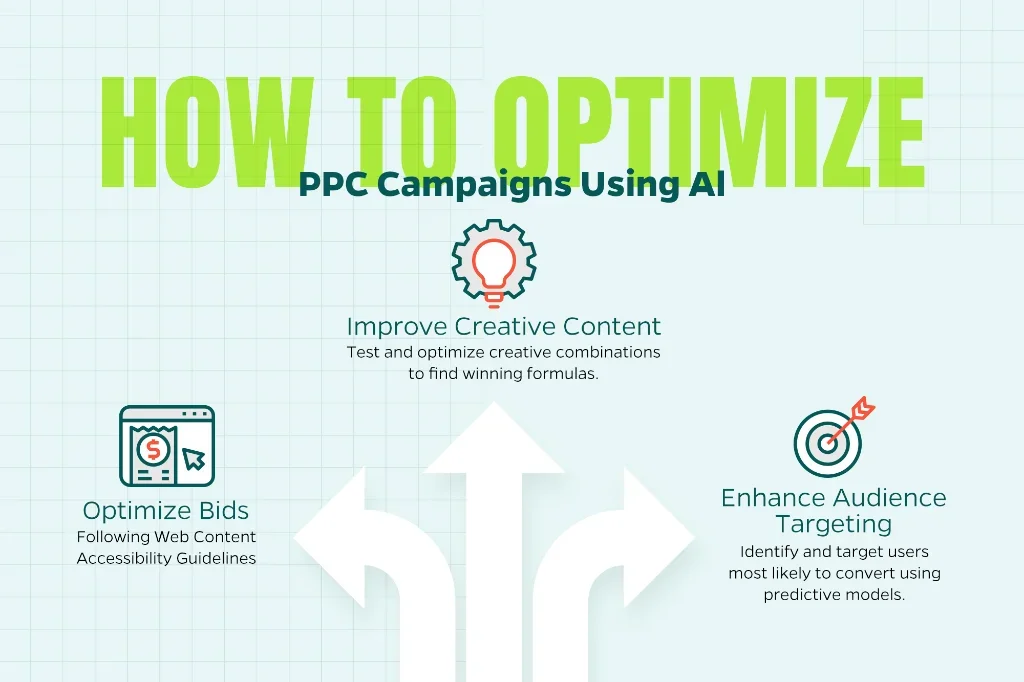
AI has moved from buzzword to business-critical tool in PPC. Here’s what AI can do for your PPC campaigns:
Optimizing bids: Machine learning algorithms adjust bids thousands of times per day based on conversion likelihood.
Audience targeting: Predictive models identify which users are most likely to convert and adjust targeting accordingly.
Creative optimization: Platforms automatically test different combinations of headlines, descriptions, and images to find winning formulas.
Tools like Google’s Performance Max take this further, automating campaign management across multiple channels simultaneously—Search, Display, YouTube, and more—using a single set of assets.
The best strategy is to use AI to handle optimization and data crunching while maintaining human oversight for strategy, creativity, and brand consistency.
What Are the Top PPC Trends I Should Watch?
The trends below are happening right now and reshaping how successful campaigns operate:
Hyper-personalization through first-party data: With privacy regulations tightening, smart marketers are collecting zero-party data—information users willingly share—to create tailored ad experiences. This approach can boost engagement by up to 20%.
Voice and visual search optimization: People search differently by voice (“Okay Google, where’s the closest Italian restaurant with outdoor seating?”) than by typing. Optimize for natural, conversational queries. Image-based searches are also growing, especially as AR and VR advertising emerges.
Video and shoppable formats dominate: Short-form videos drive 86% higher conversions on landing pages compared to static content. Shoppable ads on Instagram, for example, let users purchase without ever leaving the platform. This reduces the friction in the buying journey.
Platform diversification pays off: Google’s market share is substantial but no longer absolute. Explore Microsoft Ads for B2B audiences (average CPC of $1.54) and Amazon for retail. Diversification protects you from algorithm changes and platform policy shifts.
According to recent data, 65% of industries that embraced these trends saw conversion improvements this year.
How Do I Optimize PPC for Mobile Users?
Mobile has become the primary battleground. Mobile devices generate 52% of ad clicks and 70% of impressions. If your campaigns aren’t mobile-optimized, you’re leaving serious money on the table.
Here’s what mobile optimization looks like:
Speed is everything: Your landing pages must load in under three seconds. Every second of delay costs you conversions. Compress images and videos, minimize code, and use accelerated mobile pages (AMP) when appropriate.
Design for thumbs: Place CTAs where they’re easy to tap, use larger touch targets, and ensure forms are painless to fill out on a small screen.
Write concise copy: Mobile users are scanning, not reading. Front-load value and use clear CTAs like “Tap to Save 20% Now” or “Get Your Free Quote.”
Leverage location targeting: Mobile users searching for “coffee shop near me” or “emergency plumber” have immediate intent. Geo-targeted ads capture these high-value moments.
Test mobile-specific formats: Click-to-call extensions, app promotion ads, and map integrations perform exceptionally well on mobile.
How Does Privacy Impact My PPC Strategy?
Privacy is reshaping the entire foundation of digital advertising. GDPR expansions, CCPA in California, and Apple’s App Tracking Transparency have fundamentally changed what data you can collect and how you can use it.
Third-party cookies, once the backbone of online tracking and retargeting, are disappearing. So, what replaces them?
First-party data collection: This is information users share directly with you. It includes email addresses, purchase history, and preferences. Build systems to collect this data ethically and transparently.
Zero-party data strategies: Go beyond passive data collection. Use quizzes, preference centers, and surveys where users actively tell you what they want. This creates better targeting and builds trust.
Contextual targeting revival: Instead of tracking individual users across the web, ads are increasingly placed based on page content. If someone’s reading an article about home renovation, serve them ads for power tools.
Privacy-preserving technologies: Platforms are developing new approaches like Google’s Privacy Sandbox that balance personalization with privacy through anonymized signals and aggregated data.
Ultimately, users who trust how you handle their information are more likely to convert and become loyal customers.
How Do I Measure and Improve PPC Success?
Clicks feel good, but conversions pay the bills. The difference between a mediocre campaign and a great one often comes down to tracking the right metrics and knowing what to do with them.
Key metrics to monitor:
Return on Ad Spend (ROAS): For most businesses, a 4:1 ratio is the baseline target—earning $4 for every $1 spent. High-ticket or high-margin products should aim higher.
Cost Per Acquisition (CPA): The average across industries is $70.11 per lead, but yours should be well below your customer lifetime value to ensure profitability.
Quality Score: This Google metric (1-10 scale) impacts both your CPC and ad position. Scores of 7 or higher significantly reduce costs.
Conversion rate: Track this both at the ad level and landing page level to identify where your funnel breaks down.
Attribution modeling: Use tools like Google Analytics 4’s multi-touch attribution to understand which touchpoints contribute to conversions across the customer journey.
Don’t chase vanity metrics like impressions or clicks without connecting them to business outcomes. A campaign with fewer clicks but higher conversion rates will always beat high-traffic, low-conversion campaigns.
Skipping A/B testing is leaving money on the table. Test ad copy, landing pages, CTAs, and targeting continuously.
Ignoring Quality Score improvements can cost you thousands. Small refinements to ad relevance and landing page experience compound over time.
Improvement process:
Review performance weekly. Pause underperforming keywords and ad groups quickly. Scale what’s working by increasing budgets gradually. Create dedicated landing pages for your campaigns. They convert 65% better than sending traffic to your homepage.
Tools like SEMrush, BrightEdge, Google Analytics, and platform-native dashboards give you the data. The discipline to review it regularly and act decisively is what separates campaigns that plateau from campaigns that scale.
Conclusion
PPC in 2025 offers unprecedented opportunities for businesses ready to adapt to a more automated, privacy-conscious, and data-driven landscape. The fundamentals remain: understand your audience, deliver relevant messages, and optimize relentlessly. But the tools, tactics, and platforms available today make it possible to achieve ROI that would have seemed impossible just a few years ago.
At Straight North, we live and breathe this stuff. Our team stays ahead of every algorithm update, platform change, and industry shift to deliver PPC strategies that drive real, measurable results for our clients.
Got more questions about launching or improving your PPC campaigns? Reach out to Straight North today. We can help transform your advertising efforts into a growth engine.