

Content marketing has matured. It’s no longer just about publishing blogs or improving search visibility. Today, content is expected to generate measurable business results. If you’re not setting clear KPIs and measuring ROI, you’re guessing.
At Straight North, we talk to marketing leaders every day who know content is important in 2026, but struggle to quantify its impact. Traffic looks good. Engagement seems strong. But leadership wants answers to tougher questions. Is content generating qualified leads? Is it influencing revenue? Is it worth the investment?
The good news is measuring content marketing ROI isn’t mysterious. A content marketing strategy can help your business succeed tremendously. Yet it requires clarity, alignment, and the right metrics. This article will explore how to achieve ROI for your content.
Start with Business Goals, Not Content Metrics
One of the most common mistakes companies make is starting with content metrics instead of business objectives.
Before you define KPIs, step back and ask: What is the business trying to achieve?
- Increase qualified leads?
- Shorten the sales cycle?
- Expand into a new market?
- Improve customer retention?
- Grow revenue in a specific segment?
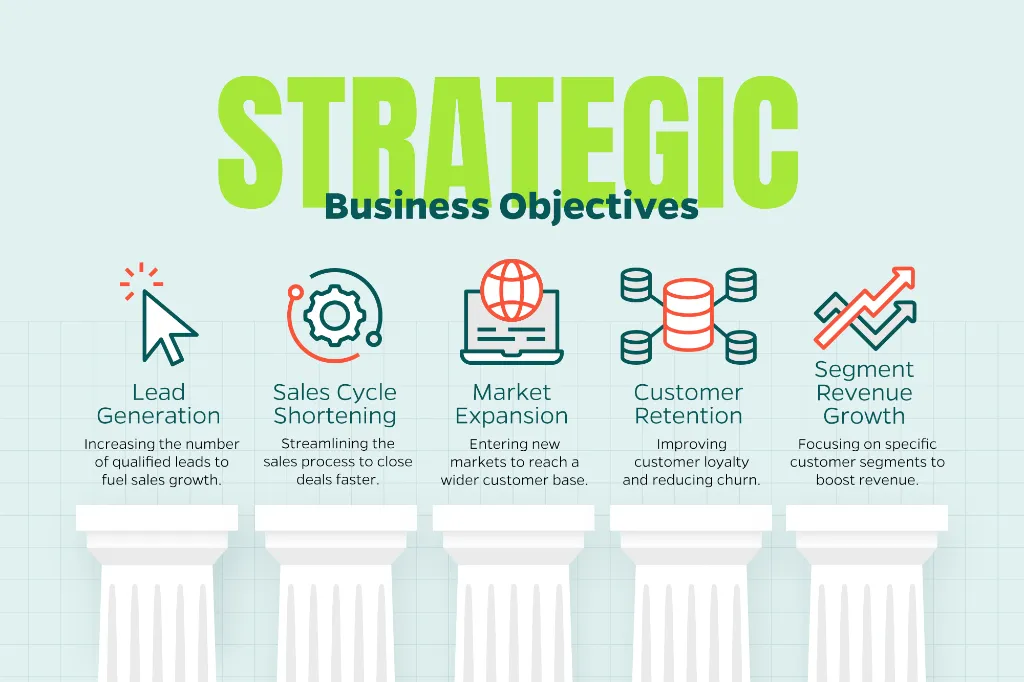
Your content strategy should directly support these goals. Once that alignment is clear, KPIs become much easier to define.
For example, if your primary goal is lead generation, page views alone aren’t enough. You’ll need to track metrics like form submissions, marketing-qualified leads (MQLs), and sales-qualified leads (SQLs). If your goal is brand authority, you might focus more on engagement metrics and assisted conversions.
The key is alignment. Content KPIs should reflect business priorities, not vanity metrics.
Choose KPIs That Reflect the Full Funnel
Content marketing impacts every stage of the buyer’s journey. That means you need KPIs that measure performance across the funnel, not just at the top.
Top of Funnel (Awareness)
At this stage, content is attracting and educating potential buyers.
Relevant KPIs may include:
- Organic traffic growth
- Keyword rankings
- New users
- Time on page
- Bounce rate
- Social engagement
These metrics indicate whether your content is reaching and resonating with your audience. However, they don’t tell the full ROI story on their own.
Middle of Funnel (Consideration)
Here, prospects are evaluating solutions.
KPIs may include:
- Content downloads
- Webinar registrations
- Email sign-ups
- Return visitors
- Lead magnet conversions
This is where content begins to generate identifiable leads. Tracking these interactions helps connect content efforts to pipeline development.
Bottom of Funnel (Conversion)
At this stage, prospects are close to making a decision.
KPIs may include:
- Demo requests
- Contact form submissions
- Sales-qualified leads
- Conversion rate by content asset
- Cost per lead
Bottom-of-funnel KPIs are where ROI becomes more tangible. When content contributes directly to conversions, it’s easier to demonstrate financial impact.
Understand the Difference Between Attribution and Contribution
Another challenge in measuring content marketing ROI is attribution.
Very few buyers read one blog post and immediately request a proposal. The customer journey is complex. Prospects may interact with multiple blog articles, landing pages, case studies, and emails before converting.
That’s why it’s important to look beyond last-click attribution.
Multi-touch attribution models allow you to see how content contributes throughout the buying journey. For example, a prospect may discover your brand through an educational blog post, download a guide two weeks later, and finally convert after reading a case study.
If you only measure the final action, you undervalue the content that initiated and nurtured the relationship.
Modern analytics platforms — such as Google Analytics 4, HubSpot, and CRM systems — make it easier to track these touchpoints. When marketing and sales data are connected, you can map content interactions to revenue more accurately.
Calculate Content Marketing ROI the Right Way
At its core, ROI is a financial metric:
ROI = (Revenue Attributed to Content – Cost of Content) / Cost of Content
The formula is straightforward. The complexity lies in determining attributed revenue.
To do this effectively, you need:
- Clear conversion tracking
- CRM integration
- Lead source tracking
- Sales pipeline visibility
Let’s say your content program costs $15,000 per month, including strategy, writing, design, and promotion. Over time, you determine that content-influenced leads generate $90,000 in monthly revenue.
Your ROI would be:
($90,000 – $15,000) / $15,000 = 5.0 or 500%
That’s a powerful story for leadership.
It’s also important to consider long-term value. Content often compounds. A blog post published today may continue generating leads for years. Unlike paid ads that stop producing results when the budget ends, evergreen content builds sustained value.
When evaluating ROI, look at both short-term performance and long-term asset growth.
Avoid Common KPI Mistakes
Even with the right intentions, companies can mismeasure content performance. Here are a few pitfalls to avoid.
Focusing Only on Traffic
Traffic is important. But traffic without conversions is just activity.
If organic sessions are rising but leads are flat, the issue may be keyword targeting, messaging alignment, or conversion optimization.
Setting Too Many KPIs
When everything is a priority, nothing is. Identify a focused set of primary KPIs tied directly to business goals. Then use secondary metrics to provide context.
Ignoring Sales Feedback
Sales teams often have valuable insight into lead quality. If marketing celebrates increased MQL volume but sales says lead quality is declining, something is misaligned.
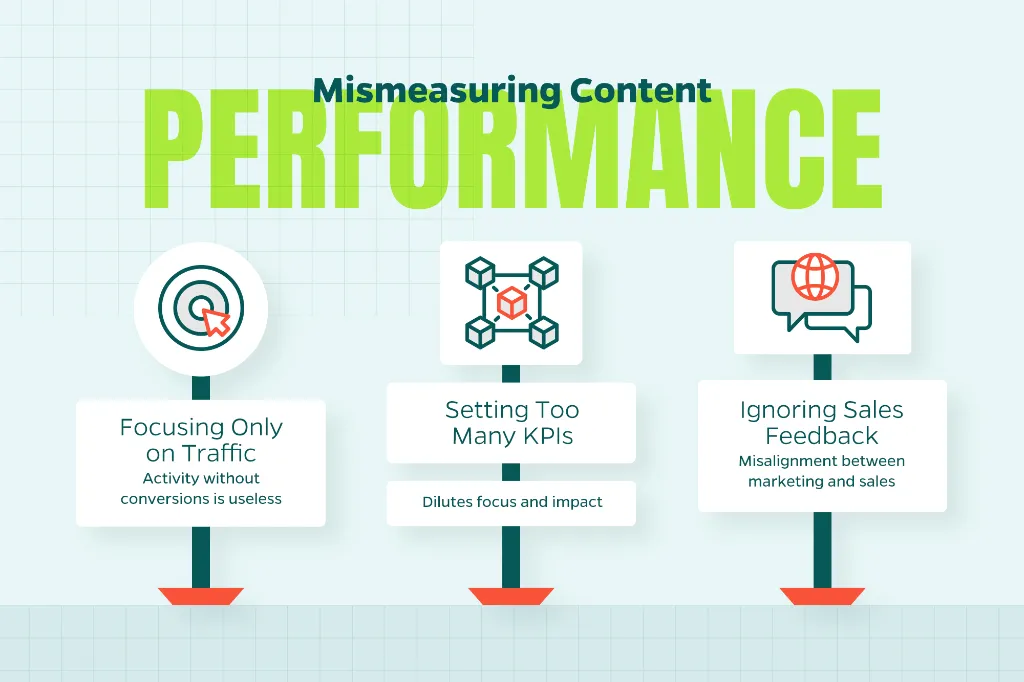
Content ROI measurement works best when marketing and sales collaborate on definitions and reporting.
Build a Reporting Framework That Leadership Understands
Executives aren’t looking for dashboards filled with marketing jargon. They want clarity.
Your reporting should answer three simple questions:
- What are we trying to achieve?
- How is content performing against those goals?
- What business impact is it generating?
Instead of reporting “Blog traffic increased by 32%,” frame it as “Organic blog traffic increased by 32%, generating 48 additional qualified leads and $220,000 in influenced pipeline.”
That shift transforms content from a cost center into a growth driver.
Clear, consistent reporting also builds trust. When leadership sees measurable progress tied to revenue, content marketing becomes a strategic investment rather than a discretionary expense.
Continuous Optimization is Part of ROI
Measuring ROI isn’t a one-time exercise. It’s an ongoing process.
As you gather data, patterns emerge:
- Certain topics drive higher-quality leads.
- Some content formats convert better than others.
- Specific channels generate stronger engagement.
Use this insight to refine your strategy. Double down on high-performing content. Improve or retire underperforming assets. Test new calls to action. Update older blog posts to improve rankings and conversions.
ROI improves when strategy evolves based on real performance data.
Final Thoughts
Setting KPIs and measuring content marketing ROI doesn’t have to be overwhelming. It requires clear goals, the right metrics, aligned teams, and disciplined reporting.
When done correctly, content marketing becomes one of the most accountable and scalable growth channels in your marketing mix.
If you’d like help defining KPIs, improving attribution, or building a content strategy focused on ROI, contact Straight North. Our team specializes in aligning content marketing with business outcomes — so you can move from activity to impact.