




Content marketing can look deceptively simple from the outside. You write some articles, share them on social media, and wait for the leads to roll in. But anyone who has run a content program for any length of time knows the reality is more complicated than that. The gap between creating content and driving results is wide. It’s also filled with avoidable mistakes.
Whether you’re just getting started or looking to sharpen a program that’s already underway, knowing what to watch is half the battle. Here are seven of the most common content marketing mistakes companies make, and what you can do to avoid them.
Mistake #1: Creating Content without a Strategy
A lot of companies dive into content marketing by producing whatever seems interesting or timely. They don’t have a clear sense of who they’re trying to reach, what problems they’re solving, or how any of it connects to business goals. The result is a patchwork of unrelated content that fails to support any meaningful business outcomes.
Effective content marketing starts with a plan. That means defining your target audience, mapping content to the stages of the buyer’s journey, setting measurable goals, and building an editorial calendar.
Mistake #2: Ignoring Search Intent
Writing for SEO without thinking about search intent is a trap many content teams fall into. You identify a keyword with decent search volume, write an article around it, and wonder why it never ranks. The problem is often a mismatch between what you created and what searchers are seeking when they type that query.
Before writing, take a close look at the results that are already ranking for your target keyword. Are they how-to guides? Product pages? Comparison articles? That tells you what format and angle your content needs to take. Matching search intent is a signal that your content will genuinely serve the reader.
Mistake #3: Prioritizing Quantity Over Quality
There was a time when publishing more content more often was a reliable way to grow organic traffic. That time has passed. Search engines have gotten much better at evaluating content quality, and readers have too. A library of thin, surface-level articles won’t build the kind of authority that drives long-term results.
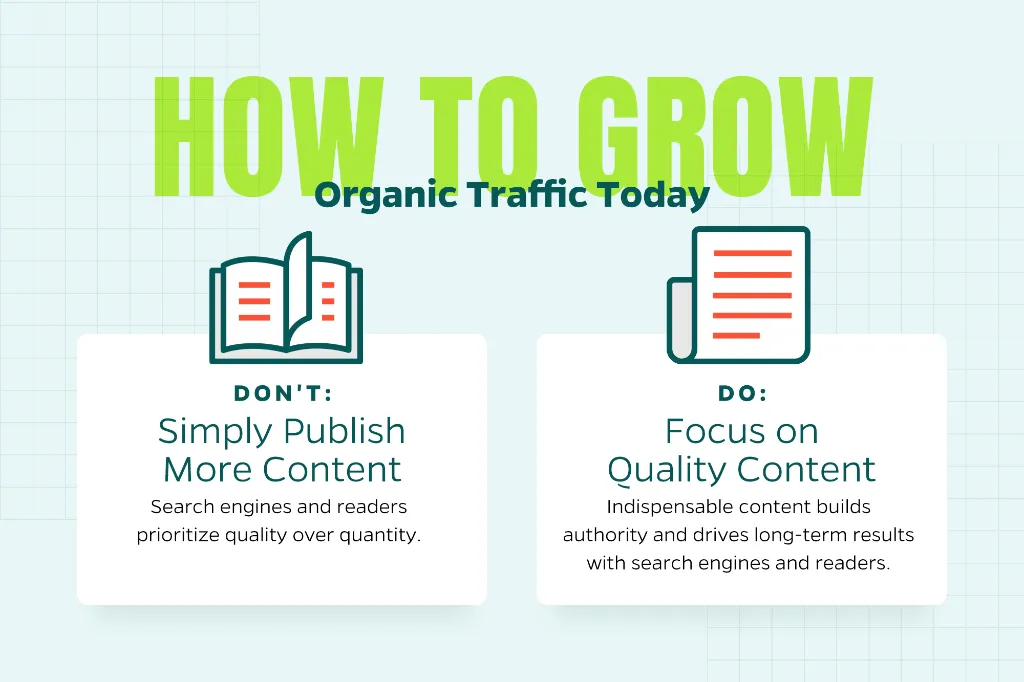
This doesn’t mean you should only publish once a quarter. It means that every piece you put out should earn its place. Your content should offer real insight, a clear point of view, or practical information your audience can’t find everywhere else. One strong article will outperform ten mediocre ones almost every time.
Mistake #4: Writing About Your Company Instead of Your Audience
It’s tempting to use content as a platform to talk about your company, your history, your awards, and your capabilities. But most of the time, that’s not what your audience is interested in. They have questions, challenges, and goals of their own, and they want content that speaks to those things.
The best content marketing is genuinely helpful. It teaches something, solves a problem, or helps a reader make a better decision. When you consistently create that kind of content, you build trust — and trust is what eventually converts a reader into a customer. Your brand’s story can still be part of the picture, but it works best as context, not the focal point.
Mistake #5: Skipping the Promotion Step
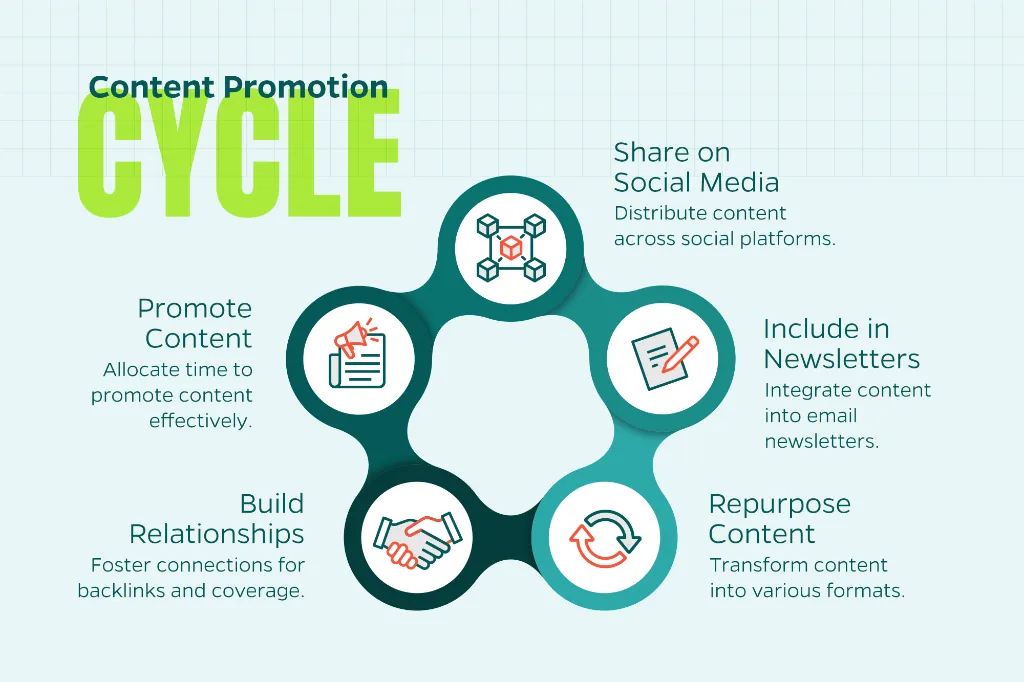
Publishing a piece of content and expecting it to find its own audience is a common mistake, especially among companies that are newer to content marketing. Even well-written, well-optimized content needs a push. Organic search takes time to build, and in the meantime, you need other ways to get your content in front of people.
That means sharing content through your social channels, including it in email newsletters, repurposing it into different formats, and building the kind of relationships that lead to backlinks and earned coverage. You should spend as much time promoting your content as you did creating it.
Mistake #6: Failing to Measure What Matters
If you’re not tracking performance, you’re flying blind. One of the most common content marketing mistakes is measuring the wrong things. Pageviews and social shares are easy to track, but they don’t tell the whole story. What you really need to know is whether your content is contributing to pipeline and revenue.
Define your KPIs before you launch a content program. Think about organic traffic trends, keyword rankings, time on page, lead form completions, and content-assisted conversions. When you know what you’re measuring and why, you can make smarter decisions about where to invest your time and what to cut.
Mistake #7: Letting Content Go Stale
Content isn’t a one-and-done investment. Articles that once ranked well can lose ground over time as competitors publish fresher material and search algorithms evolve. Yet many companies put all their energy into creating new content while ignoring what’s already on their site. This includes pieces that are close to ranking but need a refresh to get there.
Build a content audit into your regular workflow. Look for articles that have slipped in rankings, contain outdated information, or never quite reached their potential. Updating and republishing strong existing content is often a faster path to results than starting from scratch. It helps protect the investment you’ve already made.
Getting Content Marketing Right Takes Discipline
None of these mistakes are fatal on their own, but they compound over time. Companies that consistently produce strategic, audience-focused content — and measure it rigorously — build a real competitive advantage. Those that don’t tend to spin their wheels wondering why their content isn’t delivering.
Fortunately, these mistakes are correctable once you know to look for them. The key is being honest about where your program stands today and having a plan to close the gaps.
Want Help?
If you’re looking for a partner to help strengthen your content marketing strategy, reach out to Straight North. We can help you develop a content program that drives real business results.