



For many manufacturers, the Request for Quote (RFQ) represents one of the most valuable conversion opportunities in the entire sales process. When a prospect submits an RFQ, they’ve already demonstrated serious buying intent. They have a specific need, a project in mind, and they’re actively searching for the right supplier to work with.
Yet far too many manufacturers struggle to convert these high-quality inquiries into actual customers. RFQs arrive regularly, but deals don’t always follow. Sometimes the culprit is pricing. Other times it’s timing, competition, or simply a mismatch in capabilities. But often, manufacturers are unknowingly losing winnable opportunities because of fixable problems in their handling of the RFQ process.
Improving RFQ conversion rates is a key component of a manufacturing marketing strategy. It’s about refining processes, accelerating response times, communicating more clearly, and creating better alignment between your marketing and sales teams. Here are proven strategies manufacturers can implement to turn more RFQs into revenue.
Respond to RFQs Faster
Speed matters more than most manufacturers realize. When a buyer reaches out for a quote, they’re almost always contacting multiple suppliers simultaneously. The first company that delivers a helpful, professional response often gains a significant advantage in the buyer’s evaluation process.
Unfortunately, many manufacturers take days to respond to RFQs. By the time they finally send a quote, the prospect has already begun building a relationship with a faster competitor.
Manufacturers should aim to acknowledge RFQs within hours, not days. Even if you can’t complete a full quote immediately, a quick response that confirms receipt and outlines next steps demonstrates professionalism and builds confidence.
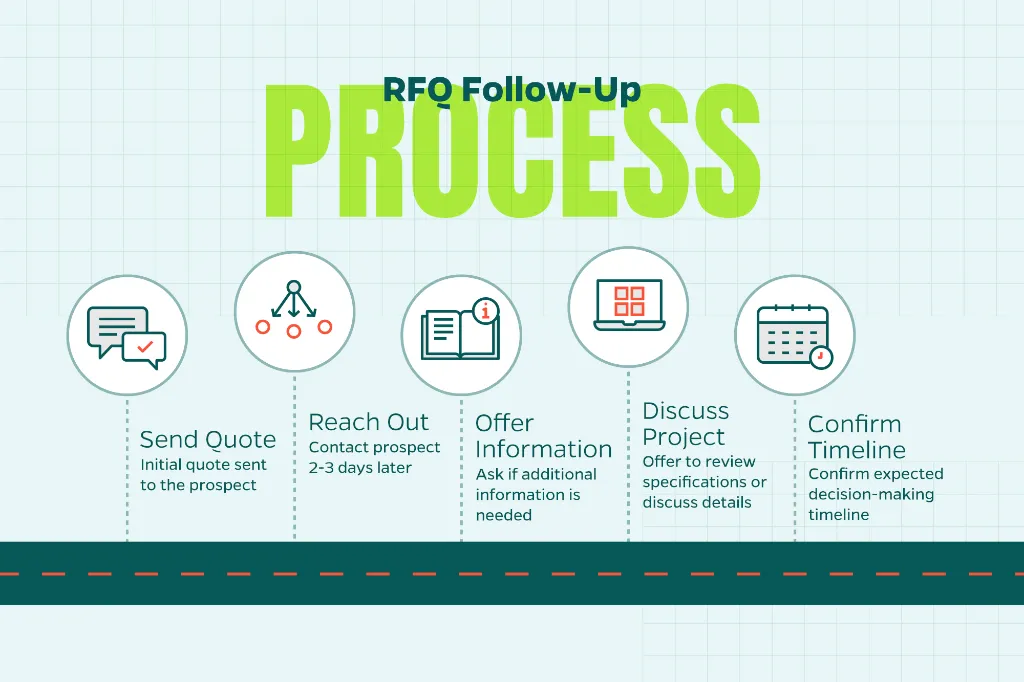
To improve response speed, consider these approaches:
- Set up automated notifications for new RFQ submissions
- Assign clear ownership for incoming RFQs
- Develop standardized templates for common responses
- Create internal workflows that prioritize quote preparation
A faster response doesn’t just improve the customer experience. It significantly increases your chances of winning the business.
Make RFQ Forms Clear and Easy to Complete
Many manufacturers inadvertently create barriers to completion with overly complex RFQ forms. When a form is confusing, too long, or asks for information the buyer doesn’t have readily available, prospects either abandon the process entirely or submit incomplete information that slows everything down.
Your RFQ form needs to strike the right balance between collecting useful details and remaining simple to complete.
Best practices include:
- Ask only for essential information upfront
- Use dropdown menus and checkboxes where appropriate
- Allow file uploads for drawings, specifications, or other documentation
- Ensure the form works well on mobile devices
- Clearly explain what happens after the prospect clicks submit
A streamlined RFQ form increases both the quantity and quality of submissions you receive.
Qualify RFQs Quickly
Not every RFQ represents a strong opportunity. Some requests fall outside your capabilities, volume thresholds, or geographic service areas. Others come from buyers who are still in the early research phase and aren’t ready to make decisions. Manufacturers with strong conversion rates develop efficient qualification processes that help them separate promising opportunities from those that are less likely to close.
Key qualification questions include:
- Does this project align with our core capabilities?
- Is the expected production volume feasible for us?
- Does the timeline work with our current capacity?
- Is this person likely to be the actual decision maker?
When you can quickly qualify RFQs, your sales team can invest their time where it matters most while still responding professionally to inquiries that aren’t the right fit.
Provide Detailed, Professional Quotes
A quote should do much more than simply list a price. It should reinforce your company’s credibility, expertise, and reliability as a manufacturing partner. Buyers who are evaluating multiple suppliers look for signals that indicate which companies are truly professional and trustworthy. A well-structured, comprehensive quote helps you stand out from competitors who might be sending generic, bare-bones pricing.
Strong quotes typically include:
- Clear pricing broken down by quantities
- Realistic lead times and delivery expectations
- Specific material specifications
- Relevant quality certifications
- Complete terms and conditions
- Direct contact information for follow-up questions
Consider including brief notes about your manufacturing processes, quality controls, or relevant experience with similar projects. These details reinforce the impression that your company is a dependable partner, not just another vendor.
Follow Up Consistently
One of the biggest missed opportunities in RFQ conversion is the lack of systematic follow-up. Many manufacturers send out a quote and then simply wait for the customer to respond. The problem is that buyers are juggling competing priorities. Your quote can easily get buried in an inbox or stalled while internal stakeholders debate next steps.
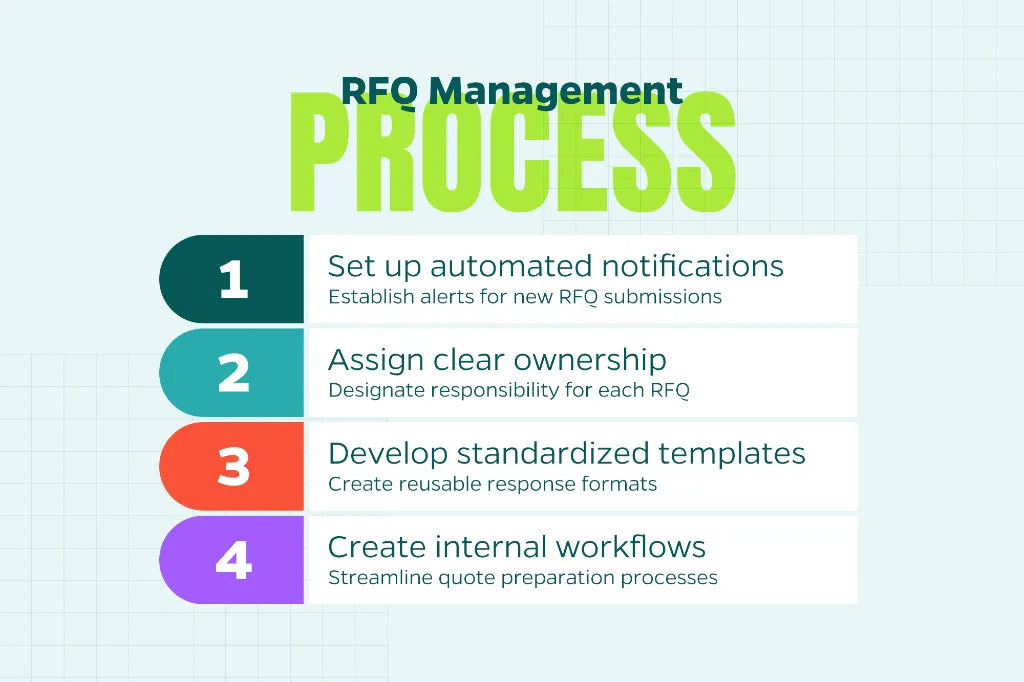
A straightforward follow-up approach can dramatically improve your conversion rates. Here are a few suggestions:
- Reach out 2 to 3 days after sending the quote
- Ask if the prospect needs any additional information
- Offer to review specifications or discuss the project in more detail
- Confirm their expected timeline for making a decision
These follow-ups should feel helpful and supportive rather than pushy or aggressive. Your goal is to stay visible and available throughout the buyer’s decision-making process.
Align Marketing and Sales Around RFQ Data
Many manufacturers treat RFQs purely as sales opportunities. But they also represent valuable data that can improve your marketing strategy.
Analyzing RFQ patterns reveals actionable insights:
- Which marketing channels consistently generate the highest-quality RFQs
- What types of projects prospects request most frequently
- Which industries or market segments convert at higher rates
- Where prospects tend to drop off during the inquiry process
When marketing and sales teams regularly review this data together, they can refine messaging, target better-fit prospects, and continuously improve overall lead quality.
For instance, if certain product pages consistently generate RFQs that convert well, your marketing team might expand content and promotional efforts around those specific services.
Improve Website Trust Signals
Most RFQs begin with online research. Before submitting a request, prospects are evaluating whether your company seems credible, capable, and worth their time. If your website lacks key trust signals, potential customers may hesitate to reach out at all or may submit an RFQ without much confidence that you’re the right fit.
Strengthen trust by prominently featuring:
- Detailed case studies and real project examples
- Authentic customer testimonials and reviews
- Industry certifications and quality standards
- Photos or videos of your facilities, equipment, and team
- Clear, specific explanations of your capabilities
When prospects feel confident in your expertise before they even submit an RFQ, they’re much more likely to engage seriously throughout the quoting process. This is a place in which content marketing can help you do a lot of the heavy lifting.
Use Automation to Stay Organized
As RFQ volume grows, manual processes become increasingly difficult to manage. Important details slip through the cracks, follow-ups get forgotten, and response times slow to a crawl. Customer relationship management (CRM) systems and marketing automation platforms help manufacturers stay organized and responsive at scale.
Automation can help with:
- Tracking the status of every RFQ in your pipeline
- Automatically assigning leads to the right sales representatives
- Scheduling follow-up reminders so nothing falls through the cracks
- Monitoring response times to identify bottlenecks
- Generating reports on conversion rates and performance trends
With better visibility into your RFQ pipeline, you can quickly spot problem areas and make continuous improvements to your process.
Measure and Optimize Performance
Improving RFQ conversion rates requires ongoing measurement and optimization. Track these key metrics regularly:
- Total number of RFQs received
- Average response time to new RFQs
- Quote-to-opportunity conversion rate
- Opportunity-to-customer conversion rate
- Average deal value from converted RFQs
These metrics reveal exactly where your process needs improvement. For example, if you’re receiving plenty of RFQs but losing opportunities after sending quotes, you might need to improve your pricing strategy, communication approach, or follow-up process.
Over time, even small refinements can add up to significant revenue growth.
Turn More RFQs into Customers
The most successful manufacturers treat RFQ management as a strategic priority rather than a routine administrative task. With the right systems, processes, and marketing support, RFQs can become one of your most reliable sources of new revenue.
If your company wants to generate more qualified RFQs and convert more of them into customers, the team at Straight North can help. Contact Straight North today to learn more about how we can help manufacturers improve lead quality, strengthen the sales pipeline, and drive measurable growth.