




In healthcare organizations, marketing and patient experience are often siloed. Marketing teams focus on visibility, campaigns, and growth. Operations and clinical teams focus on care delivery. But from a patient’s perspective, there’s no distinction. Every interaction — whether it’s a Google search, a phone call to schedule an appointment, or a follow-up visit — feels like part of the same journey.
When healthcare marketing and patient experience are aligned, the patient’s journey is smooth and successful. When these experiences are not aligned, the gaps are obvious. This can result in a lost opportunities to build loyalty and retain your base.
This article explores how healthcare organizations of all sizes can better connect their marketing efforts with patient experiences.
Why Alignment Matters More Than Ever
Patients today are informed consumers. They research providers, read reviews, compare options, and expect convenience at every step. This puts pressure on healthcare organizations to ensure their marketing and operations are telling the same story.
Let’s say your marketing pieces promise quick access, compassionate care, and easy scheduling. If a patient finds your front desk is hard to reach or your online booking system clunky, they may leave for another provider. That kind of disconnect produces lower satisfaction scores, negative reviews, reduced retention, and wasted marketing spend.
On the other hand, when marketing accurately reflects the patient experience and helps improve it, you establish consistency. This reliable experience builds trust, which is one of the most valuable assets in healthcare.
Start with the Patient Journey
Alignment begins with understanding the full patient journey. It’s a good idea to map out each stage from the patient’s perspective. This includes how they first become aware of symptoms or providers, how they evaluate options, how they book an appointment, what happens during the visit itself, and what follow-up looks like in terms of billing, results, and ongoing care.
At each stage, ask yourself what expectations your marketing is setting, what transpires in a visit, and where the gaps are between your messaging and the patient’s healthcare experience. Even small discrepancies can create friction. If your website emphasizes “same-day appointments” but availability is routinely limited, patients will be frustrated before they even schedule their first visit.
Align Messaging with Reality
One of the most common issues in healthcare marketing is overpromising. It happens when marketing teams operate without enough input from the people on the front lines. You can fix this by simply validating messaging internally before it goes out the door.
That means talking to front desk staff about common patient questions and frustrations, checking in with providers about appointment flow and realistic wait times, and reviewing call recordings or chat transcripts to understand what patients are asking. Auditing your online reviews for recurring themes is also a valuable and underused best practice.
The goal is to adjust messaging accordingly. If wait times vary, be transparent rather than vague. If certain services require referrals, explain that clearly upfront. If new patients need specific documentation, communicate it early. Clear, accurate messaging reduces friction and improves efficiency across your organization.
Additionally, you should remember that you want to identify and define your ideal patient. Not everyone is a good fit for what you offer. You should set an expectation of what needs your practice serves so the right person, who resonates with the message, can find you. Put in the time to differentiate your healthcare practice to attract the type of patient you can best serve.
Make Access a Core Part of Your Marketing
Access is one of the biggest drivers of patient satisfaction, and it’s deeply tied to marketing performance. Think about how often your campaigns highlight convenience with phrases like “Book online in minutes” or “Walk-ins welcome.” If those access points don’t work seamlessly, your marketing efforts lose impact before they even have a chance to convert.
To align access with your marketing, focus on a few key areas:
- Ensure online scheduling is intuitive and mobile-friendly
- Monitor call center performance, including hold times, missed calls, and responsiveness
- Keep business listings accurate across directories
- Regularly test your own conversion paths as if you were a patient
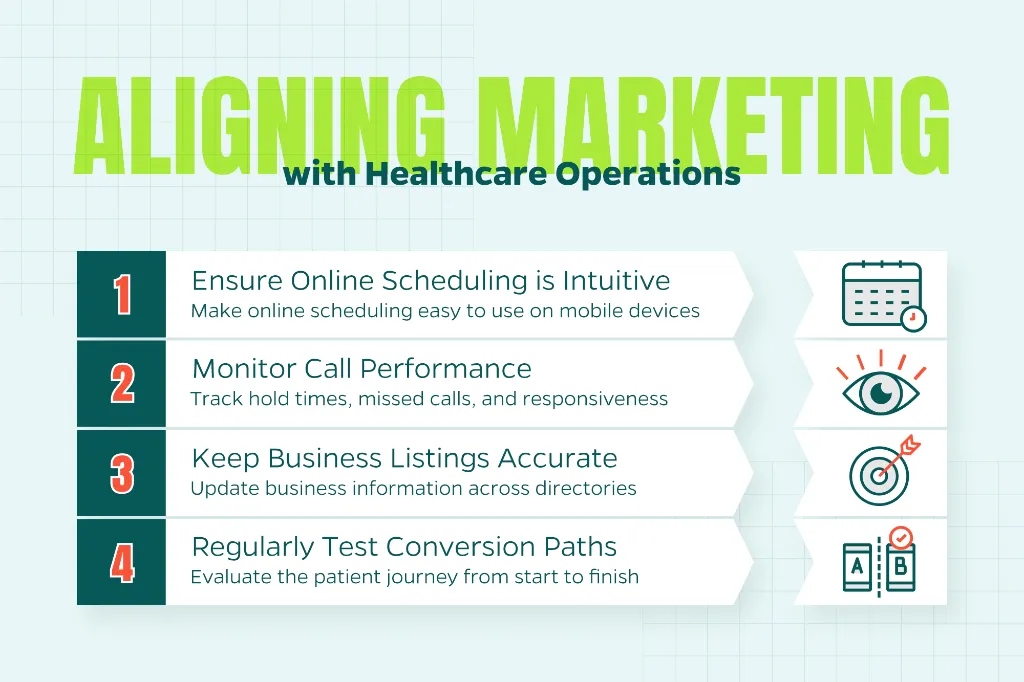
That last point is worth emphasizing. Try booking an appointment through your own website. Call your office during peak hours. Fill out a contact form and see how quickly you hear back. These small exercises often surface gaps that analytics alone won’t reveal.
Use Patient Feedback as a Marketing Asset
Patient feedback is often siloed within operations or quality teams, but it should play a central role in marketing decisions. Reviews, surveys, and direct feedback can help you identify strengths worth highlighting in campaigns, spot recurring issues that need to be addressed before you scale spending, and refine your value proposition based on real experiences rather than assumptions.
For instance, if patients consistently praise your staff’s friendliness, that’s a differentiator worth emphasizing. If they frequently mention long wait times, that’s something to address before putting more budget behind campaigns that drive higher volume.
Practically, this means featuring authentic patient testimonials on key landing pages, using common positive themes in ad copy, and building campaigns around criteria that patients value. It also means sharing feedback insights regularly between marketing and operations — not as a formality, but as a genuine input into strategic decisions.
Break Down Internal Silos
Alignment doesn’t happen without collaboration. In many healthcare organizations, marketing, administration, and clinical teams operate independently, which leads to the kinds of disconnects described above. Closing that gap requires creating regular, structured opportunities for cross-team communication.
Monthly alignment meetings between marketing and operations, shared dashboards that include both marketing metrics and patient experience data, and joint planning sessions before launching major campaigns are all effective approaches. Even something as simple as involving a front desk manager in a campaign brainstorm can surface important context that improves the final product.
The goal is to ensure marketing decisions are informed by real-world experience, and that operational changes reflect what’s being promoted externally. When those two things are in sync, the entire organization benefits.
Align Digital Experience with In-Office Experience
Patients don’t separate digital interactions from in-person care. To them, it’s all part of the same brand experience. That means your website, ads, and online presence should reflect what patients encounter when they walk through your door.
Key areas to focus on include tone and voice (if your website feels warm and personal, your in-office interactions should match), visual consistency (photos and videos should accurately represent your environment and staff), information accuracy (services, hours, and provider details must be current), and ease of use (navigation and forms should be simple and intuitive). When digital and physical experiences feel consistent, patients arrive more confident and better prepared.
Measure What Matters
To truly align marketing with patient experience, you need to track both and understand how they influence each other. Traditional marketing metrics like traffic, leads, and conversions are important, but they don’t tell the whole story. Pair them with patient experience metrics such as:
- Patient satisfaction scores
- Net Promoter Score (NPS)
- Online review ratings and volume
- Appointment no-show rates
- Patient retention
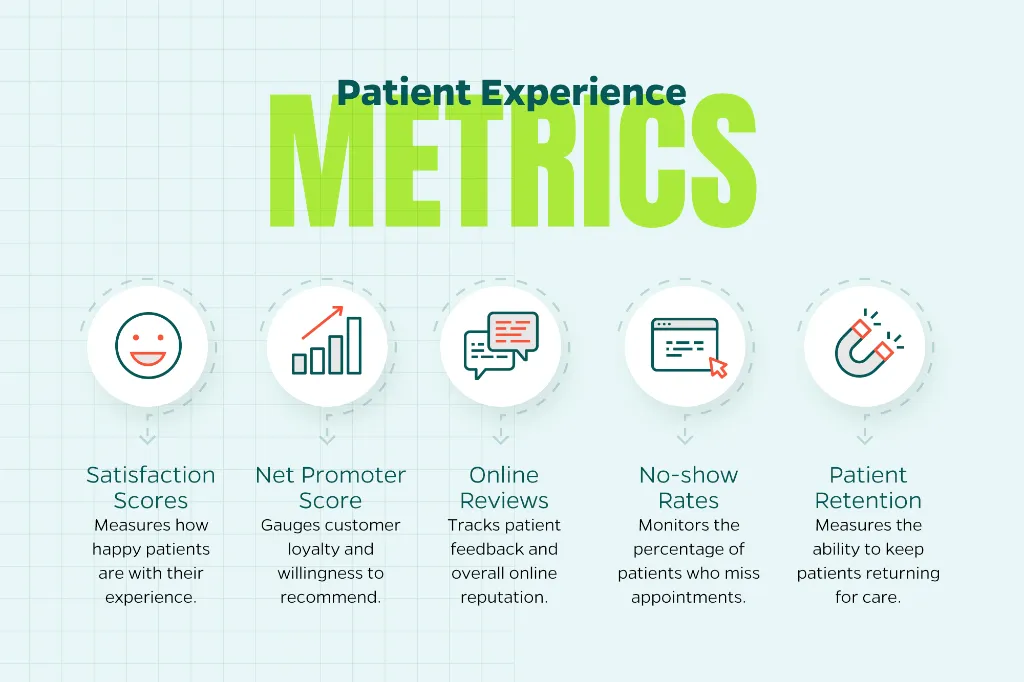
Then look for connections. Are higher lead volumes leading to longer wait times? Do certain campaigns attract patients who are more or less satisfied? Are negative reviews increasing after specific promotions? This kind of analysis helps you make more informed decisions and avoid unintended consequences of marketing success.
Focus on Continuous Improvement
Alignment isn’t static. Patient expectations evolve, technology changes, and healthcare delivery continues to shift. Treating alignment as an ongoing discipline — rather than a box to check — is what separates organizations that build lasting trust from those that generate one-time visits.
You should regularly review patient journey maps, update messaging as services and processes change, test and optimize conversion paths, and actively encourage feedback from both patients and staff. Small, consistent adjustments often have a bigger long-term impact than large, infrequent overhauls.
Conclusion
At its core, aligning marketing with patient experience is about consistency. It’s making sure what you say matches what you do. Both should be designed with the patient in mind. When alignment is strong, marketing becomes more effective, patient satisfaction improves, staff experiences fewer friction points, and your organization builds stronger trust and loyalty over time.
If your organization is looking to better connect marketing efforts with real patient experiences, Straight North can help. We help teams identify gaps, refine your strategy, and build a more cohesive approach. Reach out to Straight North to learn more.