




Healthcare organizations face a marketing challenge unlike any other industry. You need to grow your patient base, strengthen community trust, and compete in an increasingly crowded digital landscape. And you need to do all this while adhering to HIPPA, maintaining strict privacy standards, and communicating with empathy.
Fortunately, patients today behave much like consumers in other industries. They research providers online, read reviews, compare services, and expect clear information before making decisions. Whether someone is choosing a new primary care physician, researching a specialty procedure, or looking for urgent care nearby, digital channels almost always guide that journey.
This guide outlines how healthcare organizations can build a comprehensive marketing plan that supports patient acquisition retention, and sustainable long-term growth.
Why Healthcare Organizations Need a Comprehensive Marketing Plan
Marketing in healthcare is fundamentally different from most other industries. Trust, credibility, and accuracy are imperative. Healthcare decisions often involve deeply personal health concerns, emotional stress, and significant financial considerations.
With all these elements to consider, you need a clear plan. If teams run isolated campaigns without a unified strategy, it can lead to wasted budget, inconsistent messaging, and missed opportunities.
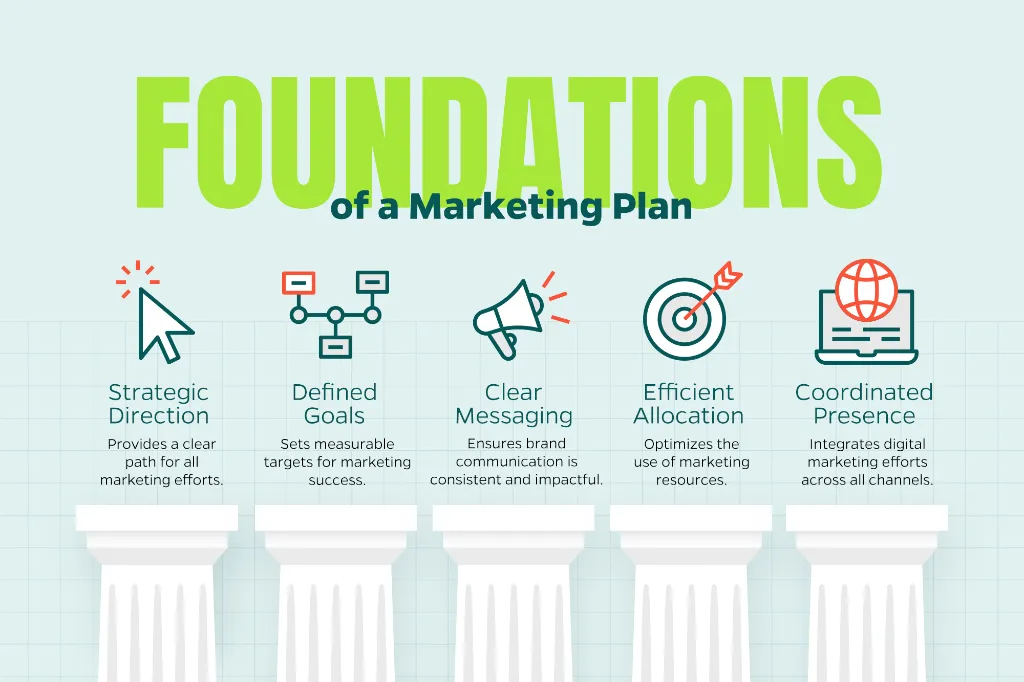
A comprehensive marketing plan provides:
- Strategic direction for all marketing initiatives
- Clear messaging and brand positioning that resonates
- Defined goals and performance metrics to track success
- Efficient allocation of marketing resources
- Coordinated digital presence across all channels
Large healthcare systems often have internal marketing teams. Yet, they still benefit from strategic alignment and fresh perspectives. Smaller organizations, like private practices or regional clinics, typically work with limited staff and budgets. In both cases, a well-defined plan ensures marketing efforts directly support broader organizational goals.
Since a plan is imperative, we will outline the basic steps of putting one together.
Step 1: Define Organizational Goals and Marketing Objectives
Every effective marketing plan begins with clear, measurable goals. Healthcare organizations typically focus on objectives such as:
- Increasing patient volume across all service lines
- Expanding awareness for specialty services
- Launching new locations or service lines successfully
- Strengthening community reputation and trust
- Improving patient retention rates
- Recruiting top healthcare professionals in competitive markets
Once you’ve defined broader organizational goals, your marketing objectives should directly support those outcomes.
Here are a few examples:
- Increase website appointment requests by 25 percent within 12 months
- Improve search visibility for key treatment services in your market
- Grow patient engagement on digital channels by 40 percent
- Increase online reviews and ratings to 4.5 stars or higher
You should have specific, measurable, achievable, relevant, and time-bound objectives. Establishing clear goals early helps guide marketing tactics and makes it much easier to evaluate success down the road.
Step 2: Understand Your Target Audiences
Your audience should dictate your marketing approach, and healthcare organizations rarely serve just one type of patient. Different audiences require different messaging, channels, and engagement strategies to be effective. Below are a few common healthcare audience segments.
Patients
Patients are the primary audience for most healthcare marketing efforts. These individuals are the ones receiving care and often have a strong desire to learn more about the process. However, even the “patient” category includes multiple distinct subgroups that require tailored messaging and outreach strategies. Just a few of these groups include:
- Families seeking pediatric care or family medicine
- Older adults researching senior health services
- Preventive care seekers interested in annual physicals, screenings, immunizations, and wellness programs
- Chronic condition patients managing ongoing conditions like diabetes, heart disease, or autoimmune disorders
- Individuals seeking specialized treatments for specific conditions (oncology, cardiology, orthopedics, neurology)
- Expectant mothers and new parents looking for prenatal care, delivery options, and postpartum support
- Local residents searching for urgent care or immediate medical attention nearby
Understanding the needs of your specific patient demographic — including behaviors, pain points, and concerns — helps shape more effective messaging that resonates.
Referring Providers
For specialty clinics and hospitals, referrals from physicians and other healthcare providers are often a critical growth driver. Your marketing efforts may need to target these professionals with educational resources, outreach programs, and streamlined referral support.
Caregivers and Family Members
Healthcare decisions are frequently made collaboratively. Family members and caregivers often research providers on behalf of loved ones. Your marketing content should acknowledge their crucial role in the decision-making process and address their specific concerns.
Healthcare Professionals
Some marketing initiatives focus specifically on recruitment. In today’s competitive labor markets, hospitals and clinics need to actively promote workplace culture, career opportunities, and professional development programs to attract talented healthcare professionals.
Clearly defining your audience segments allows you to create more relevant, meaningful communication that speaks directly to the people you’re trying to reach.
Step 3: Assess Your Current Marketing Performance
Before launching new initiatives, take time to evaluate your current marketing efforts honestly. A comprehensive marketing audit helps identify strengths, reveal gaps, and uncover opportunities you might be missing. Below are a few key areas to review.
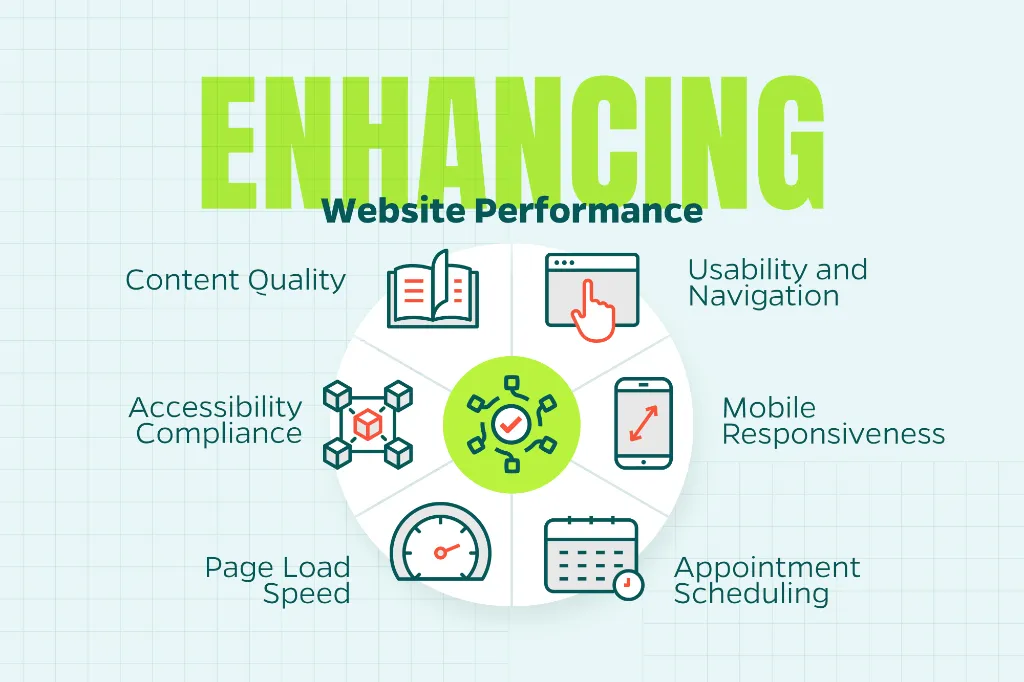
Website Performance
Your website is often the very first point of interaction for prospective patients. It needs to make a strong impression. You should evaluate:
- Website usability and intuitive navigation
- Mobile responsiveness across all devices
- Appointment scheduling functionality and ease of use
- Page load speed and technical performance
- Accessibility compliance (WCAG standards)
- Content quality, clarity, and helpfulness
Healthcare websites should make it effortless for visitors to find providers, services, locations, and contact information. If patients struggle to complete basic tasks, they’ll simply choose a competitor instead. Any healthcare website should have education readily available, as well as a clear path to scheduling an appointment. Online schedulers have also become commonplace.
Search Engine Visibility
Search engines play a massive role in how patients discover healthcare providers today. Analyze how well your organization ranks for relevant searches such as:
- Local healthcare services in your geographic area
- Specific medical specialties you offer
- Treatment-related keywords patients search for
- Symptom-based queries that match your services
Strong search visibility can dramatically increase patient inquiries and appointments. Poor visibility means you’re essentially invisible to potential patients when they need you most.
Online Reputation
Online reviews influence patient decisions more than ever before. Studies show that 94% of patients read multiple reviews before choosing a provider, and they often trust online reviews as much as personal recommendations.
When evaluating reviews, here a few things you should consider:
- Review volume and overall ratings across platforms
- Quality and tone of review responses
- Patient feedback trends and common themes
- Comparison to competitor ratings in your market
Actively managing your online reputation strengthens trust and credibility. Ignoring negative reviews, or failing to respond professionally, can seriously damage your reputation.
Marketing Channel Performance
Review the actual effectiveness of your current marketing channels, including:
- Organic search traffic and rankings
- Paid search advertising performance and ROI
- Social media engagement and reach
- Email marketing open and click rates
- Community outreach initiatives
- Referral program effectiveness
By understanding what works and what doesn’t you can refine your strategy and invest resources where they’ll have the greatest impact.
Step 4: Strengthen Your Brand and Messaging
Healthcare branding goes far beyond logos and visual identity. It reflects how patients perceive your organization’s expertise, compassion, and reliability when they need care most.
Strong healthcare brands consistently communicate:
- Clinical expertise and quality outcomes
- Patient-centered care that prioritizes individual needs
- Transparency and trust in all interactions
- Accessibility and convenience that respects patients’ time
Large hospital systems often emphasize advanced technology, cutting-edge research, and highly specialized care. Smaller clinics may highlight personalized service, community relationships, and continuity of care. Both approaches can be equally effective when executed authentically. The important part is simply speaking to your audience’s needs.
Your consistent messaging should appear across all marketing channels, including:
- Website content and service descriptions
- Advertising campaigns across all media
- Social media posts and engagement
- Patient education materials
- Email communications
- In-office signage and materials
Clear and consistent messaging builds recognition over time and reinforces credibility with every interaction.
Step 5: Develop a Strong Digital Marketing Strategy
Digital marketing sits at the center of most healthcare marketing plans today. Patients rely heavily on online research when choosing providers, and your digital presence often determines whether you’re even considered. A well-rounded digital strategy typically includes several key components working together. We will outline some of them below.
Search Engine Optimization (SEO)
Search engine optimization helps healthcare organizations appear in search results when patients look for relevant services. You want to make sure patients can find you when they need your specific services. A comprehensive SEO strategy is a significant part of that.
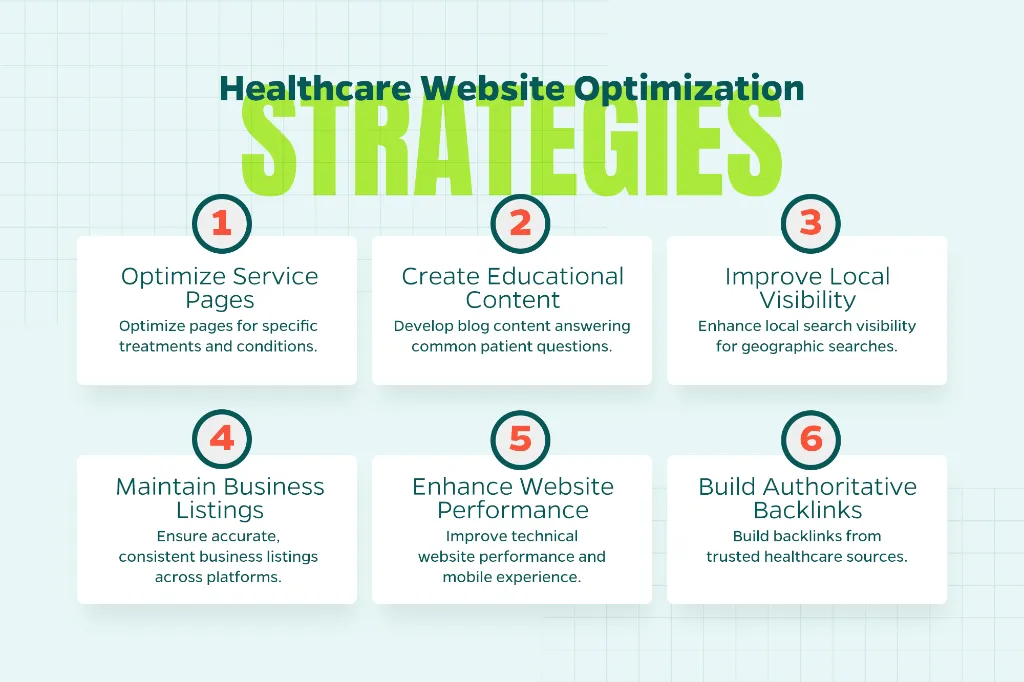
Effective healthcare SEO strategies often include:
- Optimizing service pages for specific treatments and conditions
- Creating educational blog content that answers common patient questions
- Improving local search visibility for geographic searches
- Maintaining accurate, consistent business listings across platforms
- Enhancing technical website performance and mobile experience
- Building authoritative backlinks from trusted healthcare sources
Local search optimization is especially critical for healthcare providers. Many healthcare searches include geographic terms like “near me,” city names, or neighborhood references. Appearing in local search results can be the difference between a full schedule and empty appointment slots.
Paid Search Advertising
Paid search campaigns allow healthcare organizations to appear prominently in search results for targeted keywords, even if your organic rankings aren’t prominent yet. Organizations might run paid campaigns for:
- Urgent care services when people need immediate attention
- Specialty procedures with high patient value
- New patient appointments to fill schedule gaps
- Local clinic locations you’re trying to grow
- Seasonal services like flu shots or allergy treatment
Paid search campaigns (such as pay per click campaigns) provide immediate visibility and can be especially useful for promoting high-value services, launching new locations, or capturing demand when your SEO efforts are still building momentum.
Content Marketing
Content marketing is one of the most powerful tools for educating patients and building lasting trust. When you provide genuinely helpful information, patients see you as a trusted resource rather than just another healthcare provider trying to fill appointments.
As a healthcare organization, you can offer patients value by creating valuable content such as:
- Blog articles explaining medical conditions, treatment options, and what patients can expect
- Patient guides and checklists for procedures or ongoing care
- Videos featuring physicians discussing common health concerns
- Patient testimonials of testimonial videos (with proper permissions and HIPAA compliance)
- Frequently asked questions about medical conditions, procedures, costs, and insurance
High-quality content not only helps patients make informed decisions but also significantly improves search engine visibility over time. In other words, great content helps your audience and SEO. Google rewards websites that consistently provide helpful, authoritative information.
Social Media Marketing
Social media platforms help healthcare organizations engage with their communities, share helpful information, and humanize their brand in ways traditional marketing simply can’t.
Common social media uses in healthcare include:
- Promoting wellness tips and preventive care guidance
- Announcing community health events and screenings
- Highlighting staff members and their expertise
- Sharing patient success stories (with proper permissions)
- Promoting new services or providers joining your team
- Addressing common health questions and concerns
- Distributing content you have previously created such as blogs, videos, and web pages
Consistency and authenticity are key. Social media should feel informative and supportive rather than overly promotional or “salesy.” Patients can instantly tell when content feels forced or inauthentic.
Email Marketing
Email remains a valuable channel for maintaining ongoing relationships with patients, despite predictions of its demise for the past decade.
Healthcare organizations commonly use email to:
- Share health tips and educational content relevant to patient needs
- Send appointment reminders that reduce no-show rates
- Promote preventive care screenings based on patient age and health history
- Announce new providers, services, or expanded hours
- Share seasonal health information like flu prevention or allergy management
Personalized and relevant email communications strengthen patient engagement over time. Generic, one-size-fits-all emails get deleted. Targeted, helpful emails get opened and acted upon.
Step 6: Prioritize Patient Experience
Marketing doesn’t end once a patient schedules an appointment. The overall patient experience strongly influences long-term growth, reputation, and sustainability. Positive experiences consistently lead to repeat visits and ongoing patient relationships, positive online reviews that attract new patients, and word-of-mouth patient referrals. They also build a stronger community reputation and result in higher patient lifetime value.
Healthcare organizations should carefully evaluate the complete patient journey, including:
- Appointment scheduling ease and staff friendliness
- Wait times and communication about delays
- Communication quality with physicians and staff
- Clarity of treatment plans and next steps
- Follow-up care and patient support
- Billing clarity and transparent cost information
Even small improvements in patient experience can have meaningful impact on patient satisfaction and loyalty. Marketing teams should collaborate closely with operational leaders to ensure marketing messages accurately align with real patient experiences. Nothing damages trust faster than promising one experience and delivering another.
Step 7: Maintain Compliance and Protect Patient Privacy
Healthcare marketing must operate within strict regulatory guidelines. This isn’t optional — it’s legally required and ethically essential.
Organizations must carefully follow privacy regulations such as the Health Insurance Portability and Accountability Act (HIPAA) when handling any patient information in marketing contexts.
Key compliance considerations include:
- Protecting patient data in marketing platforms and CRM systems
- Obtaining proper written consent before sharing patient stories or testimonials
- Securing website forms, email communications, and data collection tools
- Avoiding any disclosure of protected health information without authorization
- Training all staff involved in marketing on HIPAA requirements
- Regularly reviewing marketing materials for compliance issues
Working with marketing professionals who genuinely understand healthcare compliance can help organizations avoid costly mistakes, legal issues, and reputation damage. When in doubt, consult with your compliance officer before publishing patient-related content.
Step 8: Measure Performance and Continuously Improve
A marketing plan should include clear metrics to track performance and demonstrate ROI to leadership. Without measurable goals and consistent tracking, it becomes impossible to determine which strategies are driving results and which are consuming resources without adequate return. Data-driven decision-making allows healthcare organizations to allocate budgets more effectively, justify marketing investments to stakeholders, and build a foundation for sustainable growth. It’s imperative to establish key performance indicators (KPIs) from the outset to ensure accountability and create a framework for strategic optimization over time.
Common healthcare marketing metrics include:
- Website traffic volume and source breakdown
- Appointment requests and online scheduling conversions
- Phone call volume and quality
- Conversion rates across different channels
- Search rankings for priority keywords
- Patient acquisition cost by channel
- Return on advertising spend (ROAS)
- Cost per lead and cost per appointment
- Patient lifetime value
Regular performance reviews allow marketing teams to identify successful initiatives, understand what’s working, and adjust strategies when results fall short of expectations.
Continuous improvement is essential. Patient behavior, search trends, and digital platforms evolve constantly. Successful healthcare organizations treat marketing as an ongoing strategic process rather than a one-time project or occasional campaign.
Conclusion
Healthcare marketing continues to evolve rapidly as patients increasingly rely on digital channels to research and choose providers. Organizations that develop thoughtful, comprehensive marketing plans are far better positioned to build trust, reach new patients, and strengthen their reputation in competitive markets.
By defining clear goals, understanding target audiences, strengthening digital presence, and continuously measuring performance, healthcare organizations can create marketing strategies that support sustainable long-term growth.
For both large health systems and smaller practices, the key is alignment. Marketing efforts should directly support organizational priorities while delivering meaningful value to patients and communities you serve.
Need Help Building Your Healthcare Marketing Plan?
If your organization is looking to improve its marketing performance and drive measurable growth, the team at Straight North can help. From SEO and paid advertising to website design and lead generation, Straight North works with healthcare organizations to build marketing programs that deliver real results.
Contact Straight North today to learn how a strategic marketing plan can help your healthcare organization attract more patients and strengthen its digital presence.