


When marketing for home service businesses, the calendar is everything. An HVAC company that ramps up marketing in July misses the spring tune-up rush. A plumber who doesn’t advertise before winter sets in loses business to competitors who did. And a pest control company that goes quiet after summer may find itself invisible during fall rodent season.
Seasonal marketing is about building a strategy around the natural rhythms of your customers’ needs. You should be visible, relevant, and ready before those needs arrive.
Why Timing Matters
Most home service companies understand that demand follows seasons. What’s less obvious is how far in advance your marketing needs to start working. Some digital campaigns take time to build momentum, such as an SEO strategy or content marketing plan. Pay-per-click ads can move faster, but even those benefit from early planning, audience testing, and budget alignment.
The companies that dominate peak seasons are rarely the ones who launch campaigns when demand spikes. They’re the ones who started building awareness and visibility weeks or months beforehand.
To explain how this works, we will break down the peaks and best practices for three types of home services businesses: HVAC, plumbing, and pest control.
HVAC: Marketing Around Comfort and Urgency
HVAC businesses operate on two major peaks: spring cooling season and fall heating season. Each one comes with its own set of customer behaviors and marketing opportunities.
Spring/Summer (Air Conditioning):
- Begin digital campaigns in late February or early March, before customers start thinking about AC maintenance
- Promote tune-up specials and filter replacement reminders to existing customers via email
- Use urgency-based messaging as temperatures climb in May and June
Fall/Winter (Heating):
- Launch furnace check-up promotions in August and September, before the first cold snap
- Run Google Ads targeting “heating repair” and “furnace replacement” keywords ahead of demand
- Retarget website visitors from the spring season who may now be considering system upgrades
The shoulder seasons are also worth targeting for maintenance contracts and system inspections. These off-peak windows are often less competitive in paid search, which can mean lower cost per click and more visibility for your budget.
Plumbing: Preparing for Predictable Demand Spikes
Plumbing demand is driven by both seasonal patterns and sudden emergencies. While you can’t predict a burst pipe, you can anticipate when certain problems are more likely to occur. When that happens, you need to make sure your business is the first name customers find.
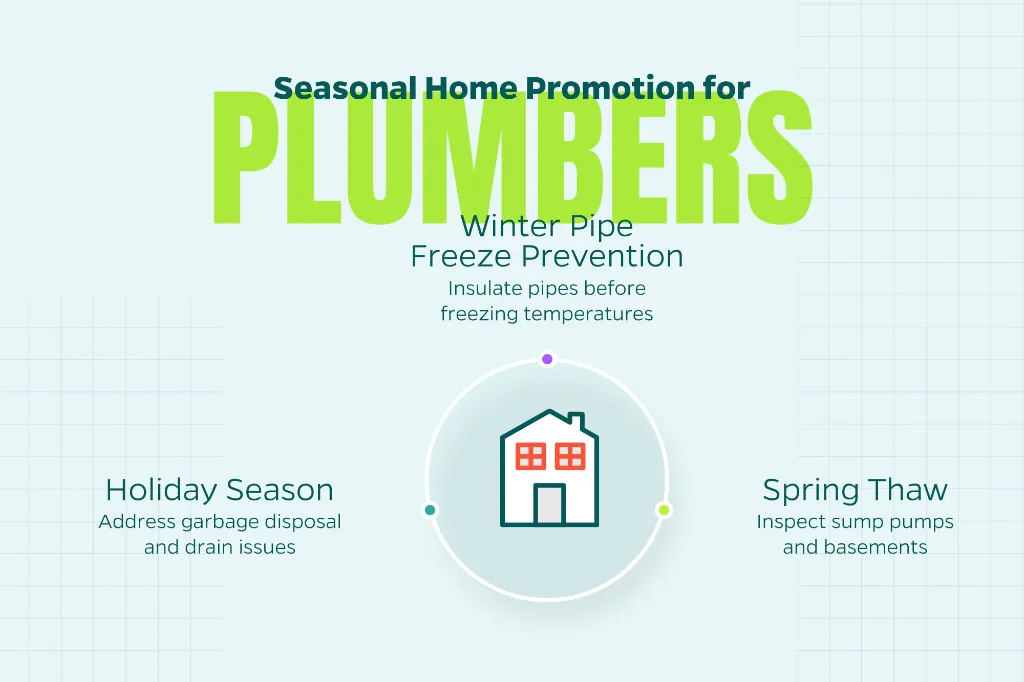
Key seasonal opportunities for plumbing companies include:
- Winter pipe freeze prevention: Market pipe insulation and winterization services in October and November, before freezing temperatures hit
- Spring thaw: Promote sump pump inspections and basement waterproofing assessments in February and March
- Holiday season: Run campaigns before Thanksgiving and Christmas — two of the busiest times of year for garbage disposal and drain issues
For emergency plumbing services, paid search should stay active year-round. But you can shift messaging and budget emphasis to align with seasonal demand. A campaign focused on “frozen pipe repair” will outperform a generic “plumber near me” ad when that’s the specific problem customers are experiencing.
Pest Control: Riding Seasonal Pest Activity
Pest control follows some of the most predictable seasonal patterns in the home services industry. Customers typically search for help when they see the problem. But the best pest control marketing gets ahead of the season by educating homeowners before infestations start.
A general seasonal map looks like this:
- Spring: Ants, termites, and stinging insects become active. This is peak season for new service contracts. Start marketing in late winter to capture early-movers
- Summer: Mosquitoes, wasps, and fleas. Lean into outdoor living content and promote recurring treatment plans
- Fall: Rodents seeking warmth become a major concern. Target homeowners in September and October with prevention-focused messaging
- Winter: Indoor pest activity (cockroaches, spiders, rodents) continues. Use this slower period to run email campaigns to existing customers and promote annual contracts
Blog content and educational resources work especially well for pest control companies. A post titled “How to Prevent Mice from Entering Your Home This Fall” published in August can rank on Google just in time to capture September and October search traffic.
Building a Seasonal Marketing Calendar
No matter which home service vertical you’re in, a seasonal marketing calendar keeps your team aligned and ensures campaigns launch on time. Here are a few principles to help guide your process:
- Start earlier than you think. SEO content should go live 8–12 weeks before your target season. PPC campaigns need at least 2–4 weeks to optimize.
- Plan for your geography. Peak seasons vary by region. A pest control company in Florida operates on a very different schedule than one in Minnesota.
- Review last year’s data. Website traffic, conversion rates, and call volume from prior seasons are the best inputs for smarter campaign timing this year.
- Don’t neglect off-peak seasons. Building brand awareness and collecting leads during slow periods keeps your pipeline from going cold.
Put Your Campaigns on the Right Schedule
Seasonal marketing works when it’s planned strategically, not executed reactively. Home service businesses that think a few months ahead consistently outperform competitors who scramble to catch up once demand is already peaking.
Fortunately, your customers’ needs are largely predictable. With the right digital marketing partner, you can build campaigns that reach the right people at exactly the right time.
Need Help?
Ready to build a seasonal strategy that drives real results? Contact Straight North to learn how we help home service businesses time their campaigns for maximum impact.