


When you mention pay-per-click (PPC) advertising, Google Ads is probably the first platform that comes to mind. Google commands the lion’s share of search traffic and offers an unparalleled ecosystem of tools and targeting options. But that dominance also means the competition for attention on the platform is fierce, and CPCs continue to climb year after year.
That’s where Microsoft Advertising enters the picture. Often overlooked, Microsoft’s ad platform includes an array of platforms including Bing, Yahoo!, AOL, and the Microsoft Audience Network. Consequently, it has quietly evolved into a sophisticated, data-rich channel that can deliver impressive results at a fraction of Google’s cost. More importantly, it reaches audiences your Google Ads campaigns might never touch—including professionals and decision-makers who rely on Microsoft tools throughout their workday.
In this article, we’ll explore the overlooked benefits of Microsoft Advertising and how it can complement your existing paid strategy, drive incremental conversions, and strengthen your brand’s visibility across the web. You’ll discover why this platform deserves a seat at your digital marketing table and how to make it perform to its full potential.
Why Microsoft Advertising Belongs in Your Paid Strategy
A powerful (but often overlooked) opportunity
Although Bing’s market share hovers between 2% and 6% globally, that translates into billions of monthly searches. Plus, roughly 20% of desktop computer users in the United States use Bing. So, the actual reach is far broader than most marketers realize.
The real advantage lies in quality over quantity. Microsoft users tend to skew older, more affluent, and more brand loyal. Many are browsing from desktop computers during traditional work hours, which often correlates with higher purchase intent—especially for B2B or high-consideration purchases. If you’re reaching fewer people on Microsoft, the upside is you’re often reaching the right people.
Less competition, lower cost, greater efficiency
Because most advertisers concentrate their budgets almost exclusively on Google, Microsoft Advertising’s auctions are significantly less crowded. That means CPCs and CPAs are often markedly lower. Sometimes they are half the cost or less compared to Google. This lower-cost environment creates compelling opportunities to:
- Stretch your ad budget further.
- Test new keywords or creative ideas without major financial risk.
- Improve your blended cost-per-acquisition across platforms.
A Strategic Complement. Not a Substitute.
It’s tempting to think of Microsoft Advertising as a “backup plan” for Google Ads, but the smartest marketers treat it as a strategic complement. When integrated correctly, the two platforms work together to maximize reach, control costs, and stabilize performance.
Think of it this way: Google is your volume driver. It offers massive reach, broad intent signals, and strong brand visibility. Microsoft is your efficiency engine. It delivers targeted traffic, niche audiences, and cost-effective conversions. Together, they create a balanced paid search portfolio that’s less vulnerable to platform fluctuations.
Many advertisers find that even a modest Microsoft investment (10–20% of their total PPC budget) can deliver impressive ROI. It’s a small commitment with a potentially significant payoff.
What Sets Microsoft Advertising Apart
1. Advanced targeting and audience intelligence
Microsoft’s data ecosystem offers deep audience insights. It combines intent, demographics, and behavior across search, LinkedIn, and Windows environments. Advertisers can target based on:
- Location, device, age, gender, and income.
- Time of day or day of week.
- Company, industry, or job function (via LinkedIn Profile Targeting).
- Predictive audience modeling, which identifies users most likely to convert.
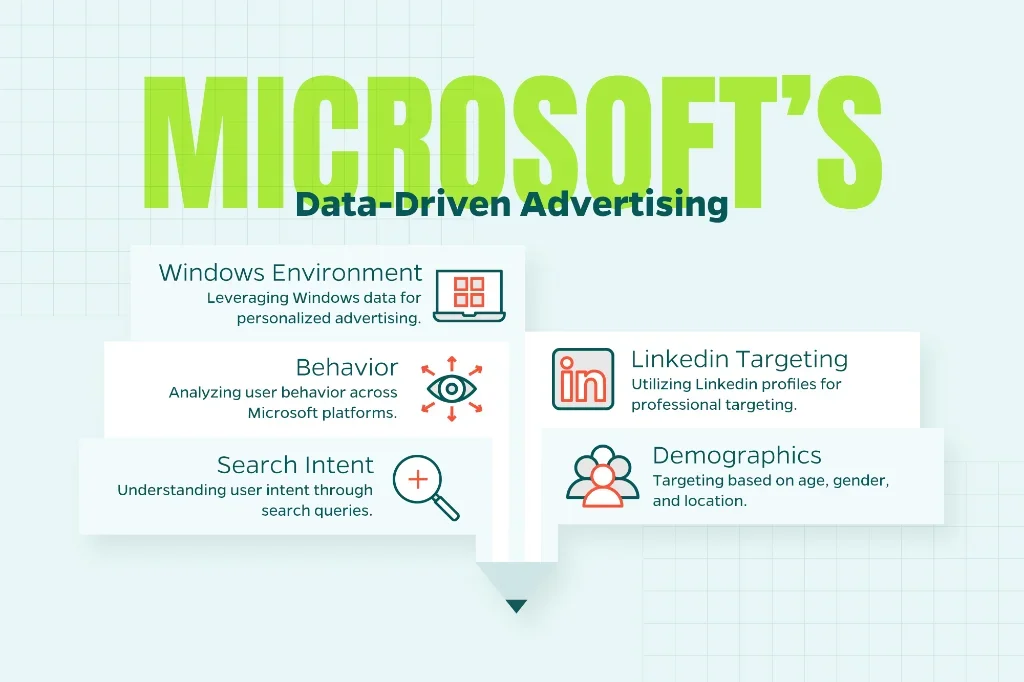
This combination of professional and behavioral data is unique in the PPC world, especially for B2B campaigns where reaching decision-makers is crucial.
2. Exclusive ad formats that boost engagement
Beyond the familiar search and display ad types, Microsoft offers exclusive formats designed to capture attention and drive action:
- Multimedia Ads: Rich visual formats with large images and bold headlines, appearing directly in the SERPs.
- Action Extensions: Built-in call-to-action buttons that encourage immediate engagement.
- Professional Service Ads: Specialized templates for industries like insurance, real estate, healthcare, and finance.
These creative options allow advertisers to differentiate their messages and make stronger visual impressions. This is becoming harder to do on Google’s increasingly uniform ad landscape.
3. Seamless integration with Google Ads
For marketers already running Google campaigns, getting started on Microsoft is remarkably simple. With the one-click Import tool, you can transfer your campaigns, ad groups, keywords, and extensions directly from Google Ads. The familiar interface and structure mean minimal setup time and virtually no learning curve.
Once imported, you can fine-tune targeting or adjust bids to account for Microsoft’s differences in audience behavior. This makes the platform a low-risk, high-reward addition to your paid media mix.
How to Build a Winning Microsoft Advertising Strategy
Step 1: Start with proven performers
Begin by importing your top-performing Google campaigns. This gives you a strong foundation for comparison while minimizing guesswork.
Step 2: Adjust for audience differences
Microsoft users are often browsing from desktop devices, during work hours, and with higher incomes. Use bid adjustments to prioritize those contexts. For example, you might increase bids during weekdays or on desktop devices, while decreasing bids for mobile traffic.
Step 3: Layer in Microsoft-exclusive features
Experiment with LinkedIn Profile Targeting, predictive audiences, and multimedia ads to see how they impact performance. These features often deliver higher engagement rates, especially in B2B campaigns.
Step 4: Optimize continuously
Monitor key metrics such as click-through rate, conversion rate, and CPA. Compare results against your Google benchmarks. Use Microsoft’s search term reports to identify new keyword opportunities or exclude irrelevant queries.
Step 5: Scale what works
Once you’ve identified profitable campaigns, increase budget allocations strategically. Because CPCs are typically lower, scaling Microsoft Ads can drive incremental growth and ROI—often without dramatically increasing total ad spend.
Real-World Scenarios Where Microsoft Excels (Pun Intended)
B2B Marketing:
If your target audience includes professionals, executives, or decision-makers, Microsoft Advertising is a natural fit. LinkedIn integration allows you to zero in on roles and industries that matter most.
E-commerce and Retail:
Microsoft Shopping Ads can help retailers showcase products with images, prices, and descriptions directly in search results. Lower CPCs make it easier to maintain healthy profit margins.
High-Value Services:
Industries such as legal, financial, and healthcare often see strong performance because Microsoft’s audience skews toward older, more affluent users who are actively researching premium services.
Local and Regional Businesses:
Microsoft Ads can be highly effective for local campaigns targeting specific metro areas or ZIP codes. With less competition in local search auctions, advertisers can achieve high visibility at reduced cost.
Common Pitfalls (and How to Avoid Them)
- Copying campaigns without customization:
Importing from Google is helpful, but every platform has unique behavior patterns. Review performance data and adjust accordingly. - Neglecting mobile optimization:
While Microsoft users skew desktop, mobile traffic still matters. Ensure your landing pages and extensions perform well across devices. - Ignoring creative opportunities:
Multimedia and video formats are often underused but can significantly improve engagement. - Forgetting to track conversions independently:
Always tag Microsoft campaigns separately so you can evaluate ROI per platform.

Measuring Success
Success with Microsoft Advertising isn’t just about lower CPCs It’s about incremental growth. Track both platform-specific and blended metrics to see the full picture:
- Conversion volume
- Cost per conversion
- Return on ad spend (ROAS)
- Assisted conversions from cross-channel attribution
When measured correctly, Microsoft Ads often emerge as one of the most efficient contributors to a company’s overall PPC portfolio.
The Bigger Picture: Why Diversification Matters
Digital advertising is dynamic. CPCs fluctuate, algorithms change, and audience behaviors evolve. Diversifying your paid media mix across multiple platforms ensures stability and growth even when one channel experiences turbulence.
Microsoft Advertising provides that diversification. It allows you to maintain consistent lead flow, control costs, and reach audiences your competitors may be ignoring. Over time, this multi-platform strategy builds resilience into your marketing ecosystem, helping your brand weather market shifts while maintaining profitability.
Conclusion
By integrating Microsoft Ads into your digital strategy, you can capture new market share, improve efficiency, and build a more balanced advertising program. Start small, test strategically, and scale what works. The results may surprise you.
At Straight North, we help businesses get the most from every ad dollar, across every platform. Want help? Let’s talk.