

Content marketing is not a one-size-fits-all gimmick. One audience may desire a 2,500-word white paper, while another audience simply wants punchy 100-word blurb. The challenge for marketers is knowing your audience and its preferred medium. That allows you to make the appropriate choice before writing.
Both long-form and short-form content have proven value. Neither is inherently better than the other. What matters is choosing the format that fits your goals, your audience, and the moment you are trying to reach them. Here is a practical breakdown to help you do exactly that.
Defining the Two Formats
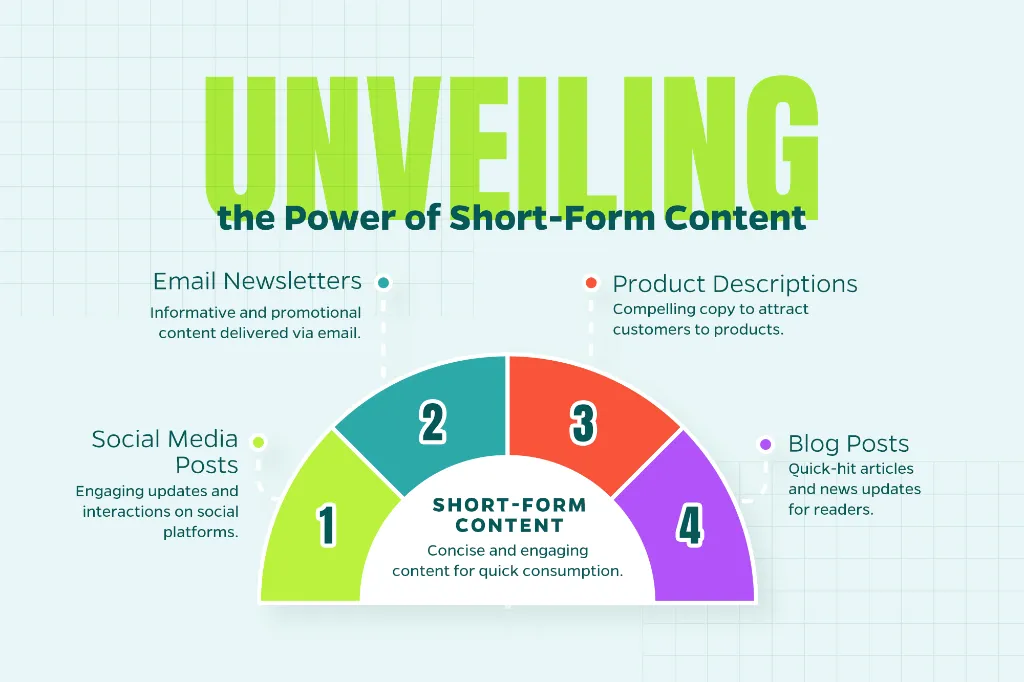
Short-form content generally runs under 1,000 words. Think social media posts, brief blog entries, email newsletters, and product descriptions. It is designed for quick consumption — readers can absorb it in a minute or two and move on.
Long-form content, by contrast, typically clears the 1,000-word mark and often runs much longer. Blog articles, whitepapers, case studies, ultimate guides, and in-depth landing pages all fall into this category. Long-form content asks more of the reader, so it needs to deliver more in return.
When Long-Form Content Wins
Long-form content earns its place when depth is the point. If you are trying to rank for a competitive keyword, establish your brand as a trusted authority, or walk a prospect through a complex buying decision, shorter content simply won’t cut it.
From the standpoint of an SEO strategy, longer content tends to perform well in search because it can cover a topic comprehensively. Google rewards content that genuinely satisfies search intent, and a thorough article is more likely to do that than a surface-level overview. Research consistently shows that long-form content earns more backlinks than shorter pieces, which further supports search rankings.
Long-form content also shines in the middle and bottom stages of the buyer’s journey. When someone is seriously evaluating a product or service, they want details. They want to understand how something works, how it compares to alternatives, and why they should trust your brand. A well-crafted guide or case study can answer all those questions in one place.
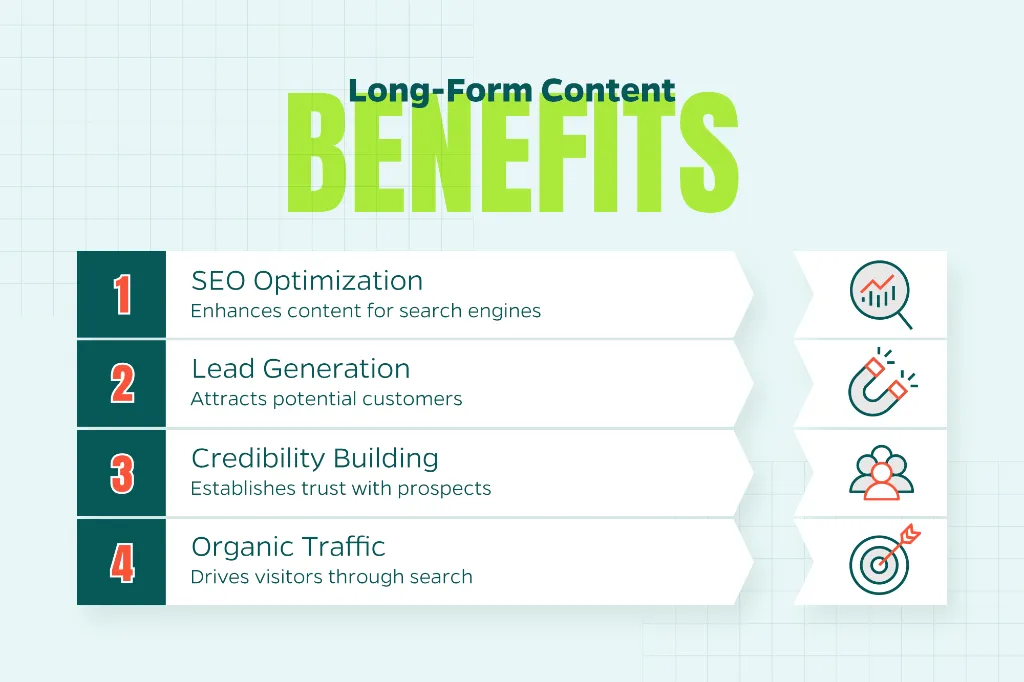
Formats where long-form content tends to deliver strong results include:
- Pillar pages and topic clusters for SEO
- Whitepapers and industry reports for lead generation
- Case studies that build credibility with prospects
- Comprehensive how-to guides that drive organic traffic
When Short-Form Content Wins
Short-form content is built for speed and shareability. When you need to reach people in a crowded feed, respond to a trending moment, or keep an existing audience engaged between bigger content pieces, brevity is your friend.
On social media, short-form content almost always wins by default. Attention spans are minimal, and platforms are designed to keep people scrolling. A crisp, well-written caption or a concise LinkedIn post that delivers one clear insight will outperform a wall of text nearly every time.
Short-form content also works well for audiences that already know and trust your brand. If someone is already subscribed to your email list or following you on social, they do not need a deep introduction. A focused, useful message is often all it takes to drive a click or a conversion.
Formats where short-form content tends to deliver strong results include:
- Social media posts across platforms
- Email newsletters and promotional emails
- Product descriptions and category page copy
- News-style blog posts and quick-hit updates
The Questions to Ask Before You Decide
Rather than defaulting to one format out of habit, run your content idea through a few key questions.
What is the goal of this piece? If you are trying to rank in search, build authority, or generate leads, long-form content is usually the right call. If you are nurturing existing relationships, promoting a time-sensitive offer, or building brand awareness on social, short-form is likely more effective.
Where does this content live? Channel shapes format. A 1,500-word article is appropriate on your blog but would be a mismatch for marketing on Instagram. Consider where your audience will encounter the content and what reading experience is realistic in that context.
Where is the reader in the buying journey? Early-stage awareness content can often be shorter because the goal is simply to introduce a topic or problem. As prospects move closer to a decision, they typically need more information — which is where long-form content earns its value.
How complex is the subject matter? Some topics genuinely require space to be explained well. Forcing a complex subject into 400 words can leave readers confused or unconvinced. On the other hand, padding out a simple concept to hit a word count adds length without adding value.
The Case for Using Both
The most effective content strategies do not pick a side. They use both formats deliberately, with each type of content playing a specific role.
A common approach is to anchor your strategy around long-form content that targets valuable keywords and covers important topics in depth. Then, short-form content — social posts, emails, brief updates — distributes that long-form content, drives traffic back to it, and keeps your audience engaged between bigger publications.
You can also repurpose efficiently. A strong long-form article can be broken down into a series of social posts, an email summary, or a short video script. This extends the life of your best content and helps you reach different segments of your audience in the formats they prefer.
Quality Content is Better Than Lengthy Content
Regardless of format, mediocre content does not move the needle. A 3,000-word article that is unfocused or poorly researched will underperform a tight 800-word piece that solves a problem. Likewise, a short social post with genuine insight will outperform a generic one no matter how many times it is published.
Length should be determined by what the content needs to accomplish — not by arbitrary targets or the assumption that more words equate to more value. Ask what your reader needs, write to meet that need, and stop when you have done it.
Get Expert Help with Your Content Strategy
Choosing between long-form and short-form content is just one part of building a strategy that drives results. If you want a content plan tailored to your business goals, audience, and competitive landscape, Straight North is ready to help.
Contact Straight North today to talk with a content strategist about what your brand needs to grow.