
Key Takeaways:
- AI is changing the rules of paid advertising.
- Better lead data drives smarter campaigns.
- Automation still needs human oversight.
- More ad channels don’t always mean better results.
- Strong agency-client partnerships turn clicks into customers.
Not long ago, managing paid advertising meant a lot of hands-on work: adjusting bids, fine-tuning keywords, and controlling where ads appeared. Today, platforms like Google, Microsoft, and Meta handle much of that automatically, with AI influencing nearly every targeting decision.
So, if the platforms are doing more of the work, what role does an agency play?
According to Straight North Director of Paid Advertising David Ohm, the answer comes down to what automation can’t do on its own. Platforms optimize based on the signals they’re given, but they can’t always distinguish a qualified lead from a spam form fill. Agencies help close that gap by connecting reliable data, setting guardrails, testing strategies, and staying accountable for results. After all, when a recommendation doesn’t work, the AI isn’t the one answering for it.
But the agency is only half the equation. Clients have a role to play, too. Accurate CRM records, quick lead follow-up, strong creative, and up-to-date business information all help campaigns succeed. Here’s how that partnership is evolving and what businesses should expect from paid media management today.
How AI Is Changing Paid Advertising Management
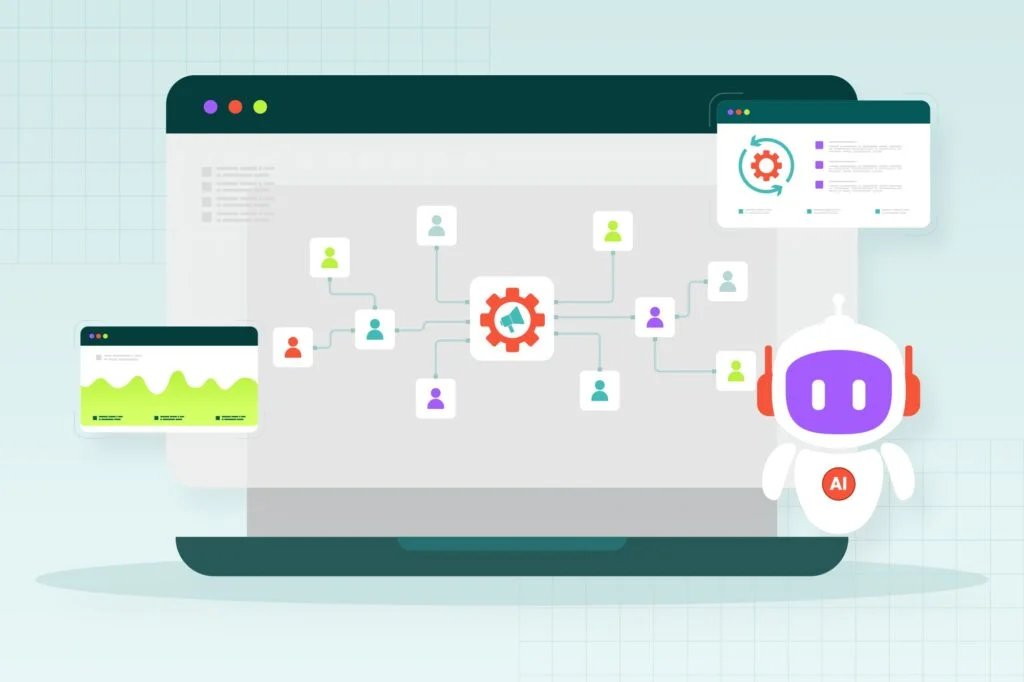
Google’s Performance Max and AI Max, Microsoft’s Copilot, and other AI-driven advertising tools are expanding how platforms identify and reach potential customers. Even keywords that advertisers once controlled through exact or phrase matching can now trigger a broader range of searches.
The expanded reach comes with both opportunities and challenges. AI can identify potential customers through searches and placements advertisers might never have considered. But it can also introduce irrelevant traffic and less precise targeting.
From our positioning, there’s going to be an increased focus on data plumbing, analysis, feeds, asset depth, lead signal feedback loops. We are kind of the creators and managers of these AI human hybrid systems now, as an agency. And I think whoever has the best system, and the delivery of that system. And an ability to deliver performance, first off, and to help our clients stay in control, stay ahead of the game. Those are the agencies that will win and retain clients for the long haul. The ones that kind of have that I don’t want to say perfect machine, because part of it really is the human side, and it will remain that, but it is that hybrid of you know, really smart people and the AI suite or system that they’ve kind of crafted, and the way that they use it and execute on it, all together. I think that that’s really who will kind of win out, in this age, is the person who, you know, the agency that has the best combination of the human side and the AI side.
For agencies, the challenge is deciding how much room to give automation. Too much control can limit opportunities, while too little can lead to wasted spending.
The future of paid advertising as a combination of human expertise and AI technology. The agencies that succeed will be those that build effective systems around automation, continually evaluate performance, and help clients maintain control as the platforms evolve.
Why First-Party Data Matters for Lead Quality
While AI can optimize campaigns based on the data it receives, it doesn’t always know which leads are worth pursuing. A spam form submission and a qualified prospect requesting a quote might both register as conversions, even though they have very different values to a business.
First-party data from a company’s CRM, sales pipeline, and customer interactions helps advertising platforms distinguish meaningful opportunities from low-quality activity. Without that feedback, AI may keep optimizing toward conversions that look successful on paper but do little to generate revenue.
And we’re losing a little bit of that control, for the sake of, you know, improving our ceiling, with AI. You know, the kind of… the balancing act is, you know giving Google the rights, and Google and all these platforms the right signal to kind of balance that out. Spam or low-quality form fills, take AI, take that machine or that system we build, out of homeostasis very quickly. And the AI sometimes has… often has no idea, that it happened, unless you tell it differently. And the way that you tell it differently is with, you know, lead and customer data, qualified leads from a sales funnel, properly labeled and pushed back into the ad platform. Tell that AI platform, this is what it looks like, not this. Not this, meaning, you know, a spam form fill, a phone call that’s 2 seconds long. Things like that.
Agencies can provide that feedback by connecting CRM systems, tracking qualified leads, and feeding sales outcomes back into advertising platforms.
For that process to work, businesses need to maintain accurate sales records and share lead quality information. Agencies can then use those insights to guide targeting and campaign decisions.
How the Paid Advertising Agency’s Role Is Evolving
As AI takes on more day-to-day campaign tasks, the role of a paid advertising agency is shifting from making manual adjustments to managing the systems behind campaign performance.
Agencies are increasingly focused on three key responsibilities: building smarter systems, continually improving performance, and advocating for their clients.
Building smarter systems means connecting CRM data, establishing reliable measurement signals, and setting campaign guardrails that help AI make better decisions. Agencies also need to determine which strategies to test and how to structure campaigns for success.
Reviewing and refining performance requires more than accepting AI-generated insights at face value. Agencies need to evaluate results, test new tools and features, and make strategic adjustments based on what the data reveals.
Advocating for clients is equally important. Advertising platforms regularly introduce new capabilities and recommendations, but not every update aligns with a business’s goals. Agencies need to understand those priorities, evaluate the potential impact, and recommend which changes are worth pursuing.
Our job in managing this kind of relationship for you with these ad platforms is, as these updates come streaming and these new product adoptions, PMax, AI Max, ChatGPT changes, is to tell you what’s important, what aligns with your business goals that we understand better than the ad platforms and their representatives. So we can help you right now, with what makes sense. We know you don’t want to fall behind as an advertiser, and it’s our job to make sure that you don’t, but to also make sure that you’re not just kind of pushing the button to turn on everything that comes as it comes up. We don’t want you to be a guinea pig, either, for these updates, and just feel like you’re turning everything on, because if you don’t, you’ll fall behind. That can often result in, you know, more spend quickly, lower quality. It won’t always, but it’s our job to make sure, you know to recommend and to kind of clarify to you what you should turn on and what you shouldn’t. Lots of product adoption changes, and I would say they’re happening faster than they ever have. So, it’s our job as an agency, and any agency’s job, to be the client’s advocate and partner in these situations.
Ultimately, an agency’s value comes from combining technology with experience, sound judgment, and a clear understanding of what the client is trying to achieve.
Why Campaign Structure and Testing Still Matter
Campaign structure is one area where that judgment matters. Automated systems need enough relevant data to learn what works, and agencies must create the conditions for that learning.
Ohm compares testing campaign structure to reorganizing the inside of a house rather than knocking it down: moving ad groups and ad sets around within a campaign to build a better machine without starting over. His team reviews structure regularly and aims to test it monthly, with a few goals in mind:
- Maximize relevant reach. Reach as many of the right people as possible within the available budget.
- Limit targeting errors. Cut down on irrelevant one-off searches while still leaving AI room to find new opportunities.
- Support ongoing learning. Give AI systems enough conversion data to keep optimizing between adjustments.
Spreading conversions across too many campaigns can limit that learning, making it harder for automated bidding systems to recognize patterns and improve over time.
Testing doesn’t mean constantly making changes. Agencies may implement a few larger adjustments each month, monitor the results, and let automated systems handle smaller, auction-level decisions in between.
“We want our campaigns to be improving on their own, even when we’re not touching them.”
When Should Businesses Expand to More Paid Media Channels?
The same concern about sufficient data applies when expanding into new advertising channels. More platforms can extend a business’s reach, but they don’t always improve results.
Before recommending a new channel, agencies need to consider campaign performance, available budget, seasonality, and business goals. A company preparing for its busiest season may have different priorities than one looking to build awareness or generate steady inquiries throughout the year.
One of the biggest risks is spreading a limited budget too thin. Each channel needs enough spending and conversion data for its automated campaigns to learn effectively.
Everybody loves diversification. Everybody wants to do all ad platforms, because they all have cool targeting that you can change up and look at, and, you know, everything new and different is good, and that’s true, but I was just talking about data thresholds before, and if you have a very small budget, and you decide to run in 5 different ad platforms, there’s a very good chance none of those are going to get the data they need, and the train is just going to stop. And after 3 months, we don’t want you to come back to us, and we have to tell you the train actually stopped 2 months ago, and we’re trying to rebuild it, but it won’t… it won’t move. And the reason is there’s, you know, there’s no data. It’s really important to watch for that over-segmentation, and that’s our job as an agency to let the client know when expansion is a good idea.
Moving from Google Ads into Microsoft Advertising, LinkedIn, or emerging platforms should therefore be supported by performance data and realistic expectations.
Agencies can also use forecasting models to estimate how changes in spending or channel mix might affect results. By comparing those projections with actual performance and refining their assumptions over time, they can help businesses make more informed decisions about where to invest next.
How Agencies Set Guardrails for AI Advertising
Within each channel, agencies also need controls to keep campaigns aligned with the business’s goals. These campaign guardrails help limit irrelevant placements, unqualified traffic, and wasted spending.
Tools such as negative keywords, placement exclusions, and targeting settings provide those controls while giving AI room to identify new opportunities.
These controls are becoming more sophisticated. For example, Google’s Performance Max and AI Max offer options to manage certain types of campaign expansion. Advertisers may be able to expand search targeting while maintaining greater control over ad copy and landing pages.
Setting guardrails isn’t a one-time task. Agencies need to review new platform controls and adjust settings as campaigns evolve, aiming to reduce wasted spending without cutting off useful opportunities.
What Clients Need to Own for Better Paid Advertising Results
Even the best paid advertising strategy needs support from the business itself. While agencies manage campaigns and optimize performance, clients provide the information, resources, and follow-through that help turn advertising opportunities into customers.
Share lead quality feedback. Agencies need to know whether campaigns are generating qualified prospects or wasting money on irrelevant inquiries. Ideally, CRM systems such as Salesforce or HubSpot can share this information directly with advertising platforms. But even without an integration, feedback from a client’s sales team about what’s working and what’s not, can help agencies make better decisions.
Keep CRM records current. Simply connecting a CRM to an advertising platform isn’t enough. Clients need to document leads, maintain accurate sales records, and update lifecycle stages as prospects move through the sales funnel. Without that information, agencies and AI systems may struggle to distinguish an initial inquiry from a genuine sales opportunity.
Respond quickly to inquiries. When someone calls or submits a form, timely follow-up matters. A qualified prospect can easily become a missed opportunity if no one responds. As Ohm emphasizes, even campaigns that consistently generate leads won’t deliver their full value without an effective process for handling them.
If you’re getting calls, as a business from your ads, pick up the phone. Respond to those calls. If you’re getting forms, respond to those forms in a timely manner. If someone’s reaching out to your business for, you know, a service they need now, and you’re taking a day to get back to them and you lose that, you know, that potential lead, and it becomes, you know, could have been an MQL, could have been a customer, but it’s nothing, that’s, you know, a client-side issue. So coming in strong with a sales funnel and lead handling that works and is kind of something that’s, you know, very… a very tight ship. That helps us tremendously. Because if that’s an issue, and, you know, we’re consistently delivering leads, the ad platform is consistently delivering leads, but nothing’s being handled. It’s kind of all for naught.
Provide strong creative assets. Images, videos, and other marketing materials give agencies more opportunities to test what resonates with customers. Clients should share existing assets, including what’s already been tested, while working with their agencies to develop new creative when needed.
Keep business information accurate. Pricing, promotions, product details, and service offerings should be consistent across ads, websites, business profiles, and product feeds. When information doesn’t match, customers may question a company’s credibility. Clients should also communicate major changes to their agencies promptly so campaigns can be adjusted accordingly.
Ultimately, successful paid advertising depends on both sides doing their part. Agencies bring the strategy, technology, and campaign expertise, while clients contribute the business knowledge and responsiveness that help turn advertising performance into meaningful results.
What Businesses Should Expect From a Paid Advertising Agency as AI Evolves
As AI continues to reshape paid advertising, businesses should expect their agencies to explain how campaign decisions support business goals.
Ask whether your agency is connecting advertising performance to qualified leads and sales opportunities, what its tests have revealed, and how those findings shape its recommendations. You should understand what’s working, what isn’t, and why.
For Ohm, that transparency goes hand in hand with accountability. AI can provide insights and recommendations, but the agency must evaluate them in context and stand behind its decisions.
We should be testing them, we should be skeptical of them, and we also want to make sure that they’re integrated with data sources to generate insights. We use Skai internally here, and we want to make sure that, you know AI systems and have access to that so we can generate insights, and then we can decide which ones we want to use and not use. So, interpreting AI output against our expertise, against the expectations of the client, the goals of the client, is still really important. We should not be relying on AI insights. We need to consider them with context and come up with our own recommendations that we own as an agency. We are accountable. The AI is not. And so they are our recommendations still. We’re the ones who will hear it if they don’t work.} And that accountability, is, is really, you know, part of where our value is.
The future of paid advertising isn’t about choosing between AI and human expertise. It’s about bringing them together through a strong agency partnership built on reliable data, collaboration, and accountability. The technology will keep changing, but the goal remains the same: reaching the right customers and turning advertising investments into business growth.