
Meta advertising looked completely different in 2020 than it does today. Between AI-generated creative, automated campaign structures, and a privacy landscape that keeps shifting under advertisers’ feet, the platform businesses grew comfortable with is being rebuilt in real time. For marketing teams and business owners who rely on Facebook and Instagram ads to drive leads and sales, understanding where Meta advertising is headed is the difference between staying competitive and falling behind.
Here’s what’s changing, why it matters, and what smart advertisers are doing to keep their campaigns performing through the shift.
AI Is Taking Over the Campaign Build
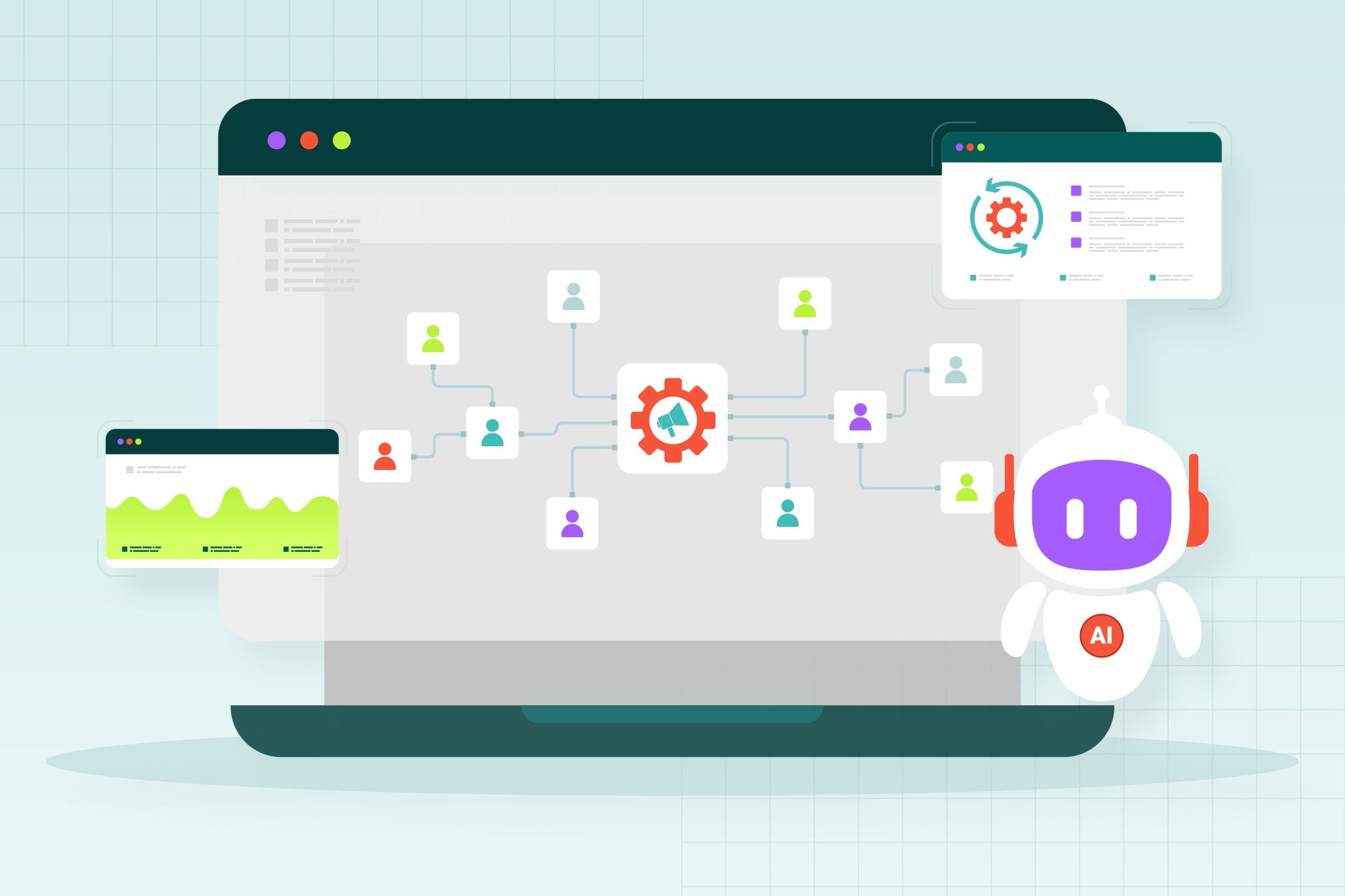
Meta is working toward a campaign process that requires advertisers to provide only a website URL, a budget, and a business goal. Its AI would then create the ad copy and visuals, choose the audience, and shift spending toward the best-performing options. Meta is already testing parts of this “goal-only” model and expects to make it more widely available by the end of 2026.
Much of this runs through Meta’s Advantage+ suite, which has grown well beyond its original shopping-campaign roots. Here are a few capabilities now folded into it:
- Automated creative generation, including turning a handful of product photos into a polished, multi-scene video ad
- Audience targeting built from behavioral and interest signals, without manual input from the advertiser
- Real-time budget and bid adjustments based on live performance data
- Brand consistency tools that keep logos, colors, and messaging aligned across auto-generated variations
Advantage+ campaigns already account for a substantial share of Meta’s ad revenue, and businesses that consolidate fragmented campaigns into the automated structure have reported meaningful drops in cost per acquisition. These tools are improving quickly, and the companies testing them now are gathering insights that competitors waiting on the sidelines simply won’t have.
Privacy Rules Keep Rewriting the Playbook
While Meta builds more powerful AI on one side, it’s also navigating an increasingly complicated privacy landscape on the other, and the two forces are pulling in different directions. Regulations like the GDPR, the EU’s Digital Markets Act, and a growing patchwork of U.S. state privacy laws continue to limit what signals Meta can collect and how advertisers can use them. Meanwhile, browser-level privacy protections keep chipping away at the third-party data that used to make retargeting simple.
The practical result is often called signal loss: a widening gap between the targeting and measurement precision advertisers want and what the ecosystem can reliably deliver. Custom audiences built on sensitive categories face tighter restrictions, retargeting pools shrink, and attribution gets fuzzier. None of this means Meta advertising stops working. It means the old playbook, built on abundant third-party data, doesn’t hold the way it used to.
Here is what’s filling the gap for advertisers who adapt early:
- First-party data collected directly through your own website, forms, and CRM
- Server-side event tracking, like Meta’s Conversions API, that recovers signal lost to browser restrictions
- Broader measurement approaches, including marketing mix modeling and geo-based lift tests, that don’t depend on tracking individual users
- Consent management built into the marketing stack from the start, not bolted on afterward
Advertisers who treat first-party data as a strategic asset, rather than an afterthought, are the ones positioned to keep their targeting sharp as third-party signals keep eroding.
What This Means for Performance
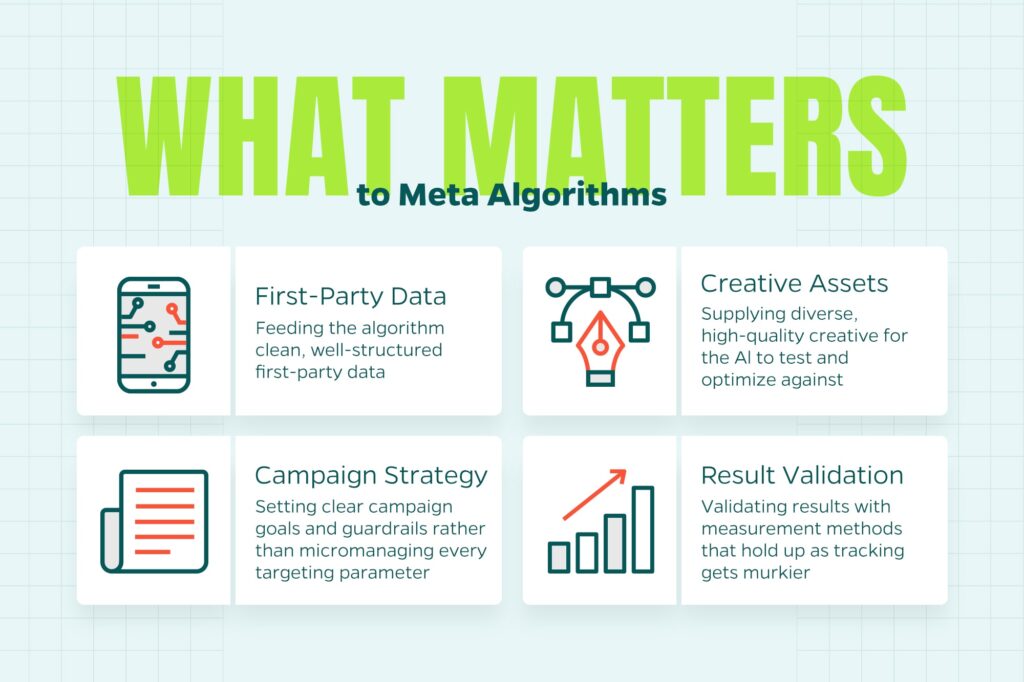
Put AI automation and privacy pressure together, and Meta advertising now rewards a different skill set than it did even two years ago. Manually building granular audiences and tweaking bids by hand is becoming less relevant, since Meta’s algorithms often outperform manual control once they have enough data to work with. What matters more today:
- Feeding the algorithm clean, well-structured first-party data
- Supplying diverse, high-quality creative for the AI to test and optimize against
- Setting clear campaign goals and guardrails rather than micromanaging every targeting parameter
- Validating results with measurement methods that hold up as tracking gets murkier
None of this means human strategy disappears. It means human strategy shifts, moving from clicking through targeting menus to shaping the inputs, goals, and creative direction that determine how well the automation performs. Businesses that feed Meta thin data or a single stale ad creative will get thin results, automation or not.
How to Prepare Your Meta Strategy
Marketers who put these fundamentals in place now will be far better positioned once fully automated Meta advertising becomes standard practice:
- Build a first-party data pipeline through your website and CRM, and connect it to Meta with server-side tracking
- Audit your creative library so the algorithm has genuine variety to test, not three versions of the same ad
- Layer privacy-safe measurement, such as lift studies or marketing mix modeling, alongside pixel-based attribution
- Stay current on which Advantage+ features fit your business goals, since the suite keeps expanding
Change at this pace can feel overwhelming for a marketing team already stretched thin, which is exactly why so many businesses bring in a partner who tracks these shifts full time.
Need Help?
Straight North’s paid media specialists build and manage Meta advertising strategies designed to perform through exactly this kind of change. Contact Straight North today to talk through your approach to AI-driven Meta advertising.