


For years, SEO and web design lived in separate silos. One chased rankings while the other pursued aesthetics. But that divide has collapsed. Modern search engines evaluate how users interact with your site, which means your design choices directly shape your SEO performance.
The challenge is creating a layout that’s visually compelling and supports crawlability, usability, and conversions. When SEO and design work in tandem, you get a website that doesn’t just attract visitors—it converts them.
Let’s break down how your layout decisions impact search performance and how to find that sweet spot.
Why SEO and Design are Two Sides of the Same Coin
Google’s mission is simple: deliver the best user experience possible. That’s why search algorithms now look beyond keywords and backlinks to evaluate page experience signals like mobile usability, site speed, and content accessibility.
Your design influences everything from how easily visitors find content to how long they stick around. Poor design can sabotage even the smartest SEO strategy, while smart layout choices amplify it.
Page Structure: Building for Both Humans and Bots
A well-organized page structure serves two masters: your visitors and search engine crawlers.
Getting Your Content Hierarchy Right
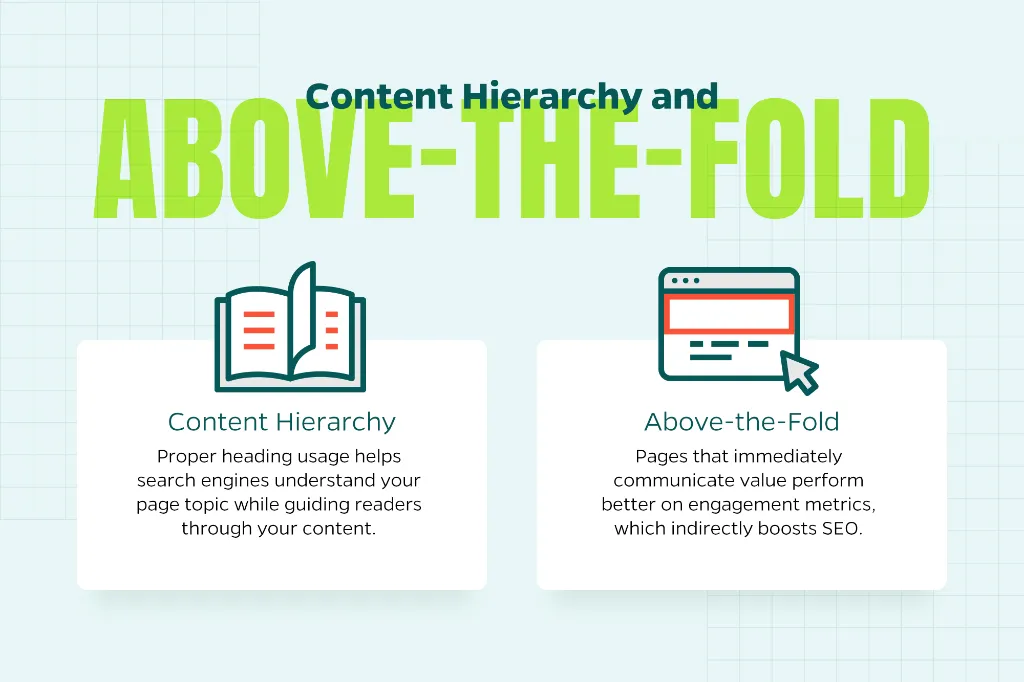
Proper heading usage (H1, H2, H3) helps search engines understand your page topic while guiding readers through your content. The key is maintaining a logical flow.
Keep these practices in mind:
- Use one clear H1 per page
- Write descriptive subheadings that break up content
- Maintain visual consistency across your site
Avoid burying important text under oversized graphics or styling your headings so they blend into body copy.
Making Above-the-Fold Count
First impressions matter. Pages that immediately communicate value perform better on engagement metrics, which indirectly boosts SEO.
Your layout should lead with clear messaging, visible primary keywords in headings, and a strong call to action. It shouldn’t overwhelm visitors with clutter.
Mobile-First Design Isn’t Optional Anymore
Google uses mobile-first indexing, meaning it primarily judges your site based on the mobile version. If your layout falls apart on smaller screens, your rankings suffer.
Common mobile design mistakes include text that’s too small to read comfortably, buttons crammed too close together, and navigation that frustrates touchscreen users.
Responsive design ensures your content is accessible and easy to interact with regardless of device. It’s not a nice-to-have—it’s table stakes.
Site Speed: Where Design Meets Performance
Your design elements can significantly impact page load speed, which Google has confirmed as a ranking factor.
Optimizing Visual Assets
High-resolution images, videos, and animations enhance visual appeal but tank load times if not optimized properly.
SEO-friendly design means compressing images without quality loss, using modern image formats, and skipping unnecessary animations or auto-play videos.
Faster pages improve rankings, reduce bounce rates, and increase conversions.
Navigation and Internal Linking Strategy
How you design navigation affects both user experience and how well search engines can crawl your site.
Keep Navigation Simple and Clear
Intuitive menus help visitors find information quickly while helping search engines understand your site architecture. Use descriptive anchor text, avoid overly complex dropdowns, and limit top-level menu items.
Make Internal Links Work Harder
Designers focus on visual flow, but SEO benefits from strategic internal linking. Well-placed links distribute authority across your site and guide users to relevant content.
Your layout should make internal links easy to find, contextually relevant, and visually consistent with your overall design.
Readability Drives Engagement Signals
Search engines track how users engage with your content, and layout heavily influences these behaviors.
White Space and Typography Matter
Crowded pages overwhelm readers and drive up bounce rates. Thoughtful spacing and legible typography encourage visitors to stay longer and consume more content.
Focus on short paragraphs, high-contrast text, and fonts that remain readable across all devices.
Use Visuals That Support Your Message
Images, charts, and icons should enhance understanding, not distract from it. When visuals reinforce your message rather than competing with it, engagement improves naturally.
Design Trends That Can Backfire
Some design choices look impressive but create SEO headaches.
Watch out for text embedded in images (search engines can’t read it easily), overreliance on JavaScript for critical content, and hidden content requiring excessive interaction to access.
A visually stunning site falls flat if search engines—or users—can’t access the information.
The Real Secret: Collaboration from Day One
The most successful websites happen when SEO strategists and designers collaborate from the beginning, not when optimization gets tacked on after launch.
We’ve seen how aligning layout decisions with SEO best practices leads to better rankings, improved engagement, and higher conversion rates. When design enhances usability and SEO ensures visibility, you don’t have to choose between looking good and performing well.
Finding the Balance
Balancing SEO and design isn’t about compromise—it’s about integration. Every layout choice, from navigation to typography, shapes how search engines and users experience your site.
By prioritizing clarity, performance, and usability, you can build websites that rank well and resonate with visitors. In today’s digital landscape, that balance isn’t optional—it’s the foundation of online success.
Need Help Striking the Right Balance?
Creating a website that performs well in search results while delivering an exceptional user experience requires expertise in both SEO and design. At Straight North, we specialize in building sites that drive measurable results.
Whether you need a complete website overhaul or want to optimize your current site for better search performance, our team can help. Contact Straight North today to discuss how we can improve your digital marketing strategy and create a website that works as hard as you do.